Liam Halligan

Liam Halligan writes the Sunday Telegraph’s Economic Agenda column.

The bust that wasn’t

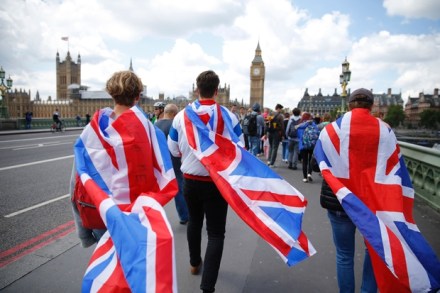
It has been a month since the UK voted to leave the European Union — but something is missing. Where is the economic collapse? What of EUpocalypse Now? Where is the Brexageddon that we were promised? To the shock of many — not least business titans who bankrolled the Remain campaign — the instant collapse doesn’t seem to be happening. The UK economy is, for now at least, taking Brexit in its stride. The oft-predicted job losses? During the three weeks from 23 June, job listings were up 150,000 compared to the same period last year according to Reed Group, a recruitment consultant. ‘That’s an 8 per cent rise,’ says James Reed, its chairman. ‘The vote hasn’t affected things — people are still hiring.

Project Hope

Boris Johnson famously said that Winston Churchill would have voted for Brexit. The wartime leader’s grandson — staunch Remainer and Tory grandee Nicholas Soames — dismissed such claims as ‘appalling’ and ‘totally wrong’. This bad-tempered referendum rift between two traditionalist, Old Etonian Conservatives symbolises, somewhat incongruously perhaps, the broader state of the nation. Deep and traumatic divisions have been drawn between friends and families everywhere — and, of course, within political parties. David Cameron’s dignified resignation speech has quickly given way to a grim determination to ‘Stop Boris’ from taking the Conservative crown and the Premiership.

Who to nudge next

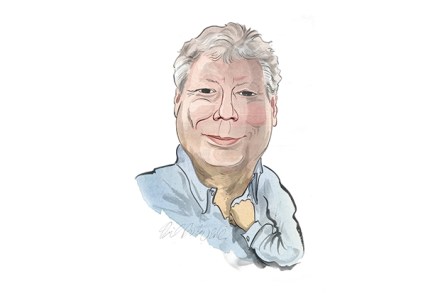
‘For ten years or so, my name was “that jerk”,’ says Professor Richard Thaler, president of the American Economics Association and principal architect of the behavioural economics movement. ‘But that was a promotion. Before, I was “Who’s he?”’ Thaler has had to get used to putting noses out of joint. His academic research, initially controversial, sparked an entirely new branch of economics, and now governments are adopting his theories across the globe. But he met plenty of resistance along the way. ‘You get your ideas straight when you argue with those whose views are most different from yours,’ he says.

High finance, low tricks

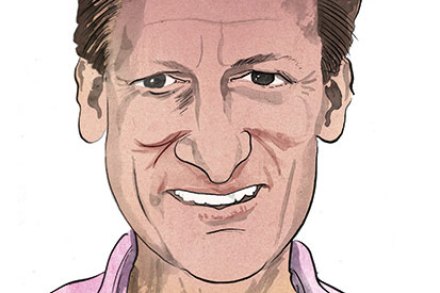
It amazes me, simply amazes me, that journalists aren’t all over these stories. Doesn’t it amaze you too?’ I’m in a plush room in a swanky central London hotel, in conversation with Michael Lewis. He is all fired up, leaning forward as he perches on the hard edge of the cushion-strewn sofa. He oozes incredulity, palms upward, shoulders raised. ‘I’m not saying there aren’t good financial journalists,’ he concedes. But the qualification seems half-hearted — and is quickly reversed. ‘The Wall Street Journal is a much worse newspaper than it was 20 years ago,’ he asserts, taking aim at the bible of US high finance. ‘The news side of the paper has the fingerprints of the finance industry all over it’.

Unequal struggle

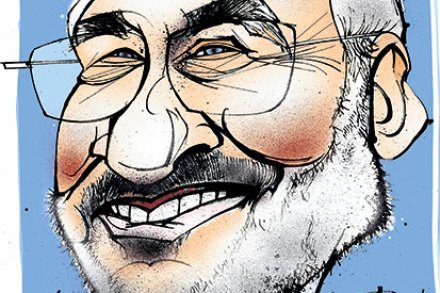
‘How do you feel when you go back to Gary?’ I ask Joe Stiglitz. ‘Well, frankly, I get depressed,’ he replies. ‘The American middle class was created in places like my home town and is now struggling badly — which makes me sad.’ Stiglitz, a Nobel prize-winning economist and the closest thing the left has to an intellectual superstar, grew up in Gary, Indiana, during the 1950s, when it was the heart of the booming US steel industry. His father sold insurance and his mother was a teacher. ‘We had a modest detached brick house, with a lawn all around — it was safe and secure,’ he recalls. ‘Back then, if you worked hard and played by the rules in America, you’d make it — you could get ahead.

The subversive wonders of Kilkenomics – where economics meets stand-up

‘What is a Minsky moment, anyway?’ asks Gerry Stembridge, an Irish satirist. ‘I’ve been reading about them in the papers and have often wondered’. Stembridge is putting the question to Paul McCulley, chief economist at Pimco, the world’s largest bond fund with over $200 billion under management, one of the ten most influential economists on earth. McCulley is sporting a T-shirt and jeans. The two men, Celtic comic and American financial whiz, are on stage in a theatre in Kilkenny, a bijou provincial city in south-east Ireland. It’s Saturday night and they’re facing a sell-out crowd — all of whom have paid to watch a debate on global economics and most of whom aren’t waiting until the interval to have a drink.

Europe will reconcile with Russia, and soon. It can’t afford not to

After months of escalating tensions over Ukraine and talk of a new cold war, Russia and the West could soon reach a surprising rapprochement. The eurozone economy is suffering badly and sanctions against Russia are partly to blame. Winter is also upon us, and that reminds every-one Vladimir Putin still holds the cards when it comes to supplying gas. The clincher, though, is that Ukraine is heading towards financial meltdown. Unless an extremely large bailout is delivered soon, there will be a default, sending shockwaves through the global economy. That’s a risk nobody wants to take — least of all Washington, London or Berlin. Sanctions against Russia were always going to hit western Europe hard.

Don’t get too excited about Britain’s economic recovery. It’s built on shaky ground

[audioplayer src="http://traffic.libsyn.com/spectator/TheViewFrom22_24_July_2014_v4.mp3" title="Liam Halligan and Adam Memon discuss whether another financial crisis is on the way"] Listen [/audioplayer]When I think about global stock markets these days, the image that springs to mind is the final scene of The Italian Job— the 1969 original, not the tacky 2003 remake. ‘Hang on a minute, lads,’ says Charlie Croker, Michael Caine’s heistmaster-in-chief, as he and his rogue brethren balance precariously in a bus loaded with gold on the edge of an Alpine cliff. ‘I’ve got a great idea.’ The film ends ambiguously, of course.

The revolution the West needs (and won’t get)

The western world is a mess. The ‘advanced’ economies are failing to generate higher living standards for the majority of citizens. Many of us believe, rightly, that our children and grandchildren will have less prosperous lives than we do. That not only runs counter to the tide of western history, but jars with natural human instincts, creating a deep sense of unease. The public no longer trusts the political classes to deliver a brighter future, so lots of us don’t vote. In the European elections, only two fifths of voters bothered casting their ballot. Many of those who did, of course, abandoned mainstream parties for the extremes.

Michael Lewis vs Wall Street’s new predators

‘The US stock market is rigged.’ That’s the j’accuse headline that screams out from Flash Boys, the new book by Michael Lewis. It’s a very big claim, made by America’s foremost financial writer. It’s also a claim that, after years of accumulating evidence, warrants extremely close and sustained official scrutiny. Lewis produced Liar’s Poker, his first bestseller, in 1989 — after a four-year stint as a fresh-from-the-Ivy-League bond dealer at the now defunct firm Salomon Brothers. The book, an insider’s account, brilliantly lampooned the macho, aggressive behaviour of the ‘big swinging dicks’ who paced the carpet-tiled trading floors.

Putin is making the West’s Cold Warriors look like fools

William Hague was on rather shaky ground when he argued this week that Moscow has chosen ‘the route to isolation’ by recognising Crimea’s referendum. On the contrary, it is the European Union and the United States who look as if they have seriously overplayed their respective hands in Ukraine. Across Asia, Africa and Latin America, the cry of ‘western hypocrisy’ has been heard much louder than complaints about Vladimir Putin. Even in the UK, mainstream opinion is steadily becoming more critical of western interventionism and our ‘New Cold War’ posturing, despite some pretty one-sided media coverage and much establishment tut-tutting.