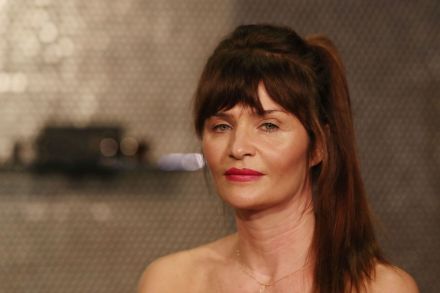
Leyla Sanai

Dr Leyla Sanai is a Persian-British writer and retired doctor who worked as a physician, intensivist, and consultant anaesthetist before developing severe scleroderma and antiphospholipid syndrome

A history of pioneering women doctors descends into Mills & Boon trivia

From our UK edition

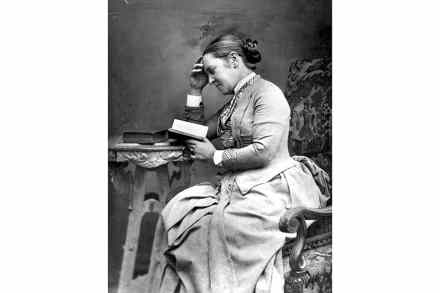
The first three women doctors on the medical register in the UK had not only to study harder than their male counterparts but also to contort themselves in almost impossible ways, jumping from city to city and country to country in order to gain the scientific knowledge and clinical skills that would allow them to progress. In fact, even after reaching standards where men could easily have graduated, they had to plead to be allowed to sit the exams. Of course, misogyny was not the only bigotry in the 19th century. To black slave-workers, these wealthy white women, who were encouraged to lead pampered lives rather than work in such a ‘male’ field, were lucky.
A dying doctor’s last words

From our UK edition

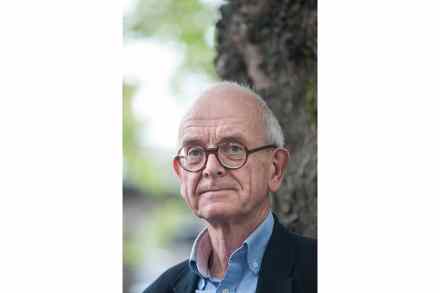
Facing up to the prospect of one’s own mortality is always jarring; but when you’ve spent your life trying, and sometimes failing, to save others from a terrible death, it carries the knowledge that the journey may be more traumatic than the fear or grief of the end. These are the concerns with which Henry Marsh, the eminent neurosurgeon and author, grapples after his own diagnosis of advanced prostate cancer more than a year ago. He believes this book will be his last and, unsurprisingly, he seems to be cramming everything into it. It makes for a discursive read and jumps about chronologically and topically, as if he wants to include all his important final thoughts.

Women behaving badly: Ghost Lover, by Lisa Taddeo, reviewed

From our UK edition

Lisa Taddeo’s Three Women established her as a narrator of female desire in all its complexity. Her study of three real women and their sexual choices became a bestseller on both sides of the Atlantic, showing how women sometimes collude in relationships that are destructive, or make decisions they later regret. Power imbalance, coercion and past trauma as well as lust were distilled in the essence of their desires. Of course, sexual relationships can be complex for both sexes, but Taddeo’s project repudiated the easy 1990s stereotypes of ‘ladettes’ as being replicas of sex-without-ties lads. Animal, her fiction follow-up, depicted the raw anger and vengeance that loss and frustration may beget.

Zimbabwe’s politics satirised: Glory, by NoViolet Bulawayo, reviewed

From our UK edition

NoViolet Bulawayo’s first novel We Need New Names, shortlisted for the Booker in 2013, was a charming, tender gem, suffused with the guileless hilarity of children and the shock of tragedy in Zimbabwe, the author’s birthplace. Her follow-up, Glory, features animals as characters. I was initially mystified. Who would try to match Orwell’s allegorical masterpiece Animal Farm? Art Spiegelman succeeded in Maus, his graphic novel about the Holocaust, but each species represented one race, so the symbolism packed a punch – German cats hunting Jewish mice. Here the species are often random, apart from the savage dog police. But the use of animals at least lends humour to a heavy subject: the betrayal of the people of Zimbabwe.

Portrait of a domestic tyrant: The Exhibitionist, by Charlotte Mendelson, reviewed

From our UK edition

If vivid, drily hilarious tales about messy families stuffed with passive aggression and seething resentment are your thing, you will gleefully hoover up Charlotte Mendelson’s riotous, prize-winning novels. These buzzing sagas dissect dysfunctional relationships with spiky wit and remarkable acuity. The Exhibitionist is as good as any of her previous books. Ray Hanrahan is a failed artist who once glimpsed mild critical approbation before lapsing into obscurity. He’s also a comically monstrous anti-hero: narcissistic, abusive, controlling, dishonest and a hypochondriac. He has quashed his talented sculptor wife Lucia’s career with guilt- tripping and spurious claims of plagiarism. She is so cowed by his bullying that she jumps to his every command.

Confused lives: It’s Getting Dark, by Peter Stamm, reviewed

From our UK edition

The Swiss writer Peter Stamm’s inscrutable, alienated outsiders make bizarre choices to escape stifling mundanity. Their discontent suggests malaise, something Stamm accentuates in his spare prose. The result is a distilled essence of unease: the reader is uncomfortable, but can’t look away. This masterful combination of fundamental themes, explored without embellishment through confused lives, has won the author numerous prizes. His 2020 novel The Sweet Indifference hinged on the possibility of seizing lost chances and allowing events to unfold differently. In this collection of short stories, the narrator of ‘Marcia’ is a recluse who ponders about an ex from whom he beat a callously precipitate retreat.

Mind games: the blurred line between fact and fiction

From our UK edition

Readers of Case Study unfamiliar with its author’s previous work might believe they have stumbled on a great psychotherapy scandal. We’ve all heard of past psychiatric controversies — forced lobotomies, the incarceration of single mothers, false memory syndrome — and of R.D. Laing, whose unconventional techniques were not always beneficial to the patient. Well, here is Graeme Macrae Burnet, a Scottish writer whose His Bloody Project was shortlisted for the Booker in 2015, disclosing that after he wrote a blog piece about the once notorious, now largely forgotten, 1960s psychotherapist A. Collins Braithwaite, he was sent previously unseen notebooks written by a young woman who had been his patient.

Ice and snow and sea and sky: Lean Fall Stand, by Jon McGregor, reviewed

From our UK edition

Jon McGregor has an extraordinary ability to articulate the unspoken through ethereal prose that observes ordinary lives from above without judging. While he is also skilful at depicting the particular, it is his overview of different lives running in parallel that is so bewitching, as if he is looking down on ants running around with their own urgent purposes, but each one minuscule in the scheme of the world. All his books have been treasures, capturing both the scramble of individual lives and the stillness of the universe and nature, impassive and immutable. His latest novel centres around an Antarctic expedition, where catastrophe seeps into the tranquillity like blood on ice. The spare prose suits the icy, barren landscape.

The shameful targeting of black police officers

From our UK edition

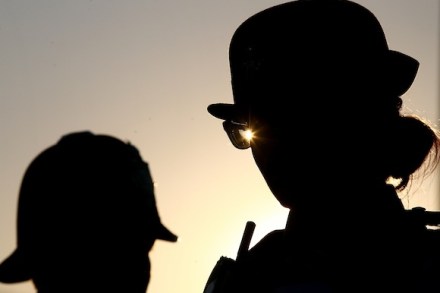
I’m severely disabled, coffee-coloured, a migrant, a refugee and a woman. I was born to a Muslim family and I chose atheism as soon as I could think. To put it simply, I don't need much convincing that for minority grievances to be ameliorated, meritocracy has to exist. Positions of power must be open to individuals from all backgrounds. Many people agree. But it's disheartening that some activists appear to reject this way of thinking. More than 430 attacks against black and ethnic minority police officers occurred between June and September last year. This number represents an almost threefold increase on the previous four months. The thuggery of far right protestors should not be underestimated, of course.

Memory – and the stuff of dreams

From our UK edition

Can you remember when you heard about 9/11? Chances are you’ll be flooded instantly with memories — not only where you were, but what you were doing, who you were with, what you could smell and see at the time as well as how you felt. How does that happen? In the first half of this fascinating book, Dr Veronica O’Keane explains the neurological pathways and processes involved in memory. We are constantly receiving stimuli from our environment via the five senses of sight, sound, smell, taste and touch. These sensations travel via cells called neurons which are electrically activated and release various transmitters into the spaces between them and other neurons, which are then taken up and cause that neuron in turn to become stimulated.

Looking for love: Ghosts, by Dolly Alderton

From our UK edition

Of all the successful modern female writers documenting their search for love, none has been as endearing as Dolly Alderton. Candace Bushnell’s alter ego Carrie Bradshaw in Sex and the City was too brash, perma-groomed and designer-clad. Liz Jones is vulnerable and self-effacingly funny, but her low self esteem and anorexia ring my ‘needs therapy’ alarm, and she too seems bizarrely materialistic. Alderton, though, is the kind of woman every woman wants as a friend. Not only was her first book, the memoir Everything I Know About Love, unfiltered in its honesty about heartache, it was also a warm paean to friendship, with its eternal goldmine of emotional intelligence, conversations about everything, unconditional love and astute advice on tap.

There’s no end to the wonders of the human body, says Bill Bryson

From our UK edition

Bill Bryson has come a long way from being the funniest, most irreverent travel writer around. He’s still as amiable, avuncular and amusing as ever, but his subject matter has broadened over the decades to cover nearly everything, from science to Shakespeare. His modus operandi, however, has not changed. He absorbs reams of facts, the most interesting of which he presents liberally sprinkled with mischief, wit and lateral thinking. On seeing this book’s title, I prepared myself for the arid science I ingested when I studied to be first a doctor, then a hospital physician and then a consultant anaesthetist. But I needn’t have worried. Bryson feeds the pith, pulp and bitter pips of a subject into his brain and produces a sweet, zingy quantity of juice.

The problem with the Church of England’s social media guidelines

From our UK edition

News that the Church of England has published social media guidelines promoting ‘truth, kindness, welcome, inspiration and togetherness’ sounds welcome. Surely we all want to live in a world which live and let lives, where kindness and tolerance are key, and everybody has the same human rights, regardless of gender, race, colour, sexuality, nationality, or religion? Well yes, but hold on. These values are only meaningful if everyone adheres to them.

Prince Charles’ irresponsible support for homeopathy

From our UK edition

You might have thought that many of the world’s scientists and doctors had come to an unequivocal decision on homeopathy: that it doesn’t work. There has been extensive research into homeopathy, and the unambiguous conclusion is that it has no more benefit than any other placebo. This is not to say that it’s harmful, unless it prevents the patient seeking conventional medical advice. It’s simply ineffective, except for the optimism it may engender. In 2017, Simon Stevens, the NHS England’s chief executive, said homeopathy was 'at best a placebo and a misuse of scarce NHS funds', and ruled that homeopathic ‘treatments’ should no longer be available on the NHS.

Illusions about delusions

From our UK edition

Schizophrenia is the psychiatric illness about which the most misconceptions abound. It’s not so much the ‘negative’ symptoms that cause misunderstanding, devastating as they are — social withdrawal, self-neglect, flattening of mood — but the auditory hallucinations and delusions, often of a paranoid nature, that can accompany it. Nathan Filer, a psychiatric nurse, wrote the best novel I’ve read about schizophrenia, the Costa-winning The Shock of the Fall. The Heartland, his non-fiction book on the subject, is easily as good. Perhaps it’s the foreign nature of their experiences that gives rise to the myth that schizophrenics are dangerous.

The danger of letting children transition gender too early

From our UK edition

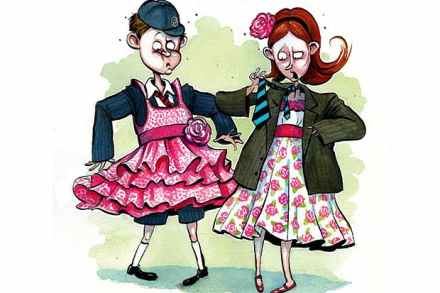
Where do you stand on the foster couple who sent their foster son to school in girls’ clothing, aged three, despite express requests from his teachers not to do so, and encouraged him to think of himself as a girl? The same couple had allowed their youngest biological son to do the same age seven, and had taken steps to legally change his – now her – name and passport. However, the child later told a member of staff at school that she did ‘not think life was worth living.’ A third foster child previously in the same couple’s care is also reported as exhibiting ‘gender identity issues.

Two men and no baby

From our UK edition

The sorrow of involuntary childlessness is profound. The award-winning novelist Patrick Flanery and his husband knew this pain. Their craving to love and nurture a child left them with an intractable emptiness. Flanery has no siblings; his parents lived abroad, and he had a difficult relationship with his father. So his desire was to create the close-knit family he never had. I sympathised deeply with the couple. Their tenderness and dedication to parenthood is obvious, but when they investigated the options open to them,  they found most doors if not actually locked, then spring-loaded shut.

Sorry Alexandra Shulman but Helena Christensen can wear what she wants

From our UK edition

Is 50-year-old model Helena Christensen too old to wear a bustier to a party? The ex-editor of British Vogue, Alexandra Shulman, thinks so. ‘There comes that point in every woman’s life,’ Shulman wrote with finger-wagging admonishment at the start of her column in the Mail on Sunday, ‘when, however reluctantly, you have to hand over the fleshpot-at-the-party baton to the next generation.’  Shulman then proceeded to castigate Christensen for turning up, ‘at the age of 50’, to her friend Gigi Hadid’s birthday party wearing ‘a tacky, black lace bustier.’ She continued: ‘surely you should call time on Ann Summers style, a look, incidentally, that no stylish young woman would dream of wearing.’ Miaow!

Tormented by guilt and desire

From our UK edition

James Lasdun is my favourite ‘should be famous’ writer, his work extraordinarily taut and compelling. His eye-boggling psychological thrillers are understated, yet perspicacious and hilarious. By ‘psychological thriller’ I don’t mean they contain newsworthy physical violence. Lasdun is too English for that (although he now lives in New York). I mean the kind of dilemmas that would have your average, settled individual writhing in empathetic angst: secrets and lies in a kaleidoscope; knuckles-in-mouth mortification. Unwittingly (because he started them before the furore), Lasdun has written two superb novellas for the #MeToo age, published together in Victory. Both explore themes of lust, transgression, self-delusion and male friendships.

Shades of Lord of the Flies

From our UK edition

Gina Perry is the eminent psychologist who blew apart Stanley Milgram’s shocking revelations from his 1961 research. Milgram had caused a sensation by alleging that 65 per cent of volunteers had been willing to inflict painful, dangerous electric shocks on others. He drew direct analogies between this ostensible blind obedience to commands to inflict pain/harm on others and that of Nazi functionaries. Perry found that Milgram had misrepresented his results: in fact, 60 per cent of his subjects had disobeyed instructions and refused to continue; while those who had, were pressed into doing so despite protests, sometimes being ordered 25 times to keep going, or told lies, such as that the recipient of the shocks was fine. Others had suspected throughout that the experiment was a hoax.