Leyla Sanai

Dr Leyla Sanai is a Persian-British writer and retired doctor who worked as a physician, intensivist, and consultant anaesthetist before developing severe scleroderma and antiphospholipid syndrome

Cutting up rough

From our UK edition

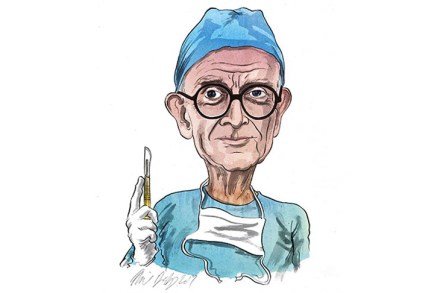
Powerful memoirs by such eloquent doctors as Oliver Sacks, Atul Gawande, Henry Marsh, Gabriel Weston and Paul Kalanithi have whipped the bed curtains open on a previously secretive profession. Steeped as medicine is in uncomfortable facts about debilitating illness, pain and the stress of treating intractable conditions, it was a subject ripe for exposure. Under the Knife and Anaesthesia admit to the fallibility of medicine and the responsibilities, flaws and complex emotions of its practitioners. Arnold van de Laar does not rely on personal experience. Instead, he explores the world of surgery through 28 clinical conditions; its historical scope makes for a fascinating book.
Stage fright | 31 August 2017

From our UK edition

Patrick McGrath is a master of novels about post-traumatic fragmentation and dissolution, set amid gothic gloom. His childhood years spent at Broadmoor, where his father was medical superintendent, have given him a solid grounding in psychiatric illness for these disquieting dramas. His ninth novel is set in London’s theatreland in 1947, and the grey, skeletal remains of the bombed East End. As usual with McGrath, the narrator is far from straightforward; in this case it is the ladies of the local theatre-world chorus, who are omniscient, knowing each character’s thoughts.

Doctor of humility

From our UK edition

Henry Marsh’s book Do No Harm (2014) was that rare thing — a neurosurgeon showing his fallibility in public and admitting to the great harm that good intentions can cause. It was a stunning, even revolutionary work, displacing doctors from their traditional ivory towers and showing them to be not only human and vulnerable to misjudgments, but also capable of self-admonishment and regret. At the time, I said it should be required reading for medical students. The follow-up, Admissions, continues the theme of self-examination. Marsh is an atheist, and in many ways his writing is like a secular confessional — hence the dual meaning of ‘admissions’.

The Feelgood factor

From our UK edition

When I wrote for the NME as a schoolgirl in the 1980s, it was recognised that there were musicians who deserve derision — those whose egos and clothes’ bills dwarfed their talent — and those who commanded respect. Wilko Johnson, one-time guitarist of Dr Feelgood, was of the latter. Whether pacing moodily on stage, hammering out choppy refrains on Feelgood classics such as ‘Roxette’, or touring and recording with subsequent bandmates, he was a dedicated grafter with attitude and ability in spades. More recently, Johnson has been in the news for very different reasons. In 2012, he was diagnosed as having inoperable terminal pancreatic cancer.

When two young Britons go camping in Yosemite their lives are changed for ever

From our UK edition

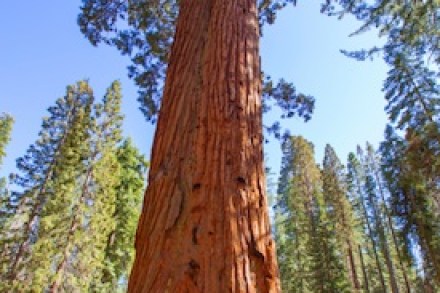
The title of A.D. Miller’s follow-up to his Man Booker shortlisted debut Snowdrops refers not to lovers but to two British men who befriend each other in their early twenties in 1993 when in the US. Among the sights they see on a tour of Yosemite is a pair of old trees with a conjoined trunk known as ‘The Faithful Couple’. Neil lost his mother as a child, and his father owns and runs a stationery store. He is the only one in his family to have been to university. Adam comes from a more entitled background and is full of confidence. When he speaks of his career ambitions in TV it is with certainty, not hope. Despite their differences, the two strike up a friendship.

A choice of first novels | 4 February 2012

From our UK edition

Mountains of the Moon is narrated by a woman just released after spending ten years in jail. The reason for her sentence and the details of her previous life are pieced together through disjointed fragments, forming a complex jigsaw. Lulu had a shocking childhood, with a violent stepfather and negligent mother. Her only loving relatives were her grandfather, who fuelled her imagination by conjuring up the Masai Mara in her dreary south-England surroundings, and her two half brothers, from whom she was eventually separated. This account, related in an idiosyncratic patois, with the matter-of-fact innocence of an abused child for whom abnormality is the norm, is quite horrifying.