Leyla Sanai

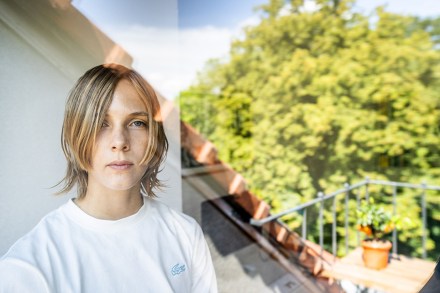
Dr Leyla Sanai is a Persian-British writer and retired doctor who worked as a physician, intensivist, and consultant anaesthetist before developing severe scleroderma and antiphospholipid syndrome

The downside to being rich: Long Island Compromise, by Taffy Brodesser-Akner, reviewed

From our UK edition

Fleishman is in Trouble was one of the funniest novels of 2020, and it catapulted Taffy Brodesser-Akner, a New York Times journalist, into the spotlight with a US TV series two years later. Long Island Compromise is a rollicking family saga written with the same sardonic wit. It is centred around a wealthy family living in a suburb of Long Island, who owe their fortune to the late patriarch, a Jewish European émigré who set up a successful factory making polystyrene foam moulds. There’s a backstory to this, which we learn later, but his indomitable widow and his son Carl’s wife Ruth rule the roost. At the beginning, Carl is kidnapped, then returned traumatised, and the implications of this violent act affect Ruth and their children Nathan, Beamer and Jenny.

Explaining the near-death experience

From our UK edition

Every few weeks, an attention seeker – er, truth seeker – raves to a media outlet about what they experienced when they were ‘clinically dead’. In last week’s Daily Mail, it was the turn of Julia Poole, a 61-year-old ‘spiritualist’ from Cornwall, who suffered an overdose at the age of 21. Poole, who describes her job as ‘spiritual and personal empowerment coach, psychic, channeller, energy healer, hypnotherapist, law of attraction teacher and author’, states that she was ‘clinically dead’ for three days and was ‘taken to Higher Realms’ by angels, who told her it was not yet her time to die.

Why rich kids are weird

From our UK edition

The son of the celebrity chef Marco Pierre White, imaginatively named Marco Pierre White Jr, has been convicted of theft and sentenced to 41 weeks in prison. The former heroin addict briefly became a reality star after a stint on Celebrity Big Brother, but has since reverted to bad behaviour, being imprisoned in 2018 for stealing from Tesco and racially abusing a security officer.  His conviction this time was for taking £1,760 worth of clothes from a shop in Bath, £72 from a Sports Direct in Bristol, and £250 from the till at a deli in Bath. He was caught because of an unedifying complication as he climbed out of the deli window: his trackie bottoms were pulled down and his hoodie pulled up, so he emerged almost naked, like a peeled sausage.

The diary of a dying man: Graham Caveney’s poignant cancer memoir

From our UK edition

Reading this third memoir by Graham Caveney, a knot in my chest tightened. It wasn’t only because it’s a cancer memoir; it was because the unfolding of history so often shows that abuse begets self-destructive behaviour. To parody Auden: I and the public knowWhat all healthcare staff learnThose to whom evil is doneDestroy themselves in turn. Caveney’s two previous memoirs, The Boy with the Perpetual Nervousness and Agoraphobia, outlined his working-class childhood in Accrington, Lancashire, and his winning of a place at a Catholic grammar school. But where the school succeeded in helping him achieve his aim of becoming a writer, it also screwed with his head, because he was not only taken to plays but also played with by a member of staff.

Do art attackers think they’re helping?

From our UK edition

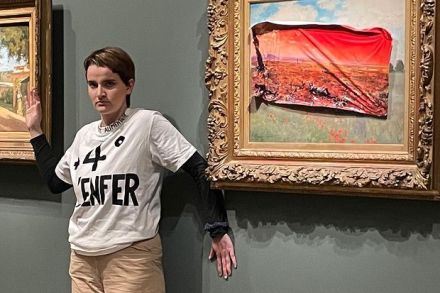
The latest painting to be attacked by an ovine climate protestor is Monet’s Poppies in Paris’s Musee D’Orsay. Thankfully, the initial reports that the painting was not protected by glass were inaccurate, and the alarming red rectangle – which at first glance looked as if the painting had been torn to the underlying canvas – was in fact a large red sticker. How is it helping climate change to throw good food at works of art? Video footage has emerged of a woman covering the surface of the painting then taking off her jacket to display her activist t-shirt. She then stood by the painting as if she was waiting for applause. It’s far from the first time that a famous work of art has been targeted. Leonardo da Vinci’s iconic Mona Lisa was smeared with cake.

A tragedy waiting to happen: Tiananmen Square, by Lai Wen, reviewed

From our UK edition

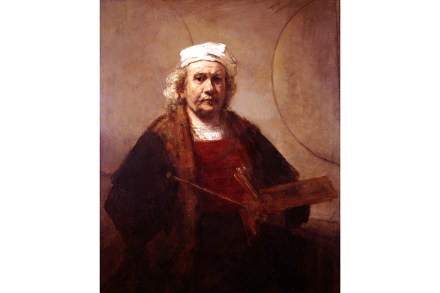
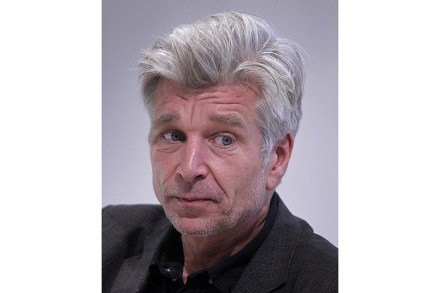
Lai Wen’s captivating book about growing up in China and witnessing the horrific massacre in Tiananmen Square reads like a memoir. The protagonist’s name is Lai, and her description of her parents is utterly convincing – the pretty, bitter housewife mother, jealous of the opportunities her daughter has; the father permanently cowed after being briefly interned by the government decades earlier. In a letter at the end, the author explains that her story is faction – embellished fiction. So how much is true? We will never know. I find this slightly irksome. I so admire writers like Henry Marsh, Karl Ove Knausgaard and Rachel Cusk who are prepared to irritate with their honesty.

I was the NME’s squarest journalist

From our UK edition

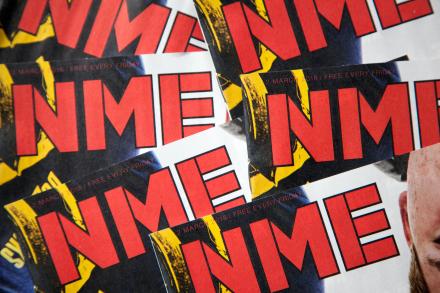
Before I went to medical school I had a hip alternative life. In the 1980s, as a 17 year-old schoolgirl, I wrote for the New Musical Express. My friends assume I had a great time with sex, drugs and rock ‘n’ roll, but the truth is I was such a cautious Carla that I didn’t touch the former two at all, and I scurried off home to be in bed immediately after each gig I reviewed. Each time they gave me a rolled up bank note and left me to snort in private, I blew Part of the reason was because I had strict parents. My dad was a benevolent patriarch who was older than many dads and had spent his youth as a cultured Persian immigrant in London, going to classical concerts and philosophy lectures.

Married At First Sight feels strangely traditional

From our UK edition

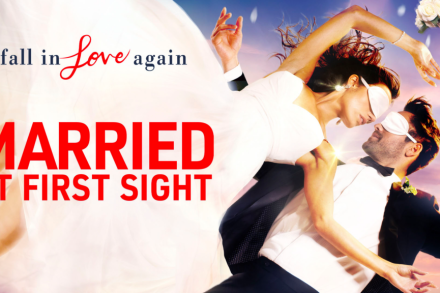
There should be a salacious German word for the blissful relief one feels at not being in another’s uncomfortable situation. Not pleasure at their misfortune, as in schadenfreude, just toe-stretching- and-dancing joy that you are safely under a blanket on the sofa while others are undergoing intense public scrutiny.  First impressions suggested earnest, caring individuals fed up of the transience of modern-day hook ups This is the feeling I have when watching Married At First Sight, the hit American TV programme that is now franchised to 24 other countries across the world.

A war reporter bravely faces death – but not from sniper fire

From our UK edition

When you are a foreign correspondent and have covered wars in dozens of countries, the last place you’d expect a threat to your life to come from is your own cells. Yet this was the predicament in which the New York Times reporter Rod Nordland found himself in July 2019. Despite close shaves in Lebanon, Iraq, Afghanistan, Central America and Darfur, he only really became aware of his mortality after collapsing with a seizure in India and discovering the existence of a ‘space occupying lesion’ (SOL) in his brain – a euphemism for a growth, benign or malignant. On transfer to a hospital in Manhattan, Nordland learned that his was a stage 4 glioblastoma multiforme, a primary brain cancer with a poor prognosis.

Escape into fantasy: My Heavenly Favourite, by Lucas Rijneveld, reviewed

From our UK edition

When Marieke Lucas Rijneveld won the International Booker Prize in 2020 for The Discomfort of Evening, a novel set in the Netherlands about the daughter of a dairy farmer growing up in a strict Christian household in the wake of the tragic death of her brother, the earthy, uncompromising voice was striking. The book was disturbing in its subject matter (the parents, blinded by grief, allow their remaining children to become semi-feral, experimenting with sex and death) and its visceral animal similes: bloody birth, brutal mating, culls for foot-and-mouth disease, slaughter. The ten-year-old girl protagonist had a lot in common with the author; and so it is again in My Heavenly Favourite, written under the name of Lucas Rijneveld.

The golden age of Dutch art never ceases to amaze

From our UK edition

This year’s Vermeer exhibition at the Rijksmuseum in Amsterdam and the Frans Hals retrospective at London’s National Gallery are testaments to the enduring appeal of the Dutch artists of the Golden Age. When the 80-year war between Spain and the Dutch Republic ended in 1648, it left the Dutch strong in military and economic terms. They founded colonies across the world. The affluence and stability provided the perfect medium for creativity. Painting flourished, and buying art was no longer the domain of the wealthiest. Benjamin Moser’s first book since winning the Pulitzer for Sontag explores this burgeoning world.

Rising star: The Wolves of Eternity, by Karl Ove Knausgaard, reviewed

From our UK edition

The Wolves of Eternity is the second volume in Karl Ove Knausgaard’s trilogy which began with The Morning Star, but is that book’s prequel. The Morning Star examined events in the lives of various narrators at the time of the appearance of a bright new celestial body, bringing uncharacteristic heat and luminosity to Norway. It read like a shiver-inducing drama penned by a combination of Phil Redmond, Irvine Welsh and Stephen King. Part of its genius lay in fleshing out the characters by expressing the ugly thoughts we all keep repressed: irritation with over-familiar strangers; frustration with lovers; the thunderbolt of lust; and boundaries and the ways they are breached. The Wolves of Eternity is written in the same immersive style, though the characters are different.

Science and surrogacy: The Seventh Son, by Sebastian Faulks, reviewed

From our UK edition

Sebastian Faulks’s new novel poses questions about the meaning of humanity and the significance of difference. Set in the near future – the action starts in 2030 – it centres around Talissa, a clever postgrad anthropologist from New York, who offers to become a surrogate mother to strangers in order to earn money to continue studying the recent past. It’s just a temporary use of her womb, she argues. But, as she soon finds out, even if everything had gone to plan, body parts can’t often be loaned without emotional attachments. And things don’t go to plan, because Lukas Parn, the billionaire owner of the foundation that carries out the embryo transfer, has ulterior motives. Faulks ingeniously conjures up a world only slightly different to ours.

The danger of making too many friends

From our UK edition

Elizabeth Day has found her niche as an astute, approachable social anthropologist, observing emotions and behaviour we are reluctant to discuss – such as failure – and draining them of their stigma. Her new book tackles the subject of friendship, which she points out has been far less analysed than romantic relationships. Her honesty and her ability to listen make her an endearing narrator and charming interviewer. She examines why friendship has always been so important to her. Admirers of her previous book, How to Fail, will recall that her childhood involved a stint at a Belfast boarding school where she was bullied, an experience she touches on again here.

A shocking account of madness – and how it is treated in the US

From our UK edition

The Best Minds is a coruscating indictment of psychiatric services for psychotic patients in the US. It is also a moving and shocking account of the trajectory of Jonathan Rosen’s childhood best friend, Michael Laudor, struck in his youth by schizophrenia, and whose starry ascent through Yale law school to spokesman for stigmatised patients with psychosis plummeted dramatically when he relapsed, with catastrophic results. Schizophrenia is terrifying for the sufferer, characterised as it is by a distortion of reality brought about through paranoid delusions and auditory hallucinations. Those who wrinkle their noses and sneer ‘crazy’ need only gently press their closed eyelids to experience transient visual hallucinations of flashing lights.

Blake Morrison mourns the sister he lost to alcoholism

From our UK edition

Blake Morrison’s previous memoirsAnd When Did You Last See Your Father? (1993) and Things My Mother Never Told Me (2002) examined his parents with the clear-eyed appraisal that only adulthood brings. In the first, he evoked the vigour of his father, Arthur: his sense of fun when rule-breaking for thrills, and the selfish entitlement which allowed him to follow his whims, oblivious of the feelings of others. The contrast between his energy when fit and his frailty when ill were stark – a dichotomy many face when a beloved parent ages and dies. The second memoir examined the life of his mother, Kim, who, like Arthur, was a doctor, but had a very different background. Both books mused on the bittersweet memories of lost times.

A history of pioneering women doctors descends into Mills & Boon trivia

From our UK edition

The first three women doctors on the medical register in the UK had not only to study harder than their male counterparts but also to contort themselves in almost impossible ways, jumping from city to city and country to country in order to gain the scientific knowledge and clinical skills that would allow them to progress. In fact, even after reaching standards where men could easily have graduated, they had to plead to be allowed to sit the exams. Of course, misogyny was not the only bigotry in the 19th century. To black slave-workers, these wealthy white women, who were encouraged to lead pampered lives rather than work in such a ‘male’ field, were lucky.

A dying doctor’s last words

From our UK edition

Facing up to the prospect of one’s own mortality is always jarring; but when you’ve spent your life trying, and sometimes failing, to save others from a terrible death, it carries the knowledge that the journey may be more traumatic than the fear or grief of the end. These are the concerns with which Henry Marsh, the eminent neurosurgeon and author, grapples after his own diagnosis of advanced prostate cancer more than a year ago. He believes this book will be his last and, unsurprisingly, he seems to be cramming everything into it. It makes for a discursive read and jumps about chronologically and topically, as if he wants to include all his important final thoughts.

Women behaving badly: Ghost Lover, by Lisa Taddeo, reviewed

From our UK edition

Lisa Taddeo’s Three Women established her as a narrator of female desire in all its complexity. Her study of three real women and their sexual choices became a bestseller on both sides of the Atlantic, showing how women sometimes collude in relationships that are destructive, or make decisions they later regret. Power imbalance, coercion and past trauma as well as lust were distilled in the essence of their desires. Of course, sexual relationships can be complex for both sexes, but Taddeo’s project repudiated the easy 1990s stereotypes of ‘ladettes’ as being replicas of sex-without-ties lads. Animal, her fiction follow-up, depicted the raw anger and vengeance that loss and frustration may beget.

Zimbabwe’s politics satirised: Glory, by NoViolet Bulawayo, reviewed

From our UK edition

NoViolet Bulawayo’s first novel We Need New Names, shortlisted for the Booker in 2013, was a charming, tender gem, suffused with the guileless hilarity of children and the shock of tragedy in Zimbabwe, the author’s birthplace. Her follow-up, Glory, features animals as characters. I was initially mystified. Who would try to match Orwell’s allegorical masterpiece Animal Farm? Art Spiegelman succeeded in Maus, his graphic novel about the Holocaust, but each species represented one race, so the symbolism packed a punch – German cats hunting Jewish mice. Here the species are often random, apart from the savage dog police. But the use of animals at least lends humour to a heavy subject: the betrayal of the people of Zimbabwe.