Lawrence Goldman

Professor Lawrence Goldman is Executive Editor of History Reclaimed. He was General Editor of the Oxford Dictionary of National Biography 2004-14

The Reith lectures are a new low in BBC history

From our UK edition

This year’s Reith lecturer is the historian and activist Rutger Bregman. Given the way things work in the BBC, it comes as no surprise that a Dutchman, however charismatic, has been chosen to lecture us on modern British history. There are dozens of extremely well-qualified historians in British universities who could have spoken rather more insightfully. Given the way things work in the BBC, it comes as no surprise that a Dutchman has been chosen to lecture us on modern British history It isn't surprising either that in Bregman's first lecture on 'Moral Revolution' he should have declared himself to be a social democrat. The BBC simply cannot understand real diversity of the mind and they ‘turn left’ reflexively.

David Olusoga’s Empire exposes the BBC’s history problem

From our UK edition

While the BBC's mis-editing of Donald Trump's words has dominated the headlines, less attention has been paid to another example of the corporation's bias: its coverage of history. The BBC's latest blockbuster history series, Empire, fronted by David Olusoga, shows the extent of the problem. This slanted and biased version of history is nothing new No one watching these three programmes, which were broadcast this month, could be in any doubt that a negative view of British history pervades everything. The series is not a balanced history of the empire, but rather a collection of some of its most controversial and violent episodes.

What Baroness Debbonaire gets wrong about Clive of India

From our UK edition

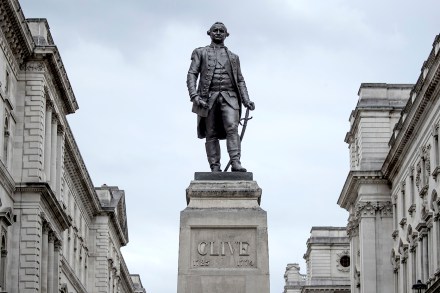
Baroness Debbonaire, addressing the Edinburgh International Book Festival, has called for the removal of the statue of Clive of India, Baron Clive of Plassey, the site of one of his most famous military victories, from its prominent place adjoining the Foreign Office, at the end of King Charles Street, looking out across St. James’s Park from what are known as Clive Steps. Clive was a founder of British imperial power and control over India. Twice governor in the mid-18th century, he was a brilliant military commander, a determined administrator and an opponent of corruption, though he himself became rich on the profits of empire. He fought warlords by becoming one of them himself.

Gladstone, the BBC and the contempt for national history

From our UK edition

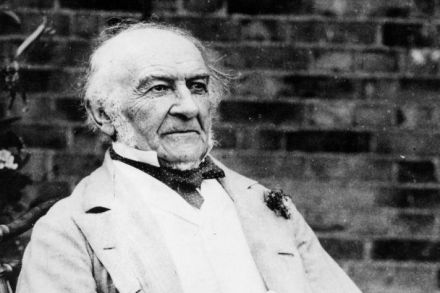
A BBC news story this week about members of the Gladstone family visiting Guyana to apologise for their ancestral links to slavery in the Caribbean has all the historical errors and elisions we have become used to in reports and investigations on the subject of slavery. The authors do not appear to know the difference between parliament’s abolition of the slave trade in 1807 and its emancipation of slaves in the British empire in 1833, and they have William Gladstone giving his first Commons speech in 1831 when he was still an undergraduate in Oxford.   Gladstone is collateral damage, guilty by association, and held responsible for decisions and investments he did not make They join the National Portrait Gallery in their confusions.

The trouble with Tate Britain

From our UK edition

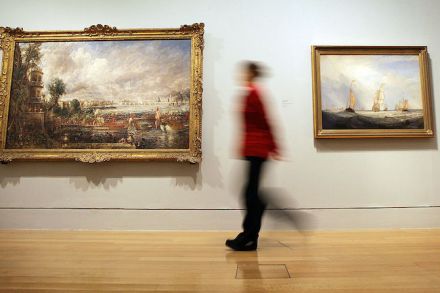
Tate Britain has had a facelift. The gallery describes its 'rehang', unveiled in May, as a chance for visitors to 'discover over 800 works by over 350 artists spanning six centuries'. Unfortunately, Tate Britain's painful historical sensitivity – and its selective amnesia – make it difficult to enjoy the artwork. The gallery's Room 6, ‘Revolution and Reform 1776-1833’, provides one of the most egregious examples. A frieze around the walls is accompanied by a chronology of the period that ends: ‘1833. Slavery is abolished in Britain’. I kept looking up, imagining my eyes were deceiving me. In 1833, there had been no slaves in Britain for years.

The problem with Cambridge University’s slavery report

From our UK edition

It's perfectly legitimate for Cambridge University to seek to understand its history, warts and all. But the University's final report of its ‘Legacies of Enslavement Advisory Group’, established in 2019 to investigate the university’s historic links with slavery, is short on facts and long on opinions. It also fails to consider Cambridge’s links with the noble cause of anti-slavery. It is hardly surprising that Cambridge should have been associated with slavery. The Atlantic slave trade and West Indian slavery were integral to the British empire between the late sixteenth and early nineteenth centuries. Yet the report tells us that no ‘Cambridge institutions directly owned any plantations that exploited enslaved people’.

Has Jesus College learned anything from its Rustat defeat?

From our UK edition

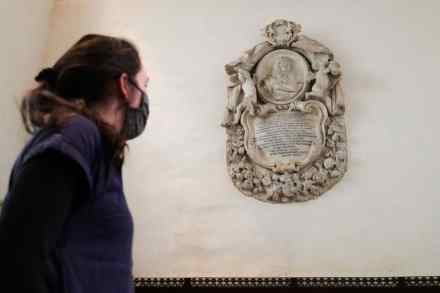
When Jesus College in the University of Cambridge set up a committee looking for ‘legacies of slavery’, they found what appeared to be the perfect culprit: Tobias Rustat. A cavalier and courtier, Rustat made benefactions to the university library and Jesus College. Important enough to merit an article in the 'Dictionary of National Biography', Rustat was not so well known that his cancellation would lead automatically to controversy – or so the powers that be thought. But history doesn’t allow for surgical strikes on the past. Now the plan to move Rustat's monument is over.