Laura Freeman

Laura Freeman

Nothing sings and shimmies like Alvin Ailey

From our UK edition

Hit them with your best shot? Or save the best till last? Almost 30 years after Alvin Ailey’s death in 1989, his dance company still ends every night with Revelations, an autobiography in ballet and gospel music.  First danced in 1960, and presented at Olympic opening ceremonies and presidential inaugurations, Revelations remains an electrifying piece. Ailey’s gift was to borrow elements of African, Asian and Native American dance and set them to a score of traditional spirituals and gospel rock. On the strength of this bill — the second of three programmes the troupe is performing at Sadler’s Wells — his successors have yet to make anything that sings and shimmies with anything like Ailey’s inventive energy. The first three acts are slack.
Whooshing seedlings and squabbling stems: Ivon Hitchens at Pallant House reviewed

From our UK edition

Set down the secateurs, silence the strimmers. Let it grow, let it grow, let it grow. Ivon Hitchens was a painter of hedgerow and undergrowth, bracken and bramble. Whoosh! go his seedlings, sprouting, bolting, demanding repotting. The first Hitchens you see on the wall outside this exhibition at Pallant House is his lithograph ‘Still Life’ (1938). A squabble of stems break bounds, vault the vase, bid for freedom. I’m a wildflower, get me out of here. ‘I love flowers for painting,’ Hitchens said. ‘Not a carefully arranged bunch such as people ought not to do — but doing a mixed bunch in a natural way.’ If his posies were ever bridal bouquets they have long since been thrown, trampled, sat on by an usher and shoved in an ice bucket to revive.

How woke is your home?

From our UK edition

Quick! Roll up the Persian carpet. Hide the willow-pattern service. Sweep the wok and chopsticks under the Berber rug. Mr and Mx Virtue-Signaller from number 12 are on their way over for tea. How woke is your house? If your impeccably enlightened neighbour ran a finger along the mantelpiece, would you pass the cultural-appropriation test? First it was yoga classes. Then fancy dress. Don’t go near a costume shop until you’ve consulted one of many online guides advising party-goers ‘how not to dress like an offensive idiot’. Tread carefully with turbans, kimonos, cheongsams, saris, bindis and Native American headdresses. Dare to wear a sombrero? On your own head be it.

Bright, and batty

From our UK edition

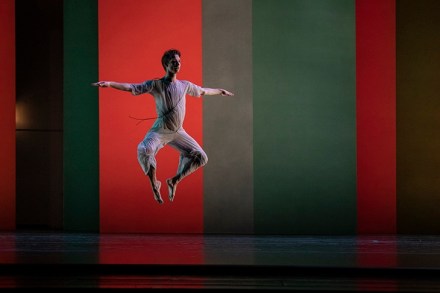
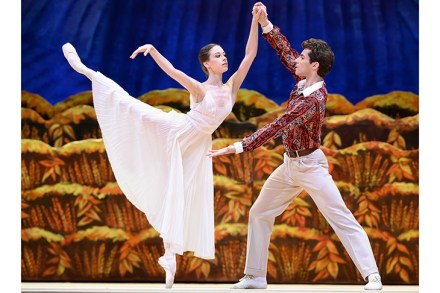
The Bright Stream is a ballet about a collective farm. Forget everything you know about collectivism — the failed harvests, the famines — this is Soviet agriculture without mud or hunger. The Bright Stream, which opened in Leningrad in 1935, was Dmitri Shostakovich’s attempt to write a ‘socialist realist’ ballet. Our heroine is Zina (Daria Khoklova), the Bright Stream Collective’s Morale Officer. The curtain rises on a scene of sunny, saturated bounty: hay stooks, horns of plenty, pumpkins as big as cartwheels. Tractors soar across the backcloth like three flying ducks. This is collectivism in white tights and Liberty print. The plot is batty.

Spartacus in spandex

From our UK edition

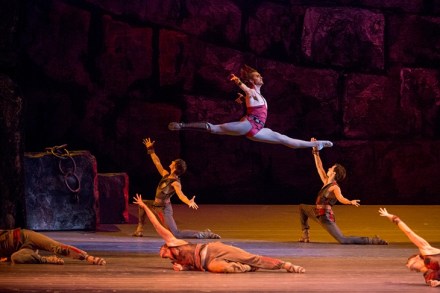
It’s togas-a-go-go as the Bolshoi bring Yuri Grigorovich’s 1956 ballet Spartacus to the Royal Opera House. Oh dear, I did giggle. This is Spartacus in spandex with gladiatorial G-strings and slave girls dressed for Thracian strip shows. On comes Crassus (Artemy Belyakov) in the Roman empire’s tiniest tunic with a legion of soldiers swinging their shields like Gucci manbags. But what dancing: disciplined, muscular, nakedly heroic. Very Soviet. Denis Rodkin is a mighty Spartacus, all vengeful savagery and outraged buttocks. There isn’t a dancer in the Royal Ballet to match his stamina, his power, his splits and leaps, his reckless stretching beyond possible endurance. True, there is more gurning than acting, but naturalism has never been a hallmark of Russian ballet.

Blessed be the fruit

From our UK edition

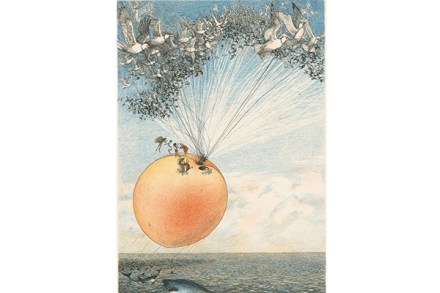
Bunnies were out. Beatrix Potter had the monopoly on rabbits, kittens, ducks and Mrs Tittlemouses. ‘I knew I had to bring in creatures of some kind,’ wrote Roald Dahl on his first thoughts towards a children’s book. ‘But I didn’t want to use all the old favourites that had been used so often before, like bunnies and squirrels and hedgehogs. I wanted new creatures that no one else had ever used.’ After making a long list of earwigs, pond skaters and Devil’s coach-horse beetles, Dahl cast a centipede, an earthworm, a silkworm, a glow-worm, a spider, a ladybird and an old-green-grasshopper. ‘It was fun,’ the author wrote, ‘to sit down and try to make a slimy old earthworm, for instance, into a rather loveable interesting character.

I never wanted it to end: Royal Ballet’s Triple Bill and Fonteyn celebration reviewed

From our UK edition

Margot Fonteyn: A Celebration Royal Opera House The Firebird / A Month in the Country / Symphony in C Royal Opera House The trouble with taking my mother to the ballet is that on the way home she will always say: 'Well, that was wonderful, darling.' A thoughtful pause. 'But of course I saw Nureyev and Fonteyn dance the parts and nothing will ever be the same.' And so on the Central Line after the Royal Ballet’s Margot Fonteyn: A Celebration, I waited for the sorrowful 'But...' It never came. 'That was wonderful,' she said. And it was.

Poetry in motion | 30 May 2019

From our UK edition

T.S. Eliot’s Four Quartets is full of music and movement. The players, such as they are, slip, slide, shake, tumble, wrestle, leap, kick, whirl, fold and kneel. There are lines like stage directions: ‘stillness’, ‘quick now’, ‘the dancers are all gone under the hill’. In her rendering of Four Quartets, the American choreographer Pam Tanowitz has denied reviewers the satisfaction of ‘Eliot in leotards’ jokes. Her dancers wear diaphanous ruched onesies. No Cats spandex here.

#MeToo Medusa

From our UK edition

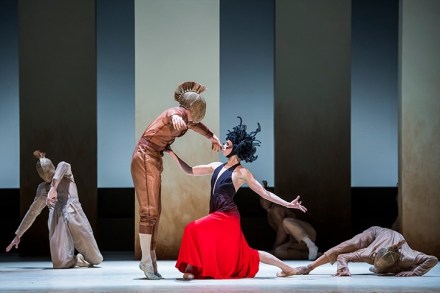
Medusa is the bad hair day from Hades. Sidi Larbi Cherkaoui’s retelling of the Greek myth is frizzy, tangled and splitting at the ends. The premise is promising. This Medusa story is a Perseus prequel: the girl who became a gorgon. The young Medusa (Natalia Osipova) is a priestess at the temple of Athena (Olivia Cowley). Her beauty is legend and the sea god Poseidon (Ryoichi Hirano) is keen to get his webs on her. Poseidon rapes Medusa and angers the virgin goddess Athena. But it is Medusa, not Poseidon, who is punished. Athena makes Medusa a monster. Then along comes Perseus (Matthew Ball), no hero he, to cut Medusa a savage short back and sides.

Snog a Tory

From our UK edition

Ew! Are you squeamish? Are you grossed out by meat, by fish, by eggs, by scales and suckers and shells and bones? We live in fastidious times. Now we pick, we prod, we send dietary requirements by return of post. ‘Super excited to see you guys! Btw I’m vegan, non-gluten, non-soy, no-nuts. Sorry to be a pain!’ Last year, Sainsbury’s launched chicken pieces in ‘no touch’ pouches for millennials who won’t handle raw meat unless it’s sans teeth, eyes, taste, everything. And at Somerville College, Oxford, students were served octopus terrine at a matriculation dinner, and a fresher complained that they had been ‘surprised’ by the dish.

Knight fever

From our UK edition

Emperor Maximilian I liked to say he invented the joust of the exploding shields. When a knight charged and his lance struck the opposing shield — bam! — the shield shattered and the shrapnel went up like fireworks. It’s almost impossible to turn the pages of Freydal. Medieval Games. The Book of Tournaments of Emperor Maximilian I and not imagine Batman-style captions. Clank! Thwack! Kapow! The knights and princes of the painted miniatures are all-awl, all-action iron men. Their horses are hooded to stop them bolting and every harness is stitched with bells. All the horse would have heard was the jangling, not the thunder of hooves or the roar of the tiltyard crowds.

Electrifying and strange

From our UK edition

‘Where was the Kahlo brow?’ asked my guest in the first interval of English National Ballet’s She Persisted, a triple bill celebrating female choreographers. She was right: Frida had been plucked. It was an odd decision for a production that does not otherwise shy from ugliness. Broken Wings, a ballet inspired by the life of Frida Kahlo by Belgian-Colombian choreographer Annabelle Lopez Ochoa, was first performed in 2016 and is revived here in a carnival of Tehuana skirts, antler bonnets and capering day-of-the-dead skeletons. The surrealist André Breton likened Kahlo’s art to ‘a ribbon around a bomb’ and that is Katja Khaniukova’s Kahlo: silken and explosive. We see her first as a teenager, all possibility, lifts and lightness.

Menace and magnificence

From our UK edition

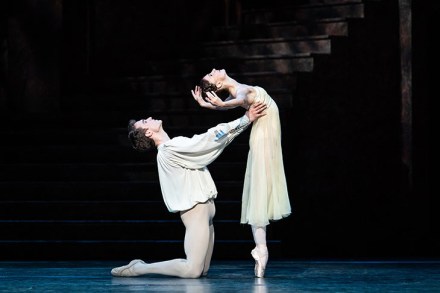
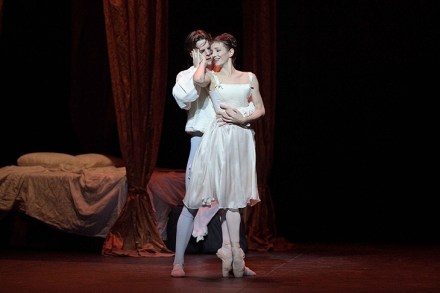
Two households, both alike in dignity. Capulets in red tights, Montagues in green. Kenneth MacMillan’s Romeo and Juliet opens in a piazza where the clash of swords makes a fifth section of the orchestra. Strings, woodwind, brass, percussion… and steel. If Shakespeare’s young bloods and blades once seemed remotely Renaissance, made romantic by distance, Verona’s knife-crime crisis is now horribly real and present. Romeo, Mercutio and Benvolio (Matthew Ball, Valentino Zucchetti and James Hay) make a convincing gang: pumped-up, freewheeling, anarchic. They goose the harlots, twit the nurse and goad each other in reckless acts of lads, lads, lads bravado. Their bragging, ragging gatecrashers’ dance is a tour de force.

Short circuit

From our UK edition

Choreographer Richard Alston is now 70 and his latest outing at Sadler’s Wells is a greatest hits medley. As with all clip shows, some of it is super, some soporific and some merely meh. We begin with Martin Lawrance’s Detour, first performed last year. The piece is a powerful hybrid of fluid dance and martial arts: kung fu meets pas de deux. The raking lamps by designer Zeynep Kepekli spotlight dancers in washed indigo and ochre tunics. The final image of a male dancer spinning his female partner like a storm-warning weather vane is striking. The trouble with minimalist soundscapes (very Tubular Bells) is that unless the dancers control both breathing and landings, it all gets a bit huffy, puffy, thud.

En avant

From our UK edition

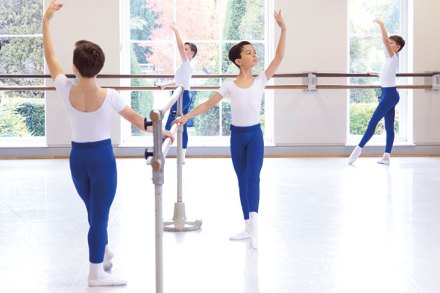
‘Nose over toes.’ ‘Index fingers in.’ ‘Hands at cheekbone width.’ Watching morning classes at the Royal Ballet School in Richmond Park is a revelation. If you’ve ever sat in the stalls at Covent Garden and wondered what it takes to be Giselle, Odette or the Sugar Plum Fairy, here is your answer: devotion, dedication, concentration and several hundred pairs of worn-through slippers. And if you’ve ever wondered why the dancers of the Royal Ballet look so at home among fairytale castles, kingdoms of sweets and enchanted woods… Well, they grew up with it. White Lodge, built as a royal hunting retreat for George II in 1730, would make an enchanting backcloth to a performance of Frederick Ashton’s Sylvia.

You’ve been trolled

From our UK edition

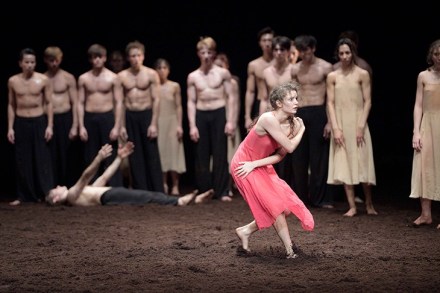
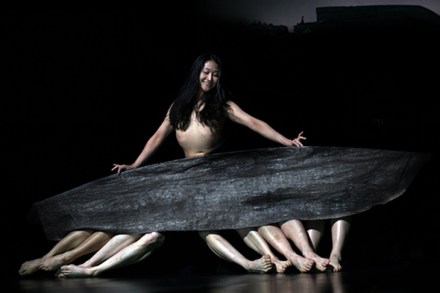
Please believe that I try to give every production my full attention, to do due diligence, to blink and miss nothing. But when, halfway through Tanztheater Wuppertal Pina Bausch’s Since She, one of the male dancers appeared on stage with cowbells attached to his willy, I’m afraid I spent a fair few minutes looking hard at my notebook. The cowbells are not the strangest thing in this night of the grotesque. Since She is both danse macabre and Grand Guignol. A woodchipper whirrs at the back of the stage, the set is a mountain of mattresses. One man sniffs a sausage, another turns a spit. A woman defecates into an omelette, another is dragged across stage with wine glasses balanced on the fan of her hair.

Dancing up a La Mancha storm

From our UK edition

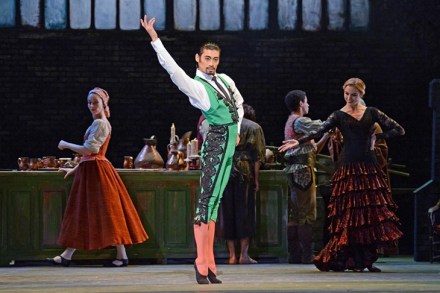
The trouble with Don Quixote is Don Quixote. Whenever the doddering, delusional Don is onstage, tilting at windmills, riding his straw-and-sawdust nag on wheels, jousting with bedposts, our spirits and sympathies suffer. Quixote’s quest only really works as an excuse for Kitri, Basilio, Espada the Matador and Mercedes the street minx to dance up a La Mancha storm. This they do, with bells on. In toreador waistcoat, tight taleguilla and pink stockings to match his cape, Ryoichi Hirano is the Mata-phwoar. The corps de ballet swoon and flutter. He is sexy, even caddish. I was a Hirano doubter, but this was a magnificent performance: athletic power matched by classical control. A bullfighter one moment, ballerino the next. Laura Morera as his firebrand lover Mercedes is underpowered.

Clucking hell

From our UK edition

‘Last fling before the ring.’ ‘Buy me a shot, I’m tying the knot.’ ‘Keep calm and bridesmaid on.’ If you find yourself on a train to Brighton, Paris or Amsterdam with a group of women in T-shirts bearing the above slogans, change carriages. You are about to witness Jen’s hen in full prosecco-and-Pringles feather. On the lash, off the leash, bonded together in squealing sisterhood for one night only. If only it were for one night. The hyper-inflation that has seen weddings go from church and breakfast to three-day wonders now extends to the hen. Away we go to Lisbon, Barcelona, Marbella on a dawn flight in matching hoodies and hangovers from the pre-hen the night before.

The Glums in tights

From our UK edition

If you like the BBC’s Les Misérables, you’ll love English National Ballet’s Manon. Manon, in Kenneth MacMillan’s telling, is The Glums in tights. Alina Cojocaru dances Manon, an 18th-century courtesan in Paris, pimped by her brother Lescaut (Jeffrey Cirio). She falls for Des Grieux (Joseph Caley), young, handsome, penniless, love’s young dream, and is later ensnared by the older, richer, crueller Monsieur GM. Cojocaru is sublime. ‘That’s her!’ whispered my neighbour in the stalls as Manon fluttered through the crowd at the inn. With Des Grieux, Cojocaru is sweet and expressive, tender and teasing. As Monsieur’s mistress, in diamonds and furs, she dances with quiet power and cold command.

Pale imitations

From our UK edition

You can tell something about national character from the way a country clears its cupboards. In the States they have the yard sale. The American dream remains a detached house with a front and a back yard, all enclosed by a white picket fence. Daughter selling lemonade, son playing catch, consumer goods spread on the lawn. The French have the vide grenier — the emptying of the attic. The Frenchman in his romantic soul still imagines he is a poet or a painter starving for love and art in a bare, unfurnished room. The English have the car-boot sale. We take a picnic, waterproofs, stop at a stone circle on the way, and when we are ready to pack up and leave, we leave. Back in Blighty after a year in France, I have been finding homes for my attic trufflings.