Laura Freeman

Laura Freeman

Glorious: Bernardo Bellotto at the National Gallery reviewed

From our UK edition

What is the National Gallery playing at? Why, in this summer of stop-start tropical storms, is the NG making visitors — visitors with prebooked, time-slotted tickets, mind — queue outside and in the rain? Why are its cloakrooms still closed and umbrellas forbidden? My husband had to stash his behind a balustrade on Orange Street. Why, with a 1:45 ticket, were we not through the doors until 2:05? Why make your harassed marshals, doing the best they can, shout ticket times and field questions from furious picture-fanciers? Lousy sort of freedom this. The V&A, by the way, is just as bad.

Rich and strange: Eileen Agar at Whitechapel Gallery reviewed

From our UK edition

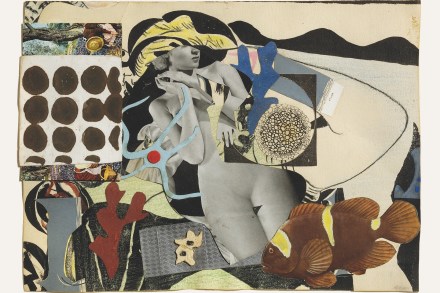
Heads turn, strangers gawp, matrons tut or look in envy. A man doffs his bowler hat knowing when he is outdone. The model walking imperturbably along a London street is Eileen Agar, her headwear the ‘Ceremonial Hat for Eating Bouillabaisse’, encrusted with crustaceans, spangled with starfish. If the Little Mermaid,in her leggy period, had been invited to Ascot, she might have worn something like this. A British Pathé newsreel of Agar wearing the same hat plays on a loop in the Eileen Agar: Angel of Anarchy exhibition at the Whitechapel Gallery. (You can also see it on YouTube.) About 50 seconds in you catch her trying not to smile. ‘Life’s meaning is lost without the spirit of play,’ Agar wrote in one of her notebooks.

The art of politics: what ministers hang on their walls

From our UK edition

On the walls of the Chancellor’s office hangs a print of Eric Ravilious’s lithograph ‘Working Controls while Submerged’ (1941). Two engineers in blue overalls heave the levers of a submarine. A third slumps asleep on a bench. An image, perhaps, of the ship of state, several hundred feet underwater, but by no means sunk yet. We might picture Rishi Sunak in the Treasury control room, changing the gears, working the pumps, keeping the country bumping along even at the bottom of the economic ocean. Or perhaps Sunak looks at his four framed screen-prints by the artist Justine Smith — ‘Pound’, ‘Euro’, ‘Dollar’, ‘Yen’ — and thinks: if only it were so easy just to print money.

Broken Trust: the crisis at the heart of the National Trust

From our UK edition

33 min listen

On this week’s podcast, we start with Charles Moore’s cover story on the failings of the National Trust. Why is the Trust getting involved in culture wars, and can it be fixed? Lara speaks to Charles, a Spectator columnist and former editor of the magazine, and Simon Jenkins, who was chair of the Trust between 2008 and 2014. Simon says that it’s ‘very odd’ for the organisation to become embroiled in controversy over Britain’s colonial past and contested history. ‘The National Trust’s relationship with the British Empire, let alone with slavery, is pretty tenuous. I don’t take this accusation against the Trust terribly seriously. This is just currently what I regard as a sort of cult’, he adds.

What does your wedding reading say about you?

From our UK edition

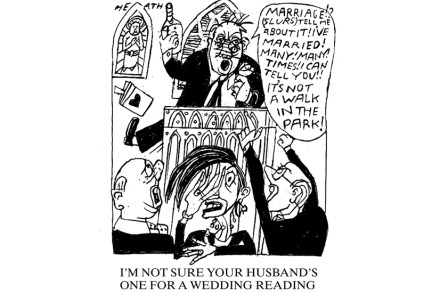
Arts journalism, like crime, doesn’t pay. So I’ve been thinking of getting a side hustle. ‘You know about books and stuff,’ say friends who are getting married. ‘What should we have for our readings?’ If I can advise friends, why not strangers? By the laws of wedding economics — pick a number and add some noughts — I could make a marital mint. We’d start with a couple’s questionnaire. No good my offering Rainer Maria Rilke if they’re more of a Purple Ronnie pair. Then a consultation over Zoom, before proposing something old, something new, something sonnet, something haiku. It is, tentatively, wedding season again. Boris and Carrie kicked us off last weekend. I wonder what they went for?

The China model: why is the West imitating Beijing?

From our UK edition

26 min listen

In this week’s podcast, we talk to the author of our cover story, eminent author, historian and broadcaster Niall Ferguson, who advances the theory that the West and China are in the throes of a new cold war which the Unites States is on course to lose, should the Biden administration continue to following Beijing’s lead on apparently everything from lockdown to digital currencies. Joining the debate is Dr Leslie Vinjamuri, from Chatham House. (01:05) ‘All of the features of Cold War I are here today which is why I have been speaking for a couple of years about Cold War II’ - Niall Ferguson. Next up, Laura Freeman writes in the magazine this week about the fake facades she has been increasingly noticing while out and about in London.

Bricks and pieces: the blight of London’s fake facades

From our UK edition

‘I found Rome a city of bricks and left it a city of marble.’ So Augustus is supposed to have said. What would an emperor of London say today? ‘I found the capital a city of bricks and left her a city of rubble’? London bricks are falling down. Across the capital, brick facades are coming off in chunks. Like the Cadbury chocolate Flake, this is the crumbliest, flakiest brickwork. I was all for the new brick city. I’m a brickwork bore. Away with glass, away with steel! Build back better, build back brick. When I saw brick buildings going up in new developments I cheered. I will bang on to anyone who will listen (most don’t) about fitness of materials, our vernacular heritage and the handsome nobility of London stock brick.

The bizarre art of Scottie Wilson deserves to be better known

From our UK edition

On eBay I have an alert set for ‘Scottie Wilson’. Nine times out of ten, it’s a diamanté Scottie dog from the jewellers Butler & Wilson. Once in a while, it’s a gem. Scottie Wilson didn’t think much of journalists. Art critics were ‘just jugglers — dodgers’. The sort of people who went to art shows — his or anybody else’s — could be counted on to go about ‘blabbing a lot of stupid muck. A lot of blah blah. They get paid for it too!’ Which makes it tricky to write about Scottie (always Scottie, never Wilson). You just know he’d light a cigarette and scowl. I came late to Scottie.

Why should art have ever been considered a male preserve?

From our UK edition

‘I’m a lady,’ insists the improbable damozel in David Walliams’s Little Britain sketch. I’m a lady, I kept thinking, reading these two books. More: I’m a lady art historian. Oughtn’t I to like books by other lady art historians about lady artists and ladies in art. Why don’t I? Why so out of sync with the sisterhood? Start with the positive. Jennifer Higgie’s The Mirror and the Palette follows an interesting, original line: ‘If she had access to a mirror, a palette, an easel and paint, a woman could endlessly reflect on her face and, by extension, her place in the world.

Carlo Rovelli, David Abulafia and Laura Freeman

From our UK edition

26 min listen

On this episode, writer and physicist Carlo Rovelli, ponder time and space in a world were the meaning of both has shifted. (01:00) Then, David Abulafia talks about the need for conservatives at universities. (07:29) Finally, Laura Freeman gets us ready for easter with the stories and the art depicting St Veronica.

The first-century saint who went viral

From our UK edition

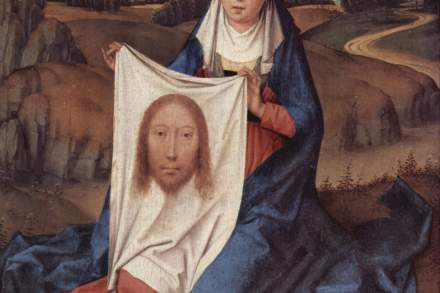
Earlier this year, Saint Veronica went viral. A tweet observing that every painting of the saint made her look like a merchandise seller at the Crucifixion was liked more than 35,000 times and retweeted more than 6,700 times. Not bad for a first-century saint. I disagree slightly. Veronica doesn’t strike me so much as a proto T-shirt tout, more as an early Christian super-fan. ‘I touched the hem of his garment.’ ‘Yeah? Well, I literally mopped the sweat from his brow.’ The Sudarium of Saint Veronica is one of art history’s more peculiar subjects. While some saints and their attributes are easy to confuse (Tau? Sword? Saw? Tongs?

The tech supremacy: Silicon Valley can no longer conceal its power

From our UK edition

36 min listen

Joe Biden won the US election, but is Big Tech really in power? (00:45) Churches are allowed to open during lockdown, but should they? (13:20) And can comfort eating and cosy socks replace human connections? (25:50)With historian Niall Ferguson; New York Times editorial board member Greg Bensinger; Father Jonathan Beswick; The Very Reverend Peter Howell-Jones; journalist Laura Freeman and psychology professor Dr Shira Gabriel.Presented by Lara Prendergast.Produced by Max Jeffery, Sam Russell and Matt Taylor.

The stifling cult of self-care

From our UK edition

Baby, it’s cold outside. It’s dark. It’s January. It’s Lockdown III. There’s only one thing for it: stay home, snuggle up, save lives. Cocoon yourself in cashmere, treat yourself to silk pyjamas, invest in a lambswool throw. Lay the fire, warm the cocoa, watch Love Actually for the 30th time. Practise self-care. Be sure to put you first. You’ve heard of safe spaces and The Coddling of the American Mind. Well, this is the safe space as interiors trend, coddling as lifestyle choice. Call it the blanket cult.

Paint in the bloodstream: The Death of Francis Bacon, by Max Porter, reviewed

From our UK edition

Francis Bacon once told the art critic Richard Cork: ‘I certainly hope I’ll go on till I drop dead.’ Max Porter’s The Death of Francis Bacon is a book about painting to the end. It is about art, rags and the restless artist’s eye. Porter, the author of Grief Is the Thing With Feathers and Lanny, has called it ‘my attempt to write as painting, not about it’. In this he brilliantly succeeds. The writing is matted and clotted and thickly impastoed. Each page has the ridge and texture of paint; the paper is like scabby canvas, the words are like drying oil. There is a sticky, tacky quality, as if the author has only just stopped and stood back to look at his work. The book feels unfinished and that seems right.

Every page of this astonishingly beautiful ode to the citrus is a treat

From our UK edition

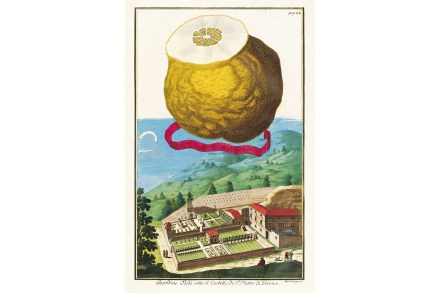
There’s an episode of Yes Minister called ‘Equal Opportunities’. Minister Jim Hacker is under pressure to recruit more women to the civil service. The hunt is on for female mandarins. ‘Ah,’ says principal private secretary Bernard. ‘Sort of… satsumas?’ At this time of year, I can’t help thinking of Bernard as I hover in the Co-op over nets of tangerines, mandarins, clementines, satsumas and ‘easy peelers’, whatever they are. ’Tis the season for citrus. For oranges at the bottom of stockings, for Buck’s Fizz on Christmas morning, for smoked salmon blinis with slices of lemon, for Milanese panettone with candied parings of peel, and for J.C.

Is this the end for Trumpism?

From our UK edition

28 min listen

What are the latest developments in the US presidential election? (01:15) - Lara is joined by the Spectator's economics correspondent Kate Andrews and the Spectator US's editor Freddy Gray, who is currently in Pennsylvania.What is it like to care for a disabled child during a time of lockdown? (09:19) - The journalist Sam Carlisle discusses the lack of support for her daughter Elvi with the Education Select Committee Chairman Robert Halfon. And finally, should churches keep their doors open throughout the pandemic? (20:42) - Journalist Laura Freeman thinks so, and considers the issue with Reverend Steve Morris from St Cuthbert's Church in North Wembley.Presented by Lara Prendergast.

Will our churches ever reopen?

From our UK edition

There used to be a joke, repeated by English tourists in deserted piazzas, that the Italian for church (chiesa) and for closed (chiusa) were almost the same. Whatever the orari on the door, you were always several hours out. And so you would consult your guidebook, admire in miniature the Ghirlandaio, the Lippi, the really very special fresco — and go for a consoling ice cream. The joke was told with the smug Anglo-Saxon certainty that our churches were open to all-comers from before breakfast until after vespers. Not so now. And not during the months we weren’t in lockdown — for all the bishops are protesting about the new one. But even before the latest lockdown, it was hard to find an open church.

Let men have their boys’ clubs

From our UK edition

Taken to the Garrick Club one evening, I was surprised when a mouse ran across the carpet. I squeaked and pulled my legs up. Not a murmur from the other armchairs. My host leaned over. ‘No one minds the mice,’ he explained. ‘It’s the women they don’t want.’ It made me laugh then and it makes me laugh now. I thought fondly of this story when I read in the paper that Emily Bendell, founder of the lingerie brand Bluebella, had instructed lawyers to seek an injunction preventing the Garrick from ‘continuing to operate its discriminatory policy’ of excluding women would-be members. As it happens, I don’t mind being there on sufferance between the allotted hours and in the permitted rooms. Boys will be boys, gentlemen will be gentlemen.

Looking at Barnett Freedman makes me weep at the government’s dismal graphics

From our UK edition

Among the spoils of a lockdown clear-out was a box of my grandmother’s books: Woolf, Austen, Mitford and The Complete Nonsense of Edward Lear with a jacket by Barnett Freedman. You only need to see a corner of the cover — a stippled trompe-l’oeil scroll — to recognise the artist. Freedman, a Stepney Cockney born to Jewish-Russian parents in 1901, delighted in paper games. Maps unfurl, book leaves fly, cut-outs and cartouches abound. His designs are a miscellany of silhouettes, decoupage, concertinas, peek-a-boos, lift-the-flaps and grubby thumbprints. Edges are ragged, endpapers torn.

From blue to pink: Looking for Eliza, by Leaf Arbuthnot, reviewed

From our UK edition

On the way back from my daily dawn march in the park, I often pass my neighbour, a distinguished gentleman in his late eighties, taking the air on his doorstep. I stand behind the area railings and shout: ‘How are you?’ And he shouts back: ‘Bored!’ At least not lonely. His sixtysomething son is with him. But how solitary these lockdown weeks have been for the widow and the widower, the singleton and the bachelor. Leaf Arbuthnot, a freelance journalist, could not have picked an apter time to publish her first novel Looking for Eliza, a redemptive story about grief, isolation and why everybody needs good neighbours. Its 75-year-old heroine Ada is a poet of the Wendy Cope school.