Lara Prendergast

Lara Prendergast

Lara Prendergast is executive editor of The Spectator. She hosts two Spectator podcasts, The Edition and Table Talk, and edits The Spectator’s food and drink coverage.

History of Art shouldn’t just be a subject for posh girls

There’s a campaign running at the moment to rebrand History of Art and clear up some of the myths surrounding the subject. It’s seen as a posh subject, studied by posh girls, and with good reason too: A-level History of Art is offered at only 17 state secondary schools out of more than 3,000, plus a further 15 sixth–form colleges. By contrast, over 90 fee-paying schools offer the subject. I not only studied it at school, but went on to read it at university. And yes, the majority of the people I met while studying it were posh girls from privileged backgrounds. At university, the course was read by a number of foreign female students too, but their backgrounds were similar: privileged girls hailing from wealthy cities around Europe – Paris, Milan, Berlin.

Why shouldn’t people have a flutter on the Pistorius trial?

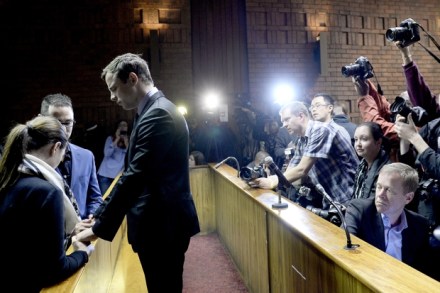
You can bet on all manner of scummy things on Paddy Power: when Fergie and Andrew will remarry; how Julian Assange will leave the Ecuadorian embassy (odds for him leaving in a diplomatic bag are currently 20/1). Now you can also bet on the outcome of the Pistorius trial. I’ve got a fiver on the Blade Runner getting off. I jest. But given the extensive coverage lavished on the trial so far, is it any wonder that people are starting to have a flutter. The scrutiny has been astonishing – with live television and radio broadcasts available for anyone who cares. South Africa even has a 24-hour TV channel devoted to coverage and commentary of it.

An arts degree isn’t a waste of time. But neither is an apprenticeship

A friend and I joke that there are two types of jobs: fun ones, and school fees ones. We (penurious journalists) say this to our friends (pecunious lawyers, bankers, consultants), and find immense comfort in it. Perhaps I should have sacked off my History of Art degree, and done something vocational – ergo ‘worthwhile’ as Katie Hopkins will no doubt argue at the Spectator’s debate on Tuesday, ‘An arts degree is a waste of time and money’. I’d be raking it in by now. But then I apply the intellectual faculties developed while studying my degree, and realise that this is, of course, poppycock. After all, most of my friends who are now raking it in as lawyers, bankers and consultants didn’t study these subjects at university.

Tutus, loo rolls and a roomful of balloons

A tip: go see Martin Creed’s retrospective at the Hayward in the company of a child. I didn’t, but I tagged on to a merry gaggle of five-year-olds being guided round by their mums. I watched as they pointed at the enormous rotating beam with a neon sign that reads ‘MOTHER’. ‘Jump up and touch it, Mummy,’ said one girl. As we carried on, we came across a machine playing rude raspberry sounds. Peals of laughter rang out. Nearby, a man was playing the piano slowly, semitone by semitone. The little girl in the tutu tapped him on the shoulder and asked if he was part of the show. He was, he said. Upstairs, the mothers heeded the warning suggesting those under 18 avoid the outdoor video installation.

The dream pill may not always be worth it

A couple of years ago, I was put on the third-generation contraceptive pill Yasmin. ‘It’s good for your skin and stabilises your weight,’ the doctor said. And it’s true. I’ve found it to be wonderful. Most of my friends are on similar types of third–gen pill, like Femodene and Marvelon; many swear by them. Out of the 3.5 million women in the UK using the combined contraceptive pill, 1 million are on third–gen versions. But things aren’t all rosy. In the past week, all British GPs have been ordered to warn anyone taking these popular pills that they are at risk of developing potentially fatal blood clots. The statistics make for an uneasy read.

Let’s ignore George Clooney’s vapid comments about the Elgin Marbles

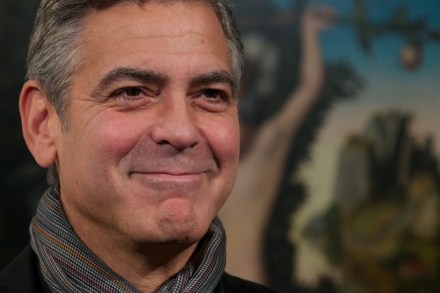
George Clooney may be many things, but an art historian he is not. Speaking at a press conference promoting his new film The Monuments Men, both he and co-star Bill Murray waded into the long-running row about the Elgin Marbles. The British Museum should hand them back, they both said. Murray began with a twee plea: ‘They’ve had a very nice stay here, certainly. London’s gotten crowded. There's plenty of room back there in Greece. England can take the lead on this kind of thing - letting art go back where it came from. The Greeks are nothing but generous. They would loan it back once in a while.' Clooney then waded in with a measly dose of cultural finesse: 

‘Even in England, the polling is in favour of returning the marbles to the Pantheon [sic].

Feminism must pay attention to the boys let down by our education system

The Universities and Colleges Admission Service (UCAS) has released its latest admission statistics, and they aren’t pretty. Of the 580,000 people that applied for places at British institutions, 333,700 of them were women. Only 246,300 men applied, a difference of 87,000. The figures show that the gender gap is particularly wide among poorer households. Perhaps this is some small victory for the women’s movement – after all, more women in tertiary education means more women with decent career prospects. But what about the men? If feminist ideology defends equal political, social and economic rights for women, then by that token, they should want equal political, social and economic rights for men. Equality can’t be lopsided.

Why doesn’t Kim Sears propose to Andy Murray?

Is there a more tragic tale being played out in the British press than that of heroic Andy Murray and his doting, wispy girlfriend Kim Sears. He caused a stir earlier this week by suggesting that he would marry the poor darling after this year’s Wimbledon, only to reveal that it was in fact a joke. Ha. This comes after a long string of will he/won't he headlines, and lots of breathy concern for poor, sweet Kim. There is a solution to Kim’s pain. It’s a bit zesty. It would certainly slog it to those media pundits who see her as a limp fish: She could ask him to marry her. A radical thought. But women shouldn’t be scared of popping the question. And neither should men be scared of accepting a proposal.

BuzzFeed does politics. Watch out, Westminster

It’s startling how few young people feel aligned to a particular newspaper. Gone is the idea of ‘taking a paper’. Today, we are far more likely to use Flipboard to browse stories from hundreds of different newswires, blogs and websites. We turn to Twitter to see what people are saying about the day’s news, before logging into Facebook to share commentary on it. We care about what our friends are reading, and what the people we respect are reading. We couldn’t care less about loyalty to a publication. The explanation for this lack of loyalty is two-fold. There is plenty to suggest that the young feel abandoned by traditional news sources.

Dasha Zhukova’s publicity stunt

We think we’re immune to whatever the art world can throw at us. A urinal here, an unmade bed there, a dead shark to the head. But occasionally we forget our indifference, and become very worked up. Hurrah! Proof we aren’t all suffering from a prolonged bout of cultural nonchalance. Dasha Zhukova – Roman Abramovich’s art-collecting girlfriend, who runs the contemporary gallery Garage in Moscow – has angered people by being photographed on what looks like a black woman leaning back, naked, and with a cushion balanced strategically on her voluptuous bosom. Of course, she isn’t actually sitting on a real black woman with a voluptuous bosom, but rather a polyvinyl sculpture by the Norwegian artist Bjarne Melgaard.

Ugliness and cynicism – all in the name of feminism

Another day, another ‘victory’ in the name of feminism. Jezebel, the feminist blog aimed at women's interests, last week offered $10,000 to anyone who could provide them with ‘unaltered’ images of Lena Dunham’s American Vogue cover story. Within two hours, they received six images from the Annie Leibovitz shoot, which they then published, complete with notations about what had been changed. Vogue, it would seem, had done the dirty: not only had they made Dunham’s chin a bit pointier, and her neck a bit thinner, they’d also removed the bags from under her eyes and nipped her waist a little. Jezebel has never before offered $10,000 for ‘unaltered’ images of Vogue cover stars.

Nigel Farage missed the point about ‘young, able women’

Nigel Farage isn’t afraid ‘to court controversy’ over the issue of women’s pay. Speaking on the issue of equal pay, he described how a pay gap exists because women who have children are ‘worth less’ to their employer than men. This may well be true; it’s a high-octane industry, and anyone who flakes out – man or woman - is clearly worth less than someone who slogs away for years. But then Farage goes onto say the following: ‘I do not believe there is any discrimination against women at all... And young, able women who are prepared to sacrifice the family life and stick to their career will do as well or better than men.

Women shouldn’t see fertility treatment as a lifestyle choice

Pasted between adverts for chewing gum and the latest Hollywood blockbuster, a series of adverts on the tube are currently flogging ‘fertility for the over-40s’. They come at a time when Professor Dame Sally Davies, Chief Medical Officer for England, has recently commented on Britain’s attitude to fertility. Davies said she was concerned about the ‘steady shift’ towards women choosing to postpone starting a family until their late 30s and early 40s, reducing their chance of conception, and increasing their medical risks. ‘We all assume we can have children later but actually we may not be able to,’ she said. Why do women continue to assume they can have children at whatever age they like?

Would you have been let in to an ’80s club? 

People will go to extraordinary lengths to get into a nightclub. Nowadays you must wear something tight, and look slinky. But, as Club to Catwalk: London Fashion in the 1980s at the V&A shows (until 16 February), a handful of Eighties doormen were into something a bit more deviant. The combination of a new London Fashion Week, a vibrant club scene and a coterie of ambitious designers emerging from the London art schools was potent. On Thursdays and Fridays, St Martin’s was deserted. Everybody was at home working on their costumes for the weekend. Over two floors, a mixture of clubbing outfits and catwalk designs are showcased. There is a mirror with the slogan ‘Would you let you in?’ stamped across it.

Labels and gimmicks will not stop a stroke

Do you think that a McDonald’s Fruitizz drink contributes to your five-a-day? I only ask, because a recent newspaper investigation has shown that food companies are using the famous government-backed health campaign to sell us processed products that may have fairly tenuous links to fruit and vegetables. The five-a-day campaign started off with good intentions: to lower the risk of strokes, diabetes, obesity and heart disease. The premise is simple – eat five portions of fruit and veg, for health and vitality. But something has gone seriously amiss, if your five-a-day could theoretically comprise a Robinson’s Fruit Shoot, some tinned peach slices, a can of Heinz spaghetti hoops, a Yo Yo roll and a Kiddylicious Strawberry Fruit Wriggle.

The Turner Prize lives the myth of constant renewal

Let’s imagine for a minute that the Turner Prize is cancelled next year. Would anyone care? A few members of the artistic elite and a handful of artists perhaps, but beyond that? I don’t think they would. There are plenty of other valuable art prizes out there, after all. And no one has really taken it seriously for a while now. Each year the same, tired debates come out about how ‘art can be whatever it wants to be’, which is true, but also happens to be the least controversial thing you can say. So it’s off. Cancelled. No more queues of people waiting to see a light switch turn on and off. No more unmade beds. And no more sullying Turner’s name for the sake of a prize which once awarded first spot to a man dressed as a bear. Would it matter?

Spectator archive: Political fanaticism was the real villain in JFK’s death

In the wake of President Kennedy's assassination, there was much speculation about whether it was politically motivated. As Robert Conquest points out, the real villain isn't political orientation, but political fanaticism. Here we reprint Conquest's notebook, from the week after Kennedy's death: November 29, 1963 (There is a) current tone of anti-Americanism, which implies they are a terrible lot because one of them killed the President. But quite a few millions didn't -- and indeed voted for him and supported his policies, or opposed them in a decent fashion. But an even more unpleasant and significant thing has been the way in which the killer's motives have been prejudged, over here as much as anywhere. to suit the political bias of the commentator. Before any actual.

Spectator archive: There is no sensible way to measure JFK as a President

'How many years,' asks Murray Kempton 'before anyone would want to read a book about the day Mr. Kennedy was shot?'.  As it transpired, not many. Here we reprint his Spectator column, entitled 'The Roman Way', written in the aftermath of Kennedy's death: Washington November 29, 1963 Mile television, trying as all of us have and 1 failing as all of use must, ceased to talk late on a Saturday night and gave itself over to photographs of various corners and columns of the White House while a voice recited 'Oh captain, my captain, the fearful trip is done', which is Walt Whitman on Abraham Lincoln and the grand style. But no time is like the time one endures oneself; one's own time is personal not historical, one's house and not a temple, the ship has not weathered every storm. Mr.

Spectator archive: JFK’s assassination was political nihilism in its purest form

The assassination of President Kennedy came just as the Christmas 1963 edition of the Spectator was going to press - we had to paste a new headline over a colourful, cover. Here we reprint our leader from this issue: The death of John F. Kennedy, President of the United States of America, inevitably produces banality in the leader- writers who have to comment upon it. The meaninglessness of the action is complemented by an inability to write meaning- fully about it. What we have seen in Dallas in the State of Texas is an expense of spirit in a waste of shame, political nihilism in its purest form with all the human suffering which nihilism entails.

‘Miley Cyrus vs Lily Allen’ is not a worthy battle for feminism

If ever there was reason to believe that feminism has lost its way, then it is found in the current debate about bottoms. It all began with twerking – the sexualized dance that no one had heard of until popstar Miley Cyrus squeezed into some PVC underwear, and twerked to Robin Thicke’s song Blurred Lines. The term entered the Oxford Dictionary of English in August. Bottoms are now all over the place. Last night was the annual Victoria’s Secret show - and, much to the delight of news desks, there were bottoms aplenty. It has become increasingly difficult to open a paper without seeing news about belfies (bum-selfies), bum implants and of course, twerking.