Lara Prendergast

Lara Prendergast

Lara Prendergast is executive editor of The Spectator. She hosts two Spectator podcasts, The Edition and Table Talk, and edits The Spectator’s food and drink coverage.

When Mondrian was off the grid

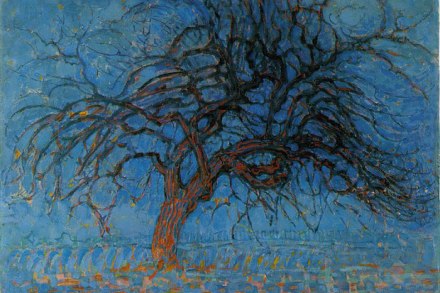
I find it easy to forget that Piet Mondrian is a Dutch artist. The linear, gridlocked works he is famed for seem to beat with the energy of the New York metropolis. But it was not always so. His path to abstraction was a precarious one that bumped into a number of styles drifting round during the early 20th century. And, in the beginning, his work was Dutch — pastoral, domestic, earthy. To see this progression, head to Margate (Margate!) where you will find an exhibition of Mondrian’s work at Turner Contemporary, which commemorates the 70th anniversary of his death. The title sounds generic — Mondrian and Colour (artist — tick! Artistic property — tick!) — but in many ways, it’s confusing.

Uber is for Londoners. Black cabs are for tourists

Black cab drivers are striking in London today because they are angry that Uber – a rival taxi service supported by Google – is undercutting their market. They will argue that Uber’s drivers are using a smartphone app to calculate fares, despite it being illegal for private vehicles to be fitted with taximeters. I couldn’t care less about the intricacies of this argument (the High Court can figure that one out). All I care about is getting home safely and it not costing too much. Uber offers me that. I’m wary of jumping into unlicensed minicabs. As those spooky tube adverts remind you, ‘If your minicab's not booked, it's just a stranger's car’. But with Uber, they are booked.

Uncovering a Royal treasure trove

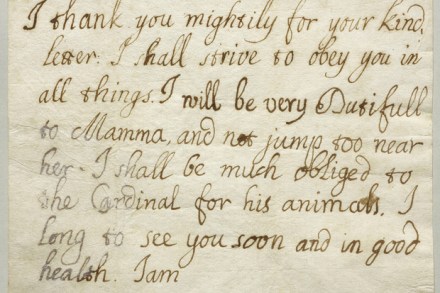
It’s rare for the public to be given access to the Royal Archives. They are housed in the forbidding Round Tower at Windsor Castle, and direct contact with them is normally reserved for erudite academics adept at buttering up the Keeper. With about two million documents relating to 700 years of the British monarchy, it is quite the trove. To celebrate the centenary of the creation of the archive, a few pieces have been put on display. Treasures from the Royal Archives (until 25 January 2015) is a bijou blend of the cheerful and the solemn. A young Princess Elizabeth captures her parents’ coronation in 1937, writing that she thought it ‘very, very wonderful’ and that she expected ‘the Abbey did too’.

In defence of Kirstie Allsopp

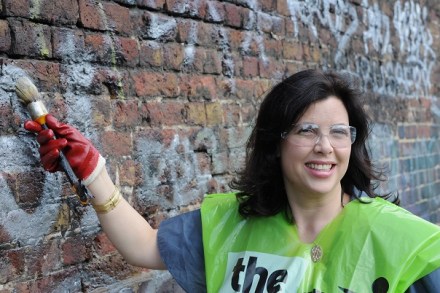
Kirstie Allsopp was yesterday quoted in the Telegraph saying that women should shun university in favour of buying a flat and having babies. If she had a daughter, she would give her the following advice: ‘Don't go to university. Start work straight after school, stay at home, save up your deposit – I'll help you, let's get you into a flat. And then we can find you a nice boyfriend and you can have a baby by the time you're 27.  ‘Women are being let down by the system. We should speak honestly and frankly about fertility and the fact it falls off a cliff when you're 35. We should talk openly about university and whether going when you're young, when we live so much longer, is really the way forward.

The ‘war on drugs’ has not been won

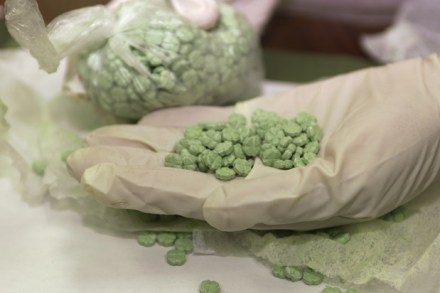
It's fashionable nowadays to claim that young people in Britain don't know how to have a good time. There's certainly plenty of evidence to suggest we’re avoiding the drugs our parents' generation got their kicks from. Fraser Nelson discussed this in The Spectator last November, arguing that Britain's youth were becoming more abstemious: 'Marijuana, LSD, speed, cocaine — surveys show that every drug you can think of is plunging in popularity amongst the young. The proportion of under-20s who say they have taken drugs in the past month has halved over the last decade. Only two drugs are on the up and both are legal: Ritalin and Modafinil, stimulants that can power students through ten-hour study sessions. 'It's a long way from Woodstock.

Dear Wonder Women; the doorman at Sushisamba was not sexist

Louisa Peacock of The Telegraph's Wonder Women desk has written of how a doorman who refused her entry to a London restaurant because she was not wearing smart enough clothes has lost his job. Peacock appears to think this a victory for the crusaders against #everydaysexism. I can't agree. Ignoring the fact that the man probably wouldn't have been sacked had Peacock not been a journalist, this piece sets a very worrying precedent. Louisa Peacock has mistaken a minor grievance for a political point, and a man has lost his job. Peacock did not intend it to be so; but that is what has happened.

Is a suntan worth skin cancer?

In a report released today, the All Party Parliamentary Group on Skin (APPGS) outline their recommendations to the Department of Health on extending sunbed regulation. The report comes at a time when rates of malignant melanoma, the most dangerous form of skin cancer, are five times higher in the UK than they were in the 1970s. According to Cancer Research UK, the dramatic rise can be attributed partly to the rise of package holidays, the fashion for a ‘healthy’ tan, and a boom in sunbed use. Increased rates of melanoma Cancer Research states that sunbed use raises the chance of developing a melanoma by nearly 59 per cent in first-time users under the age of 35.

The ‘selfie’ protest

The kidnapping of the 276 predominantly Christian schoolgirls by Islamic terror group Boko Haram is an atrocity, but it is not the first atrocity they have committed. It is just the first one to trip the West’s interest switch. A girl’s right to an education has become an important pillar in western ideology, and an important pawn in the battle against radical Islam. It is why Malala has seen herself elevated to an almost saint-like position. The recent kidnappings have enraged western sensibilities, because they desecrate hallowed ideas about female equality. The West has responded in the only way it knows how: a self-righteous selfie protest using the hashtag ‘Bring Back Our Girls’.

Let’s call the Turner Prize what it really is – an uninspiring ode to a multimedia world

The Turner Prize shortlist has been announced, and includes a video artist who uses YouTube clips, an artist who pairs spoken word with slide shows and photography, and a historical documentary about African art. Among the four nominees for the most ‘prestigious and provocative’ contemporary art prize, not one of them is a traditional painter or sculptor. In short, the Turner Prize seems to have morphed into a film and photography prize. The Tate seem to be aware of this. The nomination announcement said the four artists' methods ‘suggest the impact of the internet, cinema, TV and mobile technologies on a new generation of artists’. Of course, there’s no reason why a piece of sculpture or a painting can’t respond to the onslaught of multimedia too.

Red hair is having a renaissance

Much like supporting Millwall or contracting Parkinson’s Disease, red hair has traditionally been seen by the prejudiced as an affliction worth avoiding. The biographies of Mary Magdalene, Van Gogh and Sylvia Plath will confirm this. Rod Liddle sticks it to the gingers in his column this week: ‘I took my youngest son to a football match on Easter Monday. It used to be something I wryly called a ‘treat’ when the kids were younger, but we usually lost in such depressing circumstances each time that I would then feel the need to give them another treat immediately afterwards, to alleviate the misery. Bowling or pizza or something. Not any more.

Sexism is ‘in your face’ in Britain because it’s up for discussion

Sexism is more ‘in your face’ in Britain than in other countries, a United Nations investigator has claimed. I can see why the UN’s Rashida Manjoo might think this – for better or worse, sexism is a topic that features frequently in British publications. I imagine the Pakistani, Egyptian and Sudanese press don’t give it quite as much coverage. I’m going to assume this was the official’s logic: we write about it a lot, ergo it must be prevalent. Her research would have been easy. All those tweets about #EverydaySexism. A cabinet with fewer women than men. Page Three! We’ve got a problem. Send help. Except that we really don’t. Feminism has reached its fourth wave, and by and large, women are doing ok.

Nigel Evans: I am not seeking to return to the position of Deputy Speaker

Nigel Evans, who was cleared last week of sexual assault and rape, has described the last 11 months as torturous, and believes the case should never have been brought to trial. Speaking on the Today programme, Evans said he didn’t ‘blame the prosecution for throwing everything including the kitchen sink at him’ but ‘even when they did that, it simply did not work’. He has now asked Keith Vaz to look at the issue of anonymity in such cases. He also stated that he was not seeking to return to his position as Deputy Speaker of the House of Commons, but is keen to use his prominent position to speak out on behalf of others who ‘go through the mill’.

Gas gangrene, shell shock and flinty women: BBC One’s new Sunday night offering is no soother

Sunday nights. What are they for? Eggs. Tea. Toast. Nerves about the week ahead. Something comforting on TV.  But comfort comes in many forms. For some, it’s twee life at Downton Abbey. For others, it’s the thrill of Homeland. With the BBC’s latest Sunday-night offering, comfort takes on a new guise: one that includes gas gangrene, shell shock, flinty women and war-damaged men. It won’t rock you to sleep. The Crimson Field, BBC1’s latest six-part drama, took us to the support system that existed behind the front line during the first world war. It’s 1915, and young women from Britain’s upper and middle classes have been drafted in as VADs — Voluntary Aid Detachments — to nurse casualties from the trenches.

Let women fight on the front line, but only if they pass the tests

The head of the British Army has given the clearest sign yet that women will soon be given the right to fight on the front line in a combat role. General Sir Peter Wall, chief of the general staff has said that lifting the ban on women serving in combat units was ‘something we need to be considering seriously’. It is. Women can already serve on the front line with the artillery and as medics, engineers, intelligence officers and fighter pilots. So let’s open up all areas to women – but only if they can pass the tests to prove they are up to it. No quotas; no easier trials. There will be women who pass, and women who don't. The ones who pass of course deserve to fight in frontline combat units . The ones who don't may well be suited to other areas of the military.

The University of Cambridge must choose its donors wisely

Just over three years ago, when I was editor of Varsity, Cambridge's student newspaper, we ran a story documenting how Dmytro Firtash was using his Cambridge connections to bring libel charges to British courts. Here's an extract: 'A billionaire donor to the University of Cambridge has filed a libel lawsuit against a Ukrainian paper, the Kyiv Post, citing his donations to the University as one of the reasons he has chosen to pursue the case through the British courts. Dmytro Firtash, a gas-trading oligarch with strong connections to the President of Ukraine, has donated on a number of occasions to the University to help fund Cambridge Ukrainian Studies, based within the University's Department for Slavonic Studies. His most recent donation was in October 2010, when he donated £4.

The selfie protest

How to protest these days? You can’t rely on our music industry to kick out a good protest song, and the film industry does a pretty feeble job. So once again, it’s down to the people. In the past few years, we’ve seen a couple of examples of how Generation Y protest: Case Study 1: The 2011 riots. Case Study 2: The 2010 tuition fees protest. Quite old school in style, and not hugely effective, but both at least showed there was still some fire in the belly of Britain’s yoof. There’s a new case study to add to the Generation Y protest list. 3: The Selfie Protest. It’s simple, and perhaps therein lies its supposed ‘brilliance’. You can protest, without even getting out of bed. Very John Lennon.

Jeremy Deller is lost in Walthamstow

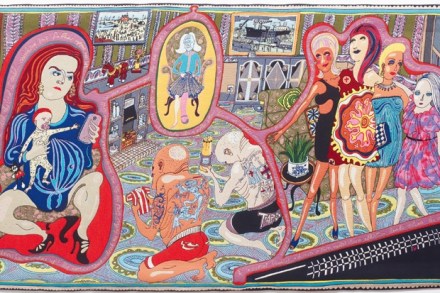
At the Venice Biennale last year, Jeremy Deller presented English Magic in the British Pavilion. It was an aggressive look at contemporary Britain and featured protest art based on socialist politics. It’s fitting, then, that the show has transferred to the William Morris gallery in Walthamstow; no doubt the libertarian socialist would be proud to see Deller’s work displayed in his old house. Despite thoughtful intentions, though, the transfer doesn’t quite work, and Deller’s art seems uncomfortable in its new setting. The mural depicting Morris in the Venetian lagoon, clutching Roman Abramovich’s enormous yacht (above), makes little impact.

Cervical cancer doesn’t discriminate, so why does the smear test?

Here’s a piece of confusing medical doctrine: in England, smear tests are offered to women from the age of 25. In Scotland, it’s 20. A couple of months ago, I checked myself in for a smear test, aged 23. The receptionist was easy to convince: ‘In Scotland,’ I said, ‘the age limit is lower. I’d like to have a test done.’ She understood, and booked me in. But when it came to the appointment, there was no convincing the nurse. I asked why there were different age limits for different parts of the UK. She had no answer. Do the women of Scotland have an increased susceptibility to cervical cancer? No, she didn’t think so. So why then? No answer.

The Budget must address the cost of living – especially for the young

Transport It is ruinous travelling by train these days. Have you tried it? My advice: don’t. Aside from re-nationalising the railways, the Budget could make some gesture of goodwill to the countless people whose entire earnings are being sucked up by our trains. One pal, who isn’t earning much, is commuting from Hampshire to London. It’s costing him around £450 a month – not much when you consider he probably takes home about £800 after tax. For him, I’d like National Railcards available to all those earning under £22,000. I’d also like off-peak train tickets to be fixed at 2/3rds of peak train ticket prices. Other countries have lower priced train travel - why can’t we?

Tony Benn – feminist

You may not have agreed with the late Tony Benn’s politics, but as Mary Wakefield points out in her interview with him, ‘his faith in humanity had deep roots’. And here’s an example of it. Back in 2001, Benn took it upon himself to erect a plaque in the broom cupboard where Emily Wilding Davison hid during the night of 2 April 1911, the night of the Census, so that she would be registered as a resident at the House of Commons. As a woman - with no right to elect who could stand in Parliament - it appealed to her sense of irony that she would be recorded as a resident. Speaking in the House of Commons in 2001, Benn said: 'I have put up several plaques—quite illegally, without permission; I screwed them up myself.