Lara Prendergast

Lara Prendergast

Lara Prendergast is executive editor of The Spectator. She hosts two Spectator podcasts, The Edition and Table Talk, and edits The Spectator’s food and drink coverage.

Fear of the baby-snatchers

From our UK edition

Baby George was born into a happy family. His mother and father love him dearly. He lives in a cottage in a pretty village, with a six-year-old sister who adores him, and his grandmother lives nearby. His parents both have good jobs and his nursery is filled with toys. By most measures, George has had a good start in life. It was only when his mother was diagnosed with post-natal depression that George’s prospects looked bleaker. Not because his caring mother was feeling blue, but because in this, paranoid, post-Baby P era, the authorities take no chances. The slightest whiff of a mother unable to cope, and they swoop down, ready to whisk the baby away. When Rosie first realised she was depressed, she assumed the doctor would be able to offer her advice about how to cope.
President Hassan Rouhani needs to get over the shock of the nude

From our UK edition

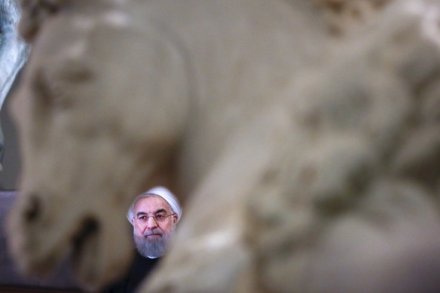
Has a new art installation opened up at the Capitoline museum? One might be forgiven for thinking so: nude sculptures were recently encased in white wooden boxes so that only their heads could be seen. So modern! So fresh! So radical! Except there was nothing radical about it. Instead, Italian authorities took the decision to cover up the ancient nude statues in honour of Iranian President Hassan Rouhani's official visit to Rome, during his first trip to Europe since international sanctions against his country were lifted. Rouhani and his entourage could not, reportedly, cope with the sight of marble sculptures of naked women, including a Venus dating back to the second century BC.

Rise of the Norland nanny

From our UK edition

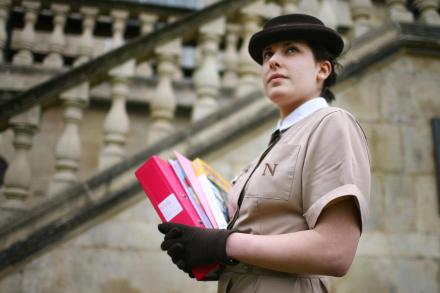
The young nannies arriving for their morning lectures at Norland College in Bath make quite a sight. Although the road is empty, they bank up along the pavement waiting for the lights to change. They are in their winter uniform of brown hat and gloves, hair in a neat bun; some push old-fashioned Silver Cross prams with plastic babies in them. Eventually the green man appears and the nannies cross. These girls look as if they are being trained for a bygone era — and that is certainly part of their appeal — but they are well prepared for modern life. Founded in London in 1892, Norland College made its name providing nannies for British aristocrats and royals.

Why are feminists refusing to discuss the Cologne sex attacks?

From our UK edition

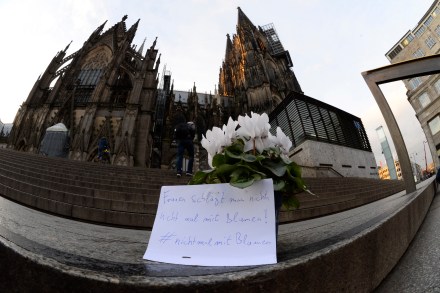
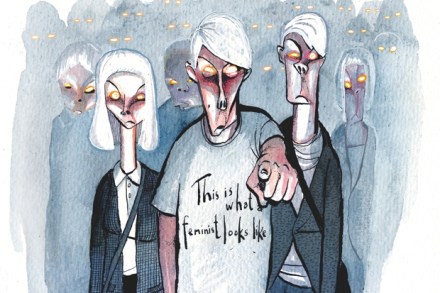
Regardless of the background of the men who carried out the attacks in Cologne on New Year's Eve, it is a pretty horrific story. A series of sexual attacks took place in the city centre by a group of around 1,000 men. More than 150 women have filed criminal complaints, three-quarters of them for sexual assault. Two cases of rape have been reported. It is the kind of story that should make headlines - and should provide ample fodder for writers who like to tackle feminist topics head on. After all, surely this is the very definition of 'rape culture'? And if the actual attacks aren't enough to merit a reaction, then how about the suggestion by Cologne's female mayor that women should adopt a 'code of conduct' to prevent future assault.

Jeremy Corbyn must be delighted by Simon Danczuk’s suspension from Labour

From our UK edition

Simon Danczuk's lightning-fast suspension from Labour - as they investigate whether he sent 'lewd' texts to a seventeen-year-old girl - is an embarrassing note to end the year on. Especially for an MP like Danczuk who has spent much of the last few years positioning himself as a campaigner against child abuse. He has described today's story in the Sun as being 'not entirely accurate' but has suggested that his behaviour 'was inappropriate'. 'I was stupid and there's no fool like an old fool' he said via Twitter. https://twitter.com/SimonDanczuk/status/682531578434686976 Danczuk has now had the party whip removed, so he will sit as an independent MP. He seems to think it won't last long.

Stephen Gilbert to step down as deputy chairman of the Conservative party

From our UK edition

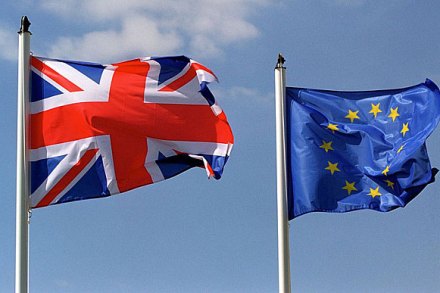
In the new year the EU referendum battle will heat up, and it seems the Conservative party are already starting to shuffle things around in preparation. Stephen Gilbert, the party's current deputy chairman, has today announced that he is standing down from this position. When Gilbert originally became deputy chairman, it was agreed that he could also hold non-executive roles with other groups. In November, he took up a part-time position at Populus, the official polling company for the main campaign to keep Britain in the EU, Britain Stronger in Europe (BSIE). While this position was in accordance with Conservative party rules, the move infuriated plenty of Tory Eurosceptics, who felt it undermined the party's commitment to remain neutral during the referendum.

Not all Uber drivers are Islamists, just like not all London cabbies are John Worboys

From our UK edition

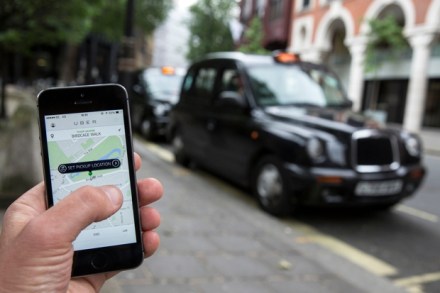
Uber aren't going to be thrilled to hear that Muhaydin Mire, the man who has been arrested on suspicion of knifing a man at Leytonstone station, while shouting 'This is for Syria', was reportedly one of their drivers. On social media, London cabbies have already started to capitalise on this, by making the case that you're better off sticking with them if you want to avoid catching a ride with a jihadi. A new hashtag is currently doing the rounds: #HeWasAnUberDriverBruv - and the Licensed Taxi Drivers Association has been quick to adopt it, while also wondering how many more 'TFL licensed terrorists' are out there.

Yes, we wear poppies. But we don’t print our faces onto them

From our UK edition

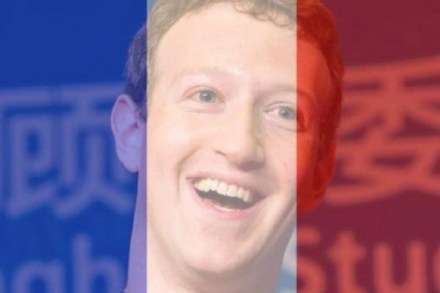
'What’s worse: people who add French flags to their Facebook profiles, or those who sneer at them?' asks my colleague Isabel Hardman on Coffee House today. 'Haven’t we always offered small gestures to commemorate sad events? Or to show respect? Why do we buy poppies in November, and feel under-dressed without them?' In some ways, I agree with Isabel - it is normal to want to show respect, and to feel an emotional response to such serious events. What troubles me about the profile picture change is not so much the act - had the option been to change your profile picture simply to a Tricolore, without your face behind it, I might have found it less hard to criticise.

In their own words – the Paris attacks as told by the survivors

From our UK edition

Last night, terrorists launched a total of six coordinated attacks at high-profile sites across Paris. French prosecutors have put the current death toll at 128, with 99 critically injured. There were two suicide bomb attacks at a bar near the Stade de France where President Hollande was watching the match. One witness told the Mail: He felt like he was 'in a video game'. 'There was an explosion in front of us. It was a very loud noise. At first I thought it was a bin that had been set alight. But then I thought it wasn't a fire cracker. 'Everyone stopped. A man was on the floor screaming. I don't know what happened to the man. I just heard him scream and move around the floor. He wasn't unconscious.

There’s no shame in the V&A changing their mind about Thatcher’s wardrobe

From our UK edition

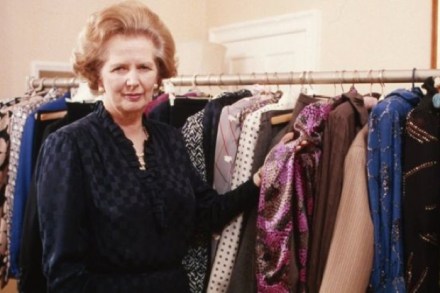
The news that the V&A had rejected an offer of Margaret Thatcher's wardrobe was met with dismay yesterday. 'Shame the V&A has turned down Thatcher’s personal collection. I for one would have loved to see it!' said the business secretary, Sajid Javid, on Twitter. Conor Burns MP suggested that the collection’s breakup would be a 'tragedy'. Even Vivienne Westwood, hardly a dyed-in-the-wool Tory, said on Radio 2 that while she was no 'fan' of Thatcher, the Iron Lady was 'certainly in her lifetime the best-dressed woman. She had terrific taste.' She also admitted that 'it would be lovely if the V&A showed her clothes.

The V&A must be mad to reject Margaret Thatcher’s wardrobe

From our UK edition

The V&A have defended their decision to turn down the offer of Margaret Thatcher's wardrobe on the basis that it only collects items of ‘outstanding aesthetic or technical quality’ rather than those with ‘intrinsic social historical value’. Yet in the same statement, they also suggest that the museum is responsible for 'chronicling fashionable dress'. I'm not entirely sure how the V&A believes it can fillet out the 'social historical value' from their aim of 'chronicling fashionable dress'. I'm also not sure I believe them. Thatcher is a divisive figure, and many people - some of them, presumably curators at the V&A, dislike her intensely.

Unreliable evidence

From our UK edition

I hadn’t really thought much about pixels before, despite spending a large portion of my day looking at them. After all, a pixel is just a tiny unit in a digital image, and we all tend to look at the bigger picture. But how about this: this humble unit has now become a key feature of drone warfare. Drone-fired missiles have reportedly been developed that can burrow through targeted buildings, and leave a hole that appears smaller than a pixel on publicly available satellite images. This means that drone strikes are often invisible to groups who try to monitor attacks, such as NGOs or the UN.

The young entrepreneurs making the best of Spain’s crisis

From our UK edition

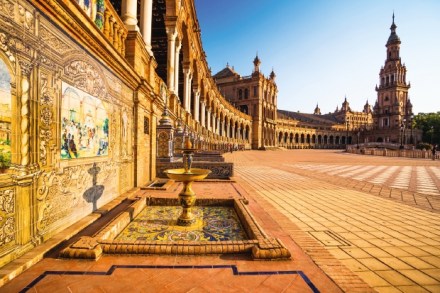
There was much talk about the anti-austerity party Podemos when we visited Andalucía in June. It was hot and sunny, and the orange trees smelt wonderful, but at the same time, youth unemployment sat at 49 per cent, second only to Greece, and that seemed to be what people wanted to chat about. Podemos, which means ‘we can’ in Spanish, does seem to have generated some hope for bright but frustrated young things, many of whom have given up hope of ever finding a professional job. In Seville, a story was doing the rounds about a low-paid receptionist job that had received 2,000 applications, although tales like this were apparently not unusual.

Yet another tragedy in the Mediterranean. Here’s an actual rescue plan

From our UK edition

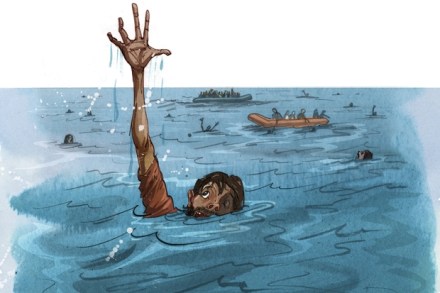
Another week, another appalling boat disaster in the Mediterranean, another round of the same tired row on migration. Yesterday a boat carrying 600 people sank off the coast of Libya; 400 people were rescued, the rest are feared dead, trapped in the belly of the boat. This morning the same round of cliches are being trotted out. The pro-immigration lobby says our restrictive policies are cruel. The anti-immigration brigade say we must not encourage masses of people to come. But the migrant crisis is too great for such shallow responses. In this week's Spectator, Paul Collier says that this 'lazy thinking' gets us nowhere. He has an alternative, and it involves more than just a few Royal Navy ships fishing people out of the water.

Isis in France? Decapitated body found next to jihadist flag

From our UK edition

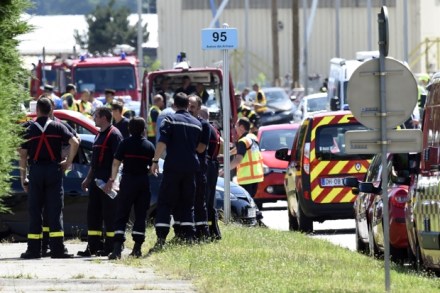
Five months after the Charlie Hebdo attack, a man has reportedly been found decapitated in a factory building in Saint-Quentin-Fallavier near Lyon. Details are still coming through, but it seems that that one assailant, who has been arrested, claimed to be a member of Islamic State and reports suggest he was 'known to the security services'. It appears that the murdered man's head was found 30 feet away from the body, 'covered in Arabic writing' and hung on a fence next to an Islamist flag. France is still reeling from the effects of the co-ordinated Islamist attack which took place in and around Paris earlier this year, and saw 17 people killed.

We really are screwed if we believe that social media can curse us

From our UK edition

More bad news for Malaysia, I’m afraid, where a group of tourists have apparently managed to trigger an earthquake simply by taking their clothes off. Last Friday, a 6.0 magnitude earthquake struck Sabah, Malaysia’s easternmost state, triggering landslides on Mount Kinabalu which killed 18 people. Tragic, and quite clearly the blame must fall on the ten tourists who reportedly posed naked for a photograph on the mountain, which is considered by locals to be a sacred site. Malaysian officials have arrested the tourists for indecent exposure and have also suggested that they angered the mountain spirits. Now it’s easy to scoff at the voodoo mindset of these funny foreigners. In the enlightened West, we know better than this.

The Stepford Student – The Spectator’s gift to the world

From our UK edition

The Stepford Student website is full of interesting articles on current affairs. For instance ‘I couldn’t give a single flying shit about electoral reform’ by Nathan Akehurst and ‘Vote for whoever the fuck you want’ by Edgar Sait-Jones. There’s something for everyone. ‘Tim Lott’s annoying but Rod Liddle is a fuckbadger’ by Ruby Lott-Lavigna, would, I am sure, amuse Rod. Tim Lott might be entertained, too, given that the author is his daughter. She has a gift for understatement: 'Dear Tory voter: I can call you a cunt if I want’ is her latest offering. You may recognise the name of the website.

The roots of the matter

From our UK edition

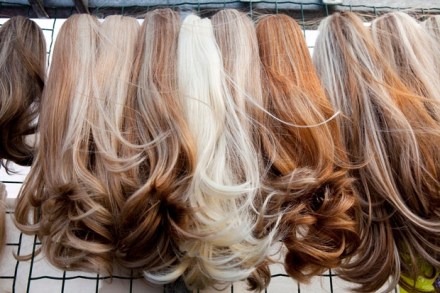
[audioplayer src="http://rss.acast.com/viewfrom22/panictimefordavidcameron-/media.mp3" title="Lara Prendergast and Louise Bailey, a hair extensions specialist, discuss the hair trade" startat=1622] Listen [/audioplayer]Perhaps you recall the moment in Les Misérables when Fantine chops off all her hair? The destitute young mother sells her long locks, then her teeth (a detail often excluded from child-friendly adaptations) before she is eventually forced into prostitution. It would be nice to think that her experience was no longer a reality, that the business of human hair had gone the way of the guillotine — but the truth is, it’s booming. The modern market for extensions made of real human hair is growing at an incredible rate. In 2013, £42.

Sonia alone

From our UK edition

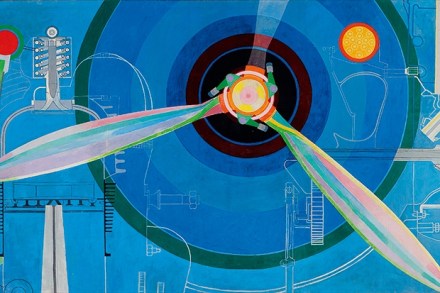
In 1978, shortly before she died, the artist Sonia Delaunay was asked in an interview whether she considered herself a feminist. ‘No! I despise the word!’ she replied. ‘I never thought of myself as a woman in any conscious way. I’m an artist.’ It is pretty obvious, though, that the Sonia Delaunay retrospective at Tate Modern (which has come from the Musée d’Art Moderne de la Ville de Paris) has been organised if not explicitly by feminists, then at least with feminism in mind. You can see the thinking behind it: let’s give the wives of the artists a break. And Mrs Delaunay, whose work has traditionally been discussed in the same breath as her artist husband Robert’s, must have seemed a suitable candidate for some revisionism.