Lara Brown

Lara Brown

Lara Brown is The Spectator's Commissioning Editor 

‘It’s a cesspool!’ — What’s going wrong in Britain’s universities?

From our UK edition

52 min listen

William Moore is joined by The Spectator’s associate editor Toby Young, commissioning editor Lara Brown and newsletter editor and restaurant critic Angus Colwell. This week: What has gone wrong with British universities? Lara unpacks the wider academic crisis in the wake of the Jason Arday scandal, from ‘surviving the apocalypse’ courses at Warwick to maths departments promising to ‘decolonise’ the subject. Has the sector lost its nerve? Also: Balding. Toby explains why he’s trying to talk his three sons out of hair transplants, while Angus and Lara weigh in on whether men vastly overestimate the importance of their hair on the dating market. Plus: is Indian the best cuisine?
‘It’s a cesspool!’ – Jason Arday & the death of Britain’s universities

Class clowns: the triumph of inanity over academia

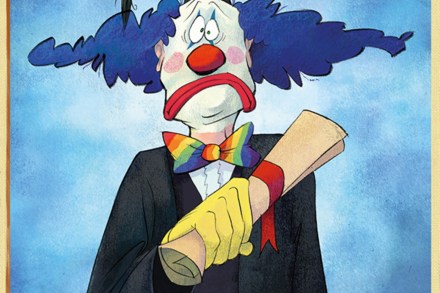
Daniel Defoe observed that plague victims ‘never perceiv’d that they were infected’ until they discovered the ‘tokens’ on their skin. By that point, ‘nothing could follow but certain Death’. Something similar might be said of Britain’s universities. In recent days, the Jason Arday affair has captured the world’s attention because of its absurdity. But the humiliation of Cambridge is not an early sign of infection. It is just a particularly visible bubo. At one level, Arday’s fall reveals how, even in our most elite universities, DEI (diversity, equity and inclusion) dogma has warped intellectual standards to the point of madness.

Jason Arday has exposed Cambridge’s corruption 

From our UK edition

The story of Jason Arday is so brilliantly illuminating of the rottenness of our Establishment that it seems – literally – fabulous. He seems to be almost too fantastic a figure for conventional fiction; rather, he is a character from fables of old – an archetype exposing the sins and hypocrisy of our times, a modern Till Eulenspiegel or Robin Goodfellow. In Arday’s frictionless ascent to academic eminence from a background of apparent disadvantage we see apparently elite institutions eagerly suspending their critical faculties in order to virtue-signal on race, disability and hardship. By studying Arday’s biography we can begin to understand just how in hock to progressive guilt our top universities are – and how damaging this is for real scholarship.

Britain’s First Catholic PM? — with Patrick Maguire

From our UK edition

Is Andy Burnham the country's first catholic Prime Minister, and how might it influence his leadership? Despite his faith drawing him to Labour, he doesn’t attend mass and rarely emphasises his religion publicly. To unpack his faith and where it might take him, Lara Brown, The Spectator's commissioning editor, is joined by the chief political commentator at The Times, Patrick Maguire, and The Spectator's religion editor, Damian Thompson.   Produced by Henry Lloyd and Ed Parker.

Britain's First Catholic PM? — with Patrick Maguire
Lara Brown, Patrick Kidd, Tali Fraser & Ella Veakins

Lara Brown, Patrick Kidd, Tali Fraser & Ella Veakins

From our UK edition

On this week’s Spectator Out Loud: Lara Brown explains the ongoing dissolution of the British private education sector; Patrick Kidd asks whether sporting curses are actually possible, or simply just a fiction; Tali Fraser goes to a death cafe to explore the world of positivity after death; and finally, Ella Veakins outlines why we should all stand in opposition the the potted plastic plant.   Produced and presented by Henry Lloyd.

Schools out: the dissolution of private education

From our UK edition

St Joseph’s College in Reading survived two world wars, the Great Depression and a pandemic. But it could not weather two years under this Labour government. Next month, its 500 pupils will be among thousands across the country who do not return to the schools from which they broke up for the summer holidays. These are the casualties of the government’s decision to impose VAT on private school fees and remove business rate relief – a policy ministers promised would not have such consequences. We still haven’t seen the full effects of Labour’s recklessness. The true damage will take time to set in.

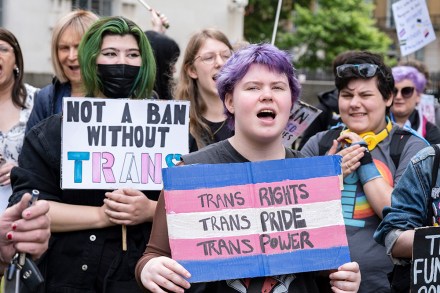
The fuss over gay conversion therapy is a charade

From our UK edition

Politicians love banning things. Even if the threats they worry about don’t actually exist. In February 2019, amid Conservative defections and the slow death of Theresa May’s Brexit deal, Conservative MP Bill Wiggin decided that the most pressing task for parliament was banning the consumption of dog meat. Not meat for dogs, but meat made out of dogs. And no, you are right, you don’t get it at the deli counter at Waitrose. Or indeed anywhere in the UK. Wiggin was honest enough to admit there was no actual evidence that dog meat was being eaten in the UK. And he acknowledged that it was already illegal to sell dog meat for human consumption. But that, he told the House, shouldn’t stop us from ‘setting an example to the world’.

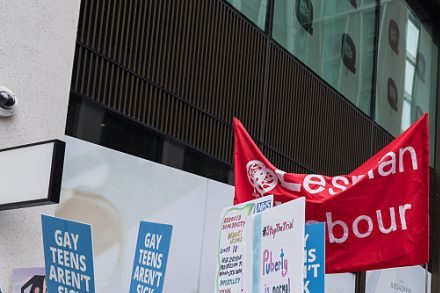
Why is Baroness Cass backing another puberty blocker trial?

From our UK edition

Baroness Cass has long been hailed as a figure who restored sense to the battle over child transition. Her report on NHS gender identity services, The Cass Review, led to the puberty blocker ban and the closure of the Tavistock gender clinic. But her work has also contributed to one of the most dangerous, unnecessary medical trials proposed in recent history. On 1 August, researchers at King’s College London will begin recruiting children as young as 11 to a clinical trial ‘that will explore how puberty-suppressing hormones impact the physical, social and emotional wellbeing of young people with gender incongruence’.

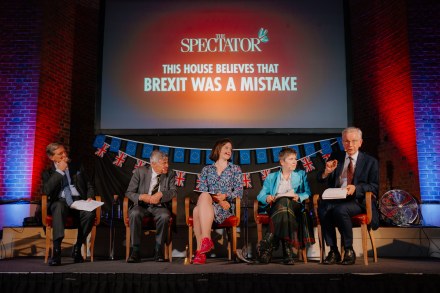
Was Brexit a mistake?

From our UK edition

Next week, we will celebrate a decade since the Brexit vote. The decade that followed was one of political turmoil: five prime ministers in just twice as many years, and maybe a sixth to join them in just a few weeks. David Cameron hoped that a referendum might stop his party obsessing over Europe. Instead, the stalemate in parliament and acrimony that followed Brexit saw his party dealt a semi-fatal blow at the ballot box. To mark this anniversary, on Wednesday The Spectator asked those who played a key role in the events leading up to the vote: was Brexit a mistake?

‘We’re only months away from the first political assassination by drone’

From our UK edition

51 min listen

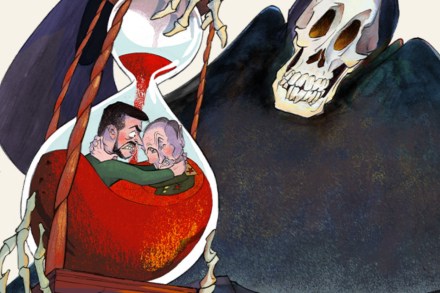
For this week’s Edition, William Moore is joined by the Spectator's commissioning editor Lara Brown, the columnist for the Wall Street Journal’s Free Expression newsletter Louise Perry and the Telegraph journalist and presenter of Ukraine: The Latest Francis Dearnley. This week: Russia’s full-scale invasion of Ukraine has now gone on longer than the first world war and it shares much of the horrors of that war, from attrition warfare to substantial losses on both sides. So, with over half a million Russians estimated to be killed, could Putin and Zelensky be brought to an exhausted peace?

War in Ukraine: 'we're only months away from the first political assassination by drone'

Revealed: Andy Burnham’s reassuringly bland Cambridge years

From our UK edition

There appears to be a missing chapter in the story of Andy Burnham. Depending on the whims of voters in Makerfield, Britain could soon have its first prime minister with a degree in English literature and its first Cambridge-educated premier since Stanley Baldwin. And while we have been treated to countless long reads on the so-called King of the North – his political philosophy, his years in Manchester and his apprenticeship in New Labour – his undergraduate years have barely been scrutinised. Burnham is tight-lipped about his Cambridge days (1988-1991). His comments over the years have been mostly limited to saying he had ‘imposter syndrome’ as he struggled to fit in at a university that was dominated, he felt, by private school students.

Will Arts Council England finally stop funding hate?

From our UK edition

It took the stabbing of two Jews in Golders Green to bring Arts Council England’s decade of funding hate to a close. On Tuesday, Keir Starmer criticised the Arts Council (ACE) for funding organisations that promote the work of ‘anti-Semitic artists’. The Prime Minister also promised to force the body to ‘suspend, withdraw and claw back’ money from organisations that have platformed anti-Semitism.  It’s nice that Starmer has woken up to the fact Britain’s main arts and culture grant provider is using taxpayer money to fund hate. But one does have to ask where he’s been for the last decade?

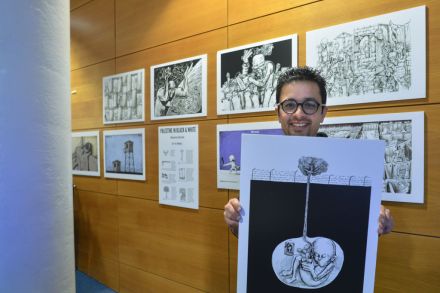
Mohammad Sabaaneh, during the 'Art & Resistance in Palestine' event hosted by Trinity BDS Campaign and Trinity College Students' Union (Getty)

The High Court has undermined freedom of speech in universities

From our UK edition

Maybe sex realists really are winning the gender wars. But for every two steps we take forward we are relentlessly pushed at least one back. The most recent victory in the war against common sense has seen the University of Sussex dodge a £585,000 fine over their free speech policies. The fine was awarded after Professor Kathleen Stock was hounded out of her job five years ago following sustained protests over her views on transgender rights and gender identity. At one point, just to do her job, Stock had to appoint private security. The Office for Students (OfS) spent three and a half years investigating the circumstances that led to Stock’s departure. Their final report is damning.

The Fight for the Right: Conservatives vs Reform

From our UK edition

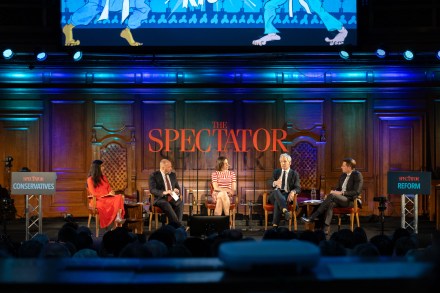
On 7 May there will be no competition. Reform is predicted to pull off sweeping victories in councils across the country, while the Tories are preparing to shoulder heavy losses. But at the Emmanuel Centre on Wednesday evening, Spectator readers were treated to a fight for the intellectual ground on the right. Representing the teal team, Danny Kruger, Reform MP for Wiltshire tasked with preparing the party for government, and Matt Goodwin, Reform’s candidate in Gorton and Denton, faced off against Claire Coutinho, shadow Secretary for Energy and Net Zero and Minister for Equalities, and Nick Timothy, shadow Secretary of State for Justice and shadow Lord Chancellor, on the Conservative side. The Spectator’s assistant editor, Isabel Hardman, refereed.

Trump vs the Pope: Rowan Williams on America’s ‘demonic’ political climate

From our UK edition

50 min listen

The Pope is 'WEAK on crime and terrible on foreign policy' – this was the verdict of the President of the United States this week, as he appeared to deepen his row with the leader of the Catholic Church. In the magazine this week, Damian Thompson reports on why the President appears to have engaged in his own Holy War with the leader of 1.3 billion Catholics around the world. For this week's Edition, host William Moore is joined by deputy editor Freddy Gray, commissioning editor Lara Brown – and the former Archbishop of Canterbury, Rowan Williams. Baron Williams, now retired from the Lords, fears there is something 'demonic' in the political culture of the United States right now, as people appear to twist Christian teaching to justify their own causes.

Trump vs the Pope: Rowan Williams on America's 'demonic' political climate

The hidden truth about our failing universities

From our UK edition

Is it worth going to university? Since 1999, when Tony Blair declared higher education the answer to all society’s problems, it has been a question Britain prefers not to ask. Every September, hundreds of thousands of school leavers pack their bags, wait for their maintenance loan to arrive and head off to their chosen city to drink, go clubbing and occasionally hand in an essay. Does this well-trodden path leave young people better off? It’s almost impossible to find out, not because the information isn’t available but because the government won’t let us see it. The Department for Education knows very well what graduates can expect when they start looking for work.

How to beat Oxbridge’s positive discrimination

From our UK edition

As university admissions have become increasingly obsessed with equal outcomes, many parents fear a kind of reverse discrimination. They worry that a Ucas form bearing the name of an independent school may be bad news for an Oxbridge application. There’s evidence to suggest they’re right. Private-school pupils who transfer to state education after their GCSEs are up to a third more likely to be admitted to Cambridge. Children who remained at private school for A-levels had an acceptance rate of 19 per cent, compared with 25 per cent for those who moved to a grammar school or state sixth form college. Given the assumed prejudice against private school applicants, a recent move by one Cambridge college has surprised many.

The social media moral panic

There is rarely much to commend Keir Starmer for. But on Monday he blocked an amendment to the schools bill which would have required all social media companies to ban under-16s from using their products. In voting against this legislation, MPs have preserved anonymity on the internet, resisted further state powers over what we see online and avoided caving in to a moral panic gripping Westminster. I don’t want to lavish too much praise on the Prime Minister just yet. The sweeping powers brought in by the Online Safety Act already censor most of online life.

The uncomfortable truth about the new Mental Health Act

From our UK edition

Three years ago, Nottingham University students Grace O’Malley-Kumar and Barnaby Webber, along with caretaker Ian Coates, were murdered by Valdo Calocane in a psychotic rampage. These were preventable deaths. Calocane should have been detained long before he went on his killing spree. The fact that he wasn’t is the consequence of a decade of progressive ideology in the NHS and police, who turned a blind eye to Calocane’s psychosis in part because he was a black man. By 2023, there could have been no doubt about his violent tendencies. In 2020, he was arrested after he attempted to force entry into his neighbour’s flat, believing (falsely) that his mother was being raped inside. Just 11 minutes after he was released on the same day, he attempted to force a woman’s door.

LIVE: The Spectator’s Alternative Covid Inquiry

From our UK edition

53 min listen

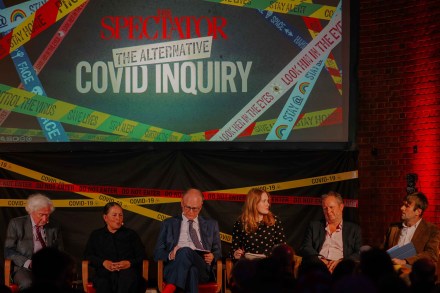
As the official Covid Inquiry comes to an end, the Spectator has convened a panel of our own experts to ask the questions that the Inquiry didn’t – or wouldn’t – answer. The Spectator’s commissioning editor Lara Brown is joined by science writer and Conservative peer Matt Ridley, Oxford professor of theoretical epidemiology Sunetra Gupta, former Supreme Court judge Jonathan Sumption, journalist Christopher Snowdon and science writer Tom Whipple. This is a condensed version of the event. Subscribers can access the full event via Spectator TV and you can find more events from the Spectator here.

LIVE: The Spectator’s Alternative Covid Inquiry