Kris Hicks

We’re Schrödinger’s overstayers in the EU – and we’re not alone

From our UK edition

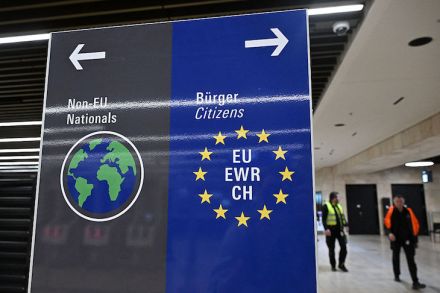
In October, my wife, daughter, and I flew to Bratislava for a short break. The Slovak border guard asked me how long we planned to stay in Slovakia. “Five days”, I replied. “That’s okay; it’s just that you only have eight days left on your Schengen visa. You’ve been in France since August.” A system that loses track of who has left the continent, and wrongly flags countless people as illegal overstayers, degrades real security This was news to us, considering we'd just flown in from Luton. On 4 August, we took a trip to Disneyland Paris on Eurostar and returned via Lille to St Pancras on 8 August. But according to the EU’s Entry/Exit System (EES), that never happened. Perhaps they thought we manned a dinghy to Dover?
The reason we’re all anxious about our ancestors

From our UK edition

The new series of Who Do You Think You Are? premieres tonight on BBC One. The first episode is about the ancestors of the television presenter Zoe Ball. I adore the schadenfreude of witnessing a wincing luvvie discover their ancestor was an irredeemable scumbag. My family are not free of moral stain. Court records attest that my great-great-grandfather, a publican from South Wales, once furnished a pint of beer to a punter outside licensed hours. The devil! My late grandparents, straightforward Welsh Methodists, never told me about lawbreakers in the family. News that one of us might have been a bit dodgy back in the day shook me. I told the story to an acquaintance, which prompted some drastic perspective: 'At least you haven’t got Hitler in your family.' Indeed, some people do.

The death of cinéma vérité

From our UK edition

Oh, how we lived. Or, how we thought we lived. Despite the numerous criticisms levelled at the BBC on a daily basis, the BBC Archive YouTube channel is one aspect of its work that cannot be faulted. It is a fascinating collection of broadcast material going back many decades, a portal into Britain’s past presented in film grain-soaked HD. A sobering reminder of what the BBC once was – and what it no longer dares to be. Much of it is made up of documentaries, many aspects of which will be peculiar to millennials and Gen Z. The form is strange: long, single-camera shots of people talking in living environments. Bathrooms, kitchens, workplaces, streets. Living spaces are as they would be on any day of the week. Workplace neon, living-room lamps. Light and shade.