Katy Balls

Katy Balls

Katy Balls is The Spectator’s former political editor.

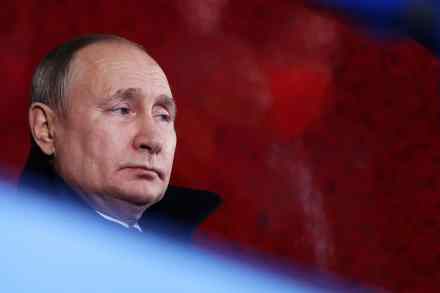
Does Europe need to get used to dealing with Russia?

From our UK edition

14 min listen

During the Cold War, the US saw Russia as global threat number one. But with China looming large on the world stage its focus is shifting. This leaves Europe to take the lead in dealing with Putin's desires on Ukraine. Katy Balls talks to James Forsyth and Sophia Gaston the director of the British Foreign Policy Group about the growing tensions on the continent.
Who will replace Cressida Dick?

From our UK edition

8 min listen

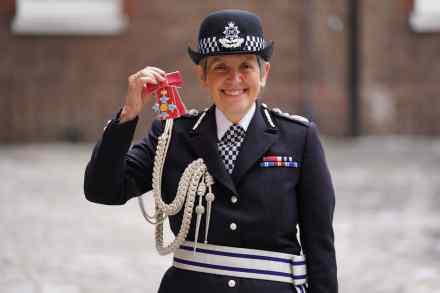
Cressida Dick announced yesterday evening that she is stepping down as head of the Metropolitan Police. In a statement, Dick said she had been left with 'no choice' but to resign, after it was made clear to her that London mayor Sadiq Khan did not have confidence in her leadership. Who will replace her? And what does her resignation mean for the investigation into parties in No. 10?Katy Balls speaks to James Forsyth.

Boris buys himself a reprieve

From our UK edition

After a difficult few weeks, Boris Johnson has made it to parliamentary recess. Given few expect a no confidence vote to be held during recess, time away from parliament gives the Prime Minister much-needed breathing space. After the seemingly never-ending parade of partygate stories, there have been times when MPs were sceptical he would make it this far.  Instead, the Prime Minister has succeeded in buying himself time — talking down would-be plotters and rushing out a string of red meat announcements to keep the right of his party on side. The announcement this week that all Covid restrictions could end a month early is a prime example of this.

The Carolyn Harris Edition

From our UK edition

26 min listen

Carolyn Harris is a Welsh Labour Party politician serving as the Deputy Leader of Welsh Labour since 2018, and has been the Member of Parliament for Swansea East since 2015. On the podcast she talks to Katy about her three successful campaigns, menopause, and the time she accidentally turned on the No.10 Christmas lights.

Should Liz Truss have gone to Russia?

From our UK edition

9 min listen

The Foreign Secretary's trip to Moscow today ended with Russian Foreign Minister, Sergey Lavrov, walking out of their joint press conference. Did the trip achieve anything – and was it a mistake from the start? Katy Balls talks to James Forsyth on this episode. For James, '[Lavrov's] rudeness is a sign that Liz Truss held the line in their meeting'.

The Tory warlords who will determine Boris’s fate

From our UK edition

When news broke over the weekend that former minister Nick Gibb had become the 14th Tory MP to publicly call for Boris Johnson to resign, cabinet loyalists were furious. They weren’t just concerned about the growing number of no-confidence letters — they were angered by what they saw as a co-ordinated effort by ‘One Nation’ Conservatives to oust the Prime Minister. One Nation Tories, a 40-strong parliamentary group, have long been regarded with suspicion by Johnson’s inner circle. ‘They’re the government’s most obvious and vocal critics,’ says a member of the whips’ office. They tend to occupy traditional shire seats or sit in Lib Dem/Tory marginals. During the Brexit referendum they veered towards Remain.

Will there ever be a break in the partygate scandal?

From our UK edition

9 min listen

The Prime Minister tried to start today's PMQs with an announcement to fire up the right of his base, an early end to all Covid restrictions. But the partygate scandal is the gift that keeps on giving when during the Commons session a new photo leaked of Boris Johnson at a Christmas quiz with a bottle of Prosecco and a colleague draped in tinsel. Isabel Hardman is joined by James Forsyth and Katy Balls to break down today's events in Westminster.

Boris’s reshuffle reveals his weakness

From our UK edition

Boris Johnson's attempted reset is underway, with a mini-reshuffle announced this afternoon. The Prime Minister has made a number of changes to his top team as part of his efforts to signal to Tory MPs that he has taken on board criticism of his operation and will improve it.   The most striking aspect of this reshuffle is Johnson's apparent reluctance to upset anyone As part of the changes, Mark Spencer has been moved from his role as chief whip to leader of the house — with Chris Heaton Harris brought in as his replacement. Jacob Rees-Mogg has been moved from leader of the house to minister for Brexit opportunities and government efficiency — in this role he will attend cabinet.

Will Boris’s new appointments win over backbenchers?

From our UK edition

14 min listen

On Saturday night, No. 10 announced two new appointments: Steve Barclay would become chief of staff, and Guto Harri would become director of communications. Will Downing Street's reshuffle improve the mood of Tory MPs? And what else does Boris Johnson have to do?  Katy Balls talks to Fraser Nelson and James Forsyth about the new faces inside No. 10.

Boris announces a new look No. 10 team

From our UK edition

Boris Johnson has this evening unveiled the second stage of his Downing Street shake-up. After the Prime Minister rushed forward the departure of his chief of staff Dan Rosenfield and director of communications Jack Doyle when his policy chief Munira Mirza quit on Thursday, replacements have been announced. The Chancellor of the Duchy of Lancaster Steve Barclay is Johnson’s new chief of staff – and will be in charge of integrating the new Office of the Prime Minister and the Cabinet Office. Meanwhile, Guto Harri has been appointed director of communications – he served as Johnson’s spokesman during his first term as London mayor.

Who will fill the vacuum in No. 10?

From our UK edition

14 min listen

Five members of Boris Johnson's team have now resigned from No. 10. This led Downing Street to bring forward changes to Johnson's top team – announcing the resignations of chief of staff Dan Rosenfield, director of communications Jack Doyle and Martin Reynolds, his principal private secretary (who sent the now notorious BYOB email). How will the PM fill the vacuum they leave in No. 10? Katy Balls speaks to Fraser Nelson and James Forsyth.

Boris’s staffing dilemma

From our UK edition

How much trouble is Boris Johnson now in? The Prime Minister suffered one of his most tumultuous days in office on Thursday after his longstanding policy chief Munira Mirza resigned over his Jimmy Savile attack on Keir Starmer. This led Downing Street to bring forward changes to Johnson's top team – announcing the resignations of chief of staff Dan Rosenfield, director of communications Jack Doyle and Martin Reynolds, his principal private secretary (who sent the now notorious BYOB email).

What does the latest No. 10 resignation mean?

From our UK edition

17 min listen

Recorded just moments after Spectator Political Editor, James Forsyth broke the story that Munira Mirza, the Downing Street head of policy, had resigned over Boris Johnson’s Jimmy Savile attack on Keir Starmer. Katy Balls talks to James about how this defection of one of Johnson's oldest allies will affect the already turbulent No. 10. They are also joined by Spectator Editor Fraser Nelson who now thinks that the current government is 'terminal'.

The fallout from Munira Mirza’s resignation

From our UK edition

Tory MPs are in a jumpy mood this afternoon after The Spectator revealed that No. 10 policy chief Munira Mirza has quit Downing Street, citing Boris Johnson's refusal to apologise over his Jimmy Savile attack on Keir Starmer. Given that Mirza is a key ally of the Prime Minister's — dating back to his City Hall days — it is has led to doubts about the longevity of Johnson's premiership if even his longest-standing supporters are walking. It also raises questions about the direction of the government.  Part of the problem Johnson faces with Mirza's departure is that she was well-liked among MPs In a bid to suggest there is no drift, Downing Street has wasted no time in announcing Mirza’s replacement.

Was the levelling up white paper worth the wait?

From our UK edition

15 min listen

While Westminster politicians and journalists alike continue to predict exactly how many letters of no confidence in Boris Johnson have been officially filed. Michael Gove's levelling up white paper has finally arrived. A bizarre document that references many ancient cites and how they 'levelled up', but does it propose any tangible solutions on how to achieve its goal in present-day Britain?Isabel Hardman is joined by James Forsyth and Katy Balls to dissect the document.

What’s the purpose of the levelling up white paper?

From our UK edition

After months of delays, the government's levelling up white paper is finally out. Boris Johnson has viewed this document as one of the things that will help him kickstart his premiership after months of negative headlines over partygate. However, MPs remain jumpy as letters of no confidence continue to trickle in.  As for the document itself, it comes in at a cool 332-pages and can be described as academic in places. While it sets out key missions, it is also heavy on history — complete with a timeline of the largest cities in the world since 7,000 BC including Jericho, Dobrovody, Yinxu and Ayutthaya.

Boris Johnson’s position is still uncertain

From our UK edition

Since the publication of Sue Gray's update on partygate a trickle of letters of no confidence have been sent to the 1922 chairman Graham Brady. Two of the senders have gone public – Tobias Elwood and Peter Aldous – while Charles Walker has said he would ‘applaud’ Boris Johnson if he resigned of his own accord. It’s worth noting that Aldous said one of the reasons he had submitted a letter of no confidence is that it became clear Boris Johnson has no intention of resigning. One MP who has submitted a letter tells Coffee House they are frustrated that many colleagues who want Johnson gone still appear to be expecting it to happen of its own accord: ‘There is never a good time to get rid of a leader’.

Have Tory MPs forgiven Boris?

From our UK edition

13 min listen

While Boris Johnson's performance in the Common's yesterday was seen broadly as tone deaf – thanks to comments about Jimmy Savile and drug-taking on the Labour front bench – he was given a chance to redeem himself at a private meeting with his party yesterday evening.  'One of my favourite questions was when one 2019 MP asked if they could reschedule the Parliamentary away day. This received a number of groans from politicians.' – Katy Balls.  Today, the Prime Minister leaves the Westminster drama behind him as he embarks on a diplomatic trip to Ukraine.  Isabel Hardman speaks to Katy Balls and James Forsyth about the mood in the Tory party.

Inside Boris Johnson’s showdown with Tory MPs

From our UK edition

After Tory MPs spent the afternoon laying into Boris Johnson over Sue Gray's summary of her report, the Prime Minister finds himself in a much more fragile position than when he started the day. Tonight he addressed Tory MPs at a meeting of the 1922 committee. Given Johnson's Commons appearance rattled MPs rather than improving relations, Johnson went into the meeting on the backfoot. The demand to hear the PM speak was so great that MPs arriving late were turned away. The demand to hear the PM speak was so great that MPs arriving late were turned away Johnson began the meeting by telling MPs he had a really torrid time in the Commons chamber and needed to do a better job of explaining how seriously he took Covid, given it did 'nearly kill me'.