Katy Balls

Katy Balls

Katy Balls is The Spectator’s former political editor.

It’s time to talk about your pension

From our UK edition

32 min listen

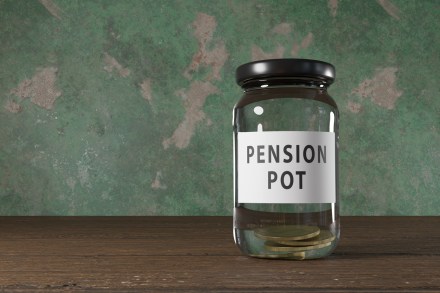
When it comes to retirement, working out how much you will need to set aside can seem like a monumental task. The average person has between 8 to 10 jobs over their lifetime. People are living longer – with the median retirement age at 65 and life expectancy at 80. What should people think about when planning for their pension? And what challenges do people face? Women are the most likely to suffer from pension inequality, with single women being the poorest of all pensioners. Almost a fifth of private sector employees do not do any pension saving, and a third of people expect to retire with only a state pension.
Will Gove’s extremism definition worsen Tory divides?

From our UK edition

11 min listen

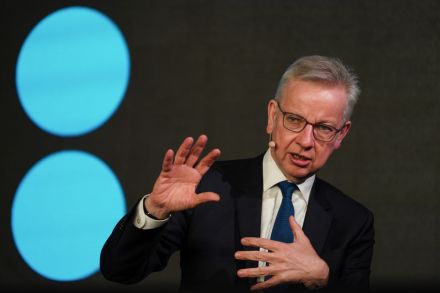
Michael Gove has unveiled the government’s new legal definition of extremism, which will decide whether organisations can receive government money. Conservative MPs, and three former Conservative home secretaries, have said doing would be a mistake. Is Gove doing more harm than good? Max Jeffery speaks to Katy Balls and Paul Goodman, former editor of Conservative Home.

Will the Red Wall revolt split the right?

From our UK edition

48 min listen

On the podcast this week: is Rishi ready for a Red Wall rebellion?  Lee Anderson’s defection to Reform is an indication of the final collapse of the Tories’ 2019 electoral coalition and the new split in the right, writes Katy Balls in her cover story. For the first time in many years the Tories are polling below 25 per cent. Reform is at 15 per cent. The hope in Reform now is that Anderson attracts so much publicity from the right and the left that he will bring the party name recognition and electoral cut-through. Leader of Reform UK Richard Tice joins Katy on the podcast to discuss.

Tory MPs worry Michael Gove’s extremism crackdown could backfire

From our UK edition

Michael Gove's extremism crackdown has been the talk of the Tory party for weeks now, with three former Conservative home secretaries warning ahead of today's official announcement not to use the issue to score political points. Gove, the Levelling Up secretary, has drawn up a new definition of non-violent extremism which, he told the Commons this lunchtime, would include 'the promotion or advancement of…violence, hatred or intolerance'. Gove argued that the new definition is 'more precise and rigorous' than what came before. The announcement follows Rishi Sunak's Downing Street speech after George Galloway's Rochdale by-election, in which the Prime Minister warned that Islamist extremists and far-right groups are 'spreading a poison'.

Will the Red Wall revolt split the right?

From our UK edition

On Monday night Tories gathered on the Terrace Pavilion at parliament for the 1922 Committee’s spring reception, to which every backbencher was invited. The crowd was small, largely made up of Rishi Sunak loyalists eating steak and chips and drinking sparkling wine. The Prime Minister chose not to give opening remarks and instead chatted to the MPs. According to one attendee, the atmosphere was jovial. But no one dared bring up the elephant in the room: Lee Anderson’s defection. Just hours earlier, the former deputy Tory party chairman held a press conference to announce he was defecting to the Reform party. Even before he started to speak, his former Tory colleagues took pre-emptive steps for his departure by removing him from their various WhatsApp groups.

Will the Tories return Hester’s £10 million?

From our UK edition

11 min listen

At Prime Minister’s Questions today Rishi Sunak refused to commit to returning the £10 million donor Frank Hester gave to the Conservative party. Hester allegedly said that Diane Abbott made him ‘hate all black women.’ Sunak now says that Hester’s  alleged comments were ‘racist’ and ‘wrong’, after a spokesperson initially only described them as ‘unacceptable’. Will the Tory position change again? Max Jeffery speaks to Katy Balls and the Financial Times’s Stephen Bush.

Lee Anderson defects: what next?

From our UK edition

13 min listen

Lee Anderson has defected from the Tory party to Reform. In a press conference this morning, Anderson said ‘I want my country back’ and said that his parents had urged him to change party allegiance. How much of a headache is Anderson’s defection for Rishi Sunak, and will more Tory MPs quit the party? Max Jeffery speaks to Fraser Nelson and Katy Balls.

Lee Anderson’s Reform defection spells trouble for Rishi Sunak

From our UK edition

Tory MP Lee Anderson has defected to Reform UK. Speaking at an impromptu press conference this morning, the former deputy Tory party chairman – who lost the Conservative whip last month over his comments on Islamists controlling London – said that he was switching to Richard Tice's party as the current 'parliament doesn't seem to understand' what British people want. Anderson said he wants 'his country back' and believes Reform is the party best placed to do this. There are plenty of Tory MPs saying Anderson was never a true conservative anyway This is not a surprising defection. Anderson has long been on 'Reform watch' as a Tory MP – seen as a candidate who could be tempted to jump ship if the Tories were too soft on issues such as immigration.

Why is Theresa May standing down?

From our UK edition

13 min listen

Theresa May has announced that she will not seek re-election this year. The former prime minister said that launching her global commission on modern slavery and human trafficking meant she would not be able to spend as much time as she would like on constituency matters. James Heale speaks to Katy Balls and Isabel Hardman about the news.

What May’s departure reveals about the Tory party

From our UK edition

The tributes are pouring in for Theresa May after the former prime minister announced that she will be stepping down at the next election. In a statement in the Maidenhead Advertiser, her local paper, May reiterated her support for Rishi Sunak and said she was leaving to spend more time on ‘causes close to my heart’ such as the fight against modern slavery. Sunak has in turn praised her as a ‘relentless campaigner’. May's former chief of staff Gavin Barwell has said that future prime ministers should follow her example by remaining in parliament for a time as a backbencher following a period in No. 10.

Are Scottish Tories causing trouble for Rishi Sunak?

From our UK edition

10 min listen

Lucy Dunn speaks to James Heale and Katy Balls about the slightly muted reaction to the budget. Labour has compared the announcements to Liz Truss's unfunded tax cuts and Scottish Tories have criticised the chancellor’s decision to extend the windfall tax on the profits of North Sea oil. But is this really the pre-election budget?

No. 10 is in no rush to call an election

From our UK edition

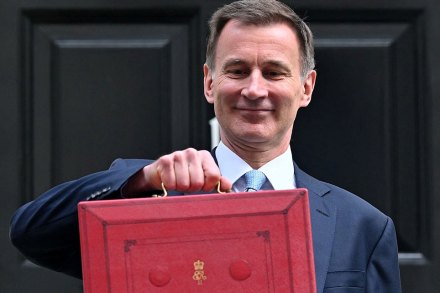
Ahead of the Budget, Rishi Sunak and Jeremy Hunt met MPs for drinks in the Prime Minister’s parliamentary office to try to temper expectations. The Chancellor informed those present that, while he is a low-tax Conservative, he is not a magician. Yes, lots of MPs want him to slash taxes to revive the Tories’ standing in the polls, but he can’t escape reality. In other words, spending is too great and has to be paid for. No Tory can ignore that basic fact. As one government figure puts it: ‘Calling an election during a recession? Genius’ This is why the Budget he announced on Wednesday fell short of some of his MPs’ expectations. Rather than delivering the income tax cut many had hoped for, Hunt went for the relatively cheaper option of reducing National Insurance by 2p.

Jeremy Hunt’s low-key Budget

From our UK edition

22 min listen

Jeremy Hunt said the government would cut National Insurance by 2 per cent, would abolish the non-dom tax status and would raise the threshold for child benefits in his Budget today. To discuss the new measures, Katy Balls speaks to Kate Andrews and David Miles, from the Office for Budget Responsibility.

New poll points to Tory wipeout

From our UK edition

Another day, another damning poll for the Tory party. This time it’s a survey by Ipsos for the Evening Standard that finds the Conservatives have hit their lowest level for 40 years. The poll puts the Tories on 20-points, falling from 27-points back in January. It means Rishi Sunak’s party is 27-points behind Labour and his personal ratings are not looking great either, with a net approval score of -54. Keir Starmer isn’t exactly popular but he is faring better than Sunak. The Labour leader’s net approval rating is -26. To put this poll into perspective, the Ipsos Political Monitor started in the late 1970s and has never before recorded a Conservative vote share this low.

Sunak and Hunt face a Budget dilemma

From our UK edition

14 min listen

Budget day is approaching and the government has hinted that their plans for tax cutting 'giveaways' are now less likely. James Heale speaks to Katy Balls and Kate Andrews about what to and what not to expect for Wednesday's Spring Budget.

Sunak and Hunt face a Budget dilemma

From our UK edition

Budget day is approaching and what was once seen as a window of opportunity is now being talked up as a moment of dread. Jeremy Hunt has gone from comparing himself in January to the former tax-slashing chancellor Nigel Lawson to telling the BBC's Laura Kuenssberg on Sunday that, in reality, fiscal constraints mean on Wednesday he will be closer to a 'prudent' Gordon Brown. Rishi Sunak is still hoping to make good on his promise of a 'gear shift' on taxation. But given the government has less space for manoeuvre than they envisaged at the beginning of the year, any tax cuts will be accompanied by difficult decisions elsewhere. Hunt and Sunak are still finalising the package the Chancellor will unveil on Wednesday.

Sunak pledges extremism crackdown

From our UK edition

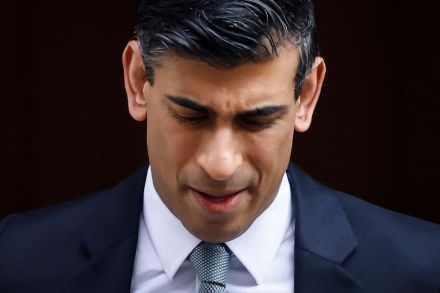
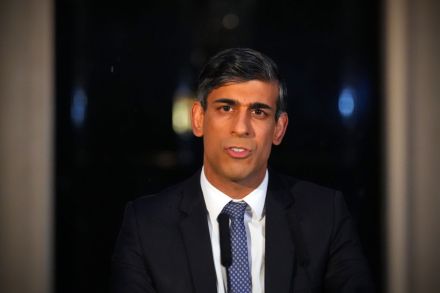
Rishi Sunak has just appeared on the steps of Downing Street to give a speech on the need to take action after ‘a shocking increase in extremist disruption and criminality’ in recent weeks. On the day former Labour MP George Galloway was announced as the new MP for Rochdale, the Prime Minister said ‘this situation has gone on long enough’, arguing that ‘Islamist extremists and far rights groups are spreading a poison, that poison is extremism’. Responding directly to Galloway's victory in the by-election, Sunak said: It is beyond horrifying that last night the Rochdale by election returned a candidate who denies the horror of what happened on October 7th, who glorifies Hezbollah and is endorsed by Nick Griffin, the racist former leader of the British National party.

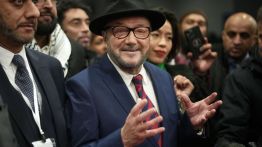
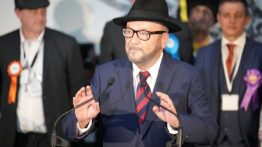
Labour nightmare as George Galloway wins Rochdale by-election

From our UK edition

15 min listen

George Galloway has won a resounding victory in Rochdale, after a chaotic and messy by-election in which Labour was forced to disown its own candidate after he claimed Israel had allowed Hamas to attack on October 7th. Former Labour MP Galloway – standing for the Workers Party of Britain – won on a single issue campaign, criticising the Israel-Gaza war and in particular the response of Keir Starmer and Rishi Sunak to the conflict. How bad is the result for Labour? Oscar Edmondson speaks to Katy Balls and James Heale.  Produced by Oscar Edmondson.

The Thangam Debbonaire Edition

From our UK edition

35 min listen

Thangam Debbonaire was born in Peterborough to an Indian father and English mother. She has been an MP since 2015 but before Parliament spent over 25 years working to end domestic violence. She served under Jeremy Corbyn as Shadow Minister for Arts and Heritage and has served in Keir Starmer’s Shadow Cabinet since his leadership as the Shadow Culture Secretary. Thangam is no stranger to a lively debate at the dispatch box and despite a busy life as an MP, still finds time for music, playing cello in Parliament as part of the string quartet, The Statutory Instruments.

Labour nightmare as George Galloway wins Rochdale by-election

From our UK edition

George Galloway is back. The former Labour MP has triumphed in the Rochdale by-election, taking the seat from Starmer's party with a majority of 5,697. Galloway – standing for the Workers Party of Britain – won comfortably with nearly 40 per cent of the vote at 12,335 votes. The independent candidate David Tully came in second place on 6,638, the Tories in third on 3,731 and Labour in a dismal fourth place on 2,041 votes in their former seat after Keir Starmer suspended the party's candidate part way through the campaign. The Reform party – which put up another former Labour MP in Simon Danczuk as its candidate – came sixth with 6 per cent of the vote (1,968 votes) meaning they just managed to keep their deposit.