Katy Balls

Katy Balls

Katy Balls is The Spectator’s former political editor.

Not all Tories are gung-ho for intervention in Syria

From our UK edition

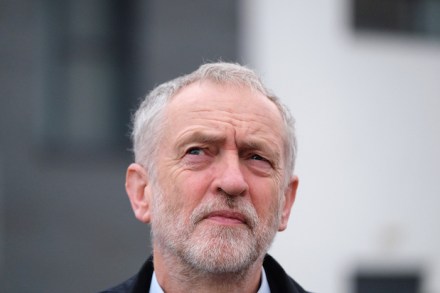
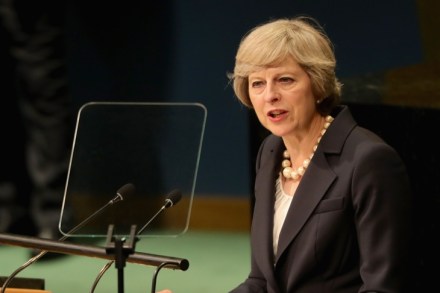
As Theresa May meets with her Cabinet to discuss a possible response to the suspected chemical weapons attack in Syria, it's widely expected that any action she does take will be actioned without a vote in Parliament. The Prime Minister does not need to have approval through a Commons vote but recent precedent means that a lot of MPs think that she should. In that vein, today Jeremy Corbyn warned that MPs must be consulted on any UK military action. This is unsurprising but May's bigger problem is that a sizeable portion of the Tory party is also sceptical of the merits of intervention. Were the decision to go to Parliament, May would almost certainly have to rely on Labour rebels’ votes for her majority in this instance.
Barry Gardiner disrupts Labour’s uneasy Brexit truce

From our UK edition

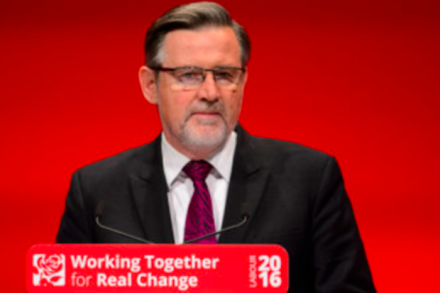
Although Labour MPs have much to disagree with their leader on of late, one thing many have been buoyed by is the fact that Jeremy Corbyn appears to be softening the party's Brexit position. The Labour leader's big Brexit speech in February voicing support for some form of permanent customs union was widely seen as a step forward in uniting the two sides - and the result of lobbying from Keir Starmer, the shadow Brexit secretary. Since then an uneasy truce has formed within the party over Brexit. Owen Smith was the first to break it – using an article to diverge from Labour policy and call for a referendum on the final Brexit deal. He was subsequently sacked from the front bench for breach of shadow cabinet collective responsibility.

The next big Brexit battle: protectionists vs free marketeers

From our UK edition

Although politicians and pundits have learnt the hard way not to take polls as gospel, the latest Opinium/Independent poll on free trade ought to give the government some cause for alarm. New polling has found that when asked whether ditching current food standards would be a price worth paying for a deal, 82 per cent of those surveyed said keeping current regulations in place should take priority – even if that meant no deal. Meanwhile, just 8 per cent said a free trade agreement with the US should take priority. Of course this is just one poll and the stark findings could in part be down to the phrasing of the question. But regardless, it touches on what the next big Brexit debate will be: the battle between the protectionists and the free marketeers.

What will Theresa May do on Syria?

From our UK edition

The suspected poison gas attack in Syria that killed dozens of people at the weekend continues to send shockwaves through Westminster. Speaking on an official trip to Sweden, the Prime Minister said she 'utterly' condemned the 'barbaric' attack. As for what action to take, Theresa May said that if it was confirmed as the doing of President Bashar al-Assad both his regime and its backers, including Russia, must be 'held to account'. May said Britain is 'discussing with our allies what action is necessary'. But just as news of a chemical attack in Syria comes with a sense of déjà vu, so does the UK response. Ever since MPs rejected David Cameron's call to intervene in 2013, inaction has been the best word to describe the British policy.

Should the government share full intelligence with Corbyn?

From our UK edition

Ben Wallace has caused a stir today with an interview on the Today programme. The security minister confirmed that the government had not shared full intelligence on the Skripal poisoning with Jeremy Corbyn – insisting that the 'circle' of those with access to the highly sensitive information should be restricted to only a small number: 'This is serious stuff and the circle of who gets to see very sensitive information is very small, because if you leak it or it gets out, people’s lives are put at risk. The best example is Mr Skripal; that’s what happens to people if other countries to decide to take actions or they have enemies.' Wallace's comments appear to imply that the government do not trust the Labour leader with this information.

No 10’s Novichok damage control

From our UK edition

Theresa May's widely-praised handling of the Salisbury poisoning hit a bump in the road this afternoon with the news that British scientists at Porton Down have not been able to establish that the Novichok nerve agent used to poison Sergei and Yulia Skripal was made in Russia. In a clumsy interview, Gary Aitkenhead, the chief executive of the Defence Science and Technology Laboratory at the facility in Wiltshire, said although the nerve agent was identified as Novichok, scientists had not been able to prove it was created in Russia. The government were quick to go into damage control mode - making clear that this was 'only one part of the intelligence picture' and it did not alter their verdict that the only plausible explanation was that Russia was responsible for the attack.

Jeremy Corbyn’s handling of Labour’s anti-Semitism row goes from bad to worse

From our UK edition

After a weekend of horrid headlines for Labour over anti-Semitism, Jeremy Corbyn is keen to be seen to be talking tough on the issue. The Labour leader has told Channel 4 news that his party will not be 'tolerating anti-Semitism in any form' and Momentum – the pro-Corbyn grassroots group – has acknowledged that 'accusations of anti-Semitism should not and cannot be dismissed simply as right-wing smears'. Only, despite this, Corbyn appears to have gone one step forward and two steps back. Guido reports that the Labour leader tonight attended a Seder in Islington held by 'Jewdas'. Jewdas are a 'radical Jewish diaspora group' who sit on the fringes of the Jewish community. Jewdas have previously said Israel 'needs to be properly disposed of'.

Good news for Labour moderates as Christine Shawcroft quits NEC

From our UK edition

After a torrid few weeks for the Labour party over alleged incidents of anti-Semitism, there is finally a light at the end of the tunnel – at least for the party's moderates. As allegations of anti-Semitism in Labour spiralled, Corbyn’s close ally Christine Shawcroft had to resign on Wednesday as chair of Labour’s disputes panel for defending a candidate who posted a Holocaust denial article. Now Shawcroft has also resigned from her position on the party's ruling committee.

Jeremy Corbyn’s anti-Semitism response backfires

From our UK edition

As MPs go into the Easter recess, Jeremy Corbyn is rounding up one of his worst weeks as leader yet. After the Board of Deputies of British Jews and the Jewish Leadership Council wrote to the Labour leader accusing him of 'again and again' siding with 'anti-Semites rather than Jews', both members of the Jewish community and Labour moderates attended a demonstration in Parliament Square to voice their concerns. Only some of Corbyn's more dedicated supporters weren't having any of that and staged a rival protest defending their leader from 'MSM smears'. Today we begin to see Corbyn's team's attempt to change the narrative and tackle the issue. Corbyn has given an interview to the Jewish News to try and show that he is taking the issue seriously.

How much trouble is David Gauke in?

From our UK edition

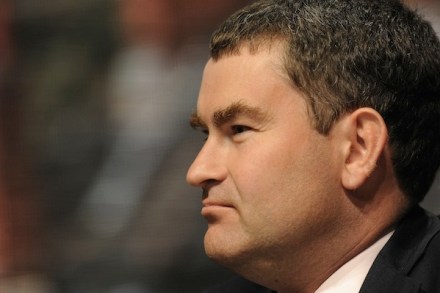
How much trouble is David Gauke in? The Justice Secretary appears to be up to his neck in it in light of the news this morning that a decision by the Parole Board to release the rapist John Worboys has been quashed following a legal challenge by two of the taxi rapist's victims. The problem is Gauke decided that the government would not pursue a judicial review to stop the release of the serial sex attacker on the grounds that it 'had no reasonable prospect of success'. At the time, there was widespread outrage at the decision and so Sadiq Khan, the Sun and several of Worboy's victims launched legal challenges of their own.

After the Salisbury attack, who is isolated now?

From our UK edition

No 10 can breathe a sigh of relief this afternoon. Not only has Theresa May's response to the attempted murder of a former Russian double agent on British soil won her plaudits back home, it has also been met by a rigorous international response. With Germany, France, Ukraine and Canada already expelling envoys, today America joined the fold. Donald Trump has ordered 60 Russian diplomats to leave the country in response to Russia's alleged use of a nerve agent in Salisbury. A White House spokesperson said: 'The United States takes this action in conjunction with our NATO allies and partners around the world in response to Russia's use of a military-grade chemical weapon on the soil of the United Kingdom, the latest in its ongoing pattern of destabilising activities around the world.

Cambridge Analytica row moves to Brexit

From our UK edition

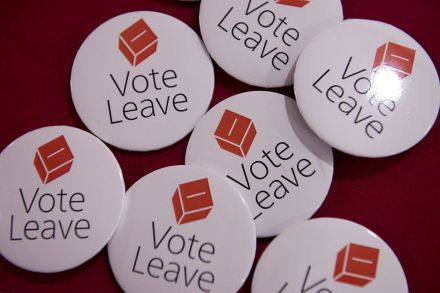
The Cambridge Analytica row looks set to move from the US presidential election to the EU referendum. After Christopher Wylie blew the whistle in the Observer and claimed that Cambridge Analytica used questionable Facebook data to win the US election, the paper looks set to re-focus its investigation on the Brexit campaign. In an 8,000 word blog post, Dom Cummings – the Vote Leave strategist – says that the Observer and Channel 4 investigation has moved onto Brexit. Cummings says that the author behind the investigation – Carole Cadwalladr – has sent Vote Leave figures a list of questions concerning allegations from Wylie along with a number of new whistleblowers.

Brexiteers smell something fishy in the transition agreement

From our UK edition

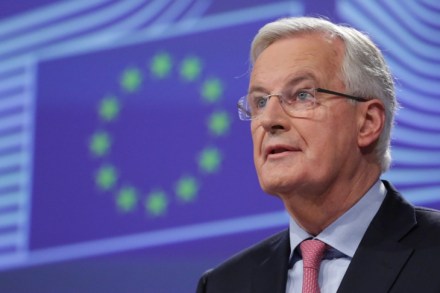
The Brexit transition draft agreement is in – and it's not all smooth sailing for the UK government. In a press conference, Brexit negotiators Michel Barnier and David Davis heralded the proposed terms for the implementation period as a 'decisive step' towards achieving an orderly Brexit. However, it's clear that the government will have to rein in some disorderly MPs before it's signed off by the EU27 on Friday. As proposed, the transition period will end New Year’s Eve 2020, three months earlier than expected. In terms of the pros for the UK side, the government will be able to negotiate and sign trade deals during the transition period and there is no longer a 'punishment clause'. The clear cons, however, relate to fisheries and Northern Ireland.

The electoral spending figures highlight the Tories’ social media problem

From our UK edition

The Electoral Commission has released details of the different parties' spending on the snap election and it doesn't make pretty reading for the Conservatives. Not only did they manage to lose their majority in that disastrous election, they also managed to spend the most money of any party in the process. The Tories spent a record £18.5million on their campaign, while Labour spent just over £11million and the Lib Dems around £6.8million. It's already well documented that the Conservatives misallocated their resources and spent money in seats they wanted to win (and didn't) when they should have been focussing on a defensive campaign in seats like Kensington, which they lost by a handful of votes.

Will Russia disrupt the local elections?

From our UK edition

Will Russia disrupt the local elections? That's the question being asked in Westminster. But rather than worries over Russian meddling and subterfuge, the issue at hand is whether Jeremy Corbyn's questionable response to the attempted murder of a former Russian double agent on British soil will help boost the Conservative vote come May. Those local elections are expected to be a blood bath for the Tories, with Labour predicted to win big – particularly in the capital. The Conservatives are so worried about the vote that the managing expectations operations includes suggesting that it would be a disappointing night for Labour if the party didn't win every London council. But in recent days something strange has happened.

Gavin Williamson shows his inexperience

From our UK edition

As Jeremy Corbyn comes under pressure from his own party over his stance on Russia, Theresa May is looking increasingly statesman-like by comparison. The Prime Minister's handling of the attempted murder of a former Russian double agent on British soil has won her praise – with a SkyData poll today finding that 69pc surveyed would prefer May to deal with Russia than the Labour leader. So, more's the pity for the Conservatives that today Gavin Williamson put in some rather un-statesman like behaviour. The Defence Secretary used an appearance in Bristol – where he pledged £50 million for a new chemical weapon defence centre – to issue Moscow with a warning.

Labour moderates turn up the heat in Cold War with Corbyn

From our UK edition

Jeremy Corbyn's response on Russia continues to send ripples through the Labour party. After the Labour leader failed to say that he believed Russia to be responsible for this attempted murder, his spokesman went one further in the post-PMQs briefing. They appeared to compare the intelligence about the Salisbury attack to the reports of weapons of mass destruction ahead of the Iraq war: 'I think obviously the government has access to information and intelligence on this matter which others don’t; however, also there’s a history in relation to WMD and intelligence which is problematic to put it mildly.' But this view is not one that is echoed across the party. As Isabel has noted, today in the Chamber Labour MPs were supportive of Theresa May's condemnation of Russia.

What a ‘general debate’ on European affairs reveals about the government

From our UK edition

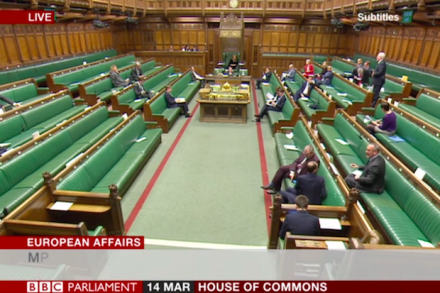
After PMQs today, Theresa May will give a statement on Russia – and the government's proposed response to the attempted murder of a former Russian double agent on British soil. Then there will be a ten minute rule motion on 'supervised drug consumption facilities' and after that a 'general debate' will commence on European Affairs. This will run on through the afternoon until 7pm – and should any MPs not have the chance to offer their two cents worth, they need not fear as there is a second day of general debate planned. Given that it’s now 380 days until Britain leaves the EU, you’d be forgiven for thinking there may be a better way for MPs to be spending their time. After all, the statute book could hardly be described as 'Brexit-ready' right now.

The latest Labour bullying row highlights the need for an independent body

From our UK edition

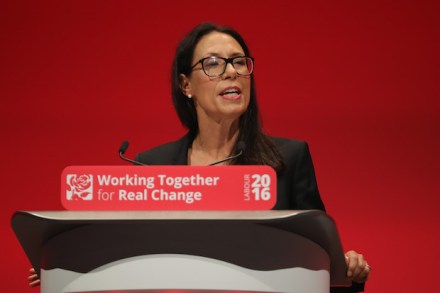
Labour's internal complaints body looks set to have a busy few weeks. After Debbie Abrahams was effectively suspended as Shadow Work and Pensions Secretary over allegations of bullying, the Labour MP made a bullying allegation of her own. Abrahams claims she's the one being bullied – accusing unnamed figures in the Leader's Office of behaving in an 'aggressive' and 'intimidating' manner towards her. Adding to those two impending investigations is a report today by the Financial Times alleging that Karl Turner, Shadow Transport Minister, slapped a woman’s buttocks  as she walked through his constituency office in the summer of 2015. Now these type of allegations are by no means confined to just Labour.

European Commission rain on Theresa May’s parade

From our UK edition

Here we go. The European Commission draft guidelines for the Brexit trade negotiations have leaked – and, as expected, it doesn't make all that pretty reading for the British government. Although Theresa May's Brexit speech was well-received in the UK, in Brussels many of May's arguments and proposals appear to have fallen on deaf ears. Speaking today, Donald Tusk has warned that it is not his priority to make Brexit a success: 'I fully understand and respect Theresa May’s political objective to demonstrate at any price that Brexit could be a success and was the right choice. But sorry, it is not our objective.' The main takeaways from the text, obtained by Politico, are that there can be no 'partial participation' – aka cherry-picking – in the single market.