Katrina Gulliver

When the local wizard was the repository of all wisdom

From our UK edition

What do you do when one of your possessions goes missing? Search behind the sofa cushions? Ask other members of the household where they put it? If you lived in Renaissance England, there’s a chance you would have consulted a local magician for advice, especially if the lost item was of value. In the absence of police to investigate theft or insurance to cover a loss, a wizard tracing the item seemed like a fair choice. Nor was it the entirely foolish idea it might seem now. In a time when belief in magic was widely held, making it known that a magician was on the case could prompt a guilty party to come forward. In Tabitha Stanmore’s Cunning Folk, these figures played an important social and cultural role in Britain, from the medieval to early modern period.

Not everything in the garden is lovely

From our UK edition

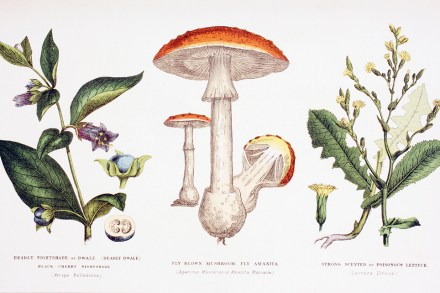
While I was reading Most Delicious Poison, I visited a herbal garden in Spain which features the plants grown by the Nasrid rulers of Granada hundreds of years ago. They cultivated myrtle for its medicinal uses and jasmine for its fragrance. How did they know of myrtle’s properties? Some ancient ancestor must have figured it out. And that ancestor might be more ancient than we realise. Noah Whiteman explains that DNA from plants found in Neanderthals’ teeth tartar suggests even they were self-medicating with herbs. We have been entangled with the chemicals around us for as long as we have been human. The author of this book, a professor of biology at Berkeley, takes us on a global trip through plants and their chemicals.

How missing persons cases work in the wild

The Pacific Crest Trail is one of the world’s great long-distance hikes, running 2,650 miles from Mexico to the Canadian border. It's a chance to see some of North America’s most majestic scenery, encompassing desert and mountain, and millions of people visit parts of it each year, to hike or run. But only a very few ever walk the whole thing. Completing the entire trail — a “thru-hike” — takes five months. The challenge breeds a kind of camaraderie among hikers, who acquire “trail names” (the 2022 finishers included individuals known as “Sparkle Lizard,” “Milkshake” and “Squiggles”) and become part of a select group. Like its Eastern counterpart, the Appalachian Trail, it is a badge of honor for those who make it through.

Lankford

Would we welcome bears in Britain again?

From our UK edition

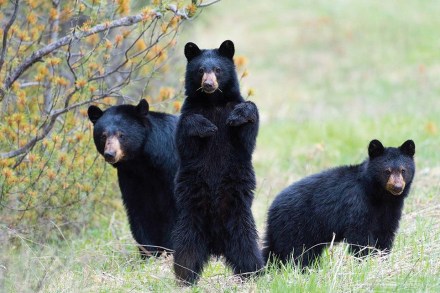
In April this year, a jogger in the Italian Alps was mauled to death by a brown bear. This was reported as the first bear killing in Italy in modern times. But it probably won’t be the last. Bears have been reappearing in northern Italy as part of a rewilding project in the last two decades, returning to regions they had been driven from hundreds of years ago. More encounters between bears and humans are inevitable. The poor Sun and Moon bears are preyed on in Asia for their bile, valued in Chinese traditional medicine In Eight Bears, Gloria Dickie explores how we can coexist with the remaining bear species on Earth, protecting those in danger as well as negotiating how to share space with those that are not.

Inside the world of multilevel marketing

Emily Paulson felt lost. A young mother with several small children, she’d stepped away from the career ladder and found herself stuck juggling childcare alone when her husband traveled for his corporate job. She was trapped in a circuit of sweatpants and Spongebob. So when an old high school acquaintance invited her out for wine, she was thrilled at the chance to get dressed up, go somewhere swish and feel like herself again. It turned out to be a trap. Although she wasn’t swept into the back of a van by kidnappers, she was propelled into the world of Multilevel Marketing (MLM), also known as a pyramid scheme. The drinks invitation was a lure, first to be wowed by the fabulous cosmetics she could buy (at a discount!! And didn’t her friend’s skin look amazing?

multilevel marketing

Mass poisonings in a small town in Hungary

From our UK edition

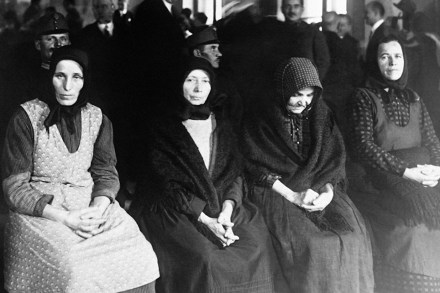
There is a small town in Hungary called Nagyrév. With a population of 800, it seems unlikely to make the news. But a century ago it turned out to be the centre of a murder ring, and suddenly it became the focus of news-paper reports across the world. The unlikely setting made the story. It was a backwater, literally: the redirecting of the Tiszaltiver river decades earlier had cut Nagyrév off. Forget cars: this was a town where it was notable in the 1920s if someone owned a bicycle. Yet the place had the murder rate of a violent city. By the time the authorities woke up to what was going on, they discovered dozens of homicides going back several years, and all traced to the town’s midwife, Suzannah Fazekas.

Britain’s money laundering scandal goes back a long way

From our UK edition

The war in Ukraine has turned a lot of people’s attention to oligarchs in the UK. How did these guys all end up in London, seemingly owning half of Belgravia? In Butler to the World, Oliver Bullough offers an answer. I read his earlier work Moneyland slack-jawed at the blatant – and mundane – techniques employed to register UK Ltd companies through frontmen and use them to launder money. I thought the middle men would be glamorous and slick, not running a website from an office above a chip shop. In this work Bullough looks at the bigger picture: the way Britain became the destination of choice for so many who don’t want questions asked about their wealth.

Should we blame our ancestors for slavery when we’re equally culpable?

From our UK edition

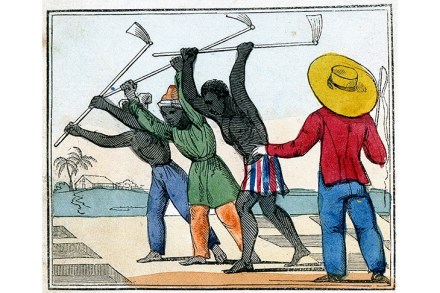
The premise of White Debt is that the author’s ancestors ran a business selling a product grown by slaves. Therefore he wants to investigate Britain’s role in slavery — which is a rather odd framing, since his family’s tobacco firm wasn’t started until decades after slavery in British colonies was abolished. But Thomas Harding apparently only recently learned that slavery happened in the British Empire. He goes as far as to ask: ‘How could I not have known this?’ Well, truly, I don’t know. I don’t recall the time when I wasn’t aware that slavery was the reason that people of African descent live in the Caribbean today. Some of their ancestors were enslaved in territories that belonged to Britain.

Don’t ask a historian what history is

From our UK edition

E.H. Carr’s 1961 book What is History? has cast a long shadow over the discipline. I recall being assigned to read it as a teen-ager, and it has prompted multiple reconsiderations over the years — as acknowledged by the editors in their introduction to this book. Reappraisals and conferences on ‘What is History?’ are launched with regularity. (One of the editors of this volume is Carr’s great-granddaughter.) Aside from the reappraisal of Carr’s original work, the fact that books like this continue to be produced in academic history says something about the slipperiness of defining it in the first place — and the discipline’s own anxieties.

Girls on film

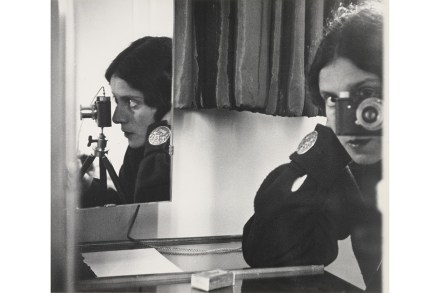
We are familiar with Dorothea Lange’s gritty photographs of Okies during the Dust Bowl. New Woman Behind the Camera, which opens this month at the Metropolitan Museum of Art, showcases Lange alongside over 120 other female photographers who refashioned modernist photography in the same years. Photography developed through an ambivalent relationship to high art: the camera was often seen as a medium for journalism or advertising. Yet the modernist works here showcase the flexibility of the form. Still, there are inherent tensions in an exhibit like this. Georgia O’Keeffe once declined an invitation to be included in an exhibit of ‘women artists’: she wanted to be seen as competing with the best, not as part of an inferior subgroup.

woman

Read all over

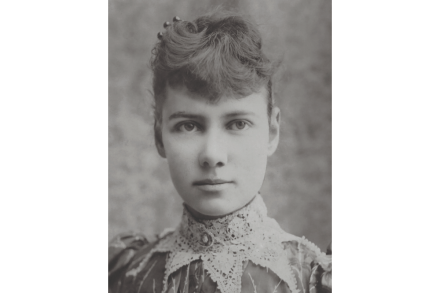
In the 1880s a new group of women was entering newsrooms. Not content to write society sketches or cover the fashionable hats of the season, they went for bold reporting — often going undercover or participating in other dramatic ‘stunts’. The antic that launched Nellie Bly’s career in 1887 was getting admitted as a patient on Blackwell’s Island in New York, then an insane asylum for women. She had told the editor of the New York World she would do anything fora job on the paper, and this was what she was assigned. She went to a boarding house under an assumed name, pretended to be unhinged and was duly committed. Rescued after 10 days by a representative from the World, her exposé of the indignities suffered by patients in the asylum was a sensation.

sensational

Picking Apple

Would you sign up for a screening streaming service that only had a dozen movies? A handful of series, and no classics? You might pause and ask if it’s worth it, compared to the range of options on other streaming providers. But if you’re like many of us, you might decide to pony up — after all, it’s only $5. Of course, I’m describing Apple TV+. It’s cheaper than Netflix or Hulu. But what you get, at least for now, is pretty limited. That’s not to say what they have isn’t good: they’ve pumped in a massive budget to lure creators like Oprah and Werner Herzog to this enterprise. Their movies have major stars. There just aren’t many of them. But they could have gone the other way.

apple

Heroine problem

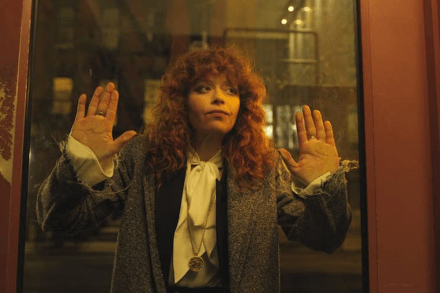
The antihero began as the ‘Byronic hero’ and was represented in the prestige television era by unlikable men in gritty dark dramas. Not completely unredeemable and usually handsome enough to catch the female viewer’s eye, this formula gave us Tony Soprano (The Sopranos), Dexter Morgan (Dexter), Walter White (Breaking Bad), Don Draper (Mad Men) and Gregory House (House). But their distaff counterparts were still villains or maidens. What we didn’t have was many antiheroines. Until quite recently, the closest thing TV had to an antiheroine was Carrie in Sex and the City. It was hard to sympathize with her: most of her problems were her own fault. She cheated on her boyfriends, then wrote narcissistic newspaper columns telling us all about it.

antiheroine

The British Empire is now the subject on which the sun never sets

From our UK edition

Wrestling with the history of the British Empire is the unfinished and unfinishable project of our history. Time’s Monster takes a meta-approach to this. Its author Priya Satia has read widely, and has written essentially a cultural history of the Empire from the early modern period to today, of the way Britain’s colonial expansion has been interwoven with the culture. Many of the connections she draws are intriguing and her narrative is nuanced enough to be sympathetic to both pro- and anti-imperial arguments past and present.

The South Sea Company’s bonds were never meant to be a scam

From our UK edition

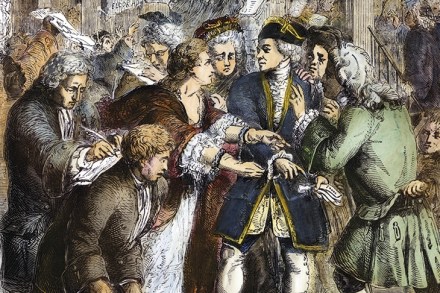
In Money for Nothing, Thomas Levenson brings us into the story of the South Sea Bubble by writing about the development of the mathematics of odds and prediction. These advances were the beginnings of actuarial science: an understanding of risk that underpins insurance. We start with Isaac Newton and his role in attempting to stabilise the currency with something we now think of as quite normal: currency revaluation (Levenson’s previous work on Newton means he’s well prepared here). Much of early modern Europe based their currencies on silver, and fluctuations in the value of the metal were a recurring issue. Ongoing wars meant England was massively in debt, and having its coins worth more (as silver bullion) than their face value in pounds was a problem.

Globalisation is scarcely new: it dates back to the year 1000

From our UK edition

In Japan, people thought the world would end in 1052. In the decades leading up to judgment day, Kyoto was rocked by a series of epidemics. It seemed the end was truly nigh. Of course they were wrong, but they were hardly the only people to predict the end of humanity on a specific date. For many tenth-century Christians, the year of the expected doom was 1000 AD. Valerie Hansen’s book focuses on this non-apocalyptic but significant year as the beginning of what we would think of as globalisation. Obviously with our European perspective we’re familiar with such major events of the 11th century as the Norman Conquest and the First Crusade. But this book draws us to what was going on in the Americas and Asia as well.

How the Lyons Corner House became a haven for the single working woman

From our UK edition

In Whitechapel, in the mid 19th century, rolling and selling cigars was a way for a newly arrived immigrant to scrape a living. This is what Samuel Glückstein did, after he landed in London from Belgium in 1843. He built up his cigar business until he could send for his parents and siblings. One of his sisters married a man named Salmon (also in the tobacco trade) and thus the Salmon & Gluckstein firm was born. The fortunes of these intertwined families and their business empire are traced in this book. Within 20 years they had a large chain of tobacconists, and their brand was known across the country.

Harlequin ladybird, fly away home

From our UK edition

I was shocked some years ago to discover, as I scratched bites on my ankles on holiday on Maui, that mosquitoes are not native to Hawaii. They first arrived in the 1820s, in barrels of water from a visiting ship. Of course, the climate was perfect for them, and they settled in very happily. But we could have had tropical islands free of them  — and the risk of diseases they can carry. The story of invasive species is often one of accidental introduction. Or of misguided humans who think they are somehow setting a creature ‘free’ — like the group of Buddhists who released hundreds of foreign lobsters from a boat off the English coast in 2015 as part of a religious ceremony.

The cruellest sea

From our UK edition

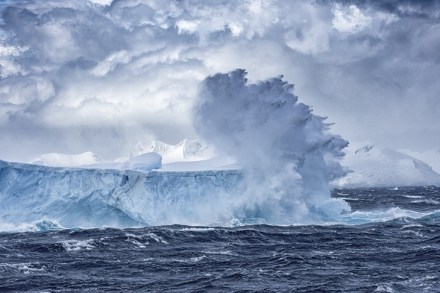
‘Below the Forties there is no law, and below the Fifties there is no God.’ Most sailors know some version of this saying, referring to the dangerous waters more than 40º south of the equator. In Wild Sea, Joy McCann focuses on these waters with a history of the Southern Ocean. The ocean surrounds Antarctica, its northern bound still open to dispute. In the 1928 first edition of Limits of Oceans and Seas, the Southern Ocean was delineated by land-based limits: Antarctica to the south, and South America, Africa, Australia and Broughton Island, New Zealand to the north. More recently, cartographers have tried to limit its scope.

Veep’s jokes are the truth about women in politics

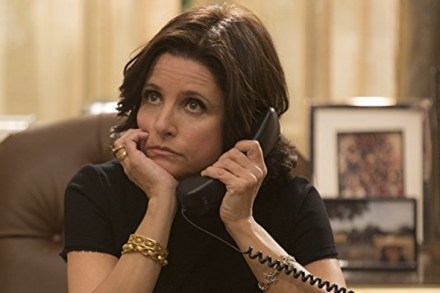
The new season of Veep will show Selina Meyer as a former president. It’s an awkward role at the best of times; George Washington’s model, Cincinnatus, has long since become Davos Man. For a woman, it’s likely to offer particular challenges — and a key element of the show’s genius has always been its consideration of the realities of female leadership. Veep was created by Armando Iannucci as a spin-off from his successful UK comedy, The Thick of It. Veep quickly came into its own, offering a view of the idiosyncrasies of American politics through a thick fog of obscenity and insults. Veep’s Selina Meyer (Julia Louis-Dreyfus) is not like the hapless, hopeless MPs satirized in The Thick of It.

veep