Katrina Gulliver

The healing art

From our UK edition

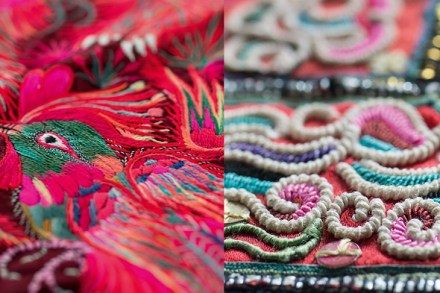
In this unusual book, part memoir, part history, Clare Hunter offers a personal meditation on the textile arts. Sewing and its associated skills have been coded as female, and the expertise required to master them has been trivialised. Hunter describes how when women demonstrate intricate embroidery or stitching, a man can be guaranteed to crack a joke about how his trousers need hemming or a button needs sewing on. But embroidery was not always so devalued. Royal families commissioned it for clothing and wall hangings to demonstrate their wealth and power. During the high point of medieval English embroidery (Opus Anglicanum), it was desired all over Europe. Gold thread created shimmering effects, and meant that each piece was worth a fortune.
Stitches in time | 11 October 2018

From our UK edition

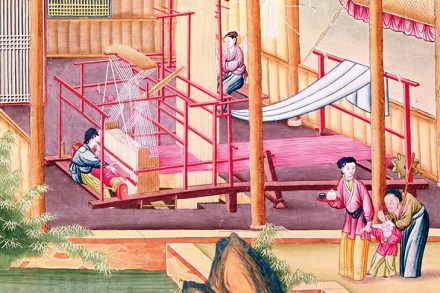
I recently read a book in which the author, describing rural life in the early 19th century, casually mentioned clothing as being ‘all made in the home’. I laughed. Anyone who has ever tried to sew anything (let alone make an entire family’s wardrobe by hand) would not be so cavalier about the amount of labour involved. But it is typical of how a female trade tends to be dismissed as something anyone (well, women) can do in their spare time, as a picturesque hobby. Nobody similarly suggests that farmers in the 1800s made all their own furniture or saddles. But just like those items, clothing was made by people who made clothing for a living.

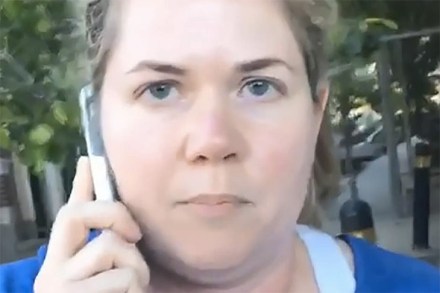
Why is it always white women calling the cops on non-criminals?

When we hear about white people calling the police on Black people, it seems like an epidemic of racist jerks ratting out fellow citizens for trivial crap. It is. It’s also a product of the fact that white people — or specifically middle and upper-middle class white people — have a relationship with authorities which differs from other ethnic groups. It is a worldview, which is much larger than just calling the cops on suspicious black people. We call the cops on each other at a rate much higher than other groups.

When voters lose faith

From our UK edition

If social media manipulation has influenced elections, and dark money has influenced our elected representatives, then we are already on the road to unfreedom, as Timothy Snyder, the well-known historian of Russia, argues in his new book. He sees threats to democracy in Europe and America as following the Russian model of oligarchic takeover: ‘The stabilisation of massive inequality, the displacement of policy by propaganda, the shift from the politics of inevitability to the politics of eternity.’ Snyder focuses on the Ukrainian crisis, noting how this conflict became a theatre of cultural memory: during the Russian invasion it was once again 1941, the enemies were Nazis, and tanks were even painted with slogans such as ‘For Stalin’.

Not all bunk

This book reminded me of Kurt Andersen’s Fantasyland — but where Andersen thinks only Americans have lost their minds, David Andress thinks everyone has. I can’t say I disagree, being a subscriber to the Hourly Outrage, also known as Twitter. Andress refers to Brexit, Donald Trump’s election and Marine Le Pen’s rise in French politics as things that should have been ‘punchlines’, comparing those who voted for them to dementia sufferers. And that’s just in the first couple of pages. So I’m guessing that as a Leave voter, I’m not the intended audience — nor do I, as someone with a PhD in history, fit into Andress’s analysis of uninformed and delusional Brexit voters.

On with the new

From our UK edition

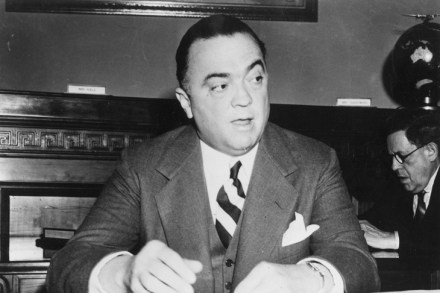
I grew up knowing 1947 as the year of my father’s birth, in a black-and-white faraway time. I was told about rationing and petrol coupons, as yet another chapter in the long book of ‘how good you have it now’ — along with chilblains, measles, castor oil and walking ten miles to school neck deep in snow, uphill both ways. The Swedish author Elizabeth Åsbrink presents the year as the fulcrum of modern history, when ‘everything seemed possible, as it had already happened’. Month by month, she shows us the year through the eyes of a disparate cast of characters. Some of them are well known (George Orwell, Simone de Beauvoir, Chuck Yeager, Primo Levi), some are passers-by who happened to be in history’s path.

Ratings war

From our UK edition

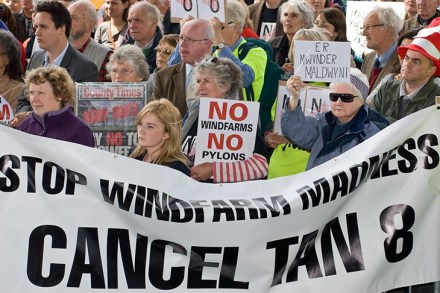
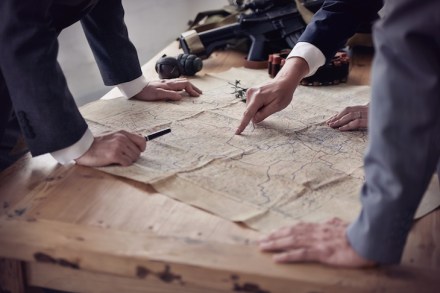
Planning for the ‘war of the future’ is something generals and politicians have been doing for the past 150 years. The first and second world wars were the most anticipated conflicts in history. Military strategists and popular novelists all published the wars they envisioned in the decades before. Whether in the spycraft of Erskine Childers or the science-fiction of H.G. Wells, the reading public was warned of the carnage to come in many imaginative forms. But all that anticipation did little to avert the bloodbaths. In this book, Lawrence Freedman offers a detailed analysis of how we have planned (or failed to plan) for conflict. Into the 20th century, military planning suffered from still focusing on the model of the Napoleonic wars, with the notion of the decisive battle.

The fruits of imperialism

From our UK edition

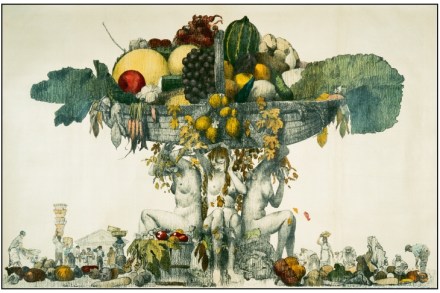
Imagine yourself a middle-class person in England in the 1870s. You sit down to drink a cup of tea while reading The Spectator. It probably doesn’t cross your mind, but in your hand you hold products from around the world. Your tea is from Ceylon, the sugar in it from Jamaica, and your porcelain cup was made in China. Your afternoon refreshment is the culmination of global trade developed over centuries. In A Thirst for Empire, Erika Rappaport traces how tea became a staple of the British diet after arriving in the 17th century, and has not lost its popularity yet. This is a detailed work, at over 400 pages of small print, but provides interesting explorations of the health-giving powers attributed to tea, and how it came to be seen as a wholesome and vital drink.

Crossing the pond

From our UK edition

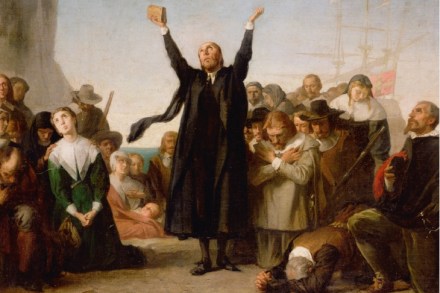
What led a person in 17th-century England to get on a ship bound for the Americas? James Evans attempts to answer that question by exploring both the push and pull factors involved. His descriptions are vivid, so the reader can imagine the life choices that would lead to one finding oneself heaving up over the side of a small ship somewhere in the mid-Atlantic, or watching the burial at sea of a fellow passenger, and hoping to God one had made the right choice. God, of course, was a big part of the choice for many of them. The Mayflower pilgrims, who landed at Plymouth Rock in 1620, are the quintessential ‘religious liberty’ seekers, so many of whom headed across the Atlantic.

Shame and scandal in the American west

From our UK edition

In the early 1920s, while the United States was entering its crazed phase of prohibition and prosperity, a group of Native Americans had also just struck it rich. The Osage were a tribe who had been driven west (like others), and had settled in a rocky region of northwest Oklahoma. Unlike other Indian nations, they purchased their new land (which meant the federal government couldn’t move them along again), and in 1906 they had the foresight to include a covenant to the title of what became the Osage nation. Land could be sold, but no matter who owned an individual plot, all mineral rights were retained by the Osage. In Killers of the Flower Moon, David Grann describes in detail how the subsequent oil boom made the Osage the richest group in America per capita.