Katrina Gulliver

When the local wizard was the repository of all wisdom

From our UK edition

What do you do when one of your possessions goes missing? Search behind the sofa cushions? Ask other members of the household where they put it? If you lived in Renaissance England, there’s a chance you would have consulted a local magician for advice, especially if the lost item was of value. In the absence

Not everything in the garden is lovely

From our UK edition

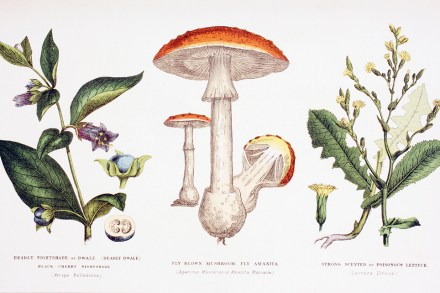
While I was reading Most Delicious Poison, I visited a herbal garden in Spain which features the plants grown by the Nasrid rulers of Granada hundreds of years ago. They cultivated myrtle for its medicinal uses and jasmine for its fragrance. How did they know of myrtle’s properties? Some ancient ancestor must have figured it

Would we welcome bears in Britain again?

From our UK edition

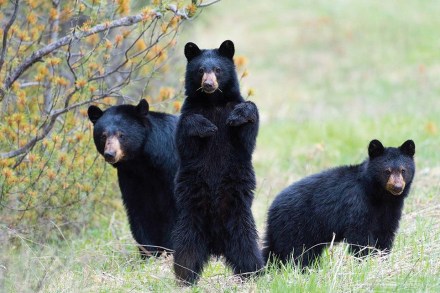
In April this year, a jogger in the Italian Alps was mauled to death by a brown bear. This was reported as the first bear killing in Italy in modern times. But it probably won’t be the last. Bears have been reappearing in northern Italy as part of a rewilding project in the last two

Mass poisonings in a small town in Hungary

From our UK edition

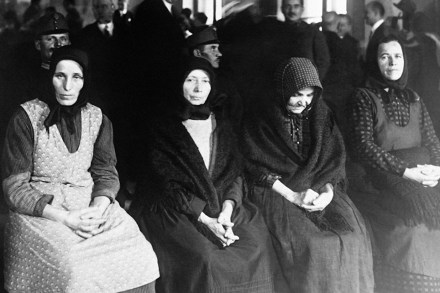
There is a small town in Hungary called Nagyrév. With a population of 800, it seems unlikely to make the news. But a century ago it turned out to be the centre of a murder ring, and suddenly it became the focus of news-paper reports across the world. The unlikely setting made the story. It

Britain’s money laundering scandal goes back a long way

From our UK edition

The war in Ukraine has turned a lot of people’s attention to oligarchs in the UK. How did these guys all end up in London, seemingly owning half of Belgravia? In Butler to the World, Oliver Bullough offers an answer. I read his earlier work Moneyland slack-jawed at the blatant – and mundane – techniques

Don’t ask a historian what history is

From our UK edition

E.H. Carr’s 1961 book What is History? has cast a long shadow over the discipline. I recall being assigned to read it as a teen-ager, and it has prompted multiple reconsiderations over the years — as acknowledged by the editors in their introduction to this book. Reappraisals and conferences on ‘What is History?’ are launched

The British Empire is now the subject on which the sun never sets

From our UK edition

Wrestling with the history of the British Empire is the unfinished and unfinishable project of our history. Time’s Monster takes a meta-approach to this. Its author Priya Satia has read widely, and has written essentially a cultural history of the Empire from the early modern period to today, of the way Britain’s colonial expansion has

The South Sea Company’s bonds were never meant to be a scam

From our UK edition

In Money for Nothing, Thomas Levenson brings us into the story of the South Sea Bubble by writing about the development of the mathematics of odds and prediction. These advances were the beginnings of actuarial science: an understanding of risk that underpins insurance. We start with Isaac Newton and his role in attempting to stabilise

Harlequin ladybird, fly away home

From our UK edition

I was shocked some years ago to discover, as I scratched bites on my ankles on holiday on Maui, that mosquitoes are not native to Hawaii. They first arrived in the 1820s, in barrels of water from a visiting ship. Of course, the climate was perfect for them, and they settled in very happily. But

The cruellest sea

From our UK edition

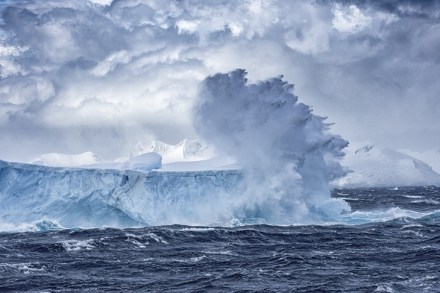
‘Below the Forties there is no law, and below the Fifties there is no God.’ Most sailors know some version of this saying, referring to the dangerous waters more than 40º south of the equator. In Wild Sea, Joy McCann focuses on these waters with a history of the Southern Ocean. The ocean surrounds Antarctica,