Katja Hoyer

Katja Hoyer

Katja Hoyer is an Anglo-German historian. Her latest book is Beyond the Wall: East Germany, 1949-1990.

German billionaires are still benefiting from the Nazis

From our UK edition

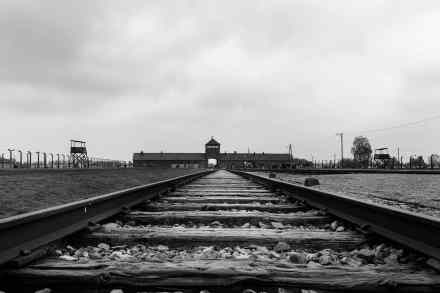
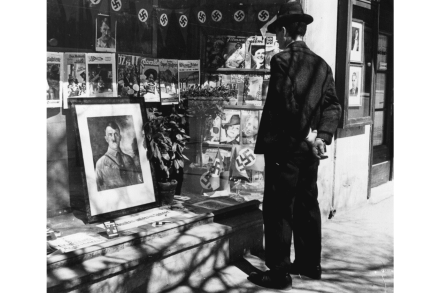
It was a clear cold morning in January 1936 when Reichsführer-SS Heinrich Himmler arrived at the luxurious Regina Palast Hotel in central Munich. He had come to pick up a group of businessmen for a day trip. Their destination: Dachau concentration camp. Nazi Germany’s first official camp had been set up by Himmler in March 1933 to detain the new regime’s political enemies. It became the prototype on which other camps were modelled. Himmler’s wealthy guests were given a personal tour by the SS leader and were impressed. Their host was ‘very carefully prepared and dressed up’, one of them commented afterwards.
Zelensky has snubbed Germany’s President

From our UK edition

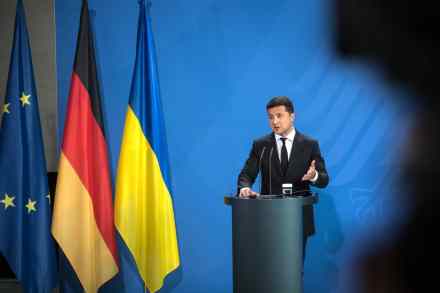
When Volodymyr Zelensky told the German President Frank-Walter Steinmeier yesterday that he did not want to see him in Kyiv, it hit his delegation like a slap in the face. The political class in Berlin still underestimates the depths of mistrust caused by Germany’s Russia policy. Whether trust with Eastern Europe can be rebuilt will depend on Berlin’s support for Ukraine – and certainly not on empty words, gestures and visits. Steinmeier had been on a state visit to Poland when Zelensky’s message reached him. He had travelled there in order to meet with President Andrzej Duda – in itself no easy encounter. Tensions between the two countries run higher than many in Germany realise.

Germany has rejected Merkel’s military legacy

From our UK edition

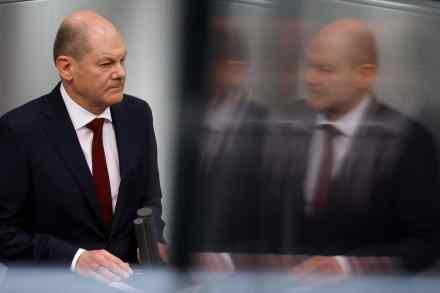
‘We are witnessing a turning point… the world is not the same anymore,’ said German Chancellor Olaf Scholz yesterday in a speech that will be remembered as the country’s biggest military shift since 1945. Staring down the barrel of Putin’s gun, Scholz announced a massive and immediate cash injection for Germany’s armed forces as well as a long-term commitment to higher defence spending. Russia’s unprovoked attack on Ukraine has pulled Germany out of decades of complacency and misguided pacifism. Foreign minister Annalena Baerbock seemed genuinely shocked at the discrepancy between Putin’s words during her visit to Moscow last month and his actions in Ukraine. She has said she feels betrayed: ‘stone-cold lied to.

Why Germany’s decision to cut Russian banks from Swift matters

From our UK edition

‘The Russian invasion marks a turning point,’ said Olaf Scholz on Saturday as he announced that Germany would break its long-standing principle of not sending arms into conflict zones by delivering 1,000 anti-tank weapons and 500 Stinger missiles to Ukraine. ‘It is our duty to support Ukraine to the best of our ability,’ he explained. With the halting of Nord Stream 2 and the offer of weapons, Berlin had already moved remarkably far out of its foreign policy comfort zone. Now it has gone a step further and agreed to exclude ‘selected Russian banks’ from the global payments system, Swift. It is not yet clear which banks will be targeted, which may affect the effectiveness of the sanctions.

Will Germany now become a serious military power again?

From our UK edition

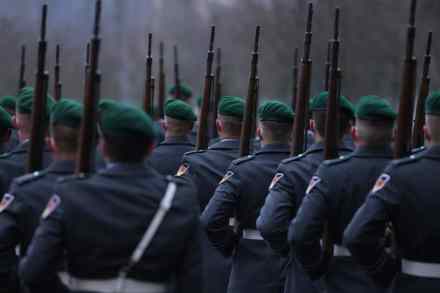
The Chief of the German Army is angry. Alfons Mais’s words were coloured by evident frustration when he said that the Bundeswehr had been ‘caught with its pants down’ in the current crisis in Ukraine:  ‘The options we can offer politicians to support the alliance are extremely limited’ Such outspoken political criticism is rare from high-ranking German military figures, which gave Mais’s rant even more resonance. He was particularly frustrated that he and others had raised concerns for years. ‘But our arguments to draw conclusions from the annexation of Crimea and put them into practice failed to cut through,’ he said. Mais admitted:  ‘That does not feel great! I am pissed off!

Cracks are already showing in the EU’s Russia response

From our UK edition

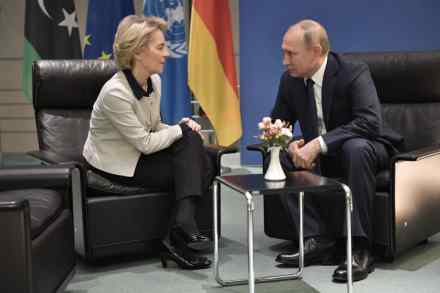
'The EU is united and acting fast,’ said Ursula von der Leyen, the president of the European Commission, as she condemned Russia's invasion of Ukraine. A new package of sanctions, swiftly agreed upon by EU member states, appeared to show von der Leyen was right. Yet in reality, the measures were disappointing: a number of Russian officials had their assets frozen, but even Putin himself avoided punishment. Given the different attitudes and interests of EU members, from here on unity will be even more difficult to obtain. While the EU has vowed to 'hurt Russia', it seems unlikely it will agree upon how.

Is Germany finally standing up to Russia and China?

From our UK edition

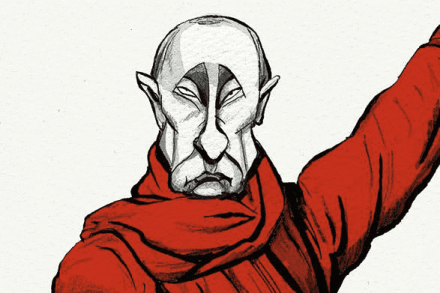
When German chancellor Olaf Scholz met Russian president Vladimir Putin yesterday, the visuals said it all. As he had done with Emmanuel Macron, Putin kept his visitor at arm’s length, or rather at five metres’ length. Sitting at opposite ends of the Kremlin’s infamous long table, the two men were as physically far away from each other as they were on content. But Scholz did not seem intimidated by this. On the contrary. At the press conference that followed, he was assertive, even feisty. Are we seeing the beginnings of a post-Merkel foreign policy shift in Berlin?

Levelling up: don’t copy the Germans

From our UK edition

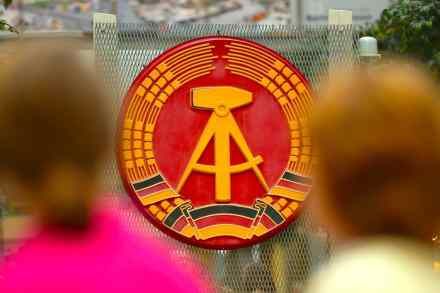
‘Germany has succeeded in levelling up where we have not,’ Boris Johnson claimed back in July last year, when talk of pork pie putsches lay far off in the future. But as the government unveils its levelling up plans today, the promise of a German-style investment package is unlikely to materialise. And that’s probably a good thing. Germany’s economic and social reunification is not the miracle it is claimed to be. In many ways, East Germany and the left-behind regions of Britain have similar economic problems, if for different reasons. When the Berlin wall fell in 1989, East Germany’s largely nationalised economy was sold-out to private investors at breakneck speed. Industrial production fell by two thirds within the first two years.

Germany’s diplomatic game doesn’t make sense

From our UK edition

Amidst the heavy criticism of Germany’s lack of commitment in the Ukraine crisis, the German foreign minister Annalena Baerbock argued in a speech to the German parliament on Thursday that alliance systems were a bit like a football team. ‘You don’t need 11 centre-forwards who all do the same thing; you need 11 players who get on with one another and who, most importantly, have the same game plan in mind.’ In other words, western alliance systems such as Nato should assign different roles and responsibilities to member states that are best suited to their individual strengths and weaknesses – horses for courses, to stay within the sporting imagery.

How can we keep the memory of the Holocaust alive?

From our UK edition

‘If people like me do not proclaim their experiences for others to hear, then future generations will not learn the lessons of these, perhaps the darkest, moments of our history,’ said Freda Wineman, who survived Auschwitz and other Nazi concentration camps and dedicated much of her life after the second world war to sharing her story. Her death earlier this month at the age of 98 meant not only the loss of a warm and much-admired individual but also that of a powerful witness to the horrors unleashed by Nazi Germany. As the Holocaust fades from living memory into history, Wineman’s story has lost nothing of its relevance, but new ways of telling it will have to be found.

Germany’s naval chief has paid the price for Berlin’s pro Russia policy

From our UK edition

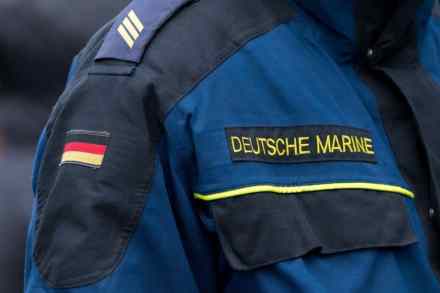
Germany's navy chief, vice admiral Kay-Achim Schönbach, resigned over the weekend. His crime? Saying something out loud that many German politicians intrinsically believe: that the Russian president Vladimir Putin deserves 'respect'. Schönbach also made the mistake of suggesting Ukraine would 'never' regain the Crimean peninsula from Russia, and calling Western fears about Russia invading Ukraine 'nonsense’. As Germany's government scrambled to limit the collateral damage of Schönbach's words as they went viral on the internet, it was clear he had to go.

Germany is toothless when it comes to facing down Russia

From our UK edition

Ukraine’s list of demands towards Germany is straightforward: it wants Berlin to stand up to Russia. With tens of thousands of Russian troops stationed on Ukraine's border, its plea is urgent. It is just a matter of time before this week's Russian-American security talks in Geneva end in a diplomatic stalemate. When that happens, an invasion could be imminent. But there's bad news for Kiev: Berlin is in no position to help. In an interview with the German press, Kiev’s man in Berlin, Andriy Melnyk, urged Angela Merkel’s successor to intervene quickly.

Germany’s China-friendly approach is continuing under Olaf Scholz

From our UK edition

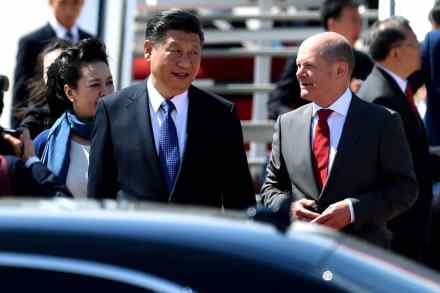
As Angela Merkel prepares to write her autobiography, 'explaining her key decisions in her own words', her successor has his hands full dealing with the decisions she did not make. Germany’s new chancellor Olaf Scholz has taken captaincy of a ship on a course to nowhere in particular. He is beginning to find out just how difficult it is to steer his predecessor’s middle course between China and the West. Sooner rather than later, some difficult decisions will have to be made as their political world drifts too far apart to be navigated in tandem from Berlin. Admittedly, this dilemma is not of Scholz’s making. Over the course of Merkel’s chancellorship, trade ties between Germany and China have become so close that they are now very difficult to untangle.

Father Christmas battles through the Blitz

From our UK edition

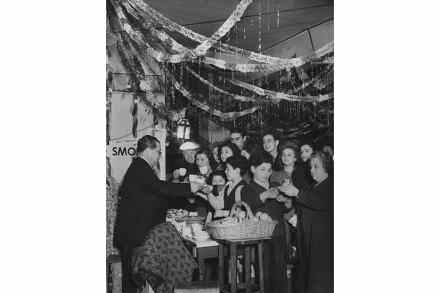
When the shrill air raid sirens blared their familiar warning cries over the city at 6.01 p.m. on 29 December 1940, Londoners thought they knew what was coming. Life under siege had taken on a strange sense of normality. They had been bombed systematically by the Luftwaffe for months and fully expected this to resume with ferocity after a brief lull over the Christmas period. But the events that unfolded that night would bring horrors on an entirely new scale. The 136 bomber planes that swooped down from the sky and dropped their high explosives and 22,000 incendiaries onto the capital were intent on creating an inferno. It worked. The low tide of the Thames combined with the south-easterly breeze to create a ferocious wind corridor fanning the flames.

Will Germany’s compulsory vaccine plan backfire?

From our UK edition

Covid was probably the last thing on Angela Merkel’s mind as she listened to the East German pop tunes of her youth played by the Bundeswehr’s military band for her retirement ceremony last night. But a few hours earlier, the outgoing German chancellor had one last entry to make on her political will. No longer a member of parliament herself, she urged those who are to vote for mandatory vaccination against Covid as an 'act of national solidarity'. The German states had pulled forward a Covid conference planned for 9 December in light of high case numbers and localised pressure on hospitals and ICUs. They decided on a de-facto lockdown for the unvaccinated at federal level as well as further restrictions on social gatherings and events.

What explains Germany’s vaccine scepticism?

From our UK edition

By the end of winter, Germans will be ‘vaccinated, recovered or dead,’ according to the country's health minister Jens Spahn. Yet as Germany battles another wave of Covid outbreaks with renewed restrictions, the outgoing Merkel administration is failing to inspire public confidence in the central government. In the city of Dresden, which usually hosts some of Germany’s most iconic Christmas markets, the mood is particularly glum. Businesses in the capital of Saxony had been looking forward to welcoming locals and tourists back to the smells of Glühwein and Bratwurst. Months ago they received the green light from state authorities to open up, but then came a shock last Friday: lockdown in Saxony, no Christmas markets, no tourism.

Germany’s ‘day of fate’ is a reminder of the country’s troubled past

From our UK edition

The 9 November is often called Germany’s Schicksalstag – Day of Fate. The date punctuates the fabric of the country’s calamitous search for a political identity like no other: from its origins as a constitutional monarchy, through democracy, dictatorship and division. As every year, today too marks a point of introspection for my compatriots. Let's hope they use it well: German democracy has come a long way, but it is far from perfect. On 9 November 1918, Germany’s first democratic experiment as a nation state ended in spectacular failure. Only the third German Kaiser since the country’s inception in 1871, Kaiser Wilhelm was forced to abdicate, and with him fell the German Empire.

Why did neo-Nazis patrol the German border?

From our UK edition

Just after midnight last Sunday, around 50 vigilantes gathered in east Germany to ‘patrol’ the country’s border with Poland. They were there to stop illegal immigrants, armed as they did so with batons, a machete, a bayonet and pepper spray. They were discovered by local police forces, but a certain nervousness from the authorities was palpable as they pleaded with residents in the eastern border regions to not take the law into their own hands. While the array of confiscated weapons suggests a well thought out plan, these ‘patrols’ are by no means coherent. The largest single group was reportedly stopped by the police in the border village of Groß Gastrose and contained just 30 people.

The horror of tank warfare brought vividly to life

From our UK edition

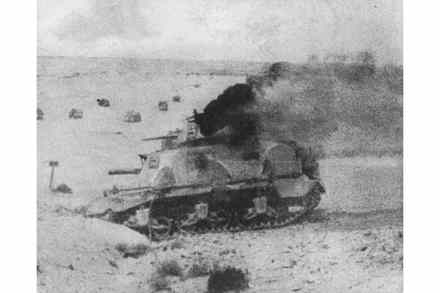
If Joseph Stalin was right about one thing it was his assertion that ‘the death of one man is a tragedy, the death of millions is a statistic’. Numbers don’t inspire empathy. They don’t tell stories. Nothing exemplifies this principle better than the second world war. The deadliest armed conflict in human history killed an estimated 70 million people or 3 per cent of the world’s population, and yet these numbers will make few people weep. They are difficult to fathom without faces. James Holland’s greatest strength as a military historian is that he brings humanity to his work — a rare trait in a field of research that can sometimes feel dominated by those obsessed with numbers.

Can the German military celebrate its history?

From our UK edition

Picture German troops marching in front of the Reichstag in Berlin. Their polished black boots hit the ground in rhythm with the drums. Night has fallen and the soldiers are carrying burning torches that cast an eerie glow over the spectacle. But these aren’t Nazis. This ceremony was held last Wednesday in honour of Germany’s Afghan campaign. The inevitable furore has overshadowed the purpose of the event — to remember the 59 German fallen — exposing the dilemma of the German armed forces: can they have a sense of history and tradition despite their unforgivable role in Nazi crimes? German politicians have been busy debating the purpose of the Afghan campaign since the Reichstag march.