Katja Hoyer

Katja Hoyer

Katja Hoyer is an Anglo-German historian. Her latest book is Beyond the Wall: East Germany, 1949-1990.

Why Merkel’s successor could be a disaster for Germany

From our UK edition

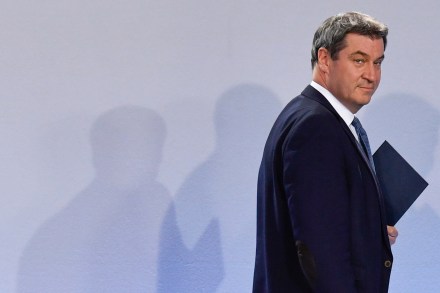
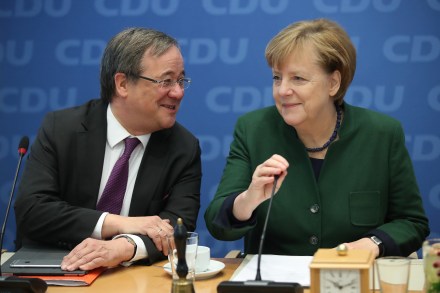
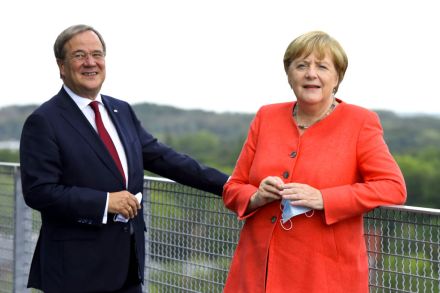
‘The die is cast,’ said Markus Söder in a press conference yesterday as he stepped back to allow his rival Armin Laschet to run as the chancellor candidate for the conservatives in Germany’s upcoming election. This ominous phrase was carefully chosen by a man who thought a disastrously wrong decision had been made by the CDU elite. Söder was by far the most popular chancellor candidate, and had a 20 point lead over his conservative competitor in the polls. Söder, the minister-president of Bavaria, won his own state and the wider German public over with his straight-talking and decisive action during the pandemic.
Why Merkel’s party is backing a political lightweight to replace her

From our UK edition

The run-up to the German federal elections in September was supposed to be dull and predictable. Merkel would name a successor and the German public would grudgingly vote for the chosen one as there was nowhere else to go. If this predictable drudge meant disaffecting voters further and losing another couple of percentage points here or there, so be it. The German conservatives would still come out as the strongest party and select its partners for a coalition, just as Merkel has done for the last four terms in office. But things have changed. The gravity of Merkel’s own personality was what held many votes tied to a party that has been haemorrhaging support for a long time.

Berlin has been bounced into accepting Sputnik

From our UK edition

Munich has had enough of the vaccine chaos in Berlin and Brussels. In a surprise announcement on Wednesday, Bavaria’s minister president Markus Söder stated that he would sign a preliminary purchase agreement for the Russian Sputnik vaccine. The leader of the Bavarian Free State explained that he would pre-order two and a half million doses of Sputnik V in the hope of receiving these by July. Söder, who is a potential candidate to replace Merkel, was keen to stress that this was dependent on regulatory approval by the European Medicines Agency.

Katja Hoyer, Fraser Nelson and Toby Young

From our UK edition

18 min listen

On this episode, Katja Hoyer looks at Ursula von der Leyen past mistakes. (00:45) Then, Fraser Nelson says the Defence Review could be a sign that Britain is learning from its foreign policy failings. (04:10) Finally, Toby Young explains the downsides to owning a small dog.

Failing upwards: the story of Ursula von der Leyen

From our UK edition

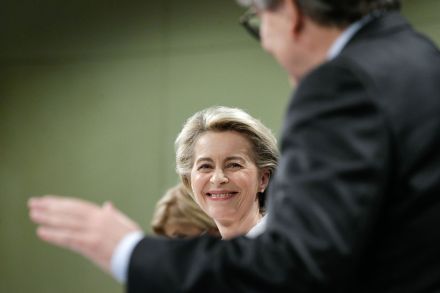
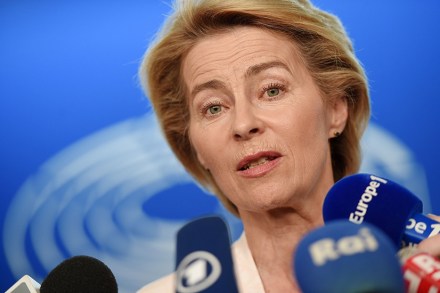
Ursula von der Leyen looks every inch the modern European stateswoman. Her tailored trouser suits, no-fuss hair and assured speeches: what’s not to like? When she was put forward by the European Council for President of the European Commission, her fellow Germans knew precisely what to expect. A poll found that only a third said she would be good at the job. Martin Schulz, a former president of the European parliament, did not mince his words. ‘Von der Leyen is our weakest minister,’ he said. ‘That is apparently good enough to head the European Commission.’ Having served as the deputy leader of Angela Merkel’s CDU party from 2010, she consistently achieved the lowest re-election results in the role’s history.

Support for Merkel’s party is crumbling

From our UK edition

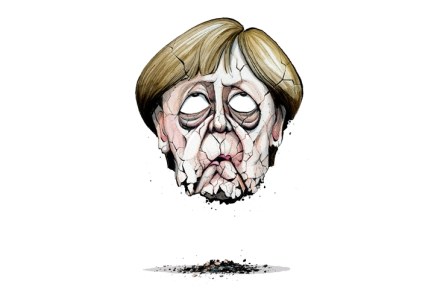
On Sunday, Angela Merkel’s Christian Democratic Union of Germany (CDU) suffered a historic election defeat in their former heartlands of Baden-Württemberg and Rhineland-Palatinate. ‘The state elections struck deep at the heart of the union of the CDU and CSU,’ said Markus Söder, leader of the CDU’s Bavarian sister party, the Christian Social Union. To an increasingly frustrated public, the ruling parties in the capital look tired and devoid of ideas. There is no incentive for Merkel and her cabinet to turn things around. After 16 years in government and on the brink of retirement, she has become a lame-duck chancellor. Some German journalists have even begun to call the whole sorry saga ‘the duck tales’.

The rapid fall of Germany’s health minister

From our UK edition

Young, polished and confident, Germany’s health minister became the country’s most popular politician in 2020. A darling of the conservative right, Jens Spahn, was even tipped as a candidate to succeed Angela Merkel as chancellor. At the peak of his popularity last November, surveys indicated approval from nearly two-thirds of all Germans. He seemed to reflect the success story that was Germany’s handling of the pandemic, the personification of friendly German efficiency. Fast forward to last week, and you find a defensive Spahn facing a hostile one-hour long grilling in parliament. His arms crossed and his jaw set, the 40-year-old was visibly tense as he braced himself for questions from angry MPs.