Kate Womersley

No pain, no gain

From our UK edition

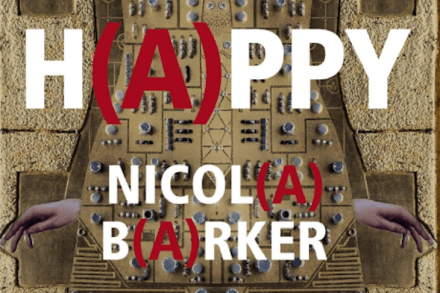
It is an unexpected pleasure when fiction has a soundtrack to accompany the work of reviewing. H(A)PPY is ‘best enjoyed in conjunction with Agustin Barrios: The Complete Historical Guitar Recordings’, Nicola Barker advises before her text gets underway. It’s tempting to dismiss this as a gimmick. But Barrios’s music strikes a deep chord with the rebellion at the heart of Barker’s 12th novel. Born in the 1880s, the Paraguayan’s playing was ridiculed because he preferred his guitar strings to be made of steel rather than fashionable gut. His dissonant art, like Barker’s today, could not be accused of courting admiration.
Bring up the bodies

From our UK edition

I grew up with a skeleton in the attic. My mother’s clinical training bestowed on our family a short man’s dry remains, and his residency at home fed the nightmares of my siblings. When I started medical school, he came too, but now as an ally in passing the anatomy exam. On moving house, I stiffened as the taxi driver carried the loosely fastened casket in just one hand. A pavement littered with 200 bones would have been a challenging start in this family-friendly neighbourhood. My accustomed eyes were suddenly anxious to protect others from such a deathly interruption. Carla Valentine doesn’t want her choice of job to sound pathological.

Bedside manners

From our UK edition

‘A tricky part of my job,’ the GP said, scrolling through the next patient’s notes, ‘is breaking good news.’ As a medical student on placement, I listened as he told the young woman that her ‘presenting complaint’ —blurred vision, fatigue and tingling down her arms — was not in fact multiple sclerosis. The diagnosis had been made several years earlier but her latest MRI scan suggested that MS was very unlikely. Despite the GP’s prediction that this would be a complicated consultation, he still looked frustrated when the patient didn’t respond with relief to his diagnostic revision. Instead, her weariness was edged with anger. ‘If it’s not MS,’ she said, ‘why do I feel so unwell?

Thoughts on the human condition

From our UK edition

This past autumn has felt more uncomfortable than usual to be a woman looking at men looking at women. From Hillary Clinton’s ‘overheating’ episode (‘Does she have Parkinson’s? Is she wearing a catheter?!’) to Donald Trump’s assessment of female limbs as if they were building materials, election season finished with the male members of our new first family peering over the voting booth to check on their wives. Siri Hustvedt has long been interested in how the way we look at the world privileges certain political, gendered, artistic and scientific agendas, while excluding others. These dynamics are at play between a reader and a writer, a doctor and a patient, a neuroscientist and the brain she studies.

Spectator Books of the Year: A death row dispatch

From our UK edition

As events unfolded this year, it was reassuring to read superb non-fiction that celebrated expertise. Two stand out. Trials: On Death Row in Pakistan (Penguin, £16.99) tells how Isabel Buchanan, fresh from a law degree, applied her feeling and intelligence to apprentice in a jurisdiction which, by 2014, saw a person executed every day. Ed Yong’s magnificent revaluation of bacteriology, I Contain Multitudes (Penguin, £20), counsels humility for student doctors like me: modern medicine’s pathogens may be the future’s therapeutics. And then there is Mark Greif’s Against Everything (Verso, £16.99), which — as its title suggests — matches brilliant critique with improbable optimism.

The key to a hidden kingdom

From our UK edition

It’s a modern pastime to hypothesise about what makes a good relationship. One evening not long ago in a Berlin bar, I listened to a friend diagnose how things were going with his partner: ‘We might have become a bit too symbiotic.’ Surprisingly earnest perhaps, but that’s what you get when a sociologist dates a psychoanalyst. On the way home, I wondered why symbiosis, apart from the obvious dangers of parasitism, might not be that desirable coexistence all our theories point toward. After all, the OED recommends that this ‘interaction between two different organisms living in close physical association’ is ‘typically to the advantage of both’. The darker side of symbiosis, I suppose, is the risk of losing yourself.

An age-old problem

From our UK edition

With a title like A Beautiful Young Wife, this is of course about the decline of an older husband. Professor Edward Landauer, virologist in avian flu at Utrecht University, sees Ruth Walta’s bottom passing on a bicycle and knows she must be his. Full of autumnal entitlement, at 15 years her senior even Edward is surprised when this vegetarian PhD student of sociology loves him back. They marry. But with time, incompatible ideas — about vivisection, interior decoration and the meaning of human good — drive Edward to a public bathroom and into the arms of his colleague, Marjolein. As a regular at any coffee shop in a university town you may well overhear a story like it, invariably soliciting the same response: ‘How predictable.

Stiffen the sinews

From our UK edition

It’s not unreasonable to expect that the anatomy syllabus for a medical degree should include breasts. Last year I performed full-body dissection as part of my training to become a doctor. After timid first incisions to the arm, we students were entrusted with opening the chest cavity. Two obstacles blocked the way. I looked in the course manual for directions about how to cut — through? around? underneath? But there was no mention of these pleasure-giving, milk-yielding, cancer-visited organs. One justification for the vast expense of cadaveric dissection is to develop a clinical understanding of the body in its supposed entirety.

The death of the author

From our UK edition

The ‘journey’ — at least the one played out in public — begins with an announcement that you are incurable. Patient waiting follows, described in monthly essays written for a respected publication. Jenny Diski (non-small cell adenocarcinoma, London Review of Books) calls this personally singular but culturally familiar experience the race from ‘the Big C to the Big D’. Surely the hope is not to reach the end in the fastest time. But if you take too long, your audience’s sympathy might tinge with suspicion, as Clive James (B-cell lymphocytic leukemia, the Guardian) recently described, now a survivor of several years. Claiming a title for your cancer memoir has also become competitive.

From surgeon’s scrubs to patient’s gown

From our UK edition

Who would you trust to take a blade to your brain? Medical schools and hospitals, arbiters of this outrageous intimacy, select the steadiest hands and the steadiest temperaments. Neurosurgery has an almost religious aura, an intellectual status approaching quantum physics and a work ethic of unforgiving precision. Most elusive of all, this elite should be able to express the pleasures and pains of being human. Ian McEwan’s fictional neurosurgeon, Henry Perowne, is suspicious in his indifference to literature, whereas Henry Marsh, neurosurgical consultant and author of Do No Harm, has earned respect through his elegant prose. To take care with words is invaluable in the heroic efforts of preserving personhood. Paul Kalanithi was to become one of these rare surgeon-storytellers.

A life well lived

From our UK edition

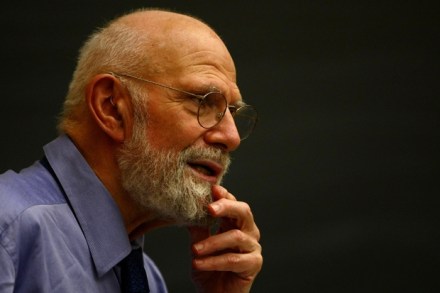
‘I cannot say there is no vanity in making this funeral oration of myself, but I hope it is not a misplaced one,’ wrote David Hume on the eve of his death in 1776, under the title, ‘My Own Life’. It is with this same title that, accepting the inevitable progression of metastatic cancer in his liver at the age of 81, Oliver Sacks paid tribute to his favourite philosopher. Like Hume, the charge of vanity was not unfamiliar to Sacks when writing about his achievements and the shapes of his inner life. In a way rare for a doctor, Sacks was prepared to admit that vanity is part of the medical endeavour: a restless pursuit to know the goings-on of your mind, to understand your heart, your lungs and your legs, to look again and again and again.

Beyond the call of duty: the kindness of strangers is a pleasing mystery

From our UK edition

When I applied to medical school, an experienced doctor offered me some advice: ‘Don’t give them reason to think you’re a “wounded healer”. They’re suspicious of that.’ The term is Carl Jung’s, by which he meant that personal difficulty is a powerful spur for joining a caring profession, but the results of such motivations are not always constructive. If you appear too altruistic, questions may surface about whether you might, in some way, be damaged. So what about those people who don’t just do their job, but dedicate their lives to helping others? The New Yorker staff writer Larissa MacFarquhar examines our ambivalence about goodness in her brilliantly thoughtful new book.