Kate Grimond

The tale of Chitty-Chitty-Bang-Bang

From our UK edition

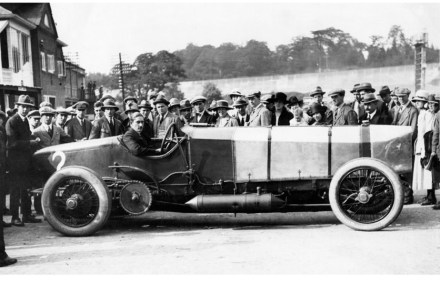
On 31 May 1961 Ian Fleming wrote to Michael Howard at Jonathan Cape, publisher of his James Bond novels: ‘I am now sending you the first two “volumes” of Chitty-Chitty-Bang-Bang. Heaven knows what your children’s book readers will think of them.’ He ended his letter: ‘I am gradually reactivating myself and I hope to be up in London for about two days each week. Though much will depend on a gigantic medical conference this afternoon.’ Six weeks earlier, Fleming had suffered a serious heart attack. He was 52. Despatched to convalesce at a seaside hotel on the south coast and forbidden a typewriter to prevent him from working, he passed the time writing out in longhand the story for his eight-year-old son, Caspar.
Turning up trumps

From our UK edition

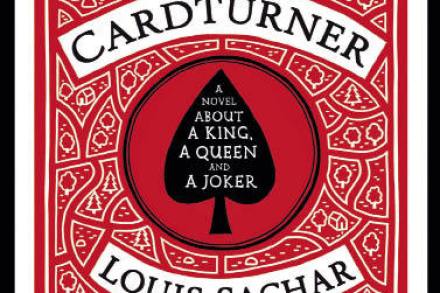
If you think that a room full of solemn people in groups of four play- ing duplicate bridge is deeply depressing, then this young-adult novel is not for you. If, on the other hand, that array of concentrated brows fills you with an urge to compete, then you may derive some pleasure from it. And if you are a keen player unable to convince your teenage children of the merit of the game, then you might consider this a useful present. Lester Trapp, a brilliant bridge-player, now blind, requires a cardturner to speak out the cards for him at his bridge club. He asks his nephew, Alton, a high-school boy looking for a summer job. This being America, the nephew has a licence and a car and, in a laid back way, is content to drive his elderly uncle to his club and help him out.

Capital crimes

From our UK edition

Rennie Airth’s first John Madden mystery, River of Darkness, published ten years ago, was set in 1921. His second, The Blood-Dimmed Tide, was set in 1932 and this, the third and reputedly the last, takes place in the closing months of 1944. The series spans, therefore, more than 20 years. In the first, Inspector Madden of Scotland Yard solves some gruesome country-house murders. He is a man still much troubled by his experience in the trenches, but during the case he meets and falls in love with Dr Helen Blackwell, who becomes his wife. By the time of the second book he has retired from the police, and has a farm in Surrey where he lives contentedly with Helen and their two children.

A fickle jade

From our UK edition

Strix would have been 100 on 31 May. Before he had decided on a screech owl as his nom de plume, he had been Moth, and occasionally Scadavay and Apemantus. He had joined The Spectator in 1931 as a bumptious young man with a first in English from Oxford, where he had also been editor of Isis and president of the OUDS. His name was Peter Fleming and his association with The Spectator lasted for nearly 40 years, though it is as a travel writer that he is now remembered by aficionados. ‘A relaxed and somehow amateurish atmosphere pervaded No. 99 Gower Street in 1931,’ he wrote, ‘and it was comparatively easy to introduce such revolutionary innovations as the appointment of a film critic (me).

Pigtails among the haystacks

From our UK edition

During the bitter winter that seized Britain in earnest at the end of January 1947, the children of the village of Farnborough on the Berkshire Downs went to the pictures in Wantage to see Courage of Lassie but were unable to return home on the bus because of a heavy fall of snow. Accompanied by ‘big Mrs Willoughby (20-odd stone), who never took off her pinafore and had arms like skittles’, they trudged the five miles back on foot through the fresh snow in the dark. ‘There was a strange ethereal light on everything and a deep silence. It was as though we were the only people left on earth.’ So begins what might be called an embroidered memoir by Candida Lycett Green of her childhood in Farnborough.

The daily round, the common task

From our UK edition

Opinion polls, it could be said, are the descendants of Mass Observation. This was a non-academic social survey started in 1936 by three people. Tom Harrisson was an anthropologist who had turned his attention from the tribes of the South Pacific to the habits of the people at home. He employed investigators to observe the citizens of Bolton as they went about their daily business. Charles Madge, a radical poet, and Humphrey Jennings, the film-maker, at about the same time and unknown to Harrisson were planning a scientific survey of ordinary people’s lives. This was to be conducted by means of sending out detailed questionnaires to a host of volunteers about their habits and possessions, their attitudes and opinions.