Kate Chisholm

Olden but golden | 23 February 2017

From our UK edition

This weekend Brian Matthew will present his last-ever Sounds of the 60s show on Radio 2. Now 88, he’s been in charge at breakfast time on Saturdays since 1990, his gravelly voice deepening and getting hoarser with the years. You could tell he was well past his clubbing prime, or for that matter being able to dance along to Bryan Ferry. Yet this has never mattered. Matthew’s band of devoted listeners have cherished his weekly two hours on air precisely because of his age. It has meant he was there when those classic Sixties’ records were made. He met the Beatles in their prime, and Dusty Springfield, Steve Winwood, Alan Price, Sandie Shaw.

United nations

From our UK edition

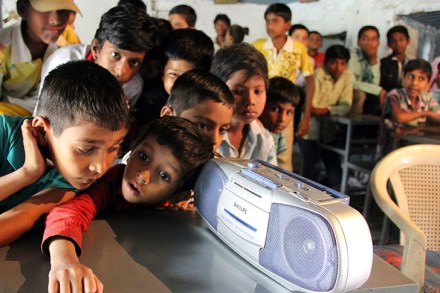
The Indian Prime Minister has twigged something that President Trump has yet to understand. On Monday, celebrated as World Radio Day, Narendra Modi tweeted his congratulations to ‘all radio lovers and those who work for the radio industry and keep the medium active and vibrant’. Modi uses radio to reach out to those in his country who live in its most remote and inaccessible corners, giving a monthly address to the nation known as ‘Mann Ki Baat’ (or ‘To mind’). He says it’s his way of ‘sharing his thoughts’ with his citizens, and a useful way of extending the tentacles of government into those areas where television sets are uncommon, let alone computer screens or smartphones.

Rules of engagement

From our UK edition

The BBC foreign correspondent Hugh Sykes was meant to be talking about how music has shaped his life with Sarah Walker on Essential Classics last week (Radio 3, Friday), but their conversation actually gave us far more crucial insights into why he has won awards for his work, reporting from troubled places such as Tehran, Baghdad, Belfast, Berlin and Islamabad. He stressed the importance of checking your facts, ‘Verify, verify, verify’, and especially now that the demand for instant news coincides and conflicts with the torrents of information flooding the internet. ‘Never report anything until you’ve got at least two sources,’ Sykes insisted. He also explained how easy he found it to get people talking. ‘I’m holding a microphone. I ask a question.

Sign of the times

From our UK edition

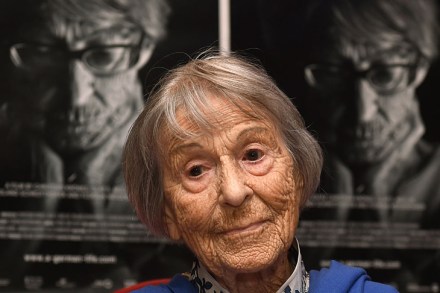
As if on cue, The World At One on Monday (Radio 4) ended with a short (too short) interview with an Austrian documentary film-maker who recently made a film about Brunhilde Pomsel, secretary to Hitler’s propaganda minister, Joseph Goebbels. The announcement of her death in Munich, aged 106, prompted the conversation, which happened to follow all the stories about the repercussions of President Trump’s executive order banning those from certain countries from entering the US. The significance was not lost on the ever-astute Martha Kearney. Florian Weigensamer described Pomsel in great age as ‘just incredible’. She was ‘quick-witted, funny, a great storyteller’. But, said Kearney, ‘She was working at the heart of the Nazi machine, wasn’t she?

Accentuate the positive | 26 January 2017

From our UK edition

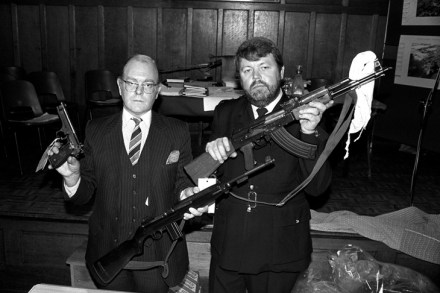
How does a town like Hungerford, tucked into the Berkshire hills, with its sleepy canal running through it and high street of tea shops and antique arcades, recover from that day in August 1987 when Michael Ryan ran amok with a semi-automatic gun, killing 16 and injuring many others? The memorial to those who died, not in the heart of the town but at the entrance to the football ground, just gives the date and their names (Ryan, who also killed himself, is not mentioned). No one wants Hungerford to be thought of as the place where that tragedy occurred, the first such mass killing in the UK. ‘You don’t need to know what the tragedy was?’ asked Alan Dein.

Spot the ball

From our UK edition

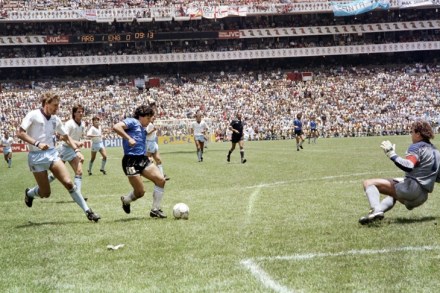
The purest form of radio is probably sports commentating, creating pictures in the mind purely through language so that by some magic the listener believes that they were there, too, when Geoff Hurst scored that final goal, Shergar ran out the field at Epsom, Mo Farah sped ahead on Super Saturday. As Mike Costello said last Thursday on Radio Five Live’s celebration of 90 years since the first outside broadcast from a rugby match on 15 January 1927, ‘We’re all blind when we listen now, just as we were back in the 1930s.’ The technology has changed radically but radio still relies on the skill of an inspired individual to communicate the atmosphere, the tension, the thrill of seeing something extraordinary happening in a sports arena.

Word perfect | 12 January 2017

From our UK edition

All that’s needed for Radio 4’s One to One series (Tuesdays) to succeed is a sharp-eyed interviewer, ready with the right question at the right time, and an articulate guest, not afraid to speak freely and openly, but with integrity, all too rare these days. In the opening programme, Julia Bradbury talked to Dr Martin McKechnie, an A&E consultant, about the challenges he faces day in day out. It was a timely reminder that not everything in the NHS is broken beyond repair. Most striking, perhaps, was not so much Dr McKechnie’s calm fortitude in the face of terrible human distress (remarkable thoughthis was) but the way he casually dismissed the idea of talking about his work with his family.

Joining the dots

From our UK edition

A new website, radio.garden, lets us browse radio stations across the globe. Nothing new about that. That’s been a key feature of wireless since the days of valves and crystals. Turning a knob and stopping off at Hilversum, Motala, Ankara or Reykjavik, if and when short-wave reception was possible, is part of radio’s magic, listening in to life elsewhere without having to leave the house. Now, though, with radio.garden (developed in Amsterdam by Jonathan Puckey for the Netherlands Institute for Sound and Vision, and part-funded by the EU), it’s possible to turn the globe that appears on your computer screen as soon as you log on to the site and to sweep across India, Africa or Australia, stopping off wherever you find a green dot.

Chance would be a fine thing | 29 December 2016

From our UK edition

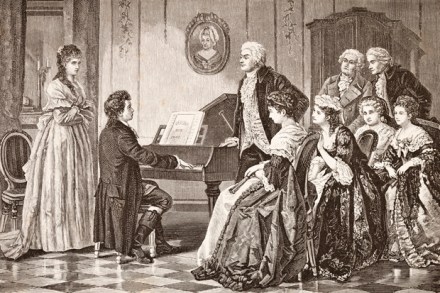
It’s been a turbulent year, and not just in the outside world. Inside radio, digital is changing not just when and how we listen but content, too. Classic FM overturned its daily schedule in the run-up to Christmas to stage an all-Mozart day with nothing but the virtuoso’s works for 24 hours. It was a bold step by the commercial station, reliant on advertisers (and therefore listener figures) for its survival. How many non-Mozart-enthusiasts would be turned off by such a monothon?

Northern exposure | 8 December 2016

From our UK edition

In this season of watching and waiting as we approach Christmas and year’s end, radio has a precious role. At the switch of a button you can be taken straightaway into another kind of life, a different world, where present realities are not relevant or can at least be made to feel less imperative. While the screen can transport you to places you’ve never been, its visual escapism never quite overwhelms the imagination in the way that words, sound effects, music will do if subtly shaped into audio magic. Who needs images when in an instant you can be taken in your imagination to the wilds of northern Finland, crunching through the snow, wind whistling in the background, breath sharp on the lungs in the freezing air? In Burn Slush!

On the road | 1 December 2016

From our UK edition

‘We’re going to get lots of negative attention from environmentalists,’ he cackled, great puffs of blue-grey smoke emerging from the exhaust of his two-stroke car. Will Self was crossing Tower Bridge in a Trabant, that most potent symbol of the East German socialist state, bending almost double to fit himself round the steering wheel (he’s six foot five inches in his socks) and cursing the lack of wing mirrors. Things could only get worse as he and his old friend Michael Shamash set off on their 700-mile trek across the Channel to Zwickau, in the former GDR, home of the Trabant car. Imagine trying to merge on to a German autobahn in a car made of resin and cotton that has no mirrors and starts vibrating in an ‘ugly way’ as soon as you reach 80km/h.

Interest-free credit

From our UK edition

When did you last experience a boring Sunday afternoon? If you’re over 16, probably not since you were last 16 and stuck at home, raindrops sliding down the window pane, nothing on TV until five o’clock, nowhere to go because everywhere is shut. But boredom, says Phill Jupitus, has become an endangered emotion. Now that we have smartphones, at a gentle swipe, the touch of a button, we have access to any amount of diversion, 24 hours a day. We need never find ourselves with nothing to do, nothing to read that takes our fancy, no one to talk to. He’s not happy about this.

Whodunnit

From our UK edition

Barbed wire, concrete, razor blades, passports, Bakelite and the sewage system are all crucial to the way we live now yet what do most of us know about who, when, how they were invented? In an ambitious new series for the World Service, 50 Things That Made the Modern Economy, Tim Harford intends to put us straight, taking one thing each week over the next year and in just nine, tight, well-ordered minutes giving us its potted history. This weekend, for instance, Harford introduced us to the Haber-Bosch process, which he argues is ‘the most significant invention of the 20th century’, allowing the world’s population to grow exponentially from four billion people in the 1910s when it was first introduced to seven and a half billion now.

Country music | 10 November 2016

From our UK edition

There was something unexpectedly moving about hearing not just one but several renditions of the somewhat naive and rose-tinted but always heartfelt ‘The Star-Spangled Banner’ when I switched on the radio after several days’ absence. America has been so much in our thoughts these past few weeks, but a distasteful, shameful version of itself. It was just so refreshing to hear something different, something meaningful, yet still so American, like a glass of ice-cold water after a long walk in the heat.

Music matters

From our UK edition

There’s nothing new about Radio 3 tearing up the schedules, temporarily abandoning regular favourites such as Private Passions, The Early Music Show, Choral Evensong in search of creative freedom. Its first controller was not just given permission but instructed by the director general, Sir William Haley, to ignore the demands of Big Ben and the news schedule in favour of allowing concerts to run on beyond the hour and to be heard just as they would have been in the concert hall, with ‘live’ operas broadcast in full from Paris or New York. There was to be ‘no annotation’, no commentary on the music that had just been heard.

Identity crisis | 27 October 2016

From our UK edition

You may not listen to them every year. Or even to every lecture in the current series. But the survival of the annual Reith Lectures on Radio 4 from the old days of the Home Service and Radio 3 (they were established in 1948 to honour what Reith had done for the corporation) is crucial to the existence of the BBC.

The power of song | 20 October 2016

From our UK edition

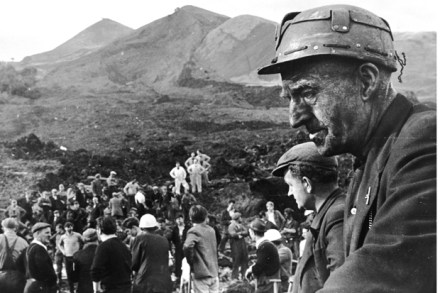
‘I went in at seven and came out aged 22,’ said Brian as he looked back on the day in October 1966 when his primary school in Aberfan was smothered in a great black wave of coal slurry. On that day, of his small school of just 141 pupils, only 25 children survived. Brian lost his older sister; he escaped because he refused to get under the desk as the teacher instructed when they heard this extraordinary, unexplained, overwhelming noise, ‘like an aeroplane coming into land’, getting louder and louder. He later joined the Ynysowen Male Voice Choir, formed in Aberfan a couple of years after the disaster as the fathers, husbands and brothers of those who died began to realise that the only thing that was helping them get by day-to-day was singing.

It’s (still) a man’s world

From our UK edition

When Jane Garvey announced to the audience who had just ‘taken part’ in the 70th birthday celebrations of Radio 4’s Woman’s Hour on Monday morning that a woman listener had sent in an email asking, ‘Why do we need a programme like this in 2016?’, she almost caused a riot in the BBC Radio Theatre. A riot of disbelief and horror. What? Abolish the only programme on the BBC entirely devoted to the issues that affect women?

Head ache

From our UK edition

Quite how one person is expected to oversee not just radio but also ‘arts, music, learning and children’s departments’ was not made clear by the BBC when it announced the stratospheric rise to power within the corporation of James Purnell as the new director of everything that’s not TV or light entertainment. You may recall that Purnell was once culture minister under the Labour government and in 2013 became head of strategy at the BBC, an appointment that at the time was excused (given Purnell’s lack of programme-making experience) by Tony Hall, the director-general, as ‘of course not editorial’.

One day in November

From our UK edition

The weather was ‘treacherous’ on Saturday, 23 November 2013, the day chosen randomly by Gary Younge as the focus for his latest book, Another Day in the Death of America. As he described it, a ‘Nordic outbreak’ of snow, rain and high winds swept across the desert states and up into the northern plains. It was for many Americans a winter’s day like many others but for ten families a shot rang out sometime during those 24 hours and their lives changed for ever. Not that these ten disparate events made the national news. Death by gunshot is so commonplace in the USA that not even when those who died are so young is it considered worth highlighting, remembering, bewailing.