Kate Chisholm

Death watch | 14 April 2016

From our UK edition

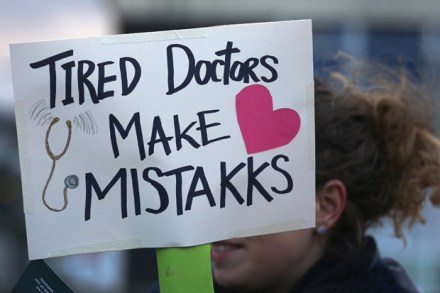
All this week Radio Five Live has been giving us an insight into what it is like not just to confront death every day but also to know that a minor error on your part might end a person’s life. In Junior Doctors’ Diaries on Sunday night, Habiba, Andrew and Jeremy took us inside their daily round, followed by updates throughout the week on Phil Williams’s night-time show. It’s been a timely reminder (politically motivated or not) of how much we need good doctors, and how sad it is that so many of them have felt driven to go on strike. Sad because it’s actually a reflection of how undervalued they have become, and of how little we understand about what they do.

Intolerable cruelty

From our UK edition

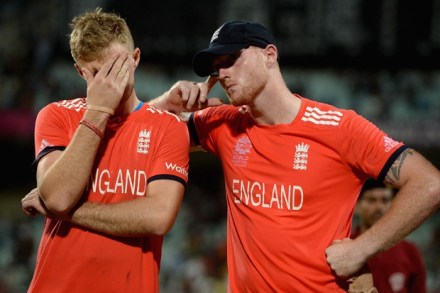
It was a toss-up on Sunday between the atmosphere in the Radio Five Live Sports Extra studio in Kolkata for the last over of the cricket world cup (England versus West Indies) and the high-velocity drama of that evening’s episode of The Archers. Which was the more dramatic? In one room my husband was shouting at the radio, ‘Go on, Stokes!’ In another, an hour later, I was staggering towards an armchair, all thought of cooking dinner quite beyond me, after listening to the dénouement of the Helen and Rob story. Who would have thought radio could be so dangerous to the blood pressure? In the heat of the moment, as the Eden Gardens stadium erupted, the exhilaration, and dismay, of Jonathan Agnew and co.

Crossing continents | 31 March 2016

From our UK edition

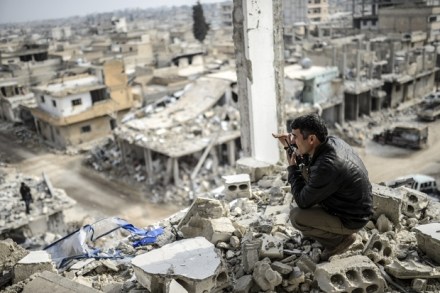
Could radio, and in particular a weekly soap, have a role to play in the Syrian crisis? You might think, no chance, given the levels of violence and terror that have overtaken the country. How can a mere broadcast signal have an impact compared with all that destruction? But, says the director of Radio Alwan, a station operated by Syrians living in exile in a western suburb of Istanbul, ‘radio is effective’. It’s a ‘weapon’ because it ‘allows you to enter the houses of people and talk to them’. It’s also so easy. ‘You don’t need power, you don’t need electricity — just two small batteries.

Born again

From our UK edition

Six years ago, on Good Friday, the journalist Melanie Reid was thrown off her horse while on a cross-country ride in Stirlingshire where she lives. The accident broke her neck and back and left her tetraplegic, paralysed from the armpits downwards. On Easter Sunday on Radio 3 she’s Michael Berkeley’s guest on Private Passions, a timely guest, as he says, because she has recently written in her Sunday Times column about being ‘surprised by a small epiphany of happiness’, of experiencing a ‘rebirth’, if ‘rather cruel’. ‘You find joy in little things ...

Home and away | 17 March 2016

From our UK edition

Four programmes, four very different kinds of radio, from a classically made drama to weird sonic ramblings, via the best kind of all: first-person narrative, straight to mike. On Syrian Voices this week on Radio 4 (produced by David Prest), Lyse Doucet has been talking to Syrians whose lives have been utterly changed by the war, now passing its five-year mark. On Monday we heard from Sam, a 22-year-old student who lives in the government-controlled area of Daraa and studies English literature at the university. It was here that the uprising began after some students scrawled graffiti on a wall, ‘It’s your turn next, doctor’, calling for their country to be the next in the Arab world to overthrow its government.

Girl power | 10 March 2016

From our UK edition

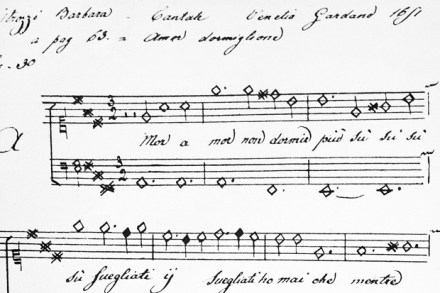
Hurrah for Radio 3 and its (long-overdue) efforts to give us music not just performed by women but composed, and conducted, by them too. Last year’s innovative day of programming for International Women’s Day introduced us to composers many of us had never heard of, such as Elisabeth Jacquet de la Guerre and Barbara Strozzi, Charlotte Bray and Anna Clyne. Yet to the surprise of even the most sceptical critics, the day was a huge success, proving that some of this music is really good. As Edwina Wolstencroft, producer last year and responsible for this year’s celebration of women in music, says, ‘We know that as many as 6,000 women composers have been identified in history.

Linked in

From our UK edition

What makes the World Service so different from the rest of the BBC? I asked Mary Hockaday, the controller of the English-language service. And how does it justify the additional £289 million funding (spread over the next five years) which the Treasury granted it at the end of last year? Will that money, which could after all otherwise go to welfare or the NHS, be well spent? ‘News is our core,’ says Hockaday. ‘It’s all about the now.’ Which sounds a bit Day Today. Anyway, isn’t this what BBC News and Radio 4 do already? It’s not just about presenting the news, Hockaday adds, but putting it in context. This last bit the World Service certainly does better than anyone else.

Just Williams

From our UK edition

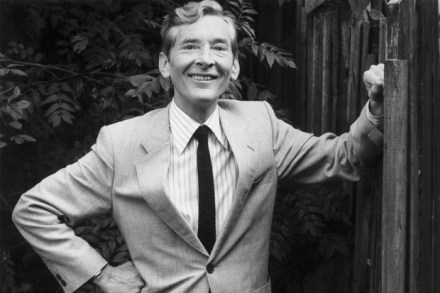
It’s tempting to believe that somewhere in the bowels of Broadcasting House in London the voice of Kenneth Williams is still roaming, rich, ribald and ever-so-fruity, ready to jump out and surprise us. He was just so unmistakable on air, both fantastically intimate with the microphone and very aloof, but never better than playing someone totally off-the-wall. The wireless was tailor-made to suit his temperament, which could be flamboyant and out-of-control and yet was also intensely private and controlled. Without him and his zany characters (he died in 1988, aged 62) radio comedy especially has never been quite the same, with no one to take on his mantle of absurdity.

Save our Helen!

From our UK edition

Never before has a radio soap crossed so far over from fiction and into the real world. Never before has it become imperative to listen to each and every episode of The Archers (just after 7 p.m. on Radio 4, every day except Saturday) as if by being there, listening in on the ether, we can in some way stand alongside Helen Titchener and defend her from her poisonous husband Rob as he tries to entangle her further in his stifling, controlling web. Some listeners have been so appalled by the current storyline, horrified by the insidious way Rob is trying to take control of his wife, that almost £60,000 has so far been raised in a real live charity appeal on the internet. Just look for ‘The Helen Titchener Rescue Fund’ on JustGiving.

The write stuff | 18 February 2016

From our UK edition

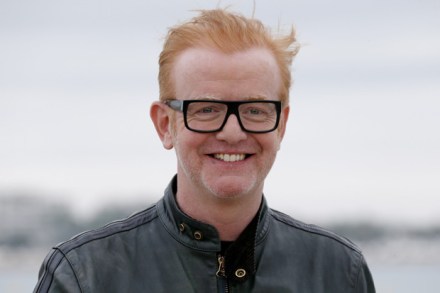
The deadline for Radio 2’s 500 Words competition falls next Thursday. Children between the ages of five and 13 are invited to send in a story, no more than 500 words, to compete for the prize, the chance to have their story read on air, live to ten million listeners on the Chris Evans Breakfast Show. Evans, the irrepressibly enthusiastic Radio 2 DJ, came up with the idea in 2011 (mainly because as a child he was not at all interested in books or reading but belatedly began to realise what he had missed out on), and from the beginning it has been a huge hit, gathering more than 120,000 entries in 2014. It’s also a clever way for Radio 2 to fulfil its outreach remit, using the organising power of Broadcasting House to sort through and judge the extraordinary number of entries.

The big reveal

From our UK edition

Much ado about Radio 4’s latest venture into the new smart world of aural selfies. Reaction Time, on Thursday mornings, is a compilation of mini-recordings by listeners telling us about their lives (overseen by Kevin Core). No tape machine needed or sound recordist. Just a listener with a smartphone and a thick skin. For these stories are not the kind of thing you would tell your nearest and dearest (unless they, too, have an equally thick skin). But rather they reveal disappointments in love, embarrassing date nights, ‘how I met my husband’, things you might unburden to a good friend over a couple of glasses — but would you do the same to almost 11 million listeners? Gary tells us about his night with Briony, back in the Seventies when he was a gauche student.

Terry’s all gold

From our UK edition

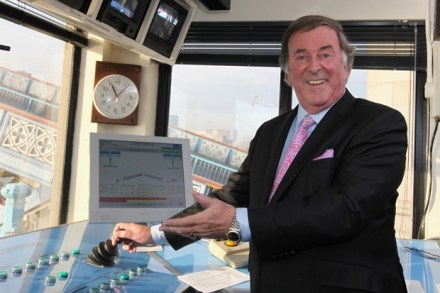
For once, the superlatives that have greeted Terry Wogan’s death from cancer have been entirely in keeping with the man. He did truly touch the lives of millions, understanding that the essence of radio, what makes it so individual among technologies, is the way it connects us, person to person, in a single moment of time. Wogan had the knack of making us believe that we were having a private conversation with him in that moment. In his own way he was also an artist, of language, of the music of words, of radio itself, constantly surprised by the strangeness of strangers, the oddities of everyday life, the idiocy that lurks beneath most big organisations.

Lessons in the surreal

From our UK edition

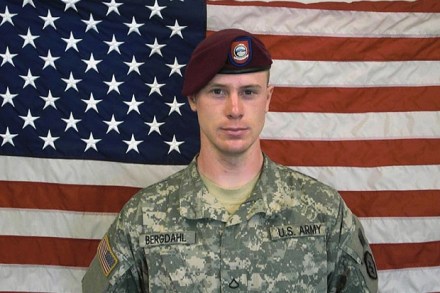
The new season of the Serial podcast (produced by the same team who make This American Life) was launched last month, releasing one episode a week as the investigative reporter Sarah Koenig looks this time into the strange story of Bowe Bergdahl. He’s the US army soldier who walked out on his platoon in 2009 while stationed on a remote outpost in Afghanistan, close to the Pakistani border. Unsurprisingly, he was captured by the Taliban and held captive for five years before being released, in a prisoner exchange with those held in Guantanamo Bay.

All in the mind | 21 January 2016

From our UK edition

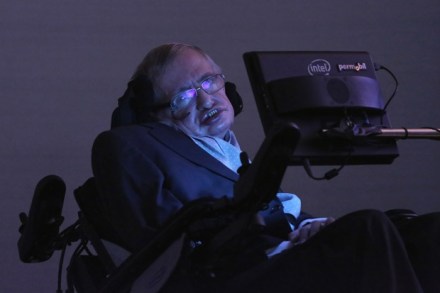
You don’t expect to be brought close to tears by the Reith Lectures, which are after all at the most extreme end of Radio 4’s commitment to ‘educating’ its audience. Yet when Stephen Hawking delivered this year’s talks at the Royal Institution in London (in front of a lucky audience of listeners and scientists) there was both much laughter and a heightened sense of emotion. This was not because of his plight — the eminent professor of theoretical physics has suffered from a rare form of motor neurone disease since the age of 21 and the only discernible movement in his body is in his eyes, and the twitching of his facial muscles. Nor his cheeky sense of humour, or his grace and dignity, although these are remarkable enough.

Chance encounters

From our UK edition

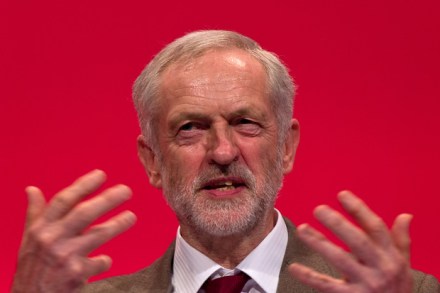
Some might say that Jeremy Corbyn is cloth-eared, tone-deaf, socially inept but on Monday morning, as the death of the pop artist David Bowie scrambled the agenda on Radio 4’s Today programme, he was as graceful and twinkle-toed as Bowie himself. The opposition leader had been invited on to the ‘big slot’ just after the eight o’clock bulletin to talk about his ‘shock’ reshuffle last week. David Cameron and the Archbishop of Canterbury, no less, had already provided their rent-a-quote verdicts on Bowie’s life and death. Nick Robinson asked Corbyn for his thoughts. Quick as a flash, he responded, ‘Does that mean I’m joining the great and the good...?

Good cop, bad cop

From our UK edition

One of the most shocking items of recent news has been the bald statistic that the number of people shot by law enforcement officers in the United States last year was 1,136. Not died by gangland shooting, domestic violence or terrorist attack. But killed by those who are meant to be preventing such deaths. Many of them are black or Hispanic. As if on cue, the World Service this week launched a documentary series to find out why this is happening. What are the deep structural issues that give rise to such inequalities of experience and opportunity in the (supposed) Land of the Free?

Aural wonderland

From our UK edition

My resolution this New Year is to get to grips with podcasts, to brace up and embrace this new aural wonderland stuffed full of sound stories, experiments, features, adventures. They’ve been around for a decade, and there’s now hundreds of thousands of them, lurking in the web, hoping for someone to stream or download them. But where to start? What will be worth listening to, and not a waste of time, or just a bore, or even worse nightmare-inducing (there’s nothing like stories told on radio for creeping insidiously into the mind)? How do you find just what you want to listen to amid this babel? The easiest place to begin is the BBC’s own podcast site, Seriously... which gathers together its own selection of BBC programmes in specific categories.

Radio is flowering because it’s so much more potent than TV

From our UK edition

Who would have thought in this visually obsessed age of YouTube, selfies and Instagram that radio, pure audio, no images attached, nothing to hold on to but a voice, a tune, a blast of birdsong, could not only survive the arrival of the new image-making and digital technologies but experience an extraordinary flowering of talent and expression. Thousands of radio stations are popping up right across the globe, ready for you to tap into via your smartphone or tablet, taking you straight from SW9 or NE69 to Chicago, Cape Town, Lviv or Marrakech. The quality of the sound produced by these stations is less important than an ability to draw in the listener, to tell a story, create a narrative, to use audio and nothing else to paint images in the mind.

There will be blood | 3 December 2015

From our UK edition

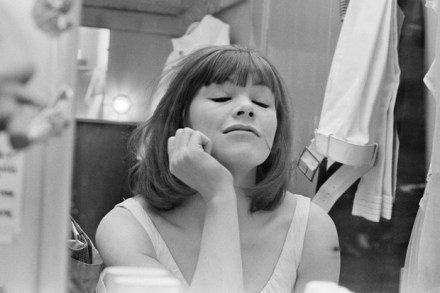
It was a stroke of genius to invite Glenda Jackson to make her return to acting as the star of Radio 4’s massive new series of dramas, Blood, Sex and Money, based on the novels of Émile Zola. Jackson plays Dide, the matriarch of the Rougon-Macquart families from Plassans in the depths of southern France. And she’s absolutely brilliant. Her voice is so distinctive, yet at the same time utterly ordinary, so it doesn’t stick out demanding attention but rather draws you in, like a spider weaving its web. Her timing, too, is pitch-perfect, each word given just the right weight for its meaning to be clear, whether making sinister predictions or laughing over another child’s comeuppance.

You can’t forget what Will Self says – even if you wish you could

From our UK edition

It lasted for just a few seconds but was such a graphic illustration of the statistics behind the bombing campaign in Syria — and not a word was spoken. Martha Kearney called it an ‘audio graphic’ on the World at One on Monday and explained how Neal Razzell and James Beard for the World Service had been monitoring the number of US combat missions on Islamic State targets in Syria, hour by hour, 24/7, and comparing them with earlier bombing campaigns. Each electronic beat we heard represents one hour, Razzell told us; each beep represents the launch of one combat mission. For Syria, the electronic beeps between each beat were quite far apart — clearly distinguishable. The sound we heard represented two raids an hour, he explained, every day for 450 days.