Kate Chisholm

Caught offside

From our UK edition

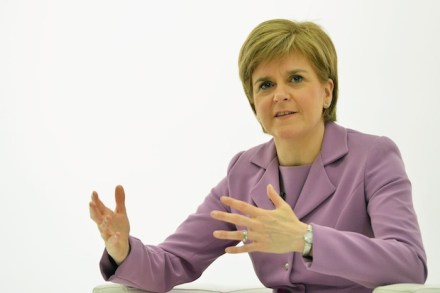
It’s not surprising that politicians have such an on-off relationship with the broadcast media. One slip. One casual comment. One lapse of memory. Even the immaculate, armour-plated Nicola Sturgeon was caught out by Jane Garvey last Wednesday as the Woman’s Hour presenter congratulated her on her latest elevation. It had just been announced that Scotland’s First Minister was top of the Woman’s Hour ‘power list’ of the top ten women for 2015 (beating Angelina Jolie and Caitlyn Jenner) and Sturgeon was doing a live telephone interview on the Radio 4 programme from her office in Edinburgh. Garvey then lobbed a question, oh so casually, but oh so deliberately, like a lioness waiting to pounce. ‘The Big Game tonight?
Anniversary fatigue

From our UK edition

There’s a part of me that thinks OK, we’ve heard enough now, one year on from the beginning of the centenary commemorations, about the first world war. Do we really need any more programmes (on radio or television) about Ypres, Gallipoli, Akaba, Versailles, and the Western Front? Or are we wallowing in history’s horror stories rather than trying to learn from them? There’s a danger that anniversary fatigue will set in and stop us pausing to think, to really contemplate, the reality of that terrible, catastrophic war and whether there is any way it can be prevented from happening again.

Sea sound

From our UK edition

It’s often not visual images that stimulate memory but a smell, a taste, the sound of pebbles crashing on to the beach, ice cream being scooped into a cone, seagulls circling overhead. Where was I when I first heard that sound? That’s why the National Trust (in association with the British Library sound archive) has just announced its Coastal Sounds of our Shores campaign. We are all invited to send in our own audio recordings from the beach: short, five-minute clips, impressions taken outdoors, in real time, which capture what the seaside means to us. Not photos, or postcards, but an online archive of sound memories.

Evan sent

From our UK edition

Evan Davis’s series on business life, The Bottom Line (made in conjunction with the Open University), has become one of those Radio 4 staples, something that’s just there in the schedule and all too easily taken for granted. Productivity, contracts and contacts, the new appreneurs (creators and sellers of apps) are not subjects I feel the need to know very much about and the business pages of the newspaper usually get sent straight out for recycling.

There will be blood | 4 June 2015

From our UK edition

If you’re in the least bit squeamish you’d better stop reading now. What follows is not for those who blanch at Casualty and come over all faint at the sight of blood. I’m told it’s a first for radio — following an operation in real time and going right inside the experience. It began at breakfast time on Tuesday on Radio Five Live as we listened to Stephen, a patient at Queen Elizabeth Hospital in Birmingham. He’d woken up at 3 a.m. to hear one of the nurses clip-clopping down the corridor towards him. She’d come to tell him that at last they’d found a heart which they hoped would be a good match, and the operation which he had been waiting for to save his life would take place in just a few hours. How did he feel about it?

Dr Johnson in Tahrir Square

From our UK edition

Goodness knows what the Great Cham would have made of Radio 4 airing an adapted version of his philosophical fable, Rasselas, Prince of Abyssinia, on Sunday afternoon. Perhaps he would be surprised to see it done at all: the works of Dr Johnson are hardly fashionable these days and Rasselas is probably little known to most people, let alone read for pleasure. Which is a shame. We studied it for A-level (a dead giveaway as to my age) and although Johnson’s robust cynicism could have scarred a depressive teenager for life (‘Human life is everywhere a state in which much is to be endured, and little to be enjoyed’; ‘Such ...

Object lesson | 21 May 2015

From our UK edition

The idea of using objects — salt, cod, nutmeg, silk — to turn history lessons into something popular and accessible has been around for at least a generation. It’s a great way to avoid complicated chronologies and the need to remember dates. A well-chosen object, or trading tool, can tell a narrative story that at the same time reflects the multicultural present, often showing unusual and previously unconsidered connections between places and peoples. Neil MacGregor brought the technique to Radio 4 with his brilliantly conceived and executed account of world history as told through 100 objects in the British Museum.

The lives of others | 14 May 2015

From our UK edition

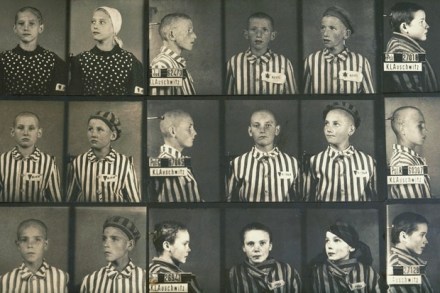
‘I call Zelma Cacik who may be living in London,’ says the announcer, in the clipped RP accent of the BBC in the 1940s. ‘I call her on behalf of her 16-year-old cousin...’ The voice betrays no emotion, no feeling, it’s so matter-of-fact, but the script spares no punches as it tells the cousin’s story in blunt statements of fact. She was born in Poland, separated from her family when she was 12 and made to work in a munitions factory while her parents, her sisters and brother were sent to Treblinka extermination camp.

Home and away | 7 May 2015

From our UK edition

An extraordinary black-and-white photograph of a young black boy taken on the Isle of Wight by Julia Margaret Cameron in 1868 shows him in exotic clothes and a heavy silver-bead necklace, like a chain-of-office or a prisoner’s collar. He looks so sad, reminding me of the caged lions in London Zoo, his eyes heavy-laden, his listless body lacking the restless energy you would expect of a seven-year-old. He is Prince Alemayehu of Ethiopia, brought to England after his father, the emperor, committed suicide in his palace at Addis Ababa having just been defeated by the British.

Presence of mind

From our UK edition

‘It’s hard to know how to tell this story,’ she said as she began. ‘Because it’s so loaded. It’s so heavy-duty.’ Lore Wolfson was talking about the death of her husband, Paul, or rather about the onset of the illness that led him a year later to take an overdose of heroin, aged 61. He had been diagnosed with early-onset dementia, in a peculiarly aggressive form, rapidly losing his words, his memory, his capacity to work or function independently. Lore began recording her conversations with Paul very soon after they knew for sure why he was having word-finding difficulties. ‘It was the natural thing to do,’ she said, because she’s a radio producer and, for her, keeping an audio diary was more natural than writing things down.

Three cheers

From our UK edition

The new controller of Radio Three, Alan Davey, was on Feedback this week (Radio Four) talking to listeners about his plans for the network. Roger Bolton, who presents, wondered if Davey was worried about ratings — Radio Three hovers around two million listeners compared with the 5.5 million boasted by its commercial rival Classic FM, or perhaps more alarmingly the two million lured to BBC upstart 6 Music. ‘Ratings aren’t a pressure for me,’ said an ebullient Davey, while admitting that he does want to find more listeners, and then to ensure they stay tuned. But how? Without going down the Classic FM route of more audience participation, more gimmicks, more cheesy competitions? ‘We have to get better at explaining what Radio Three is about ...

I, Bette Davis

From our UK edition

It was called Frankly Speaking and by golly it was. The great screen actress Bette Davis was being interviewed by not one but two men: George Coulouris, with whom she co-starred in Hollywood, and a BBC producer. ‘It’s a little sad for some of us who adore your work that a lot of your best performances have been in fairly trivial films,’ said the producer, Peter Duval-Smith, as if to tempt Davis into dishing the dirt on the directors who made her what she became. ‘I don’t know what you’re talking about,’ Davis replied, not a woman to be tricked into anything. ‘Who do you think made you a star?’ Duval-Smith persisted. ‘Me myself,’ said Davis. ‘And my sweat, blood and tears...’ ‘Nobody helped you?

Keeping the faith | 9 April 2015

From our UK edition

There was no shortage of Easter music and talks across the BBC networks with a sunrise service on Radio 4 followed by much fuss and fanfare for the ‘live’ relay of Libby Lane’s first Easter sermon as Bishop. A significant milestone for the C of E as women are at last allowed to don mitres and wield a bishop’s crozier. Three, not to be outdone, invited the Revd Lucy Winkett (who had to outride the brouhaha caused by her appointment as the first woman priest at St Paul’s Cathedral) on to Private Passions, where she proved herself an insightful musician and theologian.

Did Radio 4 have to deal with the Germanwings disaster as it did?

From our UK edition

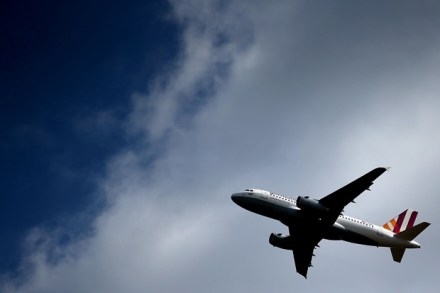
‘You can hear pretty clearly the sound of one of the helicopters and you can see it in the darkness,’ yelled James Reynolds over the noise of helicopters, police sirens, vehicles on the move. It was 8.10 a.m., the Today programme on the morning after the fatal Airbus A320 crash in southern France last week. Reynolds, a fine reporter, had been sent off to the crash site for an on-the-spot report, ‘live’ action, high-octane drama, tension so taut it’s almost visible. ‘I can see a convoy of police vehicles coming up the road with blue sirens,’ he continued. ‘There goes the police helicopter...’ Huge noise of rotors whirring. ‘It’s almost passing overhead.’ No doubt about that as the noise boomed around the kitchen.

Does the future of radio really lie in podcasts?

From our UK edition

To a debate on the future of radio at the BBC where it turns out not to be a discussion on who’s listening now but how they’re listening. The Reithian ambition to inform, educate and entertain needs to change, says Mary Hockaday, controller of BBC World Service English, and become ‘inform, educate and connect’. But how do you find and hold on to your audience in the digital age? The buzz word here is ‘podcast’ after the extraordinary success of Serial, the American-made documentary that went viral and has now reached an astonishing 75 million downloads worldwide, still rising. In many ways, though, Serial was very old-fashioned radio. True crime told as a long-form narrative in 12 episodes.

Radio is the best way to mug up on the classics

From our UK edition

If ever I found myself at a pretentious literary party obliged to play David Lodge’s ‘Humiliation’ game and to confess to the great books I’ve never read, I’d only escape the ignominy of winning (by being the most ignorant) because of the radio and the almost weekly possibility of hearing yet another classic adapted as a drama or read at bedtime. The nuances of the novel may be lost in translation — the depth of characterisation, the complexities of the plot, its many threads and diversions — but a good adaptation will capture the essence, the true feeling of the original and take us there in our imaginations as effectively as reading from the page, if by a very different route.

What it’s really like to live in India today – stressful

From our UK edition

After a month cooped up in a Scottish castle, no internet, no TV, and no radio, watching hectic snowflakes billowing through the wooded hillside opposite my window, I realise that what I’ve missed most about this supposed deprivation has not been the news (to which I thought I was addicted) or the chatter, the company of other voices, but the chance to be taken in my head to other places and inside quite different experiences of life. It’s not just the factual education that radio can provide (although I’m pretty sure most of what I know has come from listening on air), it’s the absorbing intimacy of hearing other people talk about themselves, as if only to you, one-to-one, in direct communication.

The amazing story of the blind photographer

From our UK edition

Perhaps the news that Radio 5 live will be the only BBC station (under the new broadcasting rights agreements) to broadcast ‘live’ golf will ensure that its audience stays above the six million listeners now dreamt of by its controller Jonathan Wall as the magic number he needs for the network to stay buoyant. (Figures announced last week showed that 5 live has lost 10 per cent of its audience after a radical shake-up of its presenting team, losing especially Shelagh Fogarty and Victoria Derbyshire, which had the knock-on effect of turning it even more blokey.) At first the idea sounds absurd —golf on radio.

Why BBC Arabic is booming

From our UK edition

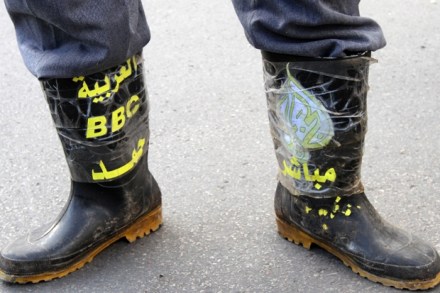
Last weekend BBC Arabic celebrated 77 years since John Reith (as he then was) launched the first foreign-language service of the fledgling BBC Empire Service with an announcement (in English) in which he declared that the programmes would always be ‘reliable, accurate and interesting’, values that have become virtually cast in stone as the Reithian model of broadcasting. ‘You have to remember the BBC was very, very young at this time, but there was no limit to its ambition,’ says Tarik Kafala, the current head of BBC Arabic, which now broadcasts on radio and (since 2008) on TV also, 24 hours each and every day. Reith’s statement was ‘a fabulous declaration of intent’, an intention which has meant 77 years later that BBC Arabic reaches 36.

The man who discovered Ebola | 1 February 2015

From our UK edition

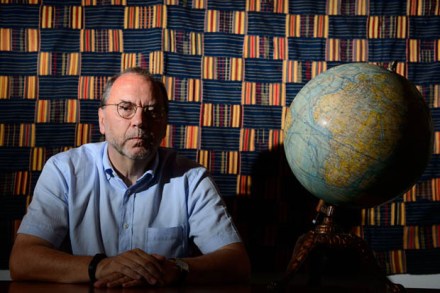
By some quirk of fate, just as news reached the papers that the Scottish nurse who had contracted Ebola while working in Sierra Leone was now recovered, the guest on that Radio 4 staple Desert Island Discs was the scientist who first identified the virus. This gave a programme that can seem rather outdated and superficial a whole new resonance, providing the back story to the news, adding that frisson of inquiry, of revelation. Did Professor Peter Piot, as a young researcher working at Antwerp’s Institute of Tropical Medicine almost 40 years ago, realise he was seeing something quite new and so dangerous?