Kate Chisholm

You can’t forget what Will Self says – even if you wish you could

From our UK edition

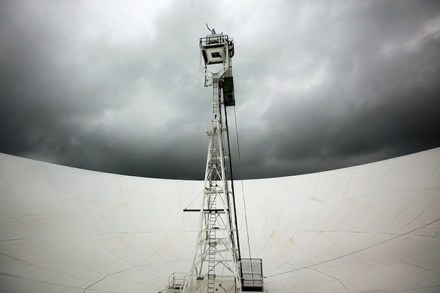
It lasted for just a few seconds but was such a graphic illustration of the statistics behind the bombing campaign in Syria — and not a word was spoken. Martha Kearney called it an ‘audio graphic’ on the World at One on Monday and explained how Neal Razzell and James Beard for the World Service had been monitoring the number of US combat missions on Islamic State targets in Syria, hour by hour, 24/7, and comparing them with earlier bombing campaigns. Each electronic beat we heard represents one hour, Razzell told us; each beep represents the launch of one combat mission. For Syria, the electronic beeps between each beat were quite far apart — clearly distinguishable. The sound we heard represented two raids an hour, he explained, every day for 450 days.
French connection | 19 November 2015

From our UK edition

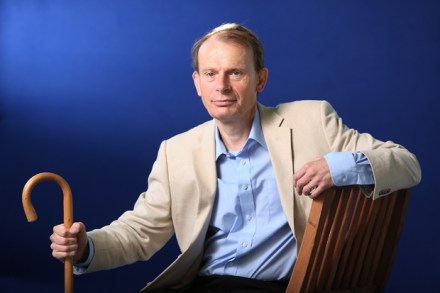
It was as if Andrew Marr and his guests on Start the Week on Monday morning were standing on the edge of a precipice with no idea how far they would fall if they strayed too near the edge. Their conversation this week, Marr told us, would not, as usual, be a live discussion but had actually been recorded in Paris on Friday, just hours before the terrible events of later that evening. Their discussion, quite coincidentally, was focused on French history, society and identity as part of a new Radio 4 season inspired by the great 20-volume series of novels by Émile Zola, which create a fictionalised record of life in France at the turn of the last century.

Bach breaking

From our UK edition

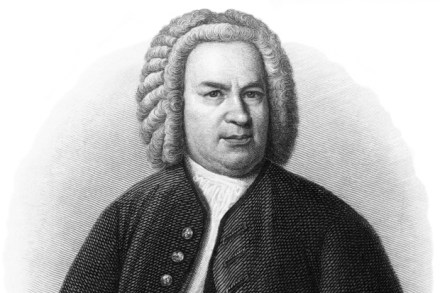
It’s just not what you expect to hear on Radio 3 but I happened upon Music Matters on Saturday morning and after playing us a clip from the opening chorus of St Matthew Passion Tom Service pronounced, ‘Bach is a tasteless and chaotic composer.’ I felt as if my ears had been syringed. Service was actually repeating what one of his guests, the Bach scholar John Butt, had just asserted, as if to verify his intention. Was he really saying that the composer formerly thought of as the epitome of balanced reflection and ‘motivic organisation’ would have sounded ‘incompetent’ to his audiences in 1727? Butt insisted, on the Passion, ‘It’s a complete mess.

Community listening

From our UK edition

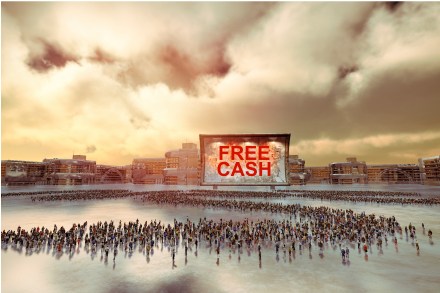
There’s been a lot of fanfare and trailers about BBC Radio’s new ‘online first’ facility. We can now get hold of programmes and listen to them before they go out on air, or download the series and listen to the whole lot in one go. Nothing so strange about that, given the powers of digital, its accessibility and flexibility. But the Radio 4 website is also offering new online-only content, which will never be broadcast in the traditional way. Best Queue is a drama series told in very short (just over four minutes) episodes. Angie and her family are waiting in a massively long queue that promises a large cash handout for those who eventually get to the front.

The films the Arab world doesn’t want you to see

From our UK edition

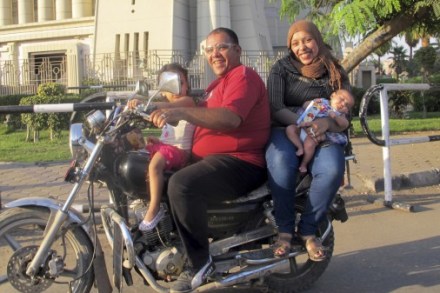
‘I want a woman to be President,’ declared one of the ambulance drivers interviewed by Sherief Elkatsha for his film Cairo Drive. I don’t think he was joking. He was fed up with the struggle to do his job in the chaos of the Egyptian capital’s streets clogged by 14 million vehicles. Elkatsha’s feature documentary took five years to make and takes us from 2009 through the Tahrir Square uprising up to the most recent elections purely through looking at the traffic, the lifeblood of the city. He set out to give us voices, not tell a political story, and this lies behind many of the films shown in last weekend’s BBC Arabic Film Festival, held in the radio theatre at Broadcasting House.

Battle fatigue

From our UK edition

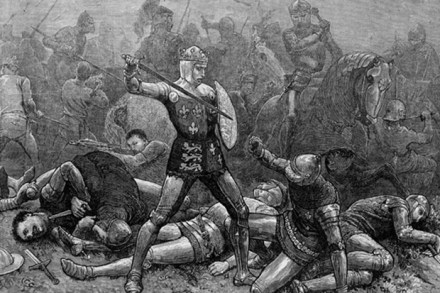
Can anyone explain this sudden enthusiasm for Agincourt, that unexpected victory over the French, now being celebrated, or rather commemorated, on radio, on digital, online? It was so weird to switch on Radio 4 on Sunday morning (which just happened to be St Crispin’s Day, the day on which the battle was fought) to discover that even Sunday Worship was being devoted to commemorating one of the bloodiest battles in that most bloodthirsty period.

What’s it like to talk at length to a serial killer?

From our UK edition

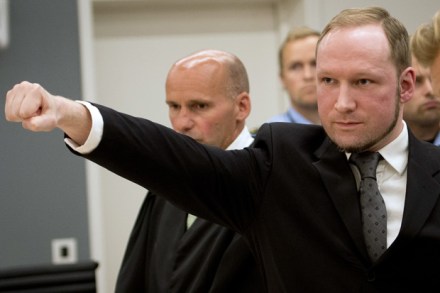
‘I’ve never met a human being who doesn’t appreciate being listened to, being taken seriously,’ said Asbjorn Rachlew, the Norwegian homicide detective who one afternoon in the summer of 2011 found himself listening to Anders Breivik, who had just killed 77 people in a shoot-out on an island near Oslo. His job, Rachlew explained, was to get Breivik to talk, but not ‘by faking it, through manipulation etc.’. You have to show real concern, he said, to get the information you need, because you have to remember that suspects, too, like Breivik, are also traumatised. ‘Banging the table and screaming etc. doesn’t help communication...

National Poetry Day broke the key rule of poetry readings: never let normal people do the reading

From our UK edition

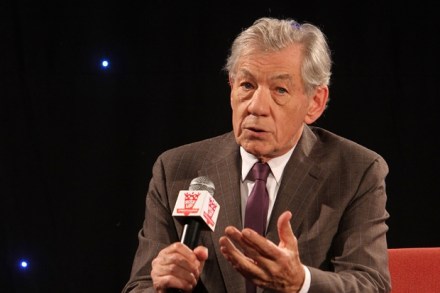
Imagine what Brennig Davies must have felt like just before 11 o’clock last Tuesday evening. The 15-year-old was about to hear Ian McKellen reading his prizewinning short story nationwide on Radio 1. The voice of Gandalf broadcasting words that have emerged from your own head must have been a spooky moment for Davies, whose story ‘Skinning’ had just won the BBC’s Young Writers’ Award (organised with the Book Trust).

I’ve never thought much of John Lennon’s music – until now

From our UK edition

It’s probably blasphemous to admit that I’ve never thought very much of John Lennon’s music. Common sense tells me it must be good but it’s never made much of an impact on me no matter how hard I’ve tried to appreciate it. If I like a Beatles song, I usually discover it’s by George. But the discovery from a radio trailer (reluctantly, I’ll have to admit they do sometimes work) that Lennon would have been 75 this week was shocking enough (how could he ever be that old?) to make me tune in on Thursday night to John Lennon’s Last Day.

Special effects | 1 October 2015

From our UK edition

Maybe what we love about radio is the way that most of its programming allows us the luxury of staying content with ourselves, of realising that it’s OK to be no more, or less, than average. There’s no spangle, no sparkle on the wireless; nothing to make us feel we should be aspiring to live in a fake and fantastical world of gilded lives, to be uber-rich, super-tanned, ultra-happy. On the contrary, you could say most radio is a celebration of Ms or Mr Average. Think of all those short stories, plays, features and real-time, real-voice recordings which take us right inside (too far inside, some might say) the banality of most domestic situations.

Tales of the unexpected | 24 September 2015

From our UK edition

Two significant anniversaries, each very different but both reflecting the BBC’s mission and the reasons for its continued success. From Our Own Correspondent has been on air for 60 years, reporting on events across the world not just as news but to fill in the back story to the headlines. Instead of bombs and bullets, we might find ourselves listening to a Russian-born piano teacher in Gaza who at last finds a grand piano and begins entertaining her neighbours with Chopin.

Eastern airs

From our UK edition

On Private Passions this week the writer Amitav Ghosh gave us a refreshingly different version of what has become a Radio 3 staple. No Mozart, Mendelssohn or Monteverdi for Ghosh, who speaks five languages including Arabic and Bengali, was born in Calcutta and has lived in Delhi, Oxford, Alexandria, Brooklyn and Goa. Instead, his musical choices were all about fusion and cultural exchange. Perhaps most surprising was an ‘Oriental Miscellany’ from the late 18th century, played on the harpsichord and sounding initially quite baroque until you realised that the fingering was much more complex, more layered, infinitely more interesting. The composer William Hamilton Bird had for the first time given Hindustani folk tunes a Western notation.

Loose women

From our UK edition

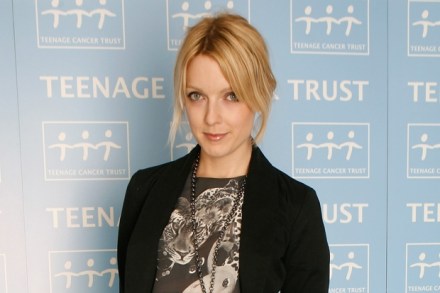
Late Night Woman’s Hour has created a Twitter storm with its twice-weekly (Thursdays and Fridays) doses of ‘mischievous and unbridled conversation’. The 11 p.m.–midnight slot is an ideal opportunity for cardigans to be unbuttoned and tongues unloosed, a chance to show that Radio 4’s venerable magazine programme for women can still shake up the station. Lauren Laverne was brought in from 6 Music to host the first few editions, signalling that there would be nothing mumsy about these hour-long chats around the table with a selection of well-chosen guests. Her style is refreshingly different, frank and a little bit cheeky, not at all Radio 4. How could it be when she spends most of her working life talking to musicians or hanging out at Glastonbury?

The BBC’s music man

From our UK edition

To Radio 2 to meet Bob Shennan, controller of the BBC’s most popular radio station (the station attracts one third of all listening hours) and now also head of the newish monolith that is BBC Music. Why corral all of the Corporation’s music output on radio and TV into one enormous sub-division (on a par with BBC News, BBC Drama and BBC Sport)? Isn’t this just another cost-cutting compromise, a way of saving money by smoothing out the BBC’s output (its first production was that weird mish-mash of God Only Knows by a constellation of stars)? How will specialist stations like Radio 3 and BBC4 survive if swallowed up in what is essentially a bureaucratic creative exercise, victims of corporate branding?

Summer listening

From our UK edition

Just back from a few nights in Sweden to find the perfect programme on Radio 3. It was one of those interval shorts that are always such a nightly bonus during the Proms season. That 20-minute space between concert halves is the perfect length for listening. On Sunday night it was Kate Clanchy’s turn to fill in between Sibelius symphonies and what better topic than The Summer House (produced by Julian May), or rather the stuga, mokki, sommerhus or dacha beloved of Scandinavians and Russians, where Sibelius would retreat to write those symphonies redolent of dark woods and deep waters. Here the hassle and routine of city life are abandoned and days are spent chopping wood, gathering cloudberries or just soaking up the long-awaited sunlight.

Words on war

From our UK edition

It’s really hard to imagine now a world before 24-hour news, continually and constantly accessible in a never-ending stream of on-the-spot, up-to-the-minute reports. What, then, would it be like to have no news summaries on the quarter-hour, no ‘live’ bulletins, no way of knowing what’s going on at this very moment in Kathmandu, Kabul or Khartoum? In his new three-part series for the World Service, War and Words (Sundays), Jonathan Dimbleby looks back to the late 1920s, when the fledgling BBC was not allowed to broadcast any news item until it had first appeared in print. Newspapers reigned supreme when it came to reliable and up-to-date reportage.

Selective memory

From our UK edition

It’s 70 years since the bombs were dropped on Hiroshima and Nagasaki and yet there has been no rush to commemorate this anniversary. It’s perhaps not surprising. Who would choose to recall the events of 6 August 1945 when the world first witnessed the effects of nuclear warfare? Yet the absence of date-setting, the annual forgetting, makes it appear that we’re much less keen to remember something that might make us feel uncomfortable or discredit us. One exception was on Radio 4 on Monday morning, when, in Under the Mushroom Cloud, Shuntaro Hida, a 98-year-old survivor of Hiroshima, told us frankly and without sentiment his memories of that day in August 1945.

Matters of life and death

From our UK edition

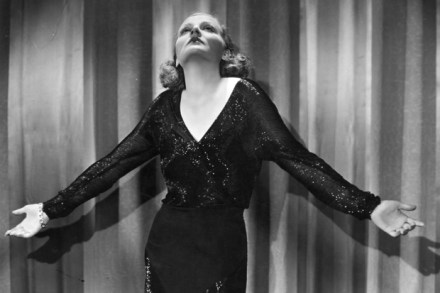
‘Bait by Cartier,’ she growls as her priceless diamond bracelet is strapped to a piece of rope and dropped overboard in the hope it might lure a fish on to the line. She’s stuck on a boat with a group of survivors after the freighter she was aboard was hit by a German U-boat during the second world war. She was Tallulah Bankhead, playing Connie, heroine of John Steinbeck’s novel-cum-film Lifeboat, for Mystery Theater, the American radio drama series, first broadcast in 1950 and now replayed on Radio 4 Extra (Sunday). They just don’t make voices like that anymore. It had star quality streaked right through it. That deep husky tone, the raucous laugh, the harsh put-down veering almost at once into a sensual come-on.

Space case

From our UK edition

The idea that Radio 2 should be sold off by the BBC to a commercial rival is as nonsensical as BBC1 losing Strictly Come Dancing, or Heinz giving up on baked beans. The station, in its former incarnation as the Light Programme, was a core product of the corporation, the home of the Palm Court Light Orchestra, Kenneth Williams, Semprini, Billy Cotton, Sid James and Edmundo Ros. It gave us ‘light’ entertainment — music to dance, exercise or sing to, comedy shows, magazine programmes, dramas of ordinary life rather than Greek tragedy. The comedy programmes on 2 were siphoned off long ago to 4 and then 4 Extra, as were all the dramas, including The Archers, and Woman’s Hour too.

Tax return

From our UK edition

Make no mistake: the Proms, whose 2015 season was launched last night, would not, could not, exist without the BBC, or the licence fee. Just under half the cost of putting on such an ambitious nightly series of concerts throughout the summer, drawing on orchestras from across the globe, commissioning new work, pulling together programmes that mix popular and safe with little-known and challenging, comes from the sale of tickets, the rest is subsidised by taxpayers. To social-justice campaigners this might seem like an outrage.