Kate Andrews

Kate Andrews

Kate Andrews is deputy editor of The Spectator’s World edition.

Is Labour’s first Budget coming unstuck?

From our UK edition

During the general election campaign, Labour played a cautious game on tax: the party was careful not to share its bigger plans for getting more revenue into the Treasury until after the election was over. A few major tax hikes were ruled out – income tax, National Insurance and VAT – but it was quickly realised this meant all other taxes were fair game. Only a handful of relatively small tax hikes were announced in the lead-up to polling day, including putting VAT on private school fees and ending non-dom status.  Reeves must take the OBR's calculations as gospel The softly-softly strategy seemed to work, at least for getting through the election.
Can Kamala Harris rewrite her political past?

From our UK edition

Alex Cooper’s Call Her Daddy podcast interview with Vice President Kamala Harris was largely a love-in. But when you have been actively avoiding the media for the majority of your presidential campaign, even the most innocuous of questions can accidentally bite. ‘You don’t do too many long-form interviews,’ Cooper put to Vice President Harris at the start of their 45 minute podcast recording. ‘What made you want to do Call Her Daddy today?’  It made complete sense to kick off Harris's ‘media blitz’ with a long interview One answer is listenership.

Should we be optimistic about the next ten years?

From our UK edition

30 min listen

Loyal listeners will know that as well as our concise daily political analysis, Coffee House Shots often delves deeper into the issues of the day. We don’t shy away from fierce debates on controversial issues. The most legendary of these debates have been between our former editor Fraser Nelson and economics editor Kate Andrews. As a parting gift to listeners before Fraser passes on the editor’s pen, Cindy Yu hosts a final contest between these two worthy debaters on whether we should be optimistic about the next ten years. Has there ever been a better time to be alive, as Fraser argues? Or should we be concerned about the growing threat to civil liberties, volatile markets and foreign policies, the failure to grapple with migration and the looming birth rate crisis?

Coffee House Shots live: the struggle for the future of conservatism

From our UK edition

39 min listen

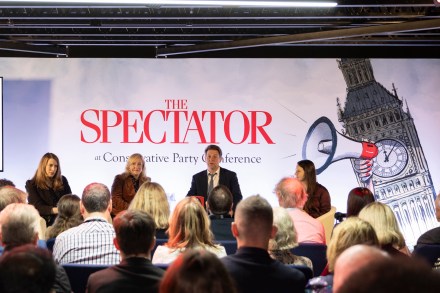
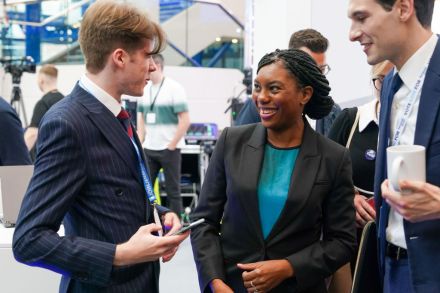
The mood at Conservative conference has been surprisingly jubilant considering the turmoil that the party finds itself in. Labour's misfortunes may have contributed to this, but there seems to be a genuine optimism around the four candidates vying for the leadership of the party. What's the latest? Have Kemi Badenoch's comments on maternity pay impacted her position with the members?  Also on the podcast, this evening will see the Vance vs Walz vice presidential debate. They go head to head in an increasingly tight election. What does Trump vs Harris say about the state of American politics? And can any of these candidates – on either side of the pond – expect to be fighting future elections for their parties?

Have the Tory leadership candidates got a Truss problem?

From our UK edition

Jeremy Hunt is one of the few Tories at Conservative Party Conference willing to take the fight to Labour. In the second day, he sat down for an on-stage interview where the former Chancellor spoke about the winter fuel allowance, freebies, but also made some polite suggestions about where the Conservative party shouldn't go, and dropped a few hints about the former Prime Minister, Liz Truss. Natasha Feroze speaks to Kate Andrews and Isabel Hardman about Hunt's speech and some of the best bits from Liz Truss's own interview at conference.

Did Kemi Badenoch really call maternity pay ‘excessive’?

From our UK edition

15 min listen

The final four leadership candidates have arrived at Conservative Party Conference to make their final pitches. However, day one and Kemi Badenoch has found herself in an online row over comments made about maternity pay. Katy Balls, Kate Andrews and Fraser Nelson take a look at what was really said, and whether there is a clear frontrunner to lead the Tory party at conference.

Did Kemi Badenoch really call maternity pay ‘excessive’?

From our UK edition

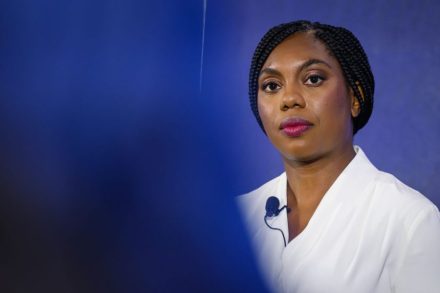
Did Kemi Badenoch just say that maternity pay in the UK is ‘excessive’? That’s the claim kicking off the first day of the Tory party conference: an affair that is supposed to act as a ‘beauty pageant’ for the four remaining leadership contenders. It’s not great timing for Badenoch – and it’s certainly not how she and her team will have wanted to kickstart her four days in Birmingham, trying to win over grassroot Conservatives. It’s also, however, not really what she said. “There was a time when there wasn't any maternity pay and people were having more babies.”@KemiBadenoch suggests statutory maternity pay is "excessive".@KateEMcCann | @AdamBoultonTABB pic.twitter.

Inside Starmer’s dinner with Donald Trump

From our UK edition

16 min listen

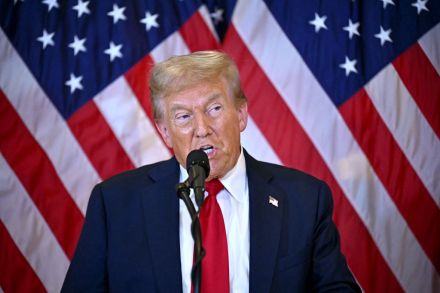
The political equivalent of the Rumble in the Jungle happened last night when Starmer sat down for a two-hour dinner with Donald Trump, following the Prime Minister’s speech at the UN General Assembly. Details of what Trump and Starmer talked about are scant: the official read-out merely says they discussed the ‘longstanding friendship’ between Britain and America. Is this good politics from the prime minsiter?  Elsewhere, the Tory party conference kicks off in Birmingham this weekend and with it the beauty contest for the next Conservative leader. What should listeners expect?  Oscar Edmondson speaks to James Heale and Kate Andrews.  Produced by Oscar Edmondson.

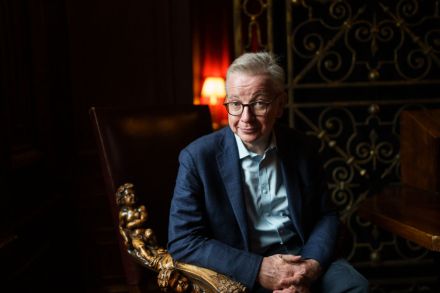
Michael Gove is the new editor of The Spectator

From our UK edition

13 min listen

We've had quite the day at 22 Old Queen Street.  All Westminster politics seem small in comparison to the news that Fraser Nelson will step down as editor of this publication, with Michael Gove taking charge on October 8th. Hear Fraser's thoughts on what this new chapter will mean for The Spectator, on the podcast.  Elsewhere, Labour conference has wrapped up in Liverpool and this has coincided with an update on growth from the OECD. Having predicted in May that the economy would grow by 0.4 per cent this year, the policy organisation now expects the economy to grow by 1.1 per cent. This lifts the UK from the bottom of the pack of advanced economies and ties it in second place – alongside France and Canada – for the fastest growth in the G7. Britain is growing.

Britain is growing. Can Rachel Reeves start spending?

From our UK edition

The OECD’s interim Economic Outlook report has landed this morning and its forecast for the UK has been revised significantly upwards. Having predicted in May that the economy would grow by 0.4 per cent this year, the policy organisation now expects the economy to grow by 1.1 per cent. This lifts the UK from the bottom of the pack of advanced economies and ties it in second place – alongside France and Canada – for the fastest growth in the G7. The news comes as the OECD declares that the global economy is ‘turning a corner’ (the name of today’s report), as global GDP looks set to ‘stabilise’ at 3.

Why has Rachel Reeves suddenly become cheery?

From our UK edition

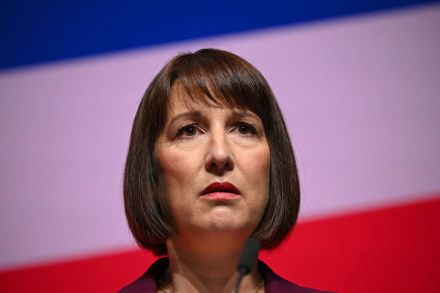
Can Rachel Reeves inject some optimism into the debate around Britain’s economy? That seems to be her ambition today, as she prepares to address Labour conference – and the country – this afternoon, where she will look forward to a ‘decade of national renewal’ and promise ‘no return to austerity.’ The change in language is striking. Having used this summer to prepare people for a ‘painful’ and ‘difficult’ Budget in October that will have to include tax hikes and spending cuts, Reeves is now talking about the fiscal event as ‘a Budget to rebuild Britain’, and pointing to a much more positive future: a economic ‘prize’ of a more stable economic foundation, ‘if we make the right choices now.

Will Starmer clash with the unions?

From our UK edition

15 min listen

It's easy enough to keep both business and the unions on side when you are vague about your policies – and when your opponent is messing up so badly. That was Labour's position going into the election. But now that it's in government, can it keep that balancing act up? Next week's Labour party conference will be the government's first real test. James Heale talks to Kate Andrews and Paul Nowak, general secretary of the Trades Union Congress. Produced by Cindy Yu.

Britain is spending beyond its means

From our UK edition

This morning marks a milestone – but it’s nothing to celebrate. Public sector net debt as a percentage of the economy has exceeded 100 per cent: a level not seen since the early 1960s. And there are no signs of course correction.  The latest update from the Office for National Statistics shows, once again, that the government is spending plenty more than it takes in, with borrowing figures for August coming in at £13.7 billion – £3.3 billion higher than last year and £2.5 billion higher than had been forecast by the Office for Budget Responsibility in March.  Meanwhile debt servicing payments continue to take their toll, coming at £5.9 billion last month. It’s a tiny dip compared to last year – £0.

Was the Bank of England wrong not to cut interest rates?

From our UK edition

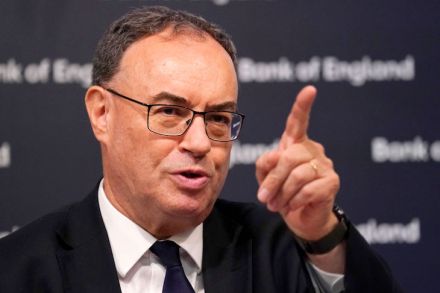
The Bank of England has held interest rates at 5 per cent. This was the expected outcome of the Monetary Policy Committee’s latest meeting, which saw members vote 8-1 to maintain the base rate.  Was it a mistake not to cut rates? The latest economic data appears to have persuaded the MPC to lean into their (now) hawkish tendencies and keep rates steady. The headline inflation rate is almost on target but the rise in core inflation in August (which excludes more volatile prices like food and energy) and in services inflation – as well as mixed signals from the labour market – gave the Bank good reasons to wait until later in the Autumn to cut rates.

Should Labour ditch the ‘doom and gloom’ narrative?

From our UK edition

11 min listen

We have some new inflation figures today. Inflation rose 2.2 per cent in the 12 months to August. This is pretty much in line with the Bank of England's target and should be good news for Labour, so why do they persist with this doom and gloom narrative?  Elsewhere, Labour's awkward week has got more awkward with the news that Sue Gray, Keir Starmer's chief of staff, is paid more than him. Surely they could have seen this news story coming?  Oscar Edmondson speaks to Kate Andrews and James Heale. Produced by Oscar Edmondson.

Labour’s economic doom and gloom doesn’t match reality

From our UK edition

Inflation was 2.2 per cent in the 12 months to August, unchanged from the month before, today's update from the Office for National Statistics reveals. This is ever so slightly above the Bank of England’s target of 2 per cent, but it’s in the ballpark of where it’s supposed to be. And while the Bank expects inflation to rise slightly by the end of the year – to just under 3 per cent – it is due to fall again in 2025 and remain around target for the years to come. These figures are good news for Labour, but they raise question marks over how long the government can continue the doom and gloom about Britain's economy. Long gone are the days of double-digit price hikes and a spiralling inflation crisis.

The junior doctors’ pay deal won’t stop them striking

From our UK edition

After 22 months of on-and-off strikes, junior doctors have voted to accept the government’s offer of a 22.3 per cent pay rise over the next two years. But this doesn’t mean the strikes have come to an end. Rather, the government seems to have secured itself only a brief pause from the walkouts, before the negotiation process (and potential strikes) start up again next year. The British Medical Association announced last night that 66 per cent of the 46,000 junior doctors who voted agreed to the deal. This includes an additional backdated 4 per cent pay increase on top of the 9 per cent awarded by the previous government for the last fiscal year, as well as another 8 per cent increase this year.

Are Democrats to blame for the repeated attempts to kill Trump?

From our UK edition

23 min listen

As if there hadn’t been enough drama in America in 2024, Donald Trump has survived another assassination attempt. The attempted killing of the 45th president at his golf course in Palm Beach, Florida yesterday afternoon was not nearly as threatening or deadly as the shooting nine weeks ago in Butler, Pennsylvania - but questions remain about how the incident could have happened.  Freddy Gray is joined by Kate Andrews to discuss the second assassination attempt, the state of the race, and what's next for Donald Trump.

Keir Starmer: the NHS will get ‘no more money without reform’

From our UK edition

15 min listen

The Prime Minister has described the NHS as in 'critical condition' in a speech this morning after the release of Lord Darzi's damning independent report. Lord Darzi had only nine weeks to conduct his investigation into –and assessment of – the National Health Service. But this truncated timeline does not appear to have led to any watering down of his verdict. The independent peer has delivered a damning diagnosis of the state of the NHS, which is described as failing both its staff and its patients. The NHS clearly needs serious intervention, but are Labour the ones to do it? James Heale speaks to Kate Andrews and Isabel Hardman, author of Fighting for Life: The Twelve Battles that Made Our NHS, and the Struggle for Its Future. Produced by Oscar Edmondson.

This report is a damning indictment of the NHS

From our UK edition

Lord Darzi had only nine weeks to conduct his investigation into and assessment of the National Health Service. But this truncated timeline does not appear to have led to any watering down of his verdict, published in a report today. The independent peer has delivered a damning diagnosis of the state of the NHS, which is described as being in a ‘critical condition’, failing both its staff and its patients. It’s not exactly a secret that the NHS is on its knees. There have been countless reports and rankings of healthcare systems over the years that have highlighted just how poorly the NHS performs compares to its counterparts, especially when it comes to patient outcomes. The NHS has been missing every A&E target for almost a decade.