Kate Andrews

Kate Andrews

Kate Andrews is deputy editor of The Spectator’s World edition.

The perils of ‘Bidenflation’

From our UK edition

Has inflation peaked in the United States? Today’s update from the Bureau of Labor Statistics shows the annual rate of inflation has fallen slightly, from 8.5 per cent in March down to 8.3 per cent in April. There are signs of slowdown in the monthly figures, too: prices rose 0.3 per cent between March and April, after rising 1.2 per cent between February and March. The Democrats will struggle to hail this relatively small dip as any kind of meaningful victory Still, markets don’t seem particularly encouraged by the news. US stock futures immediately took a dip when the figures landed. Emphasis seems to be on the fact that inflation once again outpaced predictions, with CPI up 0.3 per cent on the month, despite the consensus predicting a rise of 0.2 per cent.

Is the UK headed towards recession?

From our UK edition

10 min listen

The Monetary Policy Committee has just raised interest rates again. This is the fourth consecutive rise, the first time this has happened within a quarter of a century. Economically the future is looking pretty bleak and not just in the UK, this looks like it may be a global problem caused by several factors. China's no Covid policies, US inflation, the Eurozone trying to wean itself off Russia's oil and gas, etc.Katy Balls talks to James Forsyth and Kate Andrews about the state of the global economy.

Boris’s plans for a new Brexit clash

From our UK edition

40 min listen

In this week’s episode: Is Boris Johnson planning to tear up Britain’s deal with the EU?James Forsyth says in his Spectator cover story this week that Boris Johnson plans to reignite the Brexit voter base by taking on the EU again over Northern Ireland. He joins the podcast along with Denis Staunton, the London editor of the Irish Times, who writes in this week’s magazine about how Sein Finn has benefited from the DUP’s collapsing support. (00:50)Also this week: Does overturning Roe V. Wade stand up to constitutional scrutiny? Douglas Murray has written in his column this week about America’s abortion debate, in the wake of the leaked draft of a Supreme Court opinion set to overturn the 1973 decision in Roe V Wade.

Are we heading towards a recession?

From our UK edition

The US Federal Reserve yesterday announced its biggest interest rate rise in 22 years. Today, the Bank of England follows suit, raising rates at the fastest pace for a quarter of a century. But the biggest question remains: how successful will these hikes be at tackling inflation? The Bank’s Monetary Policy Committee has voted six to three to raise interest rates from 0.75 to one per cent. This incremental 0.25 per cent rise was broadly expected by economists – though there had been speculation in recent weeks that the Committee might move faster, after March’s headline inflation rate hit seven per cent. Notably, Committee members in the minority were calling for a bolder hike of 0.5 per cent.

Has the Fed restored its credibility?

From our UK edition

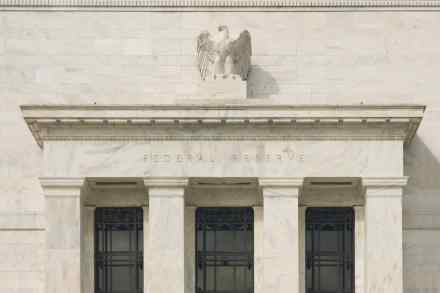
The Federal Reserve is playing catch-up. Today’s interest rate hike is only the second rate rise since 2018 – but it’s the first half-point rise in 22 years. As expected, the federal-funds rate – the interest rate banks use to lend to each other on a short-term basis – will rise from a target range of between 0.25 and 0.5 per cent, to a range between 0.75 and 1 per cent. After many months of insisting price hikes would be transitory, with inflation soaring to a 40-year high in the meantime, the Fed is finally acting to curb it. By historical standards, today’s hike keeps interest rates very low – but that’s all expected to change over the next year.

New York has become the city that never eats

From our UK edition

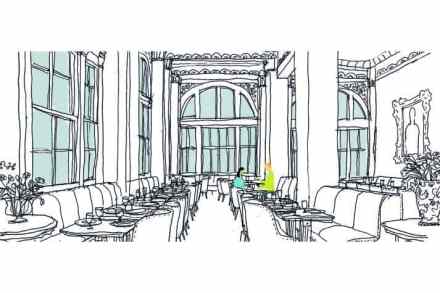
Is there anything more extraordinary than dining in New York City? Whether you’re sitting down for the Michelin star experience of a lifetime at Le Bernardin or squeezing in at the counter of Vanessa’s Dumpling House on the Lower East Side ($1 a pop), the New York restaurant combines atmosphere with quality food in a way that few other cities around the world can match. Every cuisine is on offer, 24 hours a day: and if you’re willing to do a little research beforehand, you can all but guarantee yourself a meal worth every penny. Under normal circumstances, cuisine competition between London and New York isn’t really a contest at all. Of course, London has its staples.

James Bartholomew, Freddy Gray and Kate Andrews

From our UK edition

20 min listen

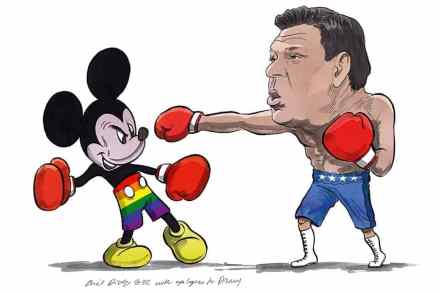
On this week's episode, we’ll hear from James Bartholomew on how taking in a Ukrainian refugee has improved his social clout. (00:50) After, Freddy Gray on the Republican fight against Disney. (06:27) And, to finish, Kate Andrews on overcoming her arachnophobia. (13:46)Entries for this year's Innovator Awards, sponsored by Investec, are now open. To apply, go to: spectator.

Why is Rishi Sunak flirting with windfall taxes?

From our UK edition

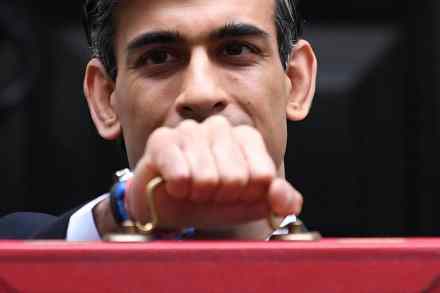
Rishi Sunak has had a few quiet weeks after an explosive one, in which the Chancellor had to deal with an avalanche of questions concerning his wife’s tax status and a partygate fine. But Sunak was back this week talking policy. And his most recent contribution is unexpected to say the least. In an interview with Mumsnet, the Chancellor indicated that he might start considering a windfall tax on oil and gas companies if they didn’t invest more profits back into their businesses to ‘support the economy’ and improve productivity. ‘If we don't see that type of investment coming forward, if companies aren't going to make investments in our energy security, of course that's something I'd look at,’ the Chancellor said.

Has Carole the tarantula cured my arachnophobia?

From our UK edition

I’ve been an arachnophobe my whole life. I can’t remember a time when videos of spiders, or even photos or drawings, didn’t give me palpitations. As a kid Charlotte’s Web read as sinister propaganda. Even as an adult, just hearing the word ‘tarantula’ would make me feel like one was crawling on me (kind friends and colleagues took to calling it ‘the t-word’). I wish I could blame someone for these fears, but no one else in my immediate family screamed uncontrollably when a house spider scuttled across the floor. A fear of spiders is the third most common phobia in the UK, so I know I haven’t been alone. But I’d grown increasingly frustrated by my arachnophobia over the years.

Will economic pressures weaken the West’s alliance?

From our UK edition

This morning’s retail sales update isn’t pretty. Sales volumes fell by 1.4 per cent last month, following a 0.5 per cent drop in February (revised, and worse, than the original estimate of 0.3 per cent). The biggest fall came in non-store retail shopping: almost an 8 per cent month-on-month fall. However, the Office for National Statistics points out that overall sales volumes are still roughly 20 per cent higher now than they were pre-pandemic. But the recent drop indicates that the cost-of-living crisis is already worsening, as inflation – now at 7 per cent – is taking its toll on real incomes and is already prompting changes in consumer behaviour. As Capital Economics notes today, the 9.

How much is Britain’s inflation rate rising by?

From our UK edition

How is the UK’s economic bounce back from the pandemic years going? Next week the Office for National Statistics will provide us with a host of new monthly data, including an economic growth and labour market update for the month of February and the headline inflation rate for March. The inflation rate is the real kicker. While GDP and labour market headlines from February will allow us to further gauge how strong the economy was at the start of the year, March’s CPI rate will factor the impact of Russia’s invasion of Ukraine. This has undoubtedly had an impact on prices: the cost of energy, in particular.  There’s little doubt that the inflation rate is going up again. But by how much?

What’s behind Sunak’s poll slide?

From our UK edition

15 min listen

The National Insurance hike comes into effect today which is going to hit doubly hard when coupled with the ever-increasing cost of living. While we are all going to feel this burden on our bank accounts, Rishi Sunak is taking his first major political blow. Is there anything he can do to bounce back, or are his future aspirations dead in the water?Max Jeffery talks to Katy Balls and Kate Andrews about the Chancellor's political future and our economic one.

Normal people are paying the price for NHS failures

From our UK edition

Most people don’t need reminding about the cost-of-living crunch: food, petrol, bills and transport all provide a daily reminder that prices are going up. But today’s energy price cap rise – lifting by almost £700 – provides a headline example of the increasing costs of essential goods.. Alongside it, the National Insurance hike (a 2.5 percentage point rise split between employers and employees) and an average council tax rise of 3.5 per cent both kick in too. But what about the essential services that are supposedly ‘free’? It seems these are getting expensive too.

Is this the end of borrow and spend?

From our UK edition

Since the spring statement last week, Rishi Sunak has been dealing with complaints from all sides: the right have been arguing he should have been bolder with tax cuts, the left insists more support is needed to help people with the rising costs.  With the Office for Budget Responsibility projecting the biggest fall in living standards since records began, rumours of U-turns and further announcements started bubbling over the weekend. The media, the opposition, and even some Tory MPs have been asking Treasury representatives over and over again: is that all? In a keynote address hosted by the Institute of Economic Affairs this morning, chief secretary to the Treasury Simon Clarke answered that question in no uncertain terms: yes, for now, that is all.

Is there a stealth tax hidden in the spring statement?

From our UK edition

17 min listen

While on the surface there might seem like a lot to like in Rishi Sunak's spring statement. Yes, the NI tax increase is still there, but the tax threshold to pay it is being raised. And there is even a promise of an income tax cut coming in 2024. But does the spectre of inflation mean that many of these supposed benefits won't be felt tangibly for the average taxpayer and may even see the amount they give to the government go up?Katy Balls is joined by James Forsyth, Kate Andrews and Fraser Nelson to discuss.

Did Rishi Sunak deliver on his tax-cut promise?

From our UK edition

Today’s spring statement may not have been a proper Budget – but it could prove to be one of the most significant moments in Rishi Sunak’s time as Chancellor.  At a time when families are facing the double-edged sword of soaring bills and wages falling behind inflation, Sunak was under pressure to offer reassurance. But inflation, which we found out this morning is heading for a 40-year high, is also biting the Treasury. The Chancellor's response to this dilemma came in the form of several major tax announcements, all targeted at reducing costs for the lowest paid. But Sunak also doubled down on less welcome policies which he insisted are vital for balancing the books. National Insurance will rise, as expected, next month by 2.5 percentage points.

Will Rishi Sunak stick to his ‘golden rule’?

From our UK edition

Here’s the Rishi Sunak paradox: he proudly defines himself as a low-tax Tory but under his watch taxes are reaching a 71-year high. There are plenty of Tories who want to ditch next month’s National Insurance increase but Sunak is firmly opposed – mainly because he wants to link up in people’s minds that more money for the NHS and social care doesn’t manifest out of thin air. But pressure is on at tomorrow’s spring statement to make clear what kind of Chancellor he really is. Does he come from the long line of Tories who like tax cuts in theory but not in practice – or does he have another agenda? Sunak’s starting position is that to cut tax, you need to restrain spending. For the Chancellor, it’s a simple point about trade-offs.

Rishi keeps coy on this week’s mini-Budget

From our UK edition

What support might the Chancellor dish out to help with the cost of living squeeze in the Spring Statement this week? In line with his previous media appearances, Rishi Sunak's statements ahead of his mini-Budget this morning on the BBC didn't give much away, as the Chancellor 'can't speculate' on what's to come in his announcements this week. But the pressure is on to address the energy and basic goods prices which have been skyrocketing since we emerged from the height of the Covid emergency: the energy price cap lifts nearly £700 this spring, and is likely to rise again in the autumn. https://www.youtube.com/watch?

Lionel Shriver, Kate Andrews and Nicholas Farrell

From our UK edition

20 min listen

On this week's episode, we'll hear from Lionel Shriver on if western populations would fight to defend their homeland in the way we have seen the Ukrainians have. (00:53)Next, Kate Andrews on the real reasons behind the rise in the cost of living. (09:17)And finally, Nicholas Farrell asks if the war in Ukraine will boost populism? (13:50)Produced and presented by Sam HolmesSubscribe to The Spectator today and get a £20 Amazon gift voucher.