Kate Andrews

Kate Andrews

Kate Andrews is deputy editor of The Spectator’s World edition.

Trussonomics doesn’t add up

From our UK edition

I’ve been lucky enough in my working life so far to hold a string of jobs that have allowed me – if not actively encouraged me – to be critical of government. Coming up through Westminster thinktanks in my twenties, I had great fun putting out press releases that tore apart bad public policy. When I had the opportunity to speak to MPs, they’d remind me of the ‘political realities’ that tied their hands and prevented change. In other words, check your policy privilege. Thinktank wonks, commentators and journalists can make all the punchy points they want; they don’t face re-election.

Has Rishi U-turned on tax cuts?

From our UK edition

10 min listen

Having spent the last four debates suggesting that tax cuts are irresponsible and immoral, Rishi Sunak says he will cut VAT on energy bills if he becomes the next prime minister. Those defending him have suggested that this particular tax cut is temporary, it is funded and will help ease the cost of living crisis. Are they right?Katy Balls is joined by Kate Andrews. Produced by Natasha Feroze.

Is Rishi’s latest tax pledge a U-turn?

From our UK edition

Is Rishi Sunak spooked? Today’s big tax announcement – his plan to temporarily slash VAT on energy bills this winter should he become Prime Minister, saving the average household £160 – is being viewed as a U-turn. This comes after the former chancellor used the first four leadership debates to double down on the importance of fiscal responsibility and not rushing tax cuts. With Sunak behind Liz Truss in the Tory membership polls by a ratio of roughly two-to-one, is this a desperate bid to improve his standing with grassroots voters? Or is something else going on? Whenever the cost-of-living crisis comes up, Sunak – on paper – has the upper hand.

Why is Liz Truss’s campaign painting her as a victim?

From our UK edition

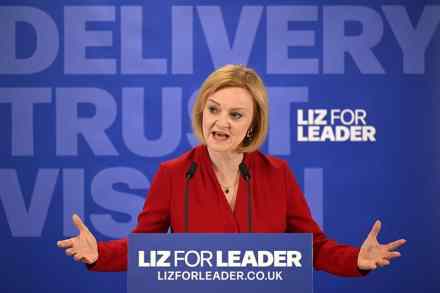
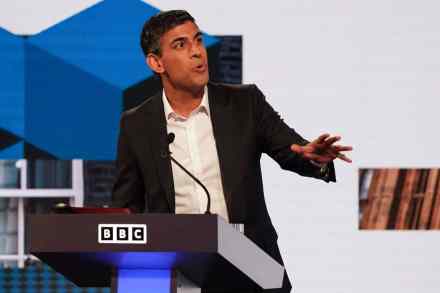
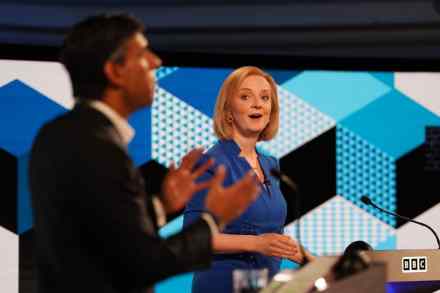
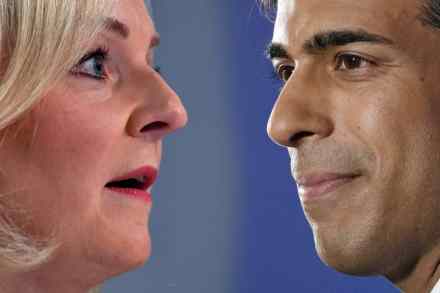
I suspect Rishi Sunak will watch back last night’s BBC Tory leadership debate with some regret. His frequent interruptions of Liz Truss did him no favours — not simply because it came across at points as impolite, but because on plenty of occasions he would have been better off letting her answer his questions (or not answer his questions, as it was apparent on things like interest rates that she had not come equipped with answers). But Truss is at risk of making Sunak’s mistakes her mistakes. In response to Sunak’s debating tactics, Team Truss is going hard on the misogyny angle. Sunak’s performance is being explained in heavily gendered terms by Truss’s allies.

Do Truss and Sunak’s spending pledges add up?

From our UK edition

Rishi Sunak and Liz Truss have only a few weeks to make their case before postal voting begins on 1 August. Sunak has vowed to be 'the heir to Margaret Thatcher' in a comment piece in the Daily Telegraph today, in which he promises to deliver a 'radical' set of reform, without expanding much on what that reform would look like. Meanwhile Truss joined BBC Radio 4’s Today programme this morning to double down on her plans to grow the economy, admitting that ‘twenty years of economic policy haven't delivered growth’, even if the majority of this time has been under Conservative leadership.

The economic battle between Sunak and Truss

From our UK edition

The Tory grassroots have got themselves a real economic debate this summer: Rishi Sunak’s ‘Thatcherite’ economic philosophy vs Liz Truss’s ‘Reaganite’ plans to boost growth. It’s not the most obvious distinction, given the former prime minister and president were great free-market allies. Both also cut tax. But it’s about the order of priorities: like the Thatcher years, Sunak believes that the most important task is getting inflation under control, which was reporting this morning to have hit a 40-year-high, rising by 9.4 per cent on the year in June. This is how he justifies the tax hikes he ushered in as chancellor, comparing them to what Nigel Lawson did in Thatcher’s government.

Investing today: how tech can change the face of finance

From our UK edition

59 min listen

Staying on top of your personal finances has never been easier. Anyone can now buy and sell stocks at the tap of a phone screen, with even more progress in fintech just around the corner. What does this bold new world of investing mean for markets, policymakers and everyday investors? Does smart technology mean easy decisions? Will technology ever replace the human touch? And what tools are out there for the less digitally savvy?

Is Rishi’s tax cut pledge enough to rally MPs?

From our UK edition

Rishi Sunak has a reputation for sleek and snazzy presentation, and his leadership launch this morning was no exception – by Westminster standards, anyway. The air-conditioning was on full blast as young activists lined up with their ‘Ready For Rishi!’ signs, next to heavily branded backdrops. And the guest list was long. MPs in attendance included many who had already declared for Sunak: Bim Afolami, Claire Coutinho, Helen Whately, and Liam Fox. There were also surprise guests, including the Deputy Prime Minister Dominic Raab, who introduced Sunak and credited him for delivering ‘the biggest tax cut for working people in a decade’ by lifting the National Insurance threshold for millions.

Is Sunak really a big state believer?

From our UK edition

There’s something strange happening in Tory politics. It’s not surprising to see leadership candidates taking special aim at the current frontrunner Rishi Sunak. But the attacks being used are redefining the economic philosophy of the Tory party in a way that could soon backfire, regardless of who wins the top job.Take, for example, Liz Truss’s most recent pitch to MPs: get behind one Tory right candidate or risk sending Sunak into No. 10. Allies of Suella Braverman are reported to be making a similar pitch. The vast number of candidates in this race has indeed caused a lot of uncertainty and increases the likelihood of surprise results – something leadership hopefuls are desperate to avoid. But to the main point: since when is Sunak on the Tory left?

Will the Tory hopefuls deliver on their tax promises?

From our UK edition

Rather unsurprisingly, the bulk of MPs who have declared their leadership bids so far are promising lower taxes. Also unsurprisingly, very few details are on offer explaining how they’d do it. In Nadhim Zahawi’s early pitch to the public — he is expected to share more tomorrow — he’s asserted that ‘taxes for individuals, families and business need to be lower - and will be on my watch.’ Tom Tugendhat's ‘clean start’ manifesto made a similar point: ‘Taxes, bluntly, are too high,’ he asserted, ‘and there is an emerging consensus across the party that they must come down.

The Tory leadership candidates’ tax cuts promises won’t be enough

From our UK edition

What does Boris Johnson’s resignation mean for the economy? The pound started its rebound yesterday from a two-year low against the US dollar after Johnson resigned. A few economists were quick to point out though that it had dropped so much, there was only one place it could really go: up.  It’s very likely this leadership race turns into a competition over who would cut taxes hardest and fastest, which is no bad thing Had Johnson managed a few more months in the role, we would have almost certainly seen some deficit-financed tax cuts, led by the new Chancellor Nadhim Zahawi. ‘We were 24 hours away from reversing the corporation tax hike,’ one minister tells me, which will rise from 19 per cent to 25 per cent for large companies.

Why Rishi Sunak quit

From our UK edition

On Tuesday, the last cabinet meeting with Sajid Javid as health secretary and Rishi Sunak as chancellor passed without any hint that either was about to resign. The ministers did not co-ordinate their resignations, but they had both been tipped over the edge by growing evidence that No. 10 had misled MPs by declaring Boris Johnson had no prior knowledge of Chris Pincher’s behaviour. Sunak had also grown tired of the Prime Minister’s economic ‘cake-ism’ – the fantasy of wanting both high spending and low taxes. The contradictions had become untenable. In that cabinet meeting, Johnson offered more cake. He was his usual ebullient self, promising a morale-raising speech to move on from recent woes. It was Michael Gove who confronted him.

Rishi Sunak will be missed as Chancellor

From our UK edition

We will never know the counterfactuals of the past few years. What if another MP had been made Chancellor when Sajid Javid resigned (the first time)? What if a green chancellor Rishi Sunak hadn’t had a pandemic to manage? While we can’t answer these questions, it’s hard to imagine any MP – certainly on the left, even on the right – taking fiscal responsibility as seriously as Sunak did when he had the permission of his party – and politicians the world over – to throw it out the window. I suspect it won’t take long for us to start missing the former Chancellor and the critical role he played in taming the Prime Minister’s spending habits.

There’s little to celebrate on the NHS’s birthday

From our UK edition

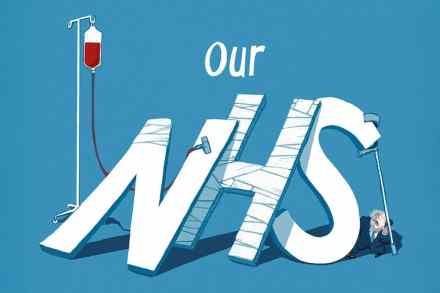
Birthday celebrations for the NHS this year are relatively quiet. In recent years the health service has received multi-billion pound top-ups from the taxpayer, not to mention high praise from politicians across the political spectrum. This may be in part because the government has already seen to the big NHS pledges, including the 2.5 per cent National Insurance hike, split between workers and employers, which is bringing in roughly £6 billion to pay for Covid catch-up. But no doubt this year’s notable silence is also linked to just how bad that catch-up is going.

A greener future for the north

From our UK edition

64 min listen

Will the government's plans for revitalising the north be hampered by its plans for decarbonisation? There's increasing concern in Whitehall that these agendas contradict each other, but there's no reason that green jobs and projects can't benefit Britain's 'forgotten communities' too.How do we ensure the north benefits from a greener, more prosperous future? How can industry best play a role? Join The Spectator's Kate Andrews as she hostsClare Harbord, Group Director of Corporate Affairs, Drax. Rt Hon Jake Berry MP, Chairman, NRG. Tom Pope, Deputy Chief Economist, Institute for Government and Valentine Quinio, Analyst, Centre for Cities.The event was kindly sponsored by Drax.

A breakthrough on abortion is there if Biden reaches for it

From our UK edition

The US Supreme Court has not banned abortion. The point made by its ruling – a pretty reasonable one – was that such issues should be decided by elected politicians, not by appointed judges. ‘It is time to heed the Constitution and return the issue of abortion to the people’s elected representatives,’ wrote Justice Samuel Alito in his majority opinion. In other words: stop confusing the job of the court with the job of the legislature. If you want to protect women’s rights in the United States, pass a law to do so. But Congress has not passed such a law. As a result, millions of women are losing access to abortion services in states that have been waiting for Roe vs Wade to be overturned. In many cases, there are virtually no exceptions.

Britain avoids a recession – for now

From our UK edition

The UK's economy grew by 0.8 per cent between January and March this year, according to this morning’s update from the Office for National Statistics. This means real GDP is now just 0.7 per cent above its pre-pandemic levels. On the face of it, it's fairly grim news. The spectacular growth originally forecast for this year, making up for lost time in lockdown, did not transpire in the first three months of the year. Signs of a weak economy are starting to show. While consumer spending was up by 0.6 per cent in the first quarter, business investment fell by the same amount, down 9.2 per cent overall from its pre-pandemic levels.

Could a row over steel blow up the Tory party?

From our UK edition

When Boris Johnson was campaigning for Brexit, he placed much importance on World Trade Organisation rules. The WTO, he’d argue, had an internationally-recognised free trade rule book - which was ready and waiting to be used as a substitute to the European Union system. This is why he could face some very difficult questions next week if he decides to extend tariffs on steel imports in a way that some think flout WTO rules. Last year the PM ignored advice from the independent Trade Remedies Authority – a trade watchdog which his government created post-Brexit – which wanted him to ditch some of the tariffs currently in place that, they said, weren’t making a meaningful difference anyway.

Putin’s billions: have sanctions backfired?

From our UK edition

When Vladimir Putin sent his tanks into Ukraine on 24 February, he did so under the assumption that the West was too ruptured and disjointed to pull together a unified response. It was the first of many miscalculations. That same day, Boris Johnson promised ‘massive’ economic sanctions that would ‘hobble’ Russia’s economy to the point of shutdown. ‘Putin chose this war,’ said Joe Biden that evening, as the United States announced its own sanctions on Russia’s top banks. ‘Now he and his country will bear the consequences.’ The global economic response to Russia’s aggression has been stronger than anyone predicted.