Kate Andrews

Kate Andrews

Kate Andrews is deputy editor of The Spectator’s World edition.

Is Andrew Bailey finally learning his lesson?

From our UK edition

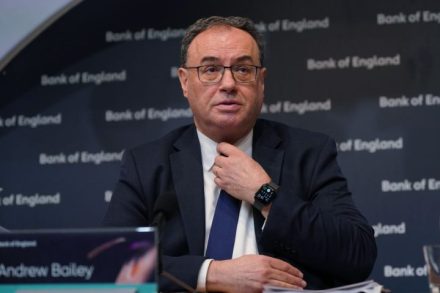
Last month the Bank of England announced its tenth rate rise in a row, taking interest rates to 4 per cent. At the time it was speculated that the BoE might end there: not only were rates now catching up with market expectations of where they would peak, but there seemed to be more agreement within the Monetary Policy Committee, based on the way its members were voting, that it was time to slow down. Their own report noted that, to keep hiking rates, the Bank would need to see ‘persistent pressures’ contributing to inflation. But the Bank’s governor reminds us once again that nothing is off the table.

Energy price cap drops for first time since 2020

From our UK edition

When Liz Truss ushered in the Energy Price Guarantee (EPG) last September, her government insisted that a universal subsidy scheme was necessary to make sure no one fell through the cracks this winter. But there was an internal argument for the scheme too: put a big down payment on energy bills now, No. 10 thought, and that will give cover to implement her tax-cutting agenda. The latter, as we know, didn’t pan out. And now Truss’s biggest policy from her time as prime minister – one that ushered in price controls, as ministers determined what household would pay for the unit price of energy – might be at the start of its end.

How is the government helping Ukrainians in Britain?

From our UK edition

14 min listen

Today marks one year since Putin sent the Russian army into Kyiv. Since then, what has been the experience of the Ukrainians who fled their homes and came over to the UK? Svitlana Morenets, a staff writer at The Spectator speaks to Kate Andrews about the year reporting on her war-torn country from Britain. Also joining the podcast is Matt Downie, chief executive of Crisis UK whose work involves helping those 4000 Ukrainians who arrived on the Homes for Ukraine scheme and are now at risk of homelessness.

Would Liz Truss’s ‘economic Nato’ work against China?

From our UK edition

It was only a few weeks ago that Liz Truss started commenting on domestic policy again, speaking to The Spectator not just about what happened during her time in No. 10, but about what she sees as prescriptions for Britain's stagnant economy. Today she weighs back in on foreign policy. In Tokyo this morning, the former prime minister made her first international speech since leaving office and it combined her favourite topics: economic freedom and taking a tough stance on China. Truss is calling for world leaders to band together and create an ‘economic Nato’ – which would include agreeing to a tough package of economic sanctions on China, were President Xi to make aggressive movements against Taiwan.

The toxic cult of self-love

From our UK edition

I used to think that the early hours of the morning were for sleeping. Sometimes they might become an extension, or at worst a hangover, from a sloppy, messy night before; a party that keeps going, a person you can’t get enough of – these are the reasons to be up at dawn. Now I know that’s wrong, even detrimental, thinking. Those wee hours of the morning are not for spontaneity or sleep. They are for deliberate self-improvement, self-care and, above all, self-love. When the sun comes up to greet you, you should not be rising with it, but already 60 minutes through your yoga session or finishing your affirmations (‘I am strong, I am beautiful’) in the mirror. If you dare deny how wonderful you are before the rooster crows, you too have committed a cardinal sin.

Inflation falls to 10.1% – but is still at a 40-year high

From our UK edition

Inflation remains at near a 40-year high – but finally, we’re starting to see some signs of good news. This morning’s update from the Office for National Statistics shows CPI falling to 10.1 per cent in the 12 months to January 2023, down from 10.5 per cent in December 2022.  It’s a better update compared to January, which revealed a much smaller dip in CPI between November and December last year. Core inflation – which excludes energy and food – fell too, from 6.3 per cent on the year in December down to 5.8 per cent in January. Crucially, this easing beat the consensus, both for CPI (the expectation was 10.2 per cent) and for core inflation (expected to remain at 6.3 per cent).

Britain’s absent workers are slowly being lured back into employment

From our UK edition

The latest labour market update – published by the Office for National Statistics this morning – looks a lot like last month’s update: that’s to say, a mixed bag of news. Unemployment rose again, up 0.1 per cent between October to December, to 3.7 per cent. But this quarterly rise was once again off-set by a fall in economic inactivity: down 0.3 percentage points, largely thanks to young workers entering (or re-entering) the workforce.  Overall, it’s a trade-off worth making: the official unemployment figure has failed for some time to reflect the true number of people out of work, as over two million people of working age are thought to be missing from the labour force due to health ailments, while 5.

Was Liz Truss right?

From our UK edition

36 min listen

This week has seen the return of Liz Truss, firstly with her op-ed in the Telegraph and then her Spectator TV exclusive interview. Has enough time passed to revise our opinion of her pro-growth agenda? Or will her legacy forever be one of failure? Cindy Yu speaks to Fraser Nelson and Kate Andrews.

Is our economy OK?

From our UK edition

11 min listen

New GDP figures show that the UK economy narrowly avoided recession at the end of 2022. Between the final quarter and the third quarter of last year, there was no change in the economy's output. Is this really good news? And do GDP figures matter if people still feel poorer?  Max Jeffery speaks to Kate Andrews and James Heale.

Britain avoids recession – for now

From our UK edition

Britain has avoided recession – for now. This morning’s update from the Office for National Statistics (ONS) reveals that there was no overall GDP growth between October and December last year. The UK has swerved the technical definition of recession – two consecutive quarters of negative growth – in the least glamorous way possible. It is not a story of growth, but a story of stagnation, that has kept the dreaded label of ‘recession’ at bay. The government will be relieved by the figures this morning: the fiscal tightening that Rishi Sunak and Jeremy Hunt felt they had to do last year to calm market jitters and get the public finances back in order always risked taking steam out of the economy and stifling growth. That risk still exists.

Andrew Bailey’s subtle wage spiral warning

From our UK edition

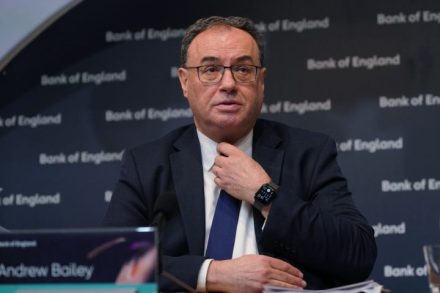
Treasury select committee meetings are not usually the stuff of great television. But this morning, it was. The Bank of England’s governor Andrew Bailey was up as a witness to give evidence on recent Monetary Policy reports. And the committee’s new chair, Harriett Baldwin, came ready to highlight where (many) mistakes had been made. Starting with where we are today – inflation still over 10 per cent, five times the Bank’s target – Bailey was forced to sit and listen to his own record over the past eighteen months. Beginning in May 2021 and moving into that autumn, Baldwin quoted his own warnings about ‘very hot areas of prices’ back to him.

Liz Truss vs the OBR

From our UK edition

Liz Truss is on manoeuvres. She is spending lots of time where she is most comfortable, inside Westminster’s thinktanks, preaching her version of free-market economics. There are rumours she might assemble a new thinktank of her own, or work with an existing one, to set up an alternative to the Office for Budget Responsibility’s growth forecasts. The OBR was prevented from producing a forecast for the mini-Budget. Still, to Truss, it represents the naysayers, the UK’s economic ‘orthodoxy’ who tore apart her mini-Budget. An alternative forecast, she believes, could confront the gloomsters and doomsters and vindicate her belief that supply-side reforms – tax cuts, deregulation, privatisation – are needed to help economic growth. She wants to make the case for change.

The Liz Truss interview: ‘I didn’t get everything right’

From our UK edition

18 min listen

Today Liz Truss has broken her silence, giving her first broadcast interview since leaving No.10 to SpectatorTV. Was she denied a ‘realistic chance’ at success?  Fraser Nelson speaks to Katy Balls and Kate Andrews.  Produced by Oscar Edmondson.  You can watch the full interview now on SpectatorTV: https://www.youtube.

How much longer will NHS strikes be allowed to risk patient safety?

From our UK edition

Patients in Devon are not supposed to call their local GPs to check on their appointments. Residents in Gloucestershire have been encouraged to avoid ringing 999 unless the situation is life-threatening. Once again, people are being asked to stay away from the health service – not because of a pandemic this time, but because today marks the largest workers' strike in the NHS’s history. Royal College of Nursing union members are walking out in over a third of NHS England Trusts, with over 10,000 GMB and Unite ambulance workers joining them. As we’ve learned from this ongoing series of strikes, they don’t tend to create mass queues outside hospitals or photos of overrun surgeries. People tend to listen – and stay away.

Was Liz Truss denied a ‘realistic chance’ to succeed?

From our UK edition

‘I assumed upon entering Downing Street that my mandate would be respected and accepted. How wrong I was.’ This is the crux of Liz Truss’s defence of her 49 days in Downing Street: the shortest-ever stint for a Prime Minister. It is also the start of her attempt at a political comeback. Writing in today’s Sunday Telegraph, Truss gives us, for the first time, her account of things: 4,000 of her own words on ‘what happened’ last autumn and what she’s learned from it. Mistakes were made, she admits: in fact, they were all-but-guaranteed, she says, as she had ‘a vast amount to do and very little time in which to do it’. She repeats, as she did last year, that ‘communication could have been better.

Did Sunak ever have a political honeymoon?

From our UK edition

13 min listen

A new poll today shows that more than half of voters think that Rishi Sunak has handled the economy badly, and that a third of voters think Boris Johnson was a better prime minister. This comes as Sunak marks his first 100 days in office. But did the PM ever have a political honeymoon to speak of? Cindy Yu talks to Katy Balls and Kate Andrews. Produced by Cindy Yu.

Have interest rates finally peaked?

From our UK edition

Markets expected another interest rate rise today of 50 basis points. That’s exactly what they got. This afternoon the Bank of England has announced its tenth rate rise in a row, from 3.5 per cent to 4 per cent.  The Monetary Policy Committee (MPC) voted 7-2 to raise rates to 4 per cent; two members voted to hold the bank rate at 3.5 per cent, exposing the dovish leaning that has been a feature of the MPC during the pandemic years. This created a credibility issue for the Bank, as it failed to act on inflation for so long, putting itself in a position of having to play catch-up with rates.  However, no member voted for a hike bigger than 50 basis points this time round, which suggests that sense of urgency to play catch-up has been (somewhat) lifted.

Can we trust the IMF’s forecasts?

From our UK edition

12 min listen

The IMF report suggests Britain will be the only advanced economy to fall into recession this year – predicting the worst growth figures of any G7 country. Historically, how reliable have these forecasts been? Can we take some of it with a pinch of salt? Also on the podcast, MPs have approved new powers to curb public sector strikes, is this a ray of hope for party cohesion? Natasha Feroze speaks to Kate Andrews and Katy Balls.

Can Sunak’s crisis plan save the NHS?

From our UK edition

Rishi Sunak's problems aren't confined to his party. The NHS is in trouble and one of the Prime Minister's five new year pledges was to get its record waiting list – 7.2 million in NHS England alone – down, ensuring patients get faster access to care. The problem with this promise is that the waiting list is expected to grow even bigger this year. What number it ultimately reaches depends on how many people turn up at an NHS hospital, having held back doing so during the pandemic years. With this variable out of the government’s control (and indeed, we want these people to come forward and seek treatment), it has to focus on capacity within the health service – to make sure patients can be processed and treated at a faster pace.

Does Hunt’s growth agenda add up?

From our UK edition

14 min listen

Jeremy Hunt unveiled his plans to grow the economy in a speech this morning. His strategy will focus on four pillars or 'four E's': enterprise, education, employment and everywhere. Natasha Feroze speaks to Kate Andrews and Fraser Nelson – who were at the Bloomberg headquarters, on their key takeaways from the speech.