Kate Andrews

Kate Andrews

Kate Andrews is deputy editor of The Spectator’s World edition.

Does Hunt’s growth agenda add up?

From our UK edition

14 min listen

Jeremy Hunt unveiled his plans to grow the economy in a speech this morning. His strategy will focus on four pillars or 'four E's': enterprise, education, employment and everywhere. Natasha Feroze speaks to Kate Andrews and Fraser Nelson – who were at the Bloomberg headquarters, on their key takeaways from the speech.
Can Jeremy Hunt’s gamble pay off?

From our UK edition

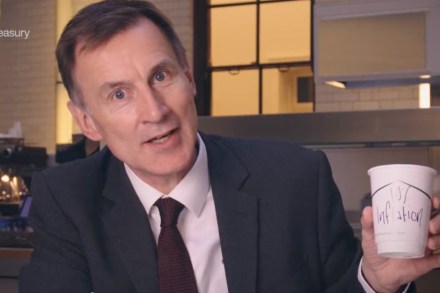
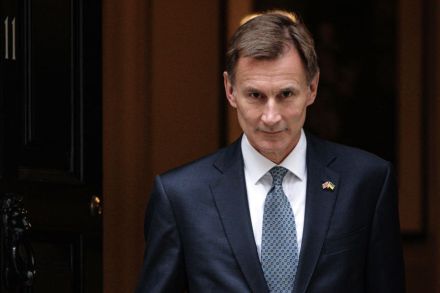
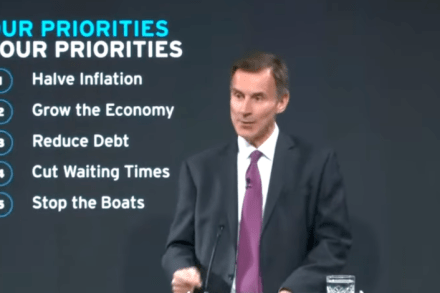
As the UK – and indeed the world – faces the prospect of an economic downturn this year, what exactly can the government do about it? This remains an ongoing debate within the Tory party, as Rishi Sunak continues to emphasise the importance of stability, while Liz Truss’s most loyal supporters keep pressuring the government to revive her focus on economic growth.  This morning a trio of cabinet members showed up in the City to suggest that it doesn’t have to be one or the other. Culture Secretary Michelle Donelan, Business Secretary Grant Shapps and the main act, Chancellor Jeremy Hunt, opened this morning’s conference at Bloomberg by insisting the UK has all the resources it needs to see its digital and tech sectors thrive.

Government borrowing hits £27.4 billion

From our UK edition

Rishi Sunak ruffled his own party’s feathers last week when – in reference to last autumn’s market turmoil – he told an audience in Lancashire: ‘You’re not idiots, you know what’s happened.’ This was quickly interpreted as the Prime Minister branding the MPs and business leaders calling for immediate tax cuts as ‘idiots’, sparking not only backlash but also another round of debates on a topic that has been dividing the Tory party since last summer. Just how quickly and aggressively can the party start to cut the tax burden down from its 72-year high?

Why did Jacinda Ardern resign?

From our UK edition

24 min listen

Kate Andrews talks to Fraser Nelson and the New Zealand based journalist and author Andrea Vance about the surprise announcement from Jacinda Ardern that she will be leaving the world stage next month.

Should Sunak be fined over seatbelt-gate?

From our UK edition

14 min listen

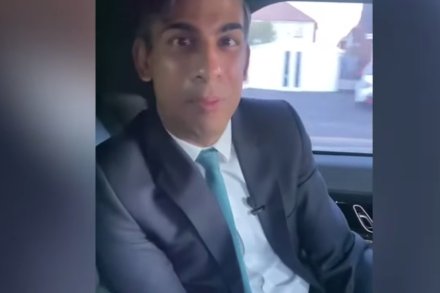
Rishi Sunak may be facing a fine from the police for not wearing a seatbelt in the backseat of a car on his tour around the country yesterday. Is this all a storm in a teacup or is there a legitimate point to the row? Kate Andrews and Fraser Nelson debate on the podcast, hosted by Katy Balls. Produced by Cindy Yu.

Inflation is coming down – but when will we start to feel better off?

From our UK edition

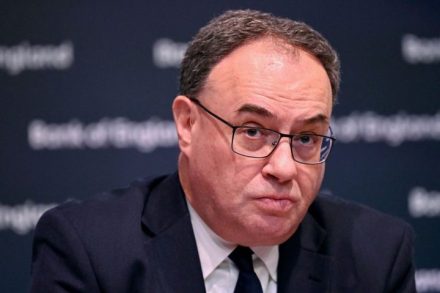
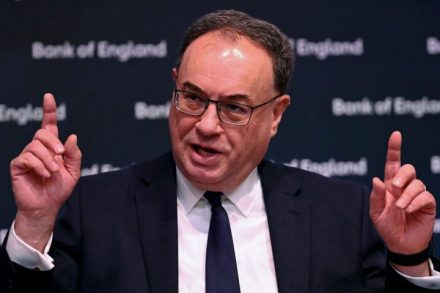
Despite this week’s inflation update, broad consensus remains that the headline rate is going to fall – significantly – this year. One of those people is the governor of the Bank of England. Andrew Bailey has told Media Wales that ‘a corner has been turned’ on those price hikes, as it appears the consumer prices index (CPI) has peaked and is now on a downwards trajectory. Bailey, ever the optimist, has a bad track record on these kinds of predictions. Having insisted for the better part of 2021 that inflation would simply be ‘transitory’, he and the Bank underestimated price hikes at almost turn, always playing catch-up with interest rate hikes.

Why is Jeremy Hunt pretending he can control inflation?

From our UK edition

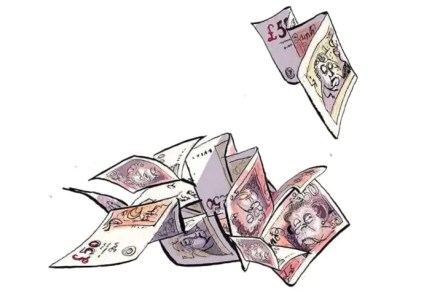
When Rishi Sunak laid out his five pledges at the start of the year, his first and most prominent one was to halve inflation in 2023. A few weeks on: how’s that going?    This morning’s inflation figures would suggest not so well. Inflation fell in the 12 months leading up to December 2022 to 10.5 per cent, down from 10.7 per cent in November. So prices are moving in the right direction, but at a snail’s pace. Ross Clark has the details here, where he highlights how the rising cost of food and domestic services is cancelling out falling energy prices. Inflation is still projected to fall significantly by the time we reach summer, but as last month’s figures show, the process of getting there will not be an easy one.

Are we too downbeat about Britain’s economy?

From our UK edition

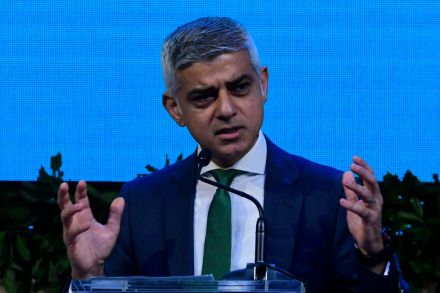
Economic optimism is in short supply these days – but has pessimism about the UK's economy been overegged by the likes of Sadiq Khan? The verdict of chief executives from around the world suggests as much: Britain has been ranked in the top three markets for investment, according to PricewaterhouseCoopers’s (PwC's) annual Global CEO Survey. Today's report follows the latest growth update that revealed that the economy did not contract in November as had been widely predicted, but grew slightly by 0.1 per cent. It marks a sharp contrast from the recent warnings of the London mayor, who said that 'Brexit isn't working'.

Will the Scottish trans row go to court?

From our UK edition

15 min listen

Westminster and Holyrood are going head to head on Scotland's newly passed Gender Recognition Bill. Last night, the UK government blocked the legislation from Edinburgh, citing that the powers it gives – requiring those identifying as a different gender to only live in that gender for three months, and reducing the age of self-identification to 16 – would contravene the UK's Equality Act. In the end, it may be the courts that decide. Cindy Yu talks to Katy Balls and Kate Andrews. Produced by Cindy Yu.

More Brits are looking to get back to work

From our UK edition

Unemployment in Britain has risen again and is now at 3.7 per cent, up 0.2 per cent on the quarter. It’s a very small change in the grand scheme of things but, perhaps counterintuitively, a change in the right direction. This morning’s labour market update from the Office for National Statistics shows that while the headline unemployment figure has ticked up, the economic inactivity rate has slightly decreased by 0.1 per cent. This reflects a shift in the status of some working age people – approximately 55,000 between September and November 2022 – from being out of work and not seeking it to actively seeking work. With the redundancy rate slightly up but still ‘low’ according to the ONS – standing at 3.

The markets have put the Truss mini-Budget behind them

From our UK edition

What is the lasting impact of Liz Truss and Kwasi Kwarteng’s mini-Budget? According to Andrew Bailey, the governor of the Bank of England, the big implications for monetary policy have come and gone. Speaking to the Treasury Select Committee this afternoon about the UK’s financial security, Bailey noted that the spike in both gilt yields and interest rate expectations last autumn have since fallen, with the former back to a ‘normal area of distribution’ and the latter having ‘seen correction’ as ‘new fixed mortgage rates’ have ‘come down.’ External member of the financial policy committee Jonathan Hall chimed in too, insisting that it ‘doesn’t look as though there was any sort of permanent damage done at the end of last year.

What will be on the agenda at Davos?

From our UK edition

12 min listen

It's looking like a busy week in Westminster. So busy in fact that prime minister Rishi Sunak will not be attending the annual Davos meeting, organised by the World Economic Forum. His opposite number Kier Starmer will be making the trip however, is this a shrewd move from Labour?  Also on the podcast, amended plans to widen police powers when it comes to public protests are being introduced to parliament today, what impact will the Public Order Bill have on civil liberties? Will the government come to regret this?  Katy Balls speaks to Isabel Hardman and Kate Andrews.  Produced by Oscar Edmondson.

The real problem with Davos and the World Economic Forum

From our UK edition

The political and financial elite are gathered in Davos in Switzerland for the World Economic Forum's (WEF) annual meeting, which starts today. Yet before the conference has even kicked off, the narrative around it has already been crafted: the WEF will have to pivot away from the free-market and globalist outlook Davos usually promotes, and switch its focus to inequality instead. In a cost-of-living crisis, images of the glamorous Swiss resort and delegates quaffing champagne are not a good look.  This problem was pre-empted by many. Neither Rishi Sunak nor his chancellor Jeremy Hunt will be attending this year’s conference (trade secretary Kemi Badenoch and business secretary Grant Shapps will be representing the government instead).

Who cares if Rishi Sunak uses a private GP?

From our UK edition

Rishi Sunak is absolutely right to say, in softer terms, that his family’s healthcare arrangements are no one’s business.  There is a reason that one of the core tenets of the Hippocratic Oath is confidentiality: accessing healthcare is a deeply personal and private matter. That’s as true for the prime minister as it is for anyone else. That right to privacy doesn’t diminish because it's suspected that an insurance bill or out-of-pocket fee might be involved in the process.  This is one of the many ugly ironies of socialised medicine: a purported universal public service gets used as a political tool to single out and criticise people (often politicians) who might go about accessing care in a different way.

Podcast special: Britain’s role in the global economic recovery?

From our UK edition

35 min listen

Covid 19 has been a crisis without borders. In a highly interconnected world, every country has felt the impacts of the pandemic, from supply chain disruption to low productivity and high inflationary pressures. Should the post-pandemic economic recovery be a global project? For decades, the UK has been a key player on the economic world stage but is this still relevant today at a time when the UK faces domestic financial challenges and global supply chains are decoupling? Or can the ripple effect of lending a hand to one economy, become a good investment for Britain's future?

Podcast special: the global role of British aid

From our UK edition

45 min listen

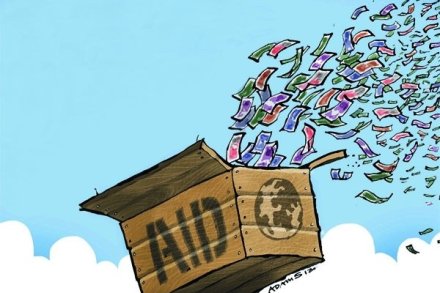
Putin’s invasion of Ukraine shocked the world. Whilst fighting is happening in Europe, repercussions have been felt around the globe. Disruption to trade and supply chains means a rapidly worsening outlook for international development, making it harder to reach those that need support the most. Meanwhile the UK’s Covid recovery and the growing fiscal blackhole have forced Britain to make tough decisions on where our money goes, throwing into question our position as a world leader when it comes to international development and, with it, the reputation of ‘global Britain’.  Britain has always been a nation with a global mindset. But in times of crisis, do we need to reprioritise our commitments?

GDP grows – but the UK isn’t out of the woods on recession

From our UK edition

Have the prospects of a recession been overstated? That would be the most optimistic reading of this morning’s update from the Office for National Statistics, which released the latest set of monthly GDP data showing 0.5 per cent growth in October. This is the biggest monthly rise since January, when the economy was bouncing back from a voluntary slowdown in activity when the Omicron variant of Covid hit last Christmas. Unfortunately, a breakdown of the data waters down that optimism. October’s 0.5 per cent growth followed a 0.6 per cent contraction in September, half of which the ONS thinks was directly linked to the bank holiday added to the calendar for the late Queen’s funeral.

Wes Streeting and the urgent need for NHS reform

From our UK edition

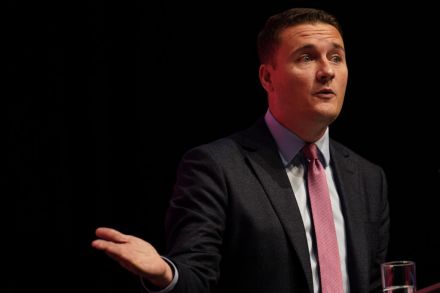
The NHS England waiting list stands at 7.2 million – and the shadow health secretary is one of them. In an interview with the Sunday Telegraph today, and subsequently on the media round, Wes Streeting is speaking openly about being ‘mucked around’ by the NHS. He has been trying for months now to get a scan to confirm his kidney cancer is gone. But the appointment was pushed back, and then his time was wasted where he showed up for the results and discovered they had not been processed yet.  Streeting insists this is about ‘the system’, not the doctors and nurses who work inside of it. He says Labour is pledging more money and resources to the NHS, but only on the condition of better results for patients.

Will Hunt’s ‘Brexit freedoms’ kickstart Britain’s economy?

From our UK edition

Rishi Sunak’s government is trying to strike a difficult balance when it comes to discussing economic growth. On the one hand, there is broad consensus that the Liz Truss days (literally… just days) had to be dismantled to regain trust with the markets and retain the UK’s ability to keep borrowing at a stable price. On the other hand, there is recognition among ministers that the only way out of this high-tax spiral is to spur on some economic growth. In other words: achieve Truss’s goal while avoiding the many mistakes she made in her attempts to get there. It’s in this context that we should look at today’s major financial services overhaul, dubbed the ‘Edinburgh reforms’, which Chancellor Jeremy Hunt is laying out in the Commons today.