Kate Andrews

Kate Andrews

Kate Andrews is deputy editor of The Spectator’s World edition.

Can Rishi Sunak afford a pre-election tax cut?

From our UK edition

Will the government have room for tax cuts before an election? Politically, it’s thought to be non-negotiable that they must. Having put the tax burden on course for a post-war high by the end of this Parliament, Rishi Sunak and Chancellor Jeremy Hunt are going to have to relieve some of that pressure on taxpayers before going head-to-head with Labour next year. But will the public finances allow for it? On the surface, today’s update from the Office for National Statistics (ONS) appears to offer up some good news: public sector net borrowing in August came in at £11.6 billion. That’s £3.5 billion higher than August 2022, but £1.4 billion below the Office for Budget Responsibility’s (OBR) latest forecast. Overall, the Treasury has borrowed £11.
Inflation is slowing but don’t rule out another interest rate hike

From our UK edition

Jeremy Hunt has been warning for weeks that inflation could rise over the summer due to an increase in fuel prices. Economists said much the same: the consensus was that the headline rate would jump to 7.1 per cent on the year in August. But this morning the Office for National Statistics (ONS) revealed that the rate of inflation continued to slow last month: rising to 6.7 per cent on the year in August, down from 6.8 per cent in July. This is a rare occasion where ministers have under-promised on the inflation figures, triggering headlines like ‘surprise fall.

UK set for highest inflation in G7 this year

From our UK edition

You’d struggle to describe the start of 2023 as anything like ‘good economic times'. But according to the OECD’s economic outlook interim report, it’s better than what’s to come. The report, published this morning, expects rising rates around the world to take their toll on economic growth. Global growth has been downgraded for next year – from 2.9 per cent in 2024 to 2.7 per cent – which is lower than the 3 per cent growth expected this year. The report notes that a ‘stronger-than-expected’ start to the year makes it all but impossible for growth to keep pace: the fall in energy prices coupled with China’s comeback post-pandemic gave global growth rates their boost.

Liz Truss is no fiscal hawk

From our UK edition

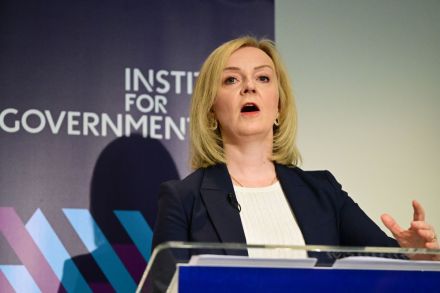
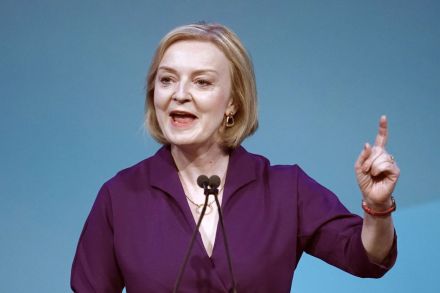
Was Liz Truss a fiscal hawk inside No. 10? That is the rather startling claim made by the former prime minister, speaking today at the Institute for Government about the future of economic growth. She has claimed public spending would be £35 billion lower over the next few years had her plans been followed, due to the real-term spending cuts that would have followed from not reopening the latest Spending Review. Moreover, she insists that her mini-Budget was not just about going for growth, but rather a ‘three-pronged approach’ that included ‘targeted tax freezes and reductions, supply side reform and holding public spending down.’ This is the first time we’ve heard Truss so explicitly argue that her plans included spending restraint.

What Liz Truss’s big speech was really about

From our UK edition

14 min listen

Liz Truss took the stage this morning for her first major intervention on the economy since leaving No. 10. Her speech at the Institute for Government comes almost a year to the day since her mini-Budget saw the markets panic and her premiership come to an abrupt end not long after. What did she have to say?   Katy Balls speaks to Fraser Nelson, Kate Andrews and James Heale.  Produced by Oscar Edmondson.

How America’s 2024 election will affect Britain’s

From our UK edition

13 min listen

For the first time since 1992 the US and the UK will have elections in the same year, and – for the first time since 1964 – there is a real chance that those campaigns could overlap. How will they impact each other?  Kate Andrews speaks to Katy Balls and Freddy Gray.

Britain is heading for an autumn of discontent

From our UK edition

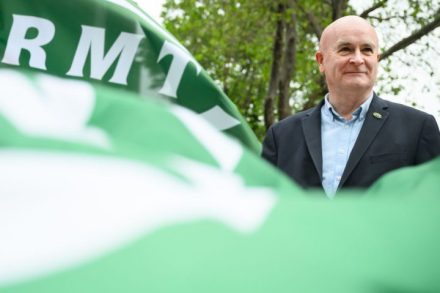
Train drivers will strike for two days in the coming weeks, on 30 September and 4 October. These dates are no coincidence: they directly overlap with when MPs and attendees will be travelling to and from the Conservative party conference in Manchester. This move from Aslef and the RMT is far from subtle: the unions may be locked in a pay battle with train companies, but it’s the government’s attention they are hoping to get. The train strikes add to a growing list of other walkouts planned over the next few weeks. Consultants and junior doctors will also be walking out separately this month. But then in an unprecedented move, they will be striking at the same time, from October 2-4. Again, this is a direct overlap with the party conference.

Is it right to cut back HS2?

From our UK edition

12 min listen

The government is reportedly looking into whether it should cut the second phase of HS2. But with so much money having already been pumped into the project, should they just see it through to the end? Katy Balls speaks to Fraser Nelson and Kate Andrews.

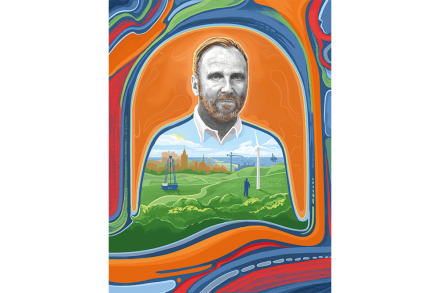
‘We’ve cut carbon emissions by decimating working-class communities’: the leader of the GMB union on the folly of net zero

From our UK edition

Last week there should have been a great victory for the British turbine industry. Auctions were held for offshore wind power, asking companies to bid for the right to supply electricity at £44 per megawatt hour – a third of the price offered eight years ago. The government and the renewables lobby hoped that a successful auction would show that wind power could compete with fossil fuels. Instead, developers worried that they couldn’t turn a profit on the amount they would be paid for energy. There wasn’t a single bid. ‘Communities up and down the east coast can see wind farms, but they can’t point to the jobs’ ‘It was very embarrassing,’ says Gary Smith, leader of the GMB union. ‘Whitehall told us wind was getting cheaper and cheaper.

Britain can’t just blame the rain for its moribund economy

From our UK edition

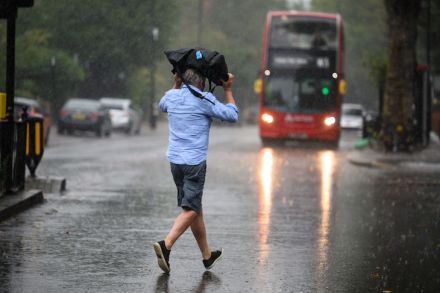
Did GDP fall in July because of the wet weather? That’s the argument being made this morning, as the Office for National Statistics reveals that the economy contracted by 0.5 per cent in July, after having grown 0.5 per cent in (warm and sunny) June. Services output, production output and construction sectors all fell, by 0.5 per cent, 0.7 per cent and 0.5 per cent respectively, as the bad weather took its toll. It stands to reason that weather did play a factor. Monthly GDP figures are sensitive to these kinds of effects, which also include disruptions like bank holidays or strikes. The impact of frequent industrial action this year has repeatedly shown up in the data, and July was no exception: the fall in services is largely attributed to the 3.

Will Rishi axe the pensions triple lock?

From our UK edition

11 min listen

Rishi Sunak has refused to commit to keeping the pensions triple lock in the next Conservative manifesto. What’s behind his equivocation? And, if the triple lock is ditched, will Labour follow suit?  James Heale speaks to Katy Balls and Kate Andrews.

Is Britain getting a pay rise?

From our UK edition

Whisper it, but British workers seem to be getting a pay rise. This morning’s update from the Office for National Statistics reveals that average regular pay (which excludes bonuses) was up by 7.8 per cent between May and July this year, unchanged from the last three-month period. Wage growth has stayed a percentage point above headline inflation – at 6.8 per cent on the year in July – which suggests a relatively small, but meaningful real-terms pay raise. So after more than a year of real-terms pay cuts – as average wage hikes kept falling behind inflation – some workers may finally be feeling the slightest bit of relief as their purchasing power rises once again. But not everyone will be pleased.

Can Liz Truss rewrite history?

From our UK edition

Last week’s anniversary of Liz Truss entering Downing Street could have passed by quietly. But the Trussites had other ideas. Her supporters used the moment to make the case for Trussonomics once again: to say that Truss diagnosed the country’s problems correctly and that she was on track to find solutions – until her many conspirators took her down. As it turned out, the cheerleading was a warm-up to the big event: yesterday Truss announced the details of her upcoming book – Ten Years to Save the West – which will be published next spring.

Kate Andrews, Katy Balls and Max Pemberton

From our UK edition

24 min listen

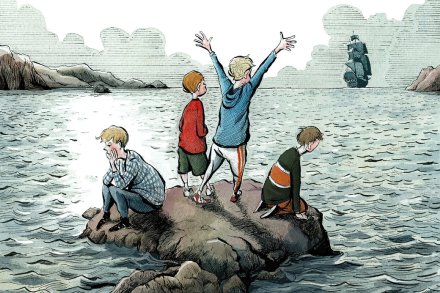
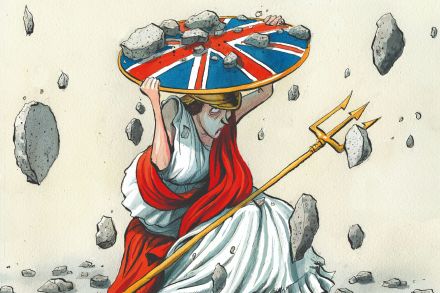
Kate Andrews talks crumbly concrete, overcrowded trains, NHS waiting lists, and describes the general air of despair and asks – who broke Britain? (01.15). Katy Balls analyses Keir Starmer’s reshuffle and describes the appearance of a New Labour restoration as the party prepares for power (11.20), and Max Pemberton outlines the worrying increase of Tourettes and tics in children, neglected during lockdowns and possibly damaged for life (17.25). Produced and presented by Linden Kemkaran.

Broken Britain: what went wrong?

From our UK edition

34 min listen

On the podcast:  In her cover piece for the magazine, The Spectator’s economics editor Kate Andrews writes that political short termism has broken Britain. She joins the podcast alongside Giles Wilkes, former number 10 advisor and senior fellow at the Institute for Government, to ask what went wrong? (01:12) Also this week:  In his column Douglas Murray writes about Burning Man, the festival which has left Silicon Valley’s finest stuck in the mud. He is joined by David Willis, who has been covering the festival this year for the BBC, to discuss the schadenfreude of Burning Man.

Is the Bank of England done with raising rates?

From our UK edition

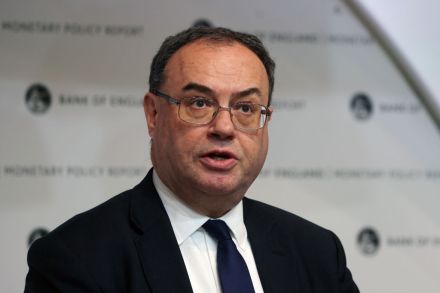
Is the UK set for its 15th consecutive interest rate hike later this month? Markets expect that rates will peak closer to 6 per cent – up from 5.25 per cent now – but this might not happen immediately – or at all. Speaking at today’s Treasury Select Committee, the Bank’s governor Andrew Bailey suggested rate hikes were no longer a matter of certainty, as the headline rate of inflation is now back on track with the Bank’s projections for a significant fall by the end of the year. Speaking to MPs this afternoon, Bailey said that the UK had moved on ‘from a period ... where it was clear rates needed to rise going forward,’ insisting ‘we’re not in that place any more’.

Broken Britain: what went wrong?

From our UK edition

Did Gillian Keegan need to apologise? The Education Secretary thought her ITV interview had ended and she could speak frankly. She insisted the schools’ concrete crisis was down to ‘everyone else’ who had ‘sat on their arse’. It was a fair point, inelegantly expressed. It’s been almost 25 years since the order first went out from Whitehall to inspect schools and hospitals for crumbling reinforced autoclaved aerated concrete (Raac). When a roof eventually collapsed at the Singlewell Primary school in Kent in 2018, the government sent out surveys to inquire about building material – but that was largely it. Like lazy homeowners, or dodgy landlords, successive administrations assumed the problem would be dealt with by somebody else at a later date.

What does Theresa May want?

From our UK edition

26 min listen

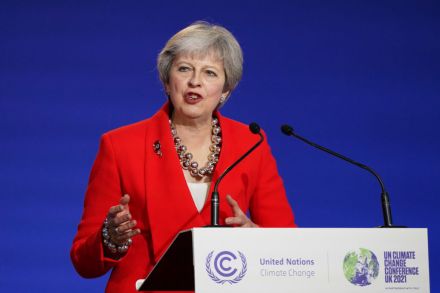
Theresa May's new book, Abuse of Power, will not be a gossip-fuelled account of her time in No. 10. Instead, it'll be an account of how powerful people make mistakes, and how institutions corrupt. What's the point of the book, and has the former Prime Minister landed on a real, punishing problem in British politics? Kate Andrews speaks to Fraser Nelson and Gavin Barwell, Theresa May's former chief of staff.

Katy Balls, Owen Matthews, Kate Andrews and Ian Thomson

From our UK edition

28 min listen

This week Katy Balls asks whether Rishi is a risk taker or whether he’ll choose to play it safe as Conference season approaches (01.17), Owen Matthews explains why America is still Ukraine’s best hope for victory (07.27), Kate Andrews is totally baffled and exasperated by the British refusal to get checked out by a doctor (15.34) and Ian Thomson reports from Sicily on the Godfather, Greek Temples and a misunderstanding involving mascarpone cheese (20.50). Produced and presented by Linden Kemkaran.

GDP revisions show UK economy almost 2% larger than thought

From our UK edition

It’s not often that we see a GDP revision as startling as the one published today. In its Blue Book for 2023 – which includes updated methods for a range of calculations – the Office for National Statistics (ONS) has upgraded the size of the economy in the final quarter of 2021 by 1.7 per cent. This means that by the time the Omicron variant hit, the UK economy was actually 0.6 per cent above its pre-Covid level – not 1.2 per cent below, as previously stated.  This is a staggering difference. It was thought as recently as this summer that GDP still had not returned to its pre-pandemic levels. Today we learn this milestone was actually passed almost two years ago. This changes the international picture completely.