Kate Andrews

Kate Andrews

Kate Andrews is deputy editor of The Spectator’s World edition.

Why have Sunak and Hunt suddenly decided they want tax cuts?

From our UK edition

The government’s transition on taxes has taken place at lightning speed. We’ve gone from chancellor Jeremy Hunt hinting at tax cuts yesterday morning on the BBC to Rishi Sunak confirming that not only are tax cuts coming this Wednesday, but they are now a major priority for the government, as laid out in five new promises made today. Arguably the UK economy has been defying the doomsday predictions for a while now But it’s not just the policy that’s changing. It’s the rhetoric too. Hunt has gone from insisting that tax cuts are ‘virtually impossible’ in September – not something to consider right now, he said in October – to ushering them in this November and embracing a new tone about the economy.
Sunak makes more pledges – but what happened to his last five?

From our UK edition

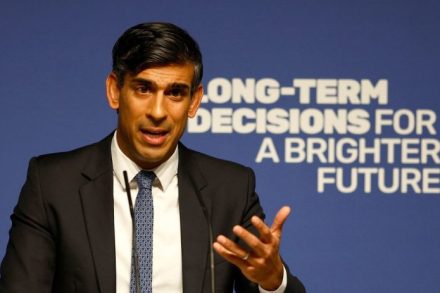
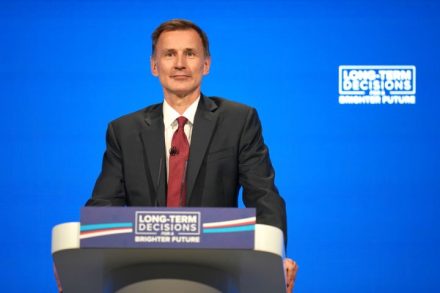
In his speech in north London his morning, the Prime Minister confirmed that tax cuts are coming this Wednesday, as is another attempt by the government to get Britain's 5.5 million missing workers back into employment. But Rishi Sunak didn’t stop there. Having achieved one of his five pledges for the year last week — the inflation rate halved in the year to October, slowing to 4.6 per cent — the Prime Minister decided this morning to offer up five more. Now in addition to the ‘five promises’ made in January — halving inflation, growing the economy, reducing public debt, cutting NHS waiting lists and ‘stopping the boats’ (a pledge that broadly became defined as getting his Rwanda scheme off the ground) — we now also have ‘five long-term decisions’ for the economy.

What changed Hunt’s mind on tax cuts?

From our UK edition

Has Jeremy Hunt had a change of heart or a change of circumstances? The Chancellor has spent the past few months crushing any hope of a major tax cut in next Wednesday’s Autumn Statement, insisting that the government’s main priorities – including tackling inflation and improving the dire state of the public finances – directly contradict calls to cut taxes now.  Just a month ago, Hunt was telling grassroot members at Conservative party conference that the Treasury was in no position to talk about personal tax cuts, ‘or even to ask what if’.

Fuel for thought: how business can make use of hydrogen

From our UK edition

40 min listen

How we achieve net zero is more than just a political or environmental decision. It is one that will have huge societal impacts. How we get our energy translates to how we move around, how we heat our homes. It’s a reminder that the energy transition has many trade-offs, as we navigate achieving net zero while protecting the wellbeing of people and industry, especially during a cost-of-living crisis.  Might hydrogen be part of the answer? In this special podcast, The Spectator’s economics editor Kate Andrews speaks with those working in government, NGOs, and industry about how to unlock this technology.

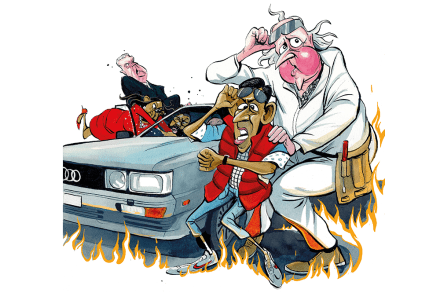
Back to the future: Sunak’s big gamble

From our UK edition

45 min listen

On the podcast: It's been a busy week in Westminster. On Monday, Rishi Sunak's first major reshuffle saw Suella Braverman sacked and David Cameron make a surprise return to politics.  Then two days later, the Supreme Court's Rwanda ruling left the government's pledge to 'stop the boats' in tatters. It was meant to be the week in which Rishi Sunak had hoped to stamp his authority on a fracturing party, but it seems to have only added to the narrative of Tory disrepair. Katy Balls writes about Rishi’s last gamble in the magazine this week, and joins the podcast alongside Kate Andrews, The Spectator’s economics editor. (01:01) Also this week:  Svitlana Morenets writes a candid account of the current state of the war in Ukraine for The Spectator.

Should Starmer worry about the ceasefire rebellion?

From our UK edition

13 min listen

Fifty-six Labour MPs rebelled last night and voted for an SNP amendment calling for a ceasefire in Israel and Gaza. Keir Starmer had ordered his party to abstain on the vote, and said afterwards that Israel had suffered ‘its worst terrorist attack in a single day’ on 7 October, and that ‘no government would allow the capability and intent to repeat such an attack to go unchallenged’. Is Starmer’s authority now under threat? Oscar Edmondson speaks to Katy Balls and Kate Andrews.

Supreme Court rules Rwanda scheme unlawful

From our UK edition

11 min listen

The Supreme Court has ruled that the government scheme to deport illegal migrants to Rwanda is unlawful. Why? And how will Rishi Sunak respond? Will he try to take Britain out of the European Convention on Human Rights? James Heale speaks to Katy Balls and Kate Andrews.

Sunak meets first pledge as the rate of inflation halves

From our UK edition

Inflation has slowed significantly, according to the latest update from the Office for National Statistics. The headline rate was 4.6 per cent in the year to October, down from 6.7 per cent the previous month. The sharp slowdown is largely attributed to last year’s hikes in energy prices dropping out of the data with the figures now reflecting Ofgem’s price cap reduction.  This major slowdown in the inflation rate allows Rishi Sunak and Jeremy Hunt to say that one of their five pledges for the year has been delivered. In January, the prime minister promised to ‘halve inflation’ by the end of the year. The rate in January was 10.

The UK labour market is beginning to cool

From our UK edition

Slowly but surely, the labour market in the UK appears to be cooling down. Data from the Office for National Statistics this morning shows the number of job vacancies across the economy fell by another 58,000 between July to September, taking the total figure to an estimated 957,000. This is still far above pre-pandemic levels, but the number has been dropping constantly, and is down again for a sixteenth consecutive period. Meanwhile, both the UK’s unemployment figure and inactivity figure have remained ‘largely unchanged on the quarter’: sitting at 4.2 and 20.9 per cent, respectively. This bodes well for an economy that is trying to dodge the dreaded label of ‘stagflation’.

The spectre of recession continues to haunt the UK economy

From our UK edition

The UK economy grew 0.2 per cent in September. This followed 0.1 per cent growth in August, revised downwards from 0.2 per cent. Monthly figures don’t always tell a story on their own, but these past two months of data reflect the UK economy’s trend for the year – one, unfortunately, of virtually no growth. The provisional Q3 figures are out this morning as well, showing no economic growth between July and September. A tiny 0.1 per cent uptick in the services sector was offset by a small fall in construction output, which has led to a flatlining economy. Compared with the same quarter in 2022, GDP has increased by 0.

After 13 years of Tory rule, is this it?

From our UK edition

There were no big surprises in the King’s Speech today. That’s a shame. Rishi Sunak and his ministers like to insist their agenda for the next year is an ambitious one. They’re making ‘difficult but necessary long-term decisions to change this country for the better’, as read out by the King to parliament. Yet the legislation put forward seems miles away from the priorities of voters – not to mention the many problems facing the country. Some of those issues were mentioned at the start of the speech. Lip service was paid to ‘increasing economic growth’ and taking ‘action to bring down inflation’, two of the Prime Minister’s pledges set out at the start of the year. Neither is going especially well.

Has the Bank of England done enough to stave off recession?

From our UK edition

14 min listen

The Bank of England has once again taken the decision to hold interest rates at their 15-year high. There is growing market consensus that this second pause is a sign that interest rates have peaked, or nearly reached their peak. Will the Bank be able to tread the thin line between tackling inflation but also keeping the country out of recession? Will Rishi Sunak hit his target to 'halve inflation'?  Natasha Feroze speaks to Kate Andrews and Isabel Hardman.  Produced by Natasha Feroze and Oscar Edmondson.

Has the Bank of England done enough to stave off recession?

From our UK edition

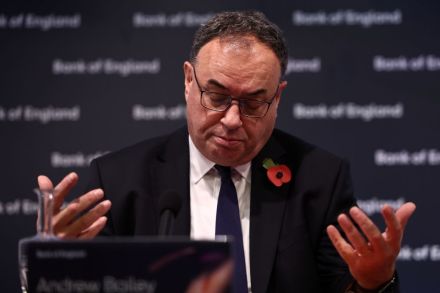
The Bank of England has held interest rates at their 15-year high for a second time. Markets were expecting another pause, but there was no guarantee: once again the Monetary Policy Committee (MPC) was split on the decision, voting 6 – 3 to hold rates at 5.25 per cent. The minority on the committee were in favour of increasing rates by 0.25 percentage points.  The Bank’s governor warned these votes would be ‘tight’ and hard to predict for the foreseeable future. But some are taking this second pause as a sign that rates have peaked. Capital Economics says it is ‘all-but confirmed’ now, while also noting that the ‘Bank is keeping the door open to the possibility of further rate hikes’.

What can Rishi learn from the EU’s plummeting inflation rate?

From our UK edition

Good headlines are coming out of the Eurozone this morning, as the inflation rate slowed to 2.9 per cent in October. This is a spectacular fall from its double-digit peak last October, when the rate sat at over 10 per cent. Today’s news brings inflation to a stone’s throw away from the European Central Bank’s target of 2 per cent. But it’s not without trade-offs. Alongside today’s inflation news, we have also learned that growth across the Eurozone took a hit, averaging a 0.1 per cent contraction between July and September this year. This dip was worse than the consensus, which expected to see a small uptick in GDP. Some growth seen in countries like France and Belgium were outweighed by contractions elsewhere – notably in Germany.

Peter Oborne, Kate Andrews and Jonathan Maitland

From our UK edition

18 min listen

On this week's Spectator Out Loud, Peter Oborne reads his letter from Jerusalem (00:55), Kate Andrews talks about why Rishi Sunak has made her take up smoking (07:20), and Jonathan Maitland explains his growing obsession with Martin Bashir (12:15). Presented by Cindy Yu. Produced by Cindy Yu and Natasha Feroze.

Rishi’s smoking ban inspired me to light a cigarette

From our UK edition

What has Rishi Sunak’s government achieved in its first year? The highlights include a renegotiated Brexit policy and setting more practical net-zero deadlines. But Sunak asked the country to judge him on his ability to deliver his pledges set out at the start of the year. If polls are to be believed, voters are preparing to do just that. Inflation is falling, but that’s largely due to interest rate hikes announced by the Bank of England. The economy is growing, but barely. The NHS waiting list keeps rising – 7.6 million now in England alone. On this last point, no doubt the six-figure salaried consultants who keep striking deserve part of the blame. But to say the Sunak government is struggling to make good on its promises would be putting it rather gently.

Unemployment is up – but can we trust the ONS’s numbers?

From our UK edition

The UK’s unemployment rate rose to 4.2 per cent in the three months leading up to August this year, according to new experimental data from the Office for National Statistics (ONS). This is a 0.2 per cent increase compared with the previous quarter (March to May 2023), but not a big change compared to previous data sets. The new numbers tell a familiar story: that the labour market is cooling slightly yet employers remain desperate for workers. For the last five decades, the ONS has relied on its Labour Force Survey – which covers ‘tens of thousands of households across the UK’ – for its employment data.

What can we hope to learn from the Covid inquiry?

From our UK edition

16 min listen

This week there have been some interesting developments in the public Covid-19 inquiry where scientists and mathematical modellers have been giving testimony on how prepared the government was to tackle the pandemic and how they used expert advise.  Within the sessions, WhatsApp messages revealed that Dame Angela McLean – who at the time was chief scientific advisor to Ministry of Defence – sent a secret message referring to Rishi Sunak as 'Dr Death the chancellor' in reference to the public health impacts of the 'eat out to help out' scheme. What were some of the other revelations? Did we get any clarity on how these mathematical models were produced and implemented? And what can we hope to learn from what promises to be a long and protracted inquiry?

Pressure is mounting for Jeremy Hunt to find tax cuts 

From our UK edition

Timing is a funny thing. The Chancellor received some good news about the public finances this morning, just when everyone is focused on fairly catastrophic election results for the Tories. A few hours after it was announced that strong Conservative majorities were overturned in the ​​Mid-Bedfordshire and Tamworth by-elections (Katy Balls analyses the results here), we also learned that there may be slightly more scope than previously thought for Jeremy Hunt to come up with some pre-election sweeteners, with the pressure on to cut taxes. Public sector net borrowing in September came to £14.3 billion – a staggering sum, yes, but £1.6 billion less than in September last year and far below the Office for Budget Responsibility's (OBR) most recent forecast of £20.

Has inflation stuck?

From our UK edition

12 min listen

September's inflation data was released today, and showed that it was at the same level as August. Is inflation getting stuck a problem? Cindy Yu talks to Kate Andrews and Katy Balls. Also on the podcast: Labour's Israel headaches and a look ahead to tomorrow's by-elections. Produced by Cindy Yu.