Kate Andrews

Kate Andrews

Kate Andrews is deputy editor of The Spectator’s World edition.

Inflation stays at 4 per cent – despite Red Sea disruption

From our UK edition

The government had been facing two economic challenges this week, ahead of the by-elections in Kingswood and Wellingborough: the publication of the latest inflation figures and the economic growth figures for the last quarter of 2023. It has just about survived the first challenge. This morning’s update from the Office for National Statistics shows the inflation rate sticking at 4 per cent on the year in January, unchanged from December. This is still double the Bank of England’s inflation target, but it is better than expected news, as economists were predicting an uptick to 4.2 per cent.

Job vacancies fall – but not by enough to lower interest rates

From our UK edition

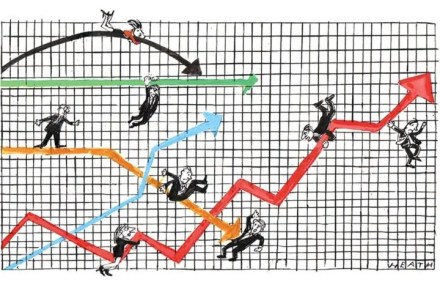
Has the Labour market cooled down enough for the Bank of England to change its mind on interest rates? Almost certainly not, based on the latest data from the Office for National Statistics, out this morning. The reintroduction of the Labour Force Survey data, which had to be suspended temporarily due to poor and limited feedback, has now been reinstated, showing fewer changes in the labour market than experts were hoping to see. Job vacancies fell for the nineteenth consecutive time – but not by much. Vacancies were down to 932,000 on the quarter – a fall of 26,000, still well above pre-pandemic levels. Despite expectations that the unemployment rate would rise slightly, it fell again in the three months to December, from 3.9 per cent down to 3.8 per cent.

Is Starmer right to ditch his £28 billion green pledge?

From our UK edition

15 min listen

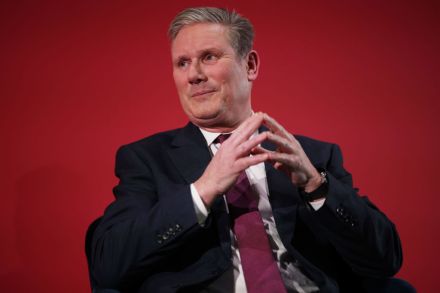
Later today Keir Starmer is expected to officially kill off Labour's £28 billion green investment pledge. With the centrepiece of their public policy now scrapped, what will Labour's promise be at the next election?  James Heale speaks to Kate Andrews and John McTernan, former No. 10 political secretary.  Produced by Cindy Yu and Oscar Edmondson.

Why Starmer had to ditch his £28 billion green pledge

From our UK edition

What will Labour’s flagship promise be going into the next election? There’s a policy vacancy, now that the party plans to ditch its pledge to spend £28 billion a year on green investment.  This is not your average U-turn. This has been Labour’s big offering for more than two years. Yet today, Keir Starmer will ditch the headline figure for good – though his party still plans to usher in other parts of their proposed ‘Green Prosperity Plan’.  By abandoning the £28 billion promise, Stamer is putting to rest what had become a contentious topic within his own party. The spending promise – which shadow chancellor Rachel Reeves first committed to back in 2021 – has become increasingly diluted over the past year.

How the Tories gave up on liberty

From our UK edition

43 min listen

On the podcast: have the Tories given up on liberty?Kate Andrews writes the cover story for The Spectator this week. She argues that after the government announced plans to ban disposable vapes and smoking for those born after 2009, the Tories can no longer call themselves the party of freedom. Kate is joined by conservative peer and former health minister Lord Bethell, to discuss whether the smoking ban is a wise precedent for the government to set. (01:22) Also this week: can the UAE be trusted on press freedom? At The Spectator that’s a question close to our hearts at the moment as we face possibly being sold off to an Abu Dhabi backed fund.

Interest rate cuts are on the horizon

From our UK edition

The Bank of England (BoE) has held interest rates at 5.25 per cent for the fourth time in a row. This is no big surprise: with inflation ticking back up slightly on the year to December (rising to 4 per cent) – continued trade disruption in the Red Sea last month is expected to have some impact on prices – it was unlikely that the Monetary Policy Committee was going to start a rate-cutting spree so early in the year. Instead, the hints are in the language used by the Monetary Policy Committee (MPC) in its report. Markets were looking for clear indication that rate cuts are coming. The BoE has delivered this, making clear that the process may not be as fast or radical as many were hoping it would be.

How the Tories gave up on liberty

From our UK edition

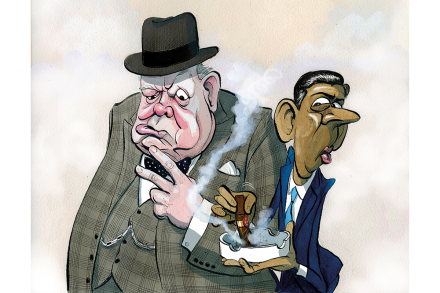
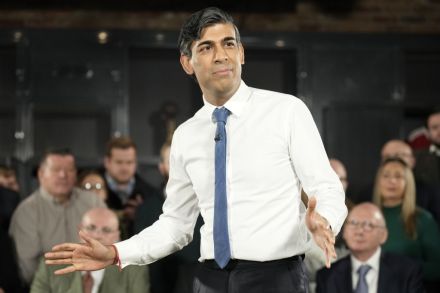
Rishi Sunak stood glowering over a school table and listed, with disdain, the flavours of the vapes that lay on the table in front of him. ‘Grapefruit,’ the Prime Minister declared. ‘Bubblegum. Strawberry. Berry Burst.’ Pupils at Haughton Academy were then invited to express their own disgust: ‘Bright colours,’ observed one student. ‘Appealing to younger people,’ said another. ‘Do you think that’s right?’ the Prime Minister asked the circle of 13- and 14-year-olds. ‘No,’ they dutifully answered. Sunak told the students, in a video posted to his Instagram account, that the ‘good news’ is that he is announcing a full ban on disposable vapes and a crackdown on packaging and flavours that might be particularly popular with the young.

Why Sunak wants to ban vapes

From our UK edition

11 min listen

Rishi Sunak has outlined plans to ban disposable vapes, and is hoping to change vape packaging to make it less appealing to children. Why? James Heale speaks to Katy Balls and Kate Andrews.

Fraser Nelson: governments should never own our press

From our UK edition

16 min listen

NHS consultants have (narrowly) rejected another pay increase offered to them by the government. They will not immediately go back on strike, and will instead negotiate further with the government. Kate Andrews takes us through the details. Also on the podcast, Fraser Nelson responds to Spectator chairman Andrew Neil's comments on BBC's Newsnight last night, on the potential sale of our magazine to UAE-backed RedBird IMI.  Produced and presented by Max Jeffery.

Can Jeremy Hunt really afford more tax cuts?

From our UK edition

On the face of it, this morning's public sector finance update is good news. The government borrowed £7.8 billion in December last year. This is well below the £11 billion that economists had expected and almost half the £14 billion last forecast by the Office for Budget Responsibility (OBR). These are the lowest borrowing figures for December since the pandemic hit.  Once again, larger tax receipts helped fill in the gaps: up on the year to £61.1 billion – £3.5 billion higher than December 2022 – though on this occasion they notably undershot the OBR’s expectations by £1.8 billion, suggesting a minor slowdown. A large contributor to lower borrowing figures overall was a fall in debt servicing payments, which were £4 billion last month.

How far will Hunt cut taxes?

From our UK edition

14 min listen

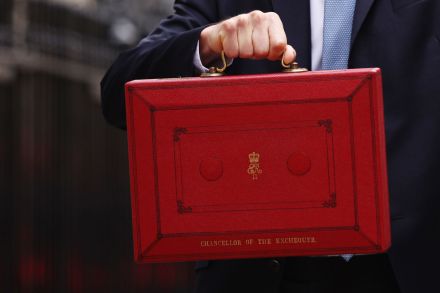
Jeremy Hunt said he would look to cut taxes in the March budget. In the Mail on Sunday, he said he would look to emulate the late Nigel Lawson, who as Margaret Thatcher’s chancellor slashed rates. But Hunt has been promising tax cuts, and hardly delivering, for a while. Will this time be any different? James Heale speaks to Katy Balls and Kate Andrews.

Can we trust Hunt’s tax cut promise?

From our UK edition

More tax cuts are on their way, according to the both the Prime Minister and Chancellor who have written comment pieces in The Sun on Sunday and The Mail on Sunday respectively to indicate their intentions ahead of the upcoming March Budget. This is interesting because their published plans suggest a rise in taxes, to levels not seen in peacetime history. Might they be about to change their mind? The Prime Minister used an outing to Hampshire to give the green light to tax cuts at ‘future events when we can responsibly do so’, while the Chancellor used his trip to Davos to say that a lower tax burden was ‘the direction of travel we would like to go in’.

Jeremy Hunt has difficult decisions ahead of him on tax cuts

From our UK edition

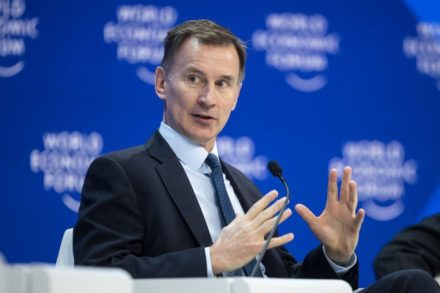
The Tory party’s plan to further cut taxes in the Spring Budget is not exactly a secret. Still, Jeremy Hunt’s suggestion at Davos that they are indeed coming has sparked imaginations – while his party continues to debate internally where these tax cuts should land. Speaking on a panel at the World Economic Forum’s conference in Davos, Switzerland, the Chancellor gave his biggest indication yet about his priorities for the upcoming fiscal statement. ‘We note that the economies growing faster than us in North America and Asia tend to have lower taxes,’ he said. ‘I believe fundamentally that low-tax economies are more dynamic, more competitive and generate more money for public services like the NHS.

Javier Milei dismantles the Davos groupthink

From our UK edition

Each year the World Economic Forum’s conference in Davos, Switzerland draws the attention of conspiracy theorists. In truth, nothing is happening in the ski town that doesn’t happen every other day of the year: it’s the world’s most senior politicians and biggest business leaders working together to implement their vision for the future. The only difference is that for one week in Switzerland, this is on full display for everyone to see.

Rising inflation makes a speedy interest rate cut less likely

From our UK edition

Inflation rose to 4 per cent on the year to December, up slightly from 3.9 per cent the previous month. It’s the first time the inflation rate has increased for almost a year – an unexpected uptick, as the consensus was for the rate to slow once more, down to 3.8 per cent.  This is not the update politicians and central bankers were hoping for, but as far as monthly data goes, it’s not the end of the world either. The inflation rate doesn’t come down in a straight line, as evidenced already in the UK’s battle to get prices under control.

Trump’s hold on Republican voters is as strong as ever

From our UK edition

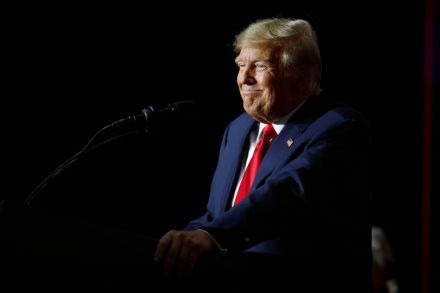
The Iowa contest tends not to select the Republican nominee. In 2016 Texas Senator Ted Cruz denied Donald Trump his first win by taking home the caucus prize with 28 per cent of the vote. In 2012, Pennsylvania Senator Rick Santorum just edged out eventual nominee Mitt Romney. In 2008, presidential nominee John McCain didn’t even place in the top three, only securing 13 per cent of the vote compared to Arkansas governor Mike Huckabee’s 34 per cent. Iowans have just delivered Trump the biggest caucus win in history In recent years, the caucus has been a better gauge for what the grassroots of the party want to see in a candidate, rather than who exactly they want to run against the Democratic nominee. But this won’t provide any comfort to the latest round of losing candidates.

Will Red Sea strikes disrupt the UK economy?

From our UK edition

November is proving to have been a lucky month in Britain. Inflation slowed significantly: from 4.6 per cent on the year in October down to 3.9 per cent on the year in November (a bigger fall than anyone predicted). Not only that: this morning we learned from the Office for National Statistics that the economy grew by 0.3 per cent, rebounding from an (unrevised) 0.3 per cent contraction in October.  Unfortunately that headline growth rate was largely thanks to a handful of temporary factors. Growth in overall services, up 0.4 per cent, is mainly attributed to a reduction in strikes that month, particularly within the health and transport sectors. Furthermore, feedback from businesses to the ONS suggest Black Friday sales ‘had a positive impact on monthly turnover'.

Can the economy win Tory votes?

From our UK edition

11 min listen

James Heale speaks to Kate Andrews and Katy Balls about Rishi Sunak's new strategy to focus more on the economy as the election year kicks off. Can Rishi Sunak convince the public that he is the best man for the job? And how much control does the government really have when it comes tackling the economy?

Will inflation return to normal this year?

From our UK edition

When will inflation return to the target rate? According to its latest forecasts, the Bank of England isn’t expecting inflation to slow to 2 per cent until 2025. But could this happen much sooner? Several independent forecasters are growing in confidence that inflation could get down to 2 per cent this spring, rather than next spring. Oxford Economics now expects inflation to average 2.1 per cent this year (a full percentage point lower than it expected in November). They also expect the inflation rate to slow to the annual rate of 2 per cent in April, as Ofgem once again lowers the energy price cap and last year’s higher prices fall out of the calculation.  Deutsche Bank is also optimistic that inflation could return to target in Q2 this year, thanks to lower energy costs.

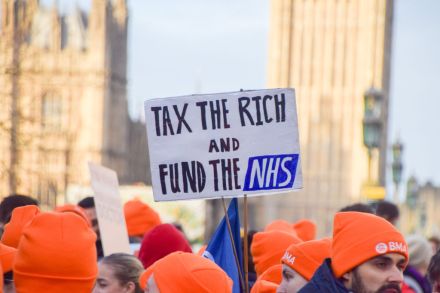
The real reason junior doctors are striking

From our UK edition

Any remaining question about who NHS strikes are supposed to benefit has been put to rest this week. Industrial action is needed, the British Medical Association’s website reads, ‘For the benefit of all junior doctors and for the benefit of all patients’ – and also, of course, to ‘protect the NHS’. Yet the union has selected the most dangerous time of the year to start its six-day junior doctor walk-out – the longest ever in the health service’s history. These strikes are putting even more lives at risk That up to 200,000 more appointments are estimated to be cancelled for patients – piled on top of the 1.2 million that have already been cancelled from previous industrial action – is tragically not the most pressing issue in this round of strikes.