Justin Marozzi

Justin Marozzi is the author of Captives and Companions: A History of Slavery and the Slave Trade in the Islamic World, published by Allen Lane on 9 July.

Who cares if fridge magnets are naff?

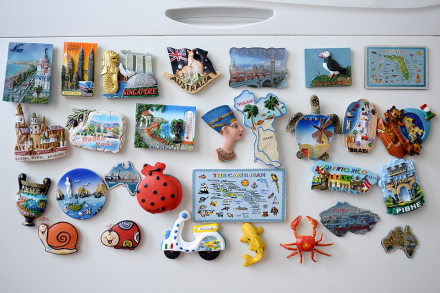
Let’s dispense with the obvious question first. Are they common? While there’s a clear temptation to consult Nicky Haslam on such matters, I don’t think I can be bothered. Not least because first, I am a Prusso-Italian immigrant, second, I was born in Essex and third, I adore fridge magnets. We should be honest and admit that, like everything in life, they are signifiers. The aim is to show our friends how cultured, travelled, well-read, ironic and amusing we are. They are our lives writ in ceramic. Where to begin? One of my favourite magnets, designed to strike fear and dread into any intruder, dates back to Iraq circa 2004: ‘Caution Stay 100 metres back or you will be shot.’ No punctuation, not even an exclamation mark!

How Syria’s dream of freedom ended in further repression

Anand Gopal has form when it comes to war. In Afghanistan, distrustful of President Bush’s ‘good vs evil’ and ‘you’re either with us or against us’ narrative, he did what every good reporter does: ‘I learned the language, grew a beard and hit the road like a local.’ The result was No Good Men Among the Living: America, the Taliban, and the War through Afghan Eyes, a Pulitzer and National Book Award finalist. In its refusal to stick to the script – especially American and British propaganda about all the ‘progress’ which later proved so illusory – the book recalled Michael Herr’s classic Vietnam exposé, Dispatches.

Geoffrey Cain, Justin Marozzi, Alex Diggins & Sam France

30 min listen

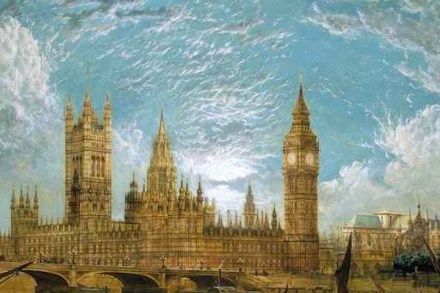
On this week’s Spectator Out Loud: Geoffrey Cain explains why Trump’s real target with Iran is China; Justin Marozzi argues ancient history might be on the side of Ayatollah Khamenei’s supporters; Alex Diggins warns about the catastrophic consequences that may befall the Palace of Westminster; and finally, Sam France celebrates the 50p coin. Produced and presented by Patrick Gibbons.

Geoffrey Cain, Justin Marozzi, Alex Diggins & Sam France

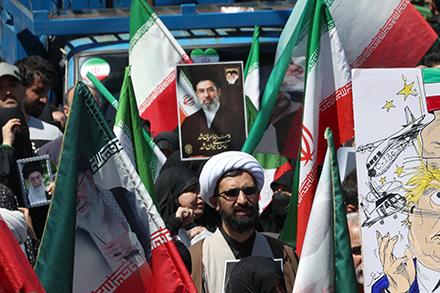
Iran’s tradition of martyrdom is key to understanding this conflict

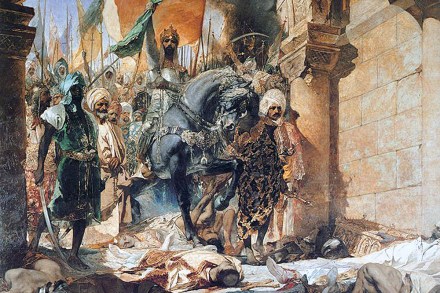
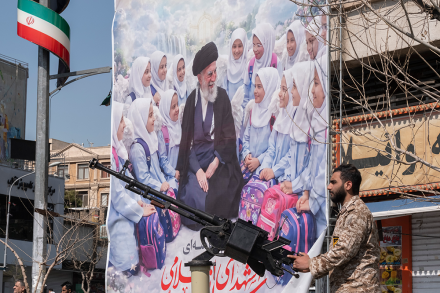
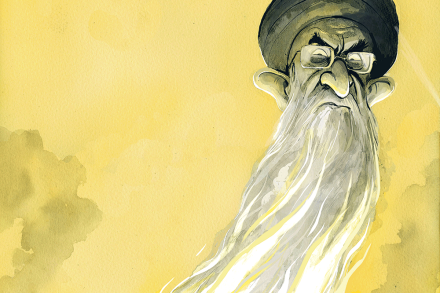
One word stood out in the florid and overwrought announcement of the death of Iran’s Supreme Leader by a tearful state-television newsreader on 1 March: ‘Leader and Imam of the Muslims, His Eminence Ayatollah Seyyed Ali Hosseini Khamenei, on the path of upholding the exaltation of the sacred sanctuary of the Islamic Republic of Iran, drank the sweet, pure draft of martyrdom and joined the Supreme Heavenly Kingdom.’ The dreaded ‘m’ word – martyrdom – immediately takes anyone familiar with Muslim history back to a legendary 7th-century battlefield in central Iraq. In 680, the Prophet Muhammad’s grandson Husayn ibn Ali – regarded as the third Shia imam – faced a much larger army commanded by the Umayyad caliph Yazid I at the Battle of Karbala.

Have we reached peak ‘curation’?

Are we all curators now? From the hotel chef offering an artfully curated cheeseboard to the fashion world’s curated capsule collections, the sound curators (DJs) and the luxury tour operators flogging seamlessly curated travel experiences – and don’t forget the curated (actually, algorithm-generated) lists from Substack – nowhere is safe from the scourge of the contemporary curator. The actor Idris Elba sees himself less as a conventional musician, ‘more of a curator of music’. In 2023, he curated the Nigerian musician Fela Kuti’s Box Set 6, in case you’re not up to speed on your Afrobeat vibes. The American rapper and songwriter Kanye West identifies as an ‘inventor or maybe curator’, possibly not clocking they’re quite different things.

Justin Marozzi, Lisa Haseldine, William Atkinson & Toby Young

32 min listen

On this week’s Spectator Out Loud: Justin Marozzi analyses what Trump’s coup in Venezuela means for Iran; Lisa Haseldine asks why Britain isn’t expanding its military capabilities, as European allies do so; William Atkinson argues that the MET’s attack on freemasonry is unjustified; and, Toby Young explains why the chickenpox vaccine is a positive health measure. Produced and presented by Patrick Gibbons.

What Trump’s coup in Venezuela means for Iran

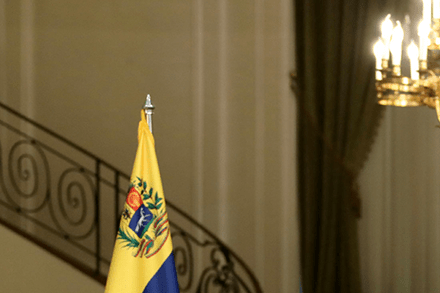
In a city awash with visual propaganda, one mural in Caracas is especially striking for the western visitor. In it, Jesus Christ stands alongside Imam Mahdi, a prophesied messianic figure who many Muslims believe will appear with him during the End Times to restore peace and justice to the world. There is only one Venezuelan – the late president Hugo Chavez – among the six smaller figures on the mural. Three are Iranian, including Qasem Soleimani, a commander in the Islamic Revolutionary Guard Corps elite Quds Force, killed by a US airstrike in 2020. One is an Iraqi commander killed in the same strike, and the last is Lebanese, Imad Mughniyeh, a founder of Islamic Jihad in Lebanon and number two in Hezbollah until his assassination in 2008.

What Andrew’s Norfolk exile will look like

When Russian dissidents were bundled off into exile under the tsars, they were sent to Siberia, the ‘prison without a roof’, and disappeared from society, never to be seen again. Many residents of Norfolk, where the King has exiled his brother, Andrew Mountbatten Windsor, will be hoping he follows the same route. ‘There may be a certain thrill about having him, like presenting Liz Truss in your sitting room’ Norfolk likes to call itself a ‘royal county’, as the Visit Norfolk website proudly proclaims. Sandringham, the family’s private home, is well known. But the royal connection pre-dates Queen Victoria’s purchase of the country retreat for her son Albert in 1862 by almost 800 years.

What hope is there for Syria today?

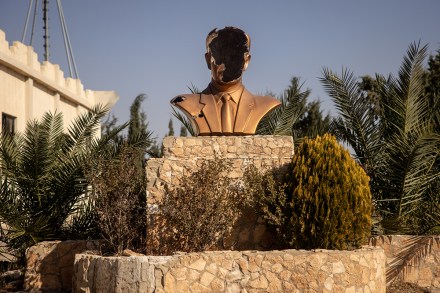
Rime Allaf takes the long view of Syria’s descent into hell. Her story begins with President Hafez al Assad, the architect of the socialist Baathist dictatorship that, from 1970 to 2000, immiserated and impoverished an entire nation before his son and successor Bashar utterly destroyed it. It Started in Damascus is part history, part memoir, the story of a people whose hopes for a better life have been consistently strangled by the Assad dynasty for more than half a century. A Syrian-born writer and analyst who comes from a distinguished diplomatic family, Allaf is unflinching when she trains her sights on regime depravity. It makes for disturbing, compulsive and at times heart-in-the-mouth reading.

Best of Notes on…

29 min listen

The Best of Notes on... gathers the funniest, sharpest and most wonderfully random pieces from The Spectator’s beloved miscellany column. For more than a decade, these short, sharp essays have uncovered the intrigue in the everyday and the delight in digression. To purchase the book, go to spectator.co.uk/shop On this special episode of Spectator Out Loud, you can hear from: William Moore on jeans; Laura Freeman on Brits in Paris; Justin Marozzi on boxer shorts; Mark Mason on coming second; Michael Simmons on doner kebabs; Fergus Butler-Gallie on Friday the 13th; Hannah Tomes on rude place names; and, Margaret Mitchell on lobsters. Produced and presented by Patrick Gibbons, with an introduction from William Moore.

Will Israel always have America’s backing?

Marc Lynch is angry. The word ‘rage’ appears six times on the first page, and comes in response to Israel’s war in Gaza. This should be sufficient warning to anyone expecting a cool, calm, dispassionate analysis of the Middle East that they might have picked up the wrong book. That is not to say that Lynch, who runs the George Washington University’s Middle East programme, is not worth reading. On the contrary, and despite the occasional lapse into the sort of political-science-speak favoured by academics, he is a fierce and compelling voice.

Tom Slater, Justin Marozzi, Iben Thranholm, Angus Colwell & Philip Womack

28 min listen

On this week’s Spectator Out Loud: Tom Slater says that Britain is having its own gilet jaunes moment; Justin Marozzi reads his historian’s notebook; Iben Thranholm explains how Denmark’s ‘spiritual rearmament’ is a lesson for the West; Angus Colwell praises BBC Alba; and, Philip Womack provides his notes on flatmates. Produced and presented by Patrick Gibbons.

The human stories of slavery

With a new history of slavery and the slave trade in the Islamic world just published, I am under strict instructions not to make any fatwa-related jokes. The Holy Trinity, if I can mix my faith metaphors for a moment, of publisher, agent and wife have advised me strongly against it. ‘No jokes about fatwas, please,’ were my wife’s exact words ahead of an appearance at Chalke History Festival. ‘No one finds them funny.’ I disagree. They can be extremely funny. But on balance it may be wisest to err on the side of caution.

Starmer at sea, Iran on the brink & the importance of shame

46 min listen

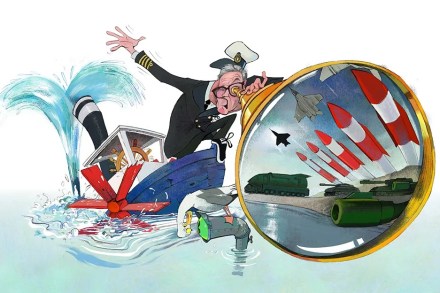
Starmer’s war zone: the Prime Minister’s perilous position This week, our new political editor Tim Shipman takes the helm and, in his cover piece, examines how Keir Starmer can no longer find political refuge in foreign affairs. After a period of globe-trotting in which the Prime Minister was dubbed ‘never-here Keir’, Starmer’s handling of international matters had largely been seen as a strength. But as tensions escalate in the Iran–Israel conflict, global events are beginning to create serious challenges. They threaten not only to derail the government’s economic plans but also to deepen divisions within the Labour party, particularly between the leadership and much of the parliamentary party. Tim joined the podcast alongside The Spectator US editor Freddy Gray.

Toppling Iran’s Supreme Leader could be a mistake

Are we already seeing an ominous mission creep in Israel’s blistering attack on Iran? First, Prime Minister Benjamin Netanyahu’s air assault was all about ending Iran’s covert nuclear weapons programme, a day after the International Atomic Energy Agency declared Tehran in breach of its non-proliferation obligations. Then, within a few hours of launching ‘one of the greatest military operations in history’, Netanyahu was telling Iranians that Israel was ‘clearing the path for you to achieve your freedom’.

Harry Cole, Zoe Strimpel, Michael Simmons, Nigel Warburton and Justin Marozzi

30 min listen

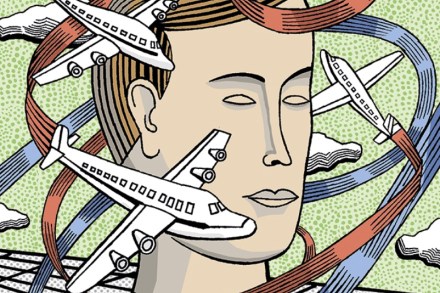
On this week’s Spectator Out Loud: Having returned from Washington D.C., Harry Cole reads his diary for the week (1:16); Zoe Strimpel reports on the Gen Z fliers obsessed with maximalising their air miles (5:37); Michael Simmons argues that Scotland is the worst when it comes to government waste (12:00); reviewing Quentin Skinner’s Liberty as Independence, Nigel Warburton examines what it means to be free (17:45); and, Justin Marozzi provides his notes on possum (25:02).  Produced and presented by Patrick Gibbons.

Why possum beats cashmere

In 1990, an exotic Swiss-Canadian teenager of purportedly Habsburgian lineage descended on Cambridge in a cloud of cashmere. His wardrobe was unfeasibly organised, shelf after shelf of cashmere arrayed in all the hues of the rainbow. We regarded him as a thing of wonder. In those days most of us British undergraduates were deeply unsophisticated, many of us impoverished. We were just about graduating from high-street polyester to Scottish lambswool. Cashmere was unheard of. Life moves on, and who today hasn’t indulged in a spot of cashmere? My wife is addicted to the stuff – jumpers, cardigans, polo necks, gloves, scarves – good God, the scarves. These days cashmere is everywhere. Even Uniqlo regularly knocks it out at sub-£100 prices.

Ukrainians are keeping calm and carrying on in defiance of Trump

In 2023, I had coffee with the celebrated Ukrainian novelist Andrey Kurkov, on Yaroslaviv Val Street in the ancient heart of Kyiv. The modern city is built over the ruins of the rampart built by Yaroslav the Wise, the eleventh-century Grand Prince of Kyiv, to keep out invaders. Now, on the third anniversary of the most recent invasion of Ukraine, Kurkov, whose novels are known for their dark humour, is in a much more sombre mood. Donald Trump’s savage and surreal attacks on president Zelensky have left the country reeling. ‘Of course, Ukrainians are shocked and upset,’ he says. ‘If two weeks ago Russia considered Americans and Poles their main enemies, now Trump has moved Americans almost into the camp of Putin’s allies.

For God or Allah

I thought we might be on to a winner with this book after the opening sentence. ‘From an early age,’ Simon Mayall writes, ‘I loved stories and storytelling.’ Sounds simple, but in a world in which many professional historians tend to know more and more about less and less, and write for each other rather than the wider public, the grand narrative history is something which general readers will applaud and enjoy. Lieutenant General Sir Simon Mayall, to give him the full honours, is one of this country’s most distinguished soldiers and is steeped in the history of the Middle East. There is no doubting the pivotal nature of the ten military encounters he has summoned between Christendom and the caliphate over the past 1,300 years.

Britain is finally debating cousin marriage

It is a biting winter’s evening in Cambridge and apparently we are making history. This is the first serious public discussion in the UK of the law on cousin marriage, and the desirability of legislating against it, since the mid-Victorian era. At a time when British universities seem more interested in discussing diversity, equity and inclusion and decolonising the curricula than engaging with the great issues of the day, there is an unmistakable frisson as we gather around a long beechwood table in the brightly lit Weston Room of the interfaith Woolf Institute. A portrait of the no-nonsense Princess Anne, its patron, smiles down upon us. Charles Darwin, who was married to his first cousin Emma Wedgwood, sought to include a question on first cousin marriage in the 1871 census.