Judi Bevan

I was told I was too middle-class to adopt

From our UK edition

Too many books? Yes, we had too many books. That’s what our social worker told us when we were being assessed to see whether we were suitable parents to adopt a baby from China back in 1996. It seemed to us, a middle-class, well-educated couple, an extraordinary statement and so it appeared to our friends and acquaintances. But that was, and is still to some extent, the credo at work in assessing potential adoptive parents. A significant number of social workers continue to believe that a child should be matched as closely as possible with the social class and ethnic background of the adoptive parents, even if that means children being held in institutional care far longer than is good for them.


Investment special: Which shops to bet on as recovery begins

From our UK edition

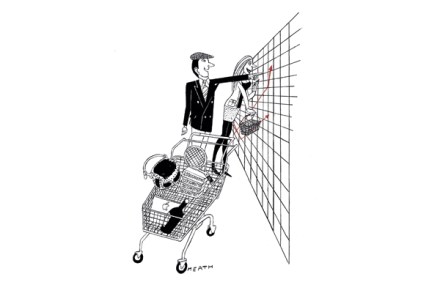
After a long, cold and sometimes lonely winter for shopkeepers, at last there are glimmers of sunshine. Retail sales volume surged in May as shoppers shelled out £6.8 billion a week, the highest figure since records began. Although the rise was partly a recovery from a miserable March and April, depressed by the coldest spring for 50 years, it was also seen as the result of rising consumer confidence buoyed by better economic news and less fear of unemployment. Intriguingly, a survey by American Express claims people using loyalty card rewards more aggressively added up to £3 billion to household budgets over the past year. Then there is the news that the housing market is finally picking up, as first-time buyers return in force.

Investment Special: Tough times for shopkeepers

From our UK edition

The high street’s double-dip winners and losers As austerity bites, competition in the high street grows ever more ferocious. Only the nimble and well-financed can thrive. While January and February showed some improvement and sunshine helped boost sales in March, the trend looks likely to be lower again in April. ‘The situation remains fragile,’ said Judith McKenna from Asda, chair of the CBI retail survey panel. ‘Consumers are still holding off from buying bigger ticket items, and opting to spend on smaller “treat” purchases that give them a lift without breaking the budget.’ According to Asda’s Income Tracker, the average UK family has only £144 of weekly disposable income to spend, a fall of 6.5 per cent from a year ago.

Digging deep, finding profits

From our UK edition

The great mining predators are on the prowl again, says Judi Bevan. The Chinese are on a spending spree in Africa. And there’s plenty of room for canny investors to make money by following the deals closely For those worried they have missed the move in mining shares – the FT mining index has nearly doubled since the market hit bottom in March – consider this. As of late November, the index was still around 40 per cent down from its peak in June 2008 and a renewed outbreak of bid speculation – along with Xstrata’s so far unsuccessful approach to Anglo American – indicates that those who are actually running mining houses believe there is plenty more value to be unleashed.

Will the NHS respond to Dr Sykes’s treatment?

From our UK edition

Corporate titan turned London healthcare chief Sir Richard Sykes faces his toughest challenge yet, says Judi Bevan — but he’s full of praise for the handling of swine flu Sir Richard Sykes darts across the hallway of the Athenaeum club to greet me. Lightly tanned, thin as a whippet, the former head of GlaxoSmithKline and Imperial College cuts a dash in pinstripes and a tie the colour of crushed raspberries. Sykes is to ‘change czars’ what Roger Federer is to tennis. In both his former roles he radically changed the institutions he headed. Through the takeover of Wellcome, followed by merger with SmithKline Beecham, he transformed middleweight Glaxo into GlaxoSmithKline, the third largest pharmaceutical group in the world.

No time to relax for BA’s fighter pilot

From our UK edition

British Airways staff have sometimes been accused of ‘working without enthusiasm’, says Judi Bevan — but you certainly couldn’t say that of chief executive Willie Walsh Before meeting Willie Walsh, I take a stroll round Terminal 5, marvelling at the vast, elegant haven of calm and efficiency it has become compared with the pandemonium of last March’s opening. All looks serene until I ask the nice young press officer with me whether passengers are now allowed two pieces of hand luggage. We approach one of the check-in desks, where she politely introduces herself and asks the young woman behind it if this is indeed the case.

‘These clouds will have a silver lining’

From our UK edition

Judi Bevan meets Sir John Parker, who chairs National Grid and the Court of the Bank of England — and takes an optimistic view of the deepening recession Few people would have dared to walk out of lunch at the Savoy Grill leaving behind the irascible Lord King. Sir John Parker, the softly spoken Irish charmer who now chairs National Grid, did just that. When he took over as chief executive at the ailing engineering firm Babcock & Wilcox in 1993, he first had to deal with the late John King, then chairman, who believed he should still call the shots despite the decline of the company under his command. ‘We had a real dust-up and I left the lunch early,’ explains Parker.

‘Business only thrives when society thrives’

From our UK edition

Judi Bevan hears the views of Paul Myners, the left-leaning millionaire art collector who has just become Gordon Brown’s City minister There is a telling mischief about the way the new City minister dresses. A double-breasted dove-grey pinstripe suit is worn with a white shirt worthy of a detergent ad, no tie but tasteful cuff links, black brogues and socks. There is an arresting slash of colour from a chunky orange plastic watch strap for his black Calvin Klein timepiece. All very Mondrian — but then until his appointment last week, Paul Myners, soon to be Lord Myners, was the chairman of the Tate trustees. He is such a keen collector of contemporary art that his Belgravia house does not just have paintings on the walls, it has installations.

Nice pork, pity about the pizza

From our UK edition

Judi Bevan finds her local Lidl discount store full of bargains — but not Boden-clad middle-class shoppers Intrigued by reports that the middle classes are shopping at the German discount stores Aldi and Lidl — and even stuffing their purchases in Waitrose bags — I set off to track them down. My nearest Lidl is a couple of miles from my house at the northern end of Cricklewood Broadway — not exactly an area known for yummy-mummy sightings, and without a Starbucks or Caffè Nero for miles. Yet the statistics say that sales at both Aldi and Lidl have been growing strongly since householders have been hit by higher petrol and utility bills.

Can London be turned around like a troubled company?

From our UK edition

Tim Parker, the bubble-haired venture capitalist hired to cut costs at City Hall and make Mayor Boris’s vision a reality, strolls down the curved walkway to greet me smiling widely, just like his photographs. Tall and rangy, this socialist-turned-capitalist, who is to be paid just £1 a year, is all charm and apologies for failing to turn up for our appointment the day before. He takes responsibility like a good leader should, although I suspect the serried ranks of apparatchiks from the not-so-ancien régime of attempted sabotage. They should watch out: while turning round the AA, Parker earned the sobriquet ‘Prince of Darkness’ for his skill at excising surplus staff.

The veteran batsman who just hates to lose

From our UK edition

Judi Bevan meets Sir Martin Sorrell, the hard-driving Eighties entrepreneur who is still chasing acquisitions for the company he created, the advertising giant WPP ‘Building a company is the nearest thing a man can do to giving birth and nurturing a child to maturity,’ says Sir Martin Sorrell, the founder and chief executive of WPP. Judi Bevan meets Sir Martin Sorrell, the hard-driving Eighties entrepreneur who is still chasing acquisitions for the company he created, the advertising giant WPP ‘Building a company is the nearest thing a man can do to giving birth and nurturing a child to maturity,’ says Sir Martin Sorrell, the founder and chief executive of WPP. ‘Nobody has a bigger emotional connection with this business than I do.

Facing the flak at Terminal 5

From our UK edition

Judi Bevan meets BAA chairman Sir Nigel Rudd, an Eighties entrepreneur turned City grandee who still relishes tough challenges — and has met several at Heathrow Sir Nigel Rudd, chairman of BAA and motor group Pendragon and deputy chairman of Barclays Bank, has a reputation for riding towards the sound of gunfire. ‘I like difficult challenges — if it’s not difficult, where’s the fun?’ he says, an impish grin lighting up his solemn face. Not that the opening of Terminal 5 can have been a bundle of laughs amid the public uproar over cancelled flights and mountains of lost luggage. ‘The first few days were a tragedy,’ says Rudd, who admits that BAA must take the blame for some of the equipment not working properly.

The entrepreneur’s art: buying, building, selling

From our UK edition

Judi Bevan meets David Young, who served in Margaret Thatcher’s cabinet before chairing Cable & Wireless and creating his own successful private-equity business Few 75-year-olds supply and programme their grandchildren’s computers or keep in touch with the younger generation by text. But Lord Young of Graffham — the businessman who was parachuted into the cabinet as secretary of state for employment by Margaret Thatcher and later headed the Department of Trade and Industry — is one of a rare breed of septuagenarian technophiles. ‘I have owned a PC since 1977 and I bought the first Apple in this country,’ he claims, with the boyishly pleased air of someone who stole a march on his peers.

Coping with crisis, climate change — and lost luggage

From our UK edition

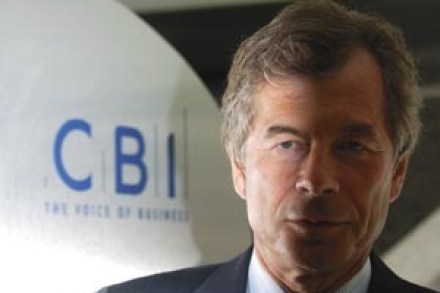
Martin Broughton looks so lean and fit for someone of 60 that I worry he is playing too much golf. But no, his handicap is still only 17, a long way from the single digits that signal too much time teeing off and not enough pressing the flesh on behalf of British Airways and the Confederation of British Industry.  Nattily dressed in a sky-blue check shirt with white collar and cuffs and a sunshine- yellow tie, Broughton’s attire owes something to the Turf, another great passion.

‘Emotions are key. It’s not just about sandwiches’

From our UK edition

A tiny door marked ‘Pret a Manger Academy’ in the back wall of Victoria station leads up two narrow flights of metal stairs to a warm, colourful room where rock music is playing softly. Strangely shaped leather chairs scattered with fluffy cushions give the faint air of a bordello. This is the headquarters of Pret a Manger, the sandwich chain which owns 164 shops in Britain, and others in New York, Hong Kong and Singapore. So far, so surreal. Julian Metcalfe, the co-founder of the sandwich chain, appears almost in a puff of smoke. An arresting presence, he would make a good wizard. He’s dressed in a tailored slate-blue jacket two shades darker than his eyes, a snowy, open-necked shirt, pristine blue jeans and sludge-coloured converse shoes — no laces.

Moral superiority in cheap plastic bottles

From our UK edition

As the train trundled down to Littlehampton one warm summer afternoon in 1988, I was filled with excitement at the thought of meeting Anita Roddick. I had arranged to interview her for a book called The New Tycoons, which I was writing with my Sunday Times colleague John Jay, now my husband. Roddick was already a household name even though the Body Shop had only been in existence for 12 years. When its shares were floated on the Unlisted Securities Market in 1984 they nearly doubled from 95p to 160p on the first day — and she became Britain’s fourth richest woman.

The last dotcom entrepreneur

From our UK edition

Chilling echoes of the 2001 dotcom crash attended the flotation of the internet price comparison business Moneysupermarket.com at the end of last month. Simon Nixon — not the financial journalist of that name but the company’s founder — was jetting around America and Europe on his roadshow as the market started to wobble, spooked by the American sub-prime lending crisis and the global credit crunch. On the day of the float, 26 July, the market fell nearly 200 points, its largest one-day fall of the year until then. ‘I thought we might have to pull it,’ says Nixon, a man who cherishes being in control. ‘But in the end the demand was there from investors at the lower price range.

‘It’s a feeding frenzy. There’s so much money’

From our UK edition

Judi Bevan meets a top estate agent who thinks only a terrorist bomb can stop the capital’s house prices soaring Peter Rollings is one of those glowingly fit and forceful people who emit an unrelenting positive energy into the air around them. ‘Yes, energy is my big thing,’ he says, enthusiastically. ‘I don’t see the point of being down. Energy is infectious but so is negativity.’ He’s instantly friendly, the sort of chap who can strike up a rapport with anyone from a secretary looking for her first flat to a Russian oligarch wanting a Regency stucco pile in Belgravia. Yet behind the smile, his brown eyes are as hard as marbles. Rollings is an estate agent; in fact he’s probably the luckiest estate agent in Britain.

The elder statesman of open skies

From our UK edition

In his measured, softly spoken way, Sir Michael Bishop is furious with the Conservative party for its plans to ration air travel. ‘There are few things less edifying than watching politicians jumping on a passing bandwagon,’ says the proprietor chairman of BMI British Midland, which holds the second largest number of take-off and landing slots at London Heathrow. Bishop is a Conservative and he sees proposals by David Cameron and George Osborne to curb air travel through punitive taxation as betrayal. ‘I felt it was a crass and clumsy response and against all Conservative principles,’ he says. Bishop is the quietly flamboyant elder statesman of the British airline industry; gracious, but with the self-contained air so often found in only children.

High-street icons are safe in private hands

From our UK edition

Those who fear that private-equity bidders, if they secure control, will destroy national icons such as Boots and Sainsbury’s, might consider that J. Sainsbury fared pretty well as a private company for 104 years before it floated on the London Stock Exchange in 1973. Family control with its paternalistic overtones may appear different from highly incentivised professional management backed by private equity, but in both cases the people at the top are motivated by the same goal. To make money for the com-pany is to make money for themselves. Private ownership enables managers to get on with this task without interference from the battalions of busybodies who besiege public companies.