Jonathan Spyer

Jonathan Spyer is a journalist and Middle East analyst. He is director of research at the Middle East Forum and the author of The Transforming Fire: The Rise of the Israel-Islamist Conflict.

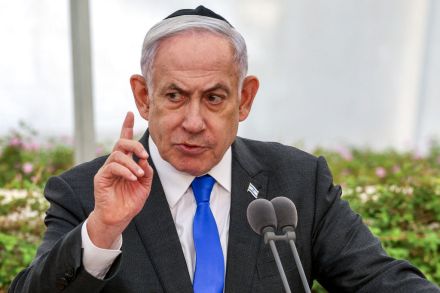
Will Netanyahu declare war on Hezbollah?

The war in Gaza is perceived internationally as a limited affair, pitting Israel against the Islamist Hamas organisation within the confines of a narrow strip of territory on the Mediterranean coast. This view has long been reductive. A number of other fronts are active as a result of the outbreak of war in Gaza. And one of them – Lebanon – is currently showing signs of erupting into full conflict. In November, the Yemeni Ansar Allah (Houthis) movement commenced their targeting of shipping in the Gulf of Aden and the Red Sea. In the same month, the Iran-allied Shia militias in Iraq began attacks on Israel, and on US and allied forces in Iraq and Syria.

Pressure is piling on Netanyahu over Rafah

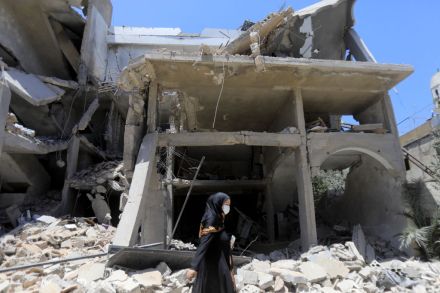
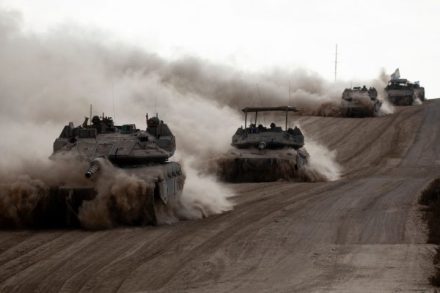
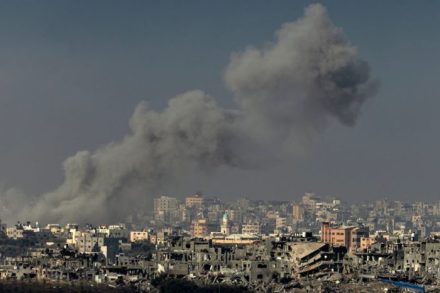
On Sunday, 45 Palestinians were killed after an Israeli airstrike on two Hamas commanders in the Rafah area set off a secondary explosion of ammunition, triggering a fire. Nevertheless, the IDF’s Rafah operation is continuing apace. A number of Merkava 4 tanks of the 401st armoured brigade were sighted near the al-Awda mosque close to the centre of Rafah city on Tuesday. The presence of the tanks has not been confirmed by the IDF but if accurate, it represents the furthest penetration by Israel into the heart of Rafah’s urban area to date. Israeli infantry and armoured forces of the 162nd division, meanwhile, continue to push along the Philadelphi Corridor adjoining the border with Egypt.

Bibi’s plan for a post-war Gaza

Sharp differences within Israel’s governing coalition have emerged into the open in recent days. On the face of it, the dispute centres on preferred post-war arrangements in Gaza. But the rival stances also reflect underlying, contrasting views concerning the conduct and aims of Israel’s now eight-month long military campaign in the Gaza Strip.   The divisions have begun to receive attention in recent days because of Defence Minister Yoav Gallant’s public statement criticising the government for ‘indecision,’ regarding the ‘day after’ in Gaza. But the dispute is not new. Gallant has for months been advocating in cabinet for a plan his ministry has developed, concerning how Gaza will be governed after the war. Details of this plan were published in March.

Hamas is playing for time

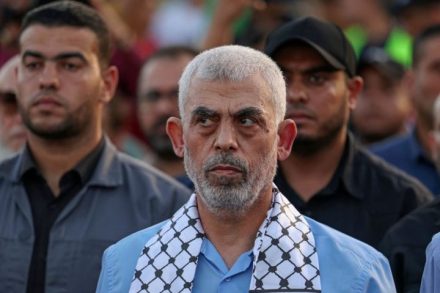
Israeli, international and Hamas officials are currently awaiting the decision of Yahya Sinwar, the terror group’s military leader on a proposed ceasefire deal. Egypt has put forward a phased release of Israeli hostages and a temporary end to the fighting in Gaza. Sinwar is looking at the deal. As the talking and the diplomatic manoeuvring continues, two IDF combat divisions, the 98th Airborne and the 162nd Armoured, are making their final preparations for entry into Rafah. Failure to reach agreement on Egypt’s proposal is likely to set an IDF operation into motion. Egypt's proposition would commit Israel to a long and open-ended ceasefire. Over time, Israeli hostages would be swapped for Palestinian prisoners, and the number of Israeli armed forces in Gaza would be reduced.

What Israel should do about Hezbollah

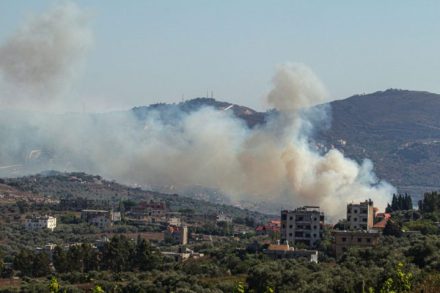
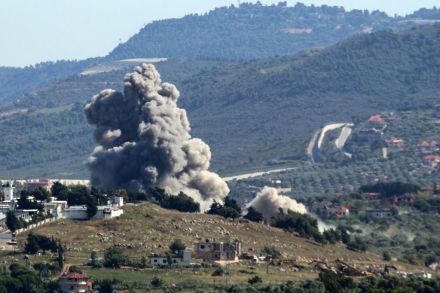
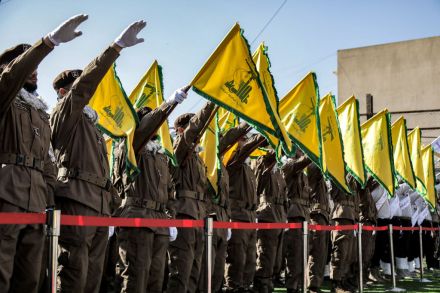
On Tuesday, Hezbollah launched its deepest attack into Israel since the current round of hostilities between Jerusalem and the Iran-supported Islamist group began last October. Sirens sounded in the town of Acre as drones and rockets were launched at what pro-Hezbollah media described as ‘military targets’ between Acre and Nahariya. There were no casualties. In response, Israeli aircraft struck at Hezbollah targets across the border.  Hezbollah’s decision to strike further south appear to have come in response to the targeted killing by Israel of one of the movement’s senior commanders the previous day.

Will Israel continue its strikes on Iran?

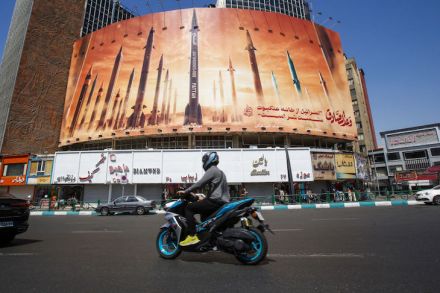
The reported Israeli strike on an Iranian air installation near the city of Isfahan in central Iran appears to have been the most significant of a series of attacks carried out by Israel in the course of last night. While the full picture is still emerging, there are indications that an additional strike of some kind took place south of Baghdad, the Iraqi capital. A third strike took place on a position of the Syrian army in Sweida, a majority Druze province close to the Syria-Israel border, according to a number of Syrian opposition sources. The strike on Sweida is business as usual in terms of Israel’s ongoing campaign against Iranian entrenchment in Syria. The Isfahan strike, however, and to a lesser extent the apparent strike on Baghdad constitute a significant escalation.

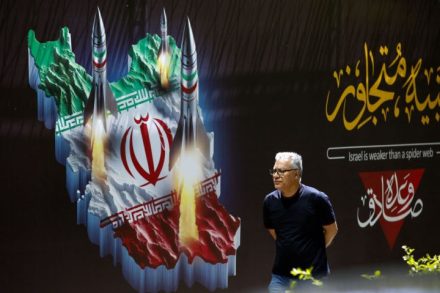
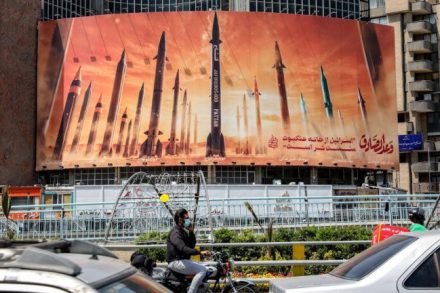
Iran’s attack was just a taste of what could be to come

The Iranian drone and missile attacks of 13 April brought less drama for many in Jerusalem than one might have imagined. War brings with it the disappearance of expectations of daily continuity, or of a reasonable and logical sequence of events.  It has been wartime for six months now here in Jerusalem; in another way it has been wartime for the last 75 years. If one insists on drawing out the camera range still further, it has been war, or a state of emergency for Jewish people for as long as history can remember.

Iran’s four options for revenge against Israel

I recently returned from a trip to the south east Syrian province of Deir al Zur, where I witnessed Kurdish and American soldiers in a tense face-off against Iranian and proxy forces along the Euphrates River line. After making my way home to Jerusalem via Iraq, Jordan and northern Israel, I had hoped for a couple of days respite from the Middle East and its attentions. No such luck. A terse message arrived in my community WhatsApp group: ‘The Home Front Command has this evening updated the list of required items, in an article at its national emergency portal. In contrast to the previous list, the current list includes food and water in accordance with the needs of the household. It remains subject to change.’ Either way, I’ve stocked up on bottled water and tinned tuna.

Biden’s Iran policy has backfired

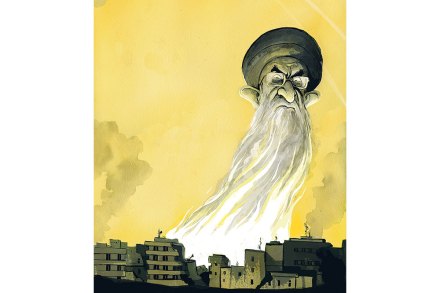
Nine years ago, Barack Obama, with his vice president Joe Biden at his side, announced the Iran nuclear deal. Ayatollah Khamenei’s regime would not enrich weapons-grade uranium for 15 years. The US would lift economic sanctions in return. It was ‘historic’, said Obama. The Iranians had been close to developing their first nuke: this agreement stopped them. ‘This deal demonstrates that American diplomacy can bring about real and meaningful change – change that makes our country, and the world, safer and more secure,’ added the president from the White House lectern. If recent months are anything to go by, these diplomatic efforts to fix the Middle East have been a disaster. The region isn’t safer, nor more secure. Obama’s nuclear deal was too narrow.

Time is running out for Israel to defeat Hamas

Israel’s ground offensive in Gaza is making steady progress. They moved into the strip on 27 October after a sustained air campaign which paved the way for infantry, armoured and engineering units to enter. Despite military analysts predicting that Israel would sustain heavy combat losses, because of decent intelligence gathered in the preceding three weeks, they remain relatively low (46 dead at the time of writing).  The Israeli Defence Forces (IDF) are now operating inside the Al-Shifa hospital, beneath which Israel believes the main operational headquarters of Hamas is located. According to Israeli media sources, five Hamas fighters were killed in the course of the IDF's raid into a part of the hospital last night and Israeli troops found weapons in the area.

New world disorder

38 min listen

On the podcast: In The Spectator's cover piece Jonathan Spyer writes that as America's role in international security diminishes history is moving Iran’s way, with political Islam now commanding much of the Middle East. He is joined by Ravi Agrawal, editor in chief of Foreign Policy and host of the FP Live podcast, to discuss whether America is still the world's policeman.  Also this week: In the magazine this week, The Spectator’s literary editor Sam Leith speaks to Jacques Testard, publisher at Fitzcarraldo Editions, the indie publishing house which has just won its fourth nobel prize in under ten years.

Political Islam now commands the Middle East

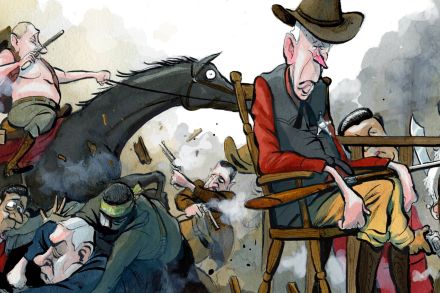
No sane American president takes office hoping for war. Woodrow Wilson, a 56-year-old Princeton academic, said it would be ‘the irony of fate’ if his presidency came to be dominated by foreign affairs. He spoke in 1913. Joe Biden came to office in 2021 promising to end the ‘forever wars’ of Iraq and Afghanistan. But as he boarded Air Force One on Tuesday, another irony of fate was in evidence: the American-enforced world order is crumbling, and the results are now becoming clear. Iran, far from being neutered by US sanctions, was able to start a war using its Hamas proxies and their Hezbollah allies to attack Israel. At a stroke, the Arab-Israeli rapprochement America had wanted to nurture has been put on ice.

An Israeli ground assault would be devastating for Gaza

On a patch of scrubland outside the Zikim kibbutz earlier this week, I came across a platoon of Merkava 4 tanks positioned among the trees. One of the tank commanders recognised my colleague and we exchanged a few words. ‘This is our Yom Kippur,’ he told us. ‘We haven’t even begun to grasp the implications of this.’ Yom Kippur, in this context, isn’t a reference to the annual Jewish day of atonement. Rather, it recalls October 1973, when Israel was surprised by an attack on two fronts from the forces of Egypt and Syria. The Hamas assault on Israeli Jewish communities around the Gaza Strip came exactly 50 years and a day after what Israelis call the Yom Kippur War.

Who should rule Syria?

The long civil war in Syria is still far from conclusion. Any real possibility of rebel victory ended with the entry of Russian forces last autumn — but while the initiative is now with the Assad regime, the government’s forces are also far from a decisive breakthrough. So who, if anyone, should the UK be backing in the Syrian slaughterhouse, and what might constitute progress in this broken and burning land? It ought to be fairly obvious why a victory for the Assad regime would be a disaster for the West. Assad, an enthusiastic user of chemical weapons against his own people, is aligned with the most powerful anti--western coalition in the Middle East. This is the alliance dominated by the Islamic Republic of Iran.