Jonathan Spyer

Jonathan Spyer is a journalist and Middle East analyst. He is director of research at the Middle East Forum and the author of The Transforming Fire: The Rise of the Israel-Islamist Conflict.

Iran may be down, but it’s not out

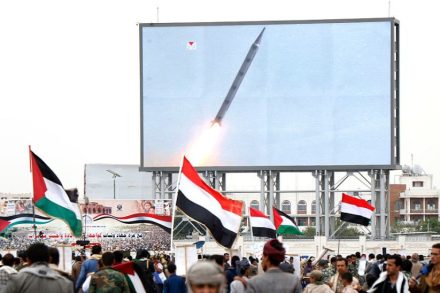
The sirens began at about 5 am. A Houthi ballistic missile was on its way, over Jerusalem, in the direction of the coastal plain. After half a minute or so, I began to hear the familiar sound of doors scraping and muffled voices, as people made their way to the shelter.   It has become a regular occurrence. No one makes much of a fuss anymore. For most Israelis, most of the last 70 years, Yemen was a remote country on the other edge of the Middle East, the part facing the Indian Ocean, rather than the Mediterranean. What was known about it consisted of a few items of food and folklore that the country’s Jewish community had brought with it to Israel when it fled there en masse in the late 1940s.

What is the purpose of Israel’s Gaza City operation?

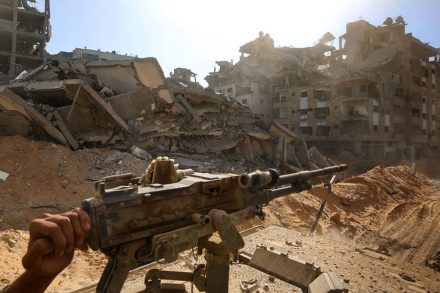
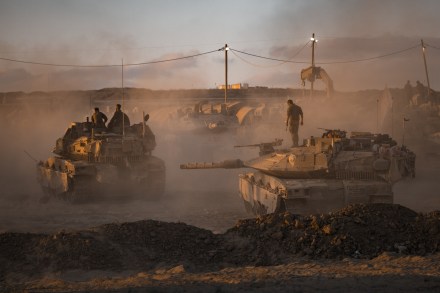
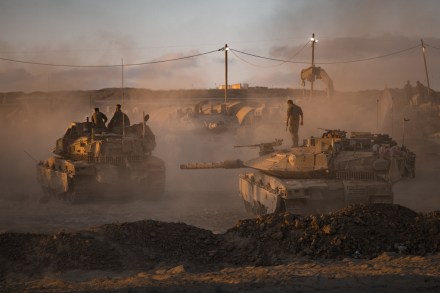
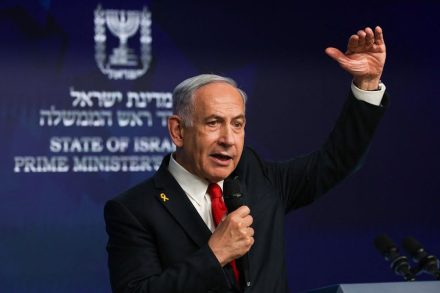
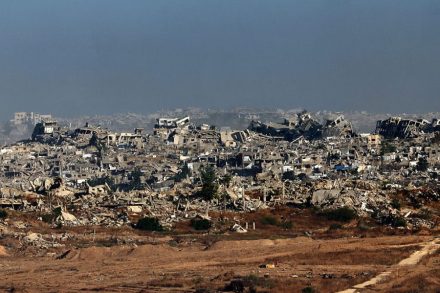
Israel’s security cabinet yesterday approved the Israel Defense Force’s plans for a major operation into Gaza City. The cabinet decision comes after the mobilisation of 60,000 IDF reservists over the past week. Israeli forces are already operating on the outskirts of the city. Should the operation commence, it appears set to bring five Israeli divisions into areas of Gaza as yet untouched in the course of nearly two years of war. At a certain point a decision must be made. Hamas must be either conceded to or destroyed Prime Minister Benjamin Netanyahu has described Gaza City as containing Hamas’s ‘last strongholds.’ In a statement made before yesterday’s cabinet meeting, Netanyahu described the war as at its ‘decisive stage.

Israel has weakened Iran – but not destroyed it

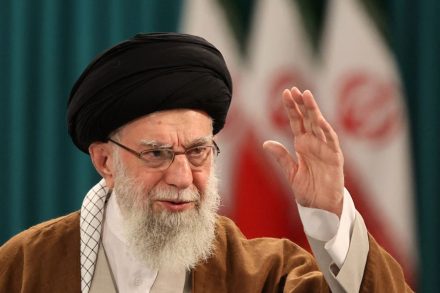
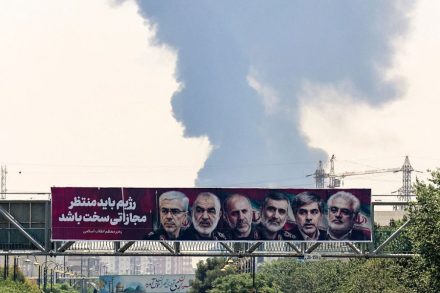
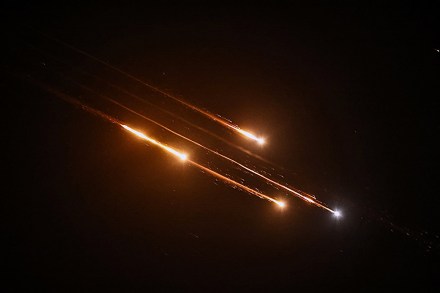
With the ceasefire between Iran and Israel so far holding, a preliminary assessment of the 12-day campaign is now possible. Jerusalem and its US ally achieved a considerable amount. Iran’s deficiencies on a tactical level were laid bare. Structural flaws in Tehran’s strategy of war by proxy have been made apparent. Both the nuclear and ballistic missile programmes have been significantly damaged. The hands of the doomsday clock, which were getting close to midnight, have been vigorously pulled back.   Unlike the actual digital clock in Tehran’s Palestine Square, however, which was destroyed by Israeli ordnance during the campaign, the Iranian strategy for the destruction of Israel has not been comprehensively defeated.

Iran is isolated against the US and Israel

America’s entry into the war against Iran is the latest step up an escalation spiral that began in October 2023. What started with an attack by a Palestinian Islamist organisation on a poorly defended Israeli border, and then became a fight between Israel and a series of Iran-supported Islamist paramilitary groups by the end of 2023, and then extended to limited exchanges between Israel and Iran itself in April 2024, and then turned into war between Iran and Israel, has now become a confrontation pitting the US and Israel against their longest standing and most powerful adversary in the Islamic world. Now at war with both Israel and the US, it has no major power interested in fighting alongside it. So what are the implications of this latest turn, and what may happen next?

Only regime change will solve the problem of Iran

The Middle East currently stands at a crossroads. The future geopolitical balance and perhaps also the historical direction of the region depend on the outcome of the war currently underway between Israel and Iran. With the US poised on the cusp of possible intervention, it's important to grasp the nature and dimension of what is at stake.   To understand the weight of the present moment, it is necessary to accurately define the nature of the current conflict and its roots. This is a war not only or primarily between states. It is a conflict between systems of governance and between rival visions of the region.

Iran is too weak to wage a ground war against Israel

As Israel advances its surgical reduction of Iran’s nuclear facilities and senior command, and Iran continues to launch missiles randomly at Israeli population centres in response, it is interesting to note what is not happening. Notably absent is any ground element to the war, which is currently being fought entirely between air and missile forces.   Israel has effectively reversed two decades of Iranian advance across the Middle East This brings home just how much the picture has changed in Israel’s favour over the last 20 months. It also reveals the deeper logic of this war. On 6 October, the Iran-led regional alliance stood as the most powerful strategic axis in the Middle East, pursuing clear goals via proven modes of action.

Israel’s war with Iran is only getting started

With the launch of Operation ‘Rising Lion’, Israel appears to have sought to take advantage of a narrow window of opportunity. Through its own actions over the last 18 months, the Iranian regime brought itself to a moment of extreme vulnerability. Tehran found itself in an uncomfortable position in which it continued to seek to prosecute its long war against Israel – intended to result in the Jewish state’s demise – while at the same time finding itself shorn of many of the capacities for aggression and defence on which it had relied. Israel has struck in this narrow window. Iranian has retaliated. The two sides are continuing to exchange strikes.   The weakening of Iran in recent months has occurred on two directly related fronts.

Why Hamas won’t accept Witkoff’s Gaza ceasefire offer

US Envoy Steve Witkoff finally received an answer to his latest proposal for a ceasefire and hostage exchange in Gaza over the weekend from Hamas: a no in all but name. This apparent rejection by the terror group confirms the essential issue under dispute in the conflict. The Gaza Islamist movement is determined to secure a situation in which Israeli forces withdraw from the territory and in which Hamas can begin the process of replenishing and reorganising its own forces and capacities. Any agreement which threatens to reduce the main asset Hamas holds to prevent Israel from executing a full push towards its destruction – namely, the remaining Israeli hostages – while failing to guarantee that no such push will take place, must automatically be rejected.

Iran is playing for time in the US nuclear talks

Over the weekend, the US and Iran held opening talks in Oman on Teheran’s nuclear programme. With the first round concluded, the Iranian regime’s position on the negotiations is becoming clearer. The Islamic regime, which prides itself on its strategic patience, intends to buy time, while avoiding any major and irreversible concessions. Whether Donald Trump's administration will prove willing to accommodate Iran's demands is another matter entirely.   Iranian foreign ministry spokesman Ismail Baqaei said on Sunday that Iran would refuse to discuss anything other than the nuclear programme in the talks. Teheran, Baqaei said, 'will not have any talks with the American side on any other issue.

No one should be surprised about the Syrian massacres

Shock and outrage are appropriate, but no one really has an excuse for being surprised at the dreadful scenes that have emerged from Syria’s western coastal region in recent days. The civilian death toll is now thought to be somewhere above 750, with over 1,000 people killed in total (Alawi sources place the number much higher). Around 125 members of the Damascus regime’s security forces have also died. Video clips, many of them filmed by the perpetrators, show people in civilian clothes being summarily executed by Islamist gunmen; the humiliation of Syrian Alawi men and women; and the inevitable Sunni jihadi battle cries of ‘Allahu Akbar.’ The specifics of the situation are important (more on that in a moment), but the non-specifics are no less crucial.

What is Israel’s plan for Syria?

Israeli leaders recently made clear that the IDF’s current military deployment into south-west Syria is not intended as a stop-gap measure until its northern neighbour stabilises. Rather, in a speech last week, Prime Minister Benjamin Netanyahu told IDF officer cadets that the force's troops would stay on the formerly Syrian side of Mount Hermon, and in the buffer zone carved out to the east of the Golan Heights for ‘an unlimited period of time'.

Isis is filling the vacuum in Syria

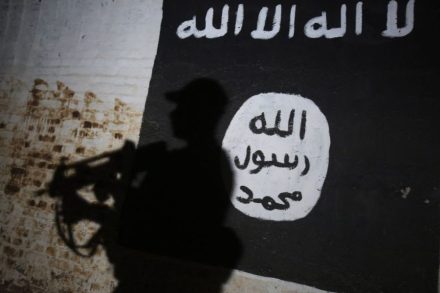
'Isis is taking huge advantage of the current situation in Syria,' Ilham Ahmed told me, when we met in the north Syrian city of Hasakeh in mid January. 'In the recent time, there have been many attacks on checkpoints of the SDF (Syrian Democratic Forces). They are most active in the al Badiya area. There’s no security control there, and we have confirmed intelligence information of plans for an attack on the Al Hol camp to liberate the families there.' Ahmed chairs the foreign relations department of the Autonomous Administration of North East Syria (AANES). This is the Kurdish-dominated de facto government with which the US and its allies aligned during the war against Isis’s self-declared ‘Caliphate’ between 2014 and 2019.

The case for ending the Israel-Hamas ceasefire

The question now facing Israel is this: will the war in Gaza recommence? The ceasefire agreement was signed less than a month ago, and it is already looking shaky.   The first phase of the deal has not yet been completed. Sixteen of the 33 Israeli hostages scheduled to be freed in this phase have been released, and so have 656 of 2,000 Palestinian prisoners. But Hamas has now announced the postponement of the release of an additional three hostages, which was scheduled to take place this Saturday. US President Donald Trump has expressed support for abandoning the phasing of the deal, and demanded that all hostages be released by Saturday at noon – not just those scheduled for the weekend.

Trump has exposed the hypocrisy of Gaza’s allies

US President Donald Trump has reiterated his call for Egypt and Jordan to accept residents of Gaza into their territory, as part of arrangements to end the current war with Israel. Further explaining his idea on Monday, the President said that he would 'like to get [Gazans] living in an area where they can live without disruption and revolution and violence so much'.  It's difficult to see anything coming of this idea. Both Egypt and Jordan have already, predictably, rejected it absolutely. Hamas, which is currently re-establishing itself as the de facto ruler of the Gaza Strip, would obviously act to prevent any attempt to implement it.

Syria feels close to a zone of anarchy

Travelling from Syria’s Highway 42, which runs from Tabqa to the city of Homs, you can see the corpse of Bashar al-Assad’s regime. Getting to Homs and from there to Damascus requires driving across 300km of desert. Once, huge and imposing checkpoints festooned with the symbolism of the regime greeted travellers seeking to reach Syria’s west from its tribal and Sunni south east. Now, the last position of the Kurdish-dominated Syrian Democratic Forces is 370 km from Damascus. The first roadblock of Syria’s new rulers, the Sunni jihadis of Hayat Tahrir al Sham (HTS), is about 100km from the capital. Between the two is an uneasy no man's land. Ever’ few kilometres, one passes enormous, dead structures of the vanished regime, which held power from 1963 to December 2024.

Hamas has exploited Israel’s weaknesses

When Hamas launched its war on Israel in October, 2023, it did so on the basis of a clear analysis of Israeli society, according to which it hoped to achieve its objectives.  Given the nature and extent of the massacre of 7 October 2023, it was surely clear to the Palestinian Islamist movement that Israel’s response would be to seek to destroy the ruling regime that Hamas had established in Gaza since 2007. Hamas’s leaders hoped to avoid this outcome, however, by the taking of Israeli hostages. This would be followed by a bargaining process in which Hamas would exchange the lives of the hostages for its continued rule in Gaza.

We all knew Syria was hell

The liberation of Syria’s notorious Sednaya jail close to Damascus a week ago has resulted in a wave of belated outrage in much western media toward the former dictator and his methods. For Syria watchers, there is something rather surreal about this late discovery of the methods of Assad’s regime. Some of the precise numbers remain disputed. There is, as yet, no independent verification of the statement by Mouaz Mustafa, head of the Syrian Emergency Task Force, that the mass grave at al-Qutayfah contains the remains of at least 100,000 people. The task of piecing together the precise dimensions of the Assad regime’s crimes against the Syrian people, and crucially the names and whereabouts of the victims, is only now beginning.

What al-Jolani’s past can reveal about Syria’s future

In late February 2012 I was travelling through Syria’s Idleb province. I stayed for a few days in a town called Binnish, not far from the province’s capital. It was, at that time, under the tentative control of the newly hatched insurgency against the regime of Bashar Assad.   The young host of the place I was staying – I’ll call him ‘D’ – was connected to the fledgling structures of what at that time was widely known as the ‘Free Syrian Army'. But through a cousin of his he also had links to another group of fighters just getting organised in the town. These men were a little older than the FSA members, and were more obviously Sunni Islamist in their appearance and their orientation.

How Assad fell

The astonishing and abrupt fall of Bashar al-Assad’s regime in Damascus is a moment of historic importance for the Middle East, in which the shifting of tectonic plates can be plainly felt. But which plates in particular? And what are the immediate implications? Firstly, it is important just to contemplate the dimensions of what has just taken place. The Assad regime’s beginning is usually dated to 1970.  In that year Hafez Assad, father of the now deposed Bashar, launched a coup to topple his former ally, Salah Jadid, and proclaimed himself president. His family then ruled Syria, uninterruptedly, until this week. But it’s worth remembering that the Ba’ath party, through which both Assad and his predecessor emerged, had ruled Syria since 1963.

Success for Syria’s rebels is far from guaranteed

Syrian Sunni Islamist fighters are continuing to consolidate their gains in Syria’s Aleppo province. Almost the entirety of Aleppo city, sometimes called the capital of Syria’s north, is now in the hands of the Turkey-backed fighters. Russian and Assad regime airstrikes have begun in earnest on opposition-held parts of the country’s north west. The lightning advance of the insurgents has now slowed down. Fresh from their triumph in Aleppo, the Sunni fighters sought to push into Hama province further south. Elements of Hayat Tahrir al-Sham (HTS – or the 'Organization for the liberation of Syria/the Levant'), which is spearheading the push south, entered the suburbs of the city but were quickly expelled.