John Preston

Colossal windbags

From our UK edition

‘Senior British diplomats really knew how to write,’ declares Matthew Parris in his introduction to The Spanish Ambassador’s Suitcase, a collection of ambassadorial despatches about funny foreigners and filthy, far-flung climes. Well, up to a point. The pieces in this collection, a successor to Parting Shots, are often elegantly phrased and colourful, but at the same time there’s a weird sense that they were all written by the same person — someone peering down a very long nose beneath which lies an indulgently curled lip. In 1962, Sir John Russell, the then ambassador to Brazil, writes that his plane had to make an unscheduled stop in a place called Belem. ‘The usual scruffy Brazilian airport,’ he notes.
Bookends: Umpty, umpty, umpty…

From our UK edition

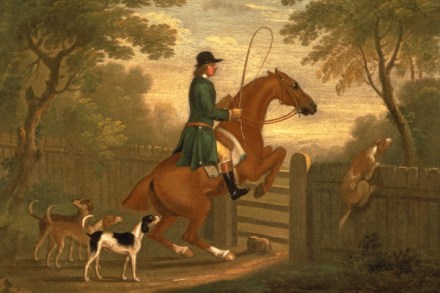
According to Ogden Nash, the reason the British aristocracy wrote so much is because they could never understand what they were saying to one another. Much of the advice proffered in Gentlemen’s Pursuits (Simon & Schuster, £12.99) from the pages of Country Life, seems aimed at people who can neither write nor talk. Take this tip on how to jump a fence from Lieut-Colonel MF McTaggert DSO in 1924: ‘Umpty, umpty, umpty, one, two, three over!’ Even to the layman this sounds worryingly short on technique. By contrast, lighting a bonfire is regarded as a brain-knottingly complex business: ‘To start the fire, push lighted paper into the hole and at once the flames draw away with a roaring noise.

A date with death

From our UK edition

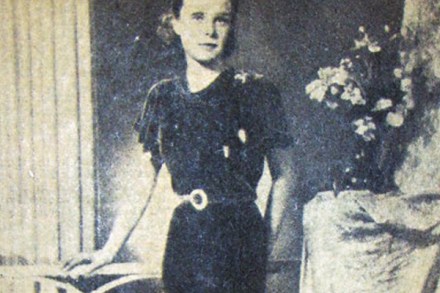
On 8 January 1937, an old man was taking his prize songbird for an early morning walk in the eastern section of Peking when he came across a woman’s body lying in a ditch. The face had been disfigured, the ribs hacked apart and the heart removed. Pathologists who examined the corpse thought it was one of the worst cases of mutilation they had ever seen — ‘and that was saying something’. She was identified as a 19-year-old British schoolgirl called Pamela Werner, the adopted daughter of a former British consul, Edward Werner. To begin with, the murder was thought to be the work of a random sex maniac. Pamela had been a quiet, rather plain girl and it seemed inconceivable that she might have known her killer.

Enter a Wodehousian world

From our UK edition

On 26 February 1969, Roger Mortimer wrote to his son, Charlie: ‘Your mother has had flu. Her little plan to give up spirits for Lent lasted three and a half days. Pongo has chewed up a rug and had very bad diarrhoea in the kitchen. Six Indians were killed in a car crash in Newbury.’ Even 40 years ago, the real-life buffer was a dying breed. Perhaps Roger Mortimer — Eton, Coldstream Guards, assorted POW camps during the second world war, then racing correspondent of the Sunday Times — was the last of the lot. If so, they went out with a suitably sclerotic roar. For 25 years, he wrote regular letters to his son, Charlie. Like him, Charlie also went to Eton, but left without ‘a single, humble A level’.

One that got away | 21 April 2012

From our UK edition

There are six drawings in the back of this book. They’re not very good drawings. In fact they look as if they come from an unusually hamfisted comic strip. However, it’s their crudity that makes them so powerful. One shows a young boy being suspended over a coal fire, a rope round his wrists, a chain round his ankles and a hook through his abdomen. The boy is Shin Dong-hyuk, the only person born in a North Korean labour camp ever to have escaped from one. Shin’s first memory is of being taken to see an execution aged four. He watched a man having his mouth stuffed full of pebbles in case he tried to shout out anything unpatriotic, and then shot.

Africa’s excesses

From our UK edition

There are an awful lot of prostitutes in Africa and most of them seem to pass through the pages of Richard Grant’s book at one time or another. All this puts him in a terrible lather — ‘I had been so long without a woman’, he moans at one point, this while weighing up the attractions of a woman called Felicia ‘with extraordinary skin’ in the Rwandan capital, Kigali. But Grant also has a girlfriend back home who he’s determined to remain faithful to, and a mind set on higher things. He wants to become the first person to navigate the second longest river in Tanzania, the Malagarasi.

Winning words

From our UK edition

If you want to see what an ambivalent attitude we have towards rhetoric, you have only to look at the speeches of Barack Obama. Before Obama became President, when he was out on the stump, there was no holding him back rhetorically: he soared, he swooped, he lifted his eyes to the hills and found all kinds of inspiring imagery there. But the moment he took office something strange happened. All that silver-tongued stuff dropped away and instead he started sounding as if two trucks had collided in his mouth. The message was plain: rhetoric is for the posters, for the promissory notes. When it comes to actually doing the job, there’s no place for it.

What Am I Still Doing Here? by Roger Lewis

From our UK edition

The start of What Am I Still Doing Here? finds Roger Lewis in a state of deep gloom. But then so does the middle of the book — and indeed the end. This, of course, is just as it should be. The last thing one wants from a professional curmudgeon is brimming red-cheeked jollity, and I’m delighted to be able to report there’s nothing like that here. There are, however, all kinds of other pleasures. In some respects, this comes as a surprise. If happiness writes white — as every creative writing student is told — you might think that churning discontent should come in a similarly unvarying shade of black. But one of Lewis’s great virtues as a chronicler of his own dissatisfaction is the breadth of his range.

More dark material

From our UK edition

If there’s one thing guaranteed to send a reviewer’s spirits plummeting, it’s opening a book and finding that the spellyng is orl rong If there’s one thing guaranteed to send a reviewer’s spirits plummeting, it’s opening a book and finding that the spellyng is orl rong. Bugga thys 4 a larque, hee thynks (awe wurds 2 dat effec). S’enuf 2 mayk mi brayne hert. The True Tale of the Monster Billy Dean is David Almond’s first novel for adults —his children’s books have won two Whitbread Awards. However, it shares plenty of the same preoccupations as his other work: mice, small birds, angels and an air of apocalyptic gloom.

Bookends | 3 September 2011

From our UK edition

Dr Temperance Brenner, like her creator, Kathy Reichs, is a forensic anthropologist. She works in North Carolina, specialising in ‘decomps and floaters’. This ensures that in Flesh and Bones (Heinemann, £18.99) you get plenty of authentic sounding detail with your gore. So when a human hand is found sticking out of a drum full of asphalt at the local speedway track, Reichs carefully includes plenty of stuff about how to extract the body — start with a power saw, then move on to an air hammer — and about the drum itself: ‘the size of the drum suggested a 35-gallon capacity.’ But there’s plenty more to Reichs than just insider info.

Something happens to everyone

From our UK edition

Towards the end of Cressida Connolly’s novel, one of the characters says of another, ‘I dare say she didn’t see her life as completely uneventful. Something happens to everyone.’ You could, I suppose, argue that not a huge amount happens to anyone in My Former Heart — there are no multiple pile-ups, cyborg invasions or satanic rituals. But what there is is something infinitely more rewarding: a succession of relationships analysed and orchestrated by a writer who seems able to peer directly into the human heart, to understand its follies and strivings, and to write about them with such sparkling originality that it makes you see the world afresh.

Random questions

From our UK edition

British writers who set their first novels in America are apt to come horribly unstuck. One of the pleasures of Sam Leith’s debut novel is its sureness of tone. All the elements here are properly balanced. Nothing feels clumsy or over-egged. So what? you might think. Isn’t this what any halfway decent novelist does? Yes, but few attempt anything as ambitious, as exuberant, as downright weird as this. At the heart of Leith’s novel is an examination of the role of chance and the nature of coincidence. This, though, is only the half of it.

The empire strikes back

From our UK edition

Something strange happened in New York on a cold November afternoon in 1783: the city effectively turned itself inside out. Mounted on a grey horse, George Washington marched down Manhattan at the head of the victorious US army. At the same time, British troops headed frantically in the opposite direction. When they reached the southernmost tip of the island, they clambered into longboats and rowed out to the Royal Navy ships waiting in the harbour. All this, of course, left the thousands of loyalists who had supported the British during the War of Independence in a very tricky position.

Unpredictable pleasures

From our UK edition

As befits a magazine with an erudite and international readership, I shall begin this review with a short salutation in the Western Greenland Eskimo language: ‘Ata, sûlorsimavutit!’ The phrase, as some of you — although I fear reprehensibly few — will know means: ‘Well, now you have again relieved yourself in your trousers.’ One can, I think, deduce two things from this. As befits a magazine with an erudite and international readership, I shall begin this review with a short salutation in the Western Greenland Eskimo language: ‘Ata, sûlorsimavutit!’ The phrase, as some of you — although I fear reprehensibly few — will know means: ‘Well, now you have again relieved yourself in your trousers.

Ready for take-off | 23 October 2010

From our UK edition

In the recently published Oxford Book of Parodies, John Crace clocks up five entries, thus putting him just behind Craig Brown as our Greatest Living Parodist. Crace may not have quite Brown’s range, but for the last 10 years his ‘Digested Reads’ have been reason enough to buy the Guardian. Taking a well-known novel, he gives a brief distillation of the plot while capturing — often perfectly — the tone of its author. At the same time, he jabs a sharpened elbow into their pomposities and limitations.

What lies beneath

From our UK edition

There’s the pretty-much-mandatory South American setting, the gloomy reflections on the nature of reality and unreality, along with a clutch of wildly unreliable narrators. There’s the pretty-much-mandatory South American setting, the gloomy reflections on the nature of reality and unreality, along with a clutch of wildly unreliable narrators. It even has the added cachet of having been written in Spanish by a Canadian and then translated into English. If ever there was a book that demanded to be hurled across the room by anyone who’s not a regular user of the word ‘ludic’, this surely is it.

Odd men out

From our UK edition

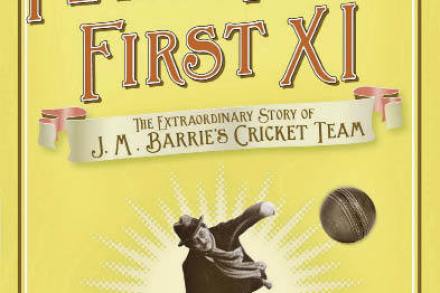
The first game played by the Allahakbarries Cricket Club at Albury in Surrey in September 1887 did not bode well for the club’s future. The first game played by the Allahakbarries Cricket Club at Albury in Surrey in September 1887 did not bode well for the club’s future. One player turned up wearing pyjamas, another held the bat the wrong way round while a third — a Frenchman — thought the game had finished every time the umpire called ‘Over’. The Allahakbarries were skittled out for just 11 runs and under the circumstances it seemed entirely appropriate that the team’s name should have been derived from the Moorish phrase for ‘Heaven Help Us’. However, the team’s captain, the playwright, J. M.

An end to cordiality

From our UK edition

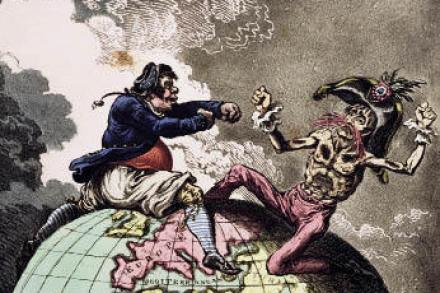
On the first page of this book there is a sentence so extraordinary that I had to read it several times to make sure my eyes weren’t playing up. On the first page of this book there is a sentence so extraordinary that I had to read it several times to make sure my eyes weren’t playing up. Despite what the English and French may say about one another in public, writes Stephen Clarke, the truth is that ‘we find each other irredeemably sexy’. If only this were the case. Alas, as the would-be English Lothario bruised by yet another dismissive ‘Non!’ knows only too well, the traffic tends to flow in just one direction. Mercifully, Clarke is a lot less even- handed in his history of Anglo/French relations.

A couple of drifters

From our UK edition

Paul Torday was 59 when his first novel, the highly acclaimed Salmon Fishing in the Yemen, was published in 2006. Since then, he can barely have stepped away from his keyboard. The Hopeless Life of Charlie Summers is his fourth novel and it represents a return to the comic tone of Salmon Fishing. Or at least it does in part. There are scenes of high comedy here, but some pretty dark swirls too. And hanging over the whole book is the question of what makes for a fulfilled life. The narrator, Hector Chetwode-Talbot — known, mercifully as ‘Eck’ — is a former soldier who has drifted into the City.

‘I never drink . . . wine’

From our UK edition

Although almost every country in the world has some vampire element in its folklore, it still comes as a surprise to learn that Wales was once home to something called a Vampire Chair which bit anyone who sat in it. The Bulgarian vampire, however, is much easier to recognise, being possessed of only one nostril and given to emitting sparks at night. But if you should ever find yourself nostril to nostril with a vampire, there’s a lot to be said for hoping it hails from Germany. As this handbook rather touchingly informs us, the German vampire clutches one of its thumbs while lying in its coffin. It can also be killed by the comparatively simple method of sticking an apple in its mouth.