John Pietro

John Pietro is an editorial assistant at The Spectator World

Massachusetts Republicans pay the price for Trumpism

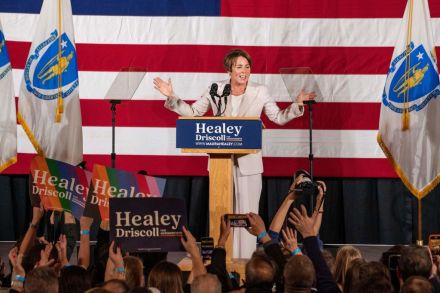
Massachusetts voters are known to be pragmatic. Despite being one of the most liberal states in the country, Massachusetts has had only one Democratic governor between 1991 and 2022. Yet the state’s Republican Party is anything but pragmatic. Hence the inevitable defeat of Republican Geoff Diehl in the gubernatorial race against Democrat Maura Healey. For those not from Massachusetts, there are a few things about the state’s political dynamics that need to be understood. First, it is overwhelmingly Democratic — the GOP holds three out of 40 seats in the state senate and 29 of the 160 seats in the state house. Before the midterms, Democrats controlled every statewide office except for the governorship, and now they control that too.
Republican support for Ukraine is fading

There is much that is uncertain about Tuesday’s elections, but it seems all but certain that the GOP will take the House. They may well do the same in the Senate. What the new majority will stand for, however, is far from clear, particularly on foreign policy — and it is foreign policy that will likely prove to be the most impactful area of the 118th Congress. With Biden in the White House, there is not much on the policy front that a GOP legislature can do beyond budgeting, but as the war in Ukraine drags on, the power to set budgets will be crucial. When the Congress is sworn in on January 3, Ukraine will be in the dead of winter, and — if Russia’s strategy remains the same — home to millions without access to heat and water.

Germany needs to break its dependence on China

From our UK edition

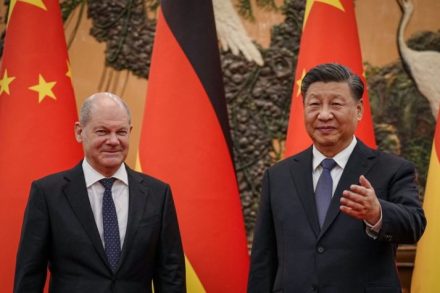
Back in February, Olaf Scholz gave one of the most important speeches in his country’s post-Cold War history. In it, the German Chancellor announced that the Russian invasion of Ukraine had produced a zeitenwende, or turning point, and that German policy must adapt. No longer could his nation live on the so-called peace dividend that the West has enjoyed for nearly three decades, and no longer could Germany be dependent on cheap Russian gas. Within three days of Vladimir Putin’s invasion Berlin had U-turned and promised to give Ukraine lethal aid, to spend a one-off $110 billion on the Bundeswehr (the German military), and to spend 2 per cent of GDP on defence.

The inevitable return of Bibi Netanyahu

With about 90 percent of the vote counted as of this morning, former Israeli prime minister Benjamin "Bibi" Netanyahu appears set to return to power in a stunning comeback. Having lost power in May 2021, and facing mounting legal challenges, his political career seemed over. Now, with his right-wing alliance set to secure a majority — likely between 61 and 65 seats in the 120-seat Knesset — his return to the premiership seems almost inevitable. The party he leads, Likud, is likely to receive around 32 seats. While Bibi may once again lead his country, his coalition will be different this time around. The far-right Religious Zionist Party (RZP), led by firebrands Betzalel Smoltrich and Itamar Ben Gvir, will have around 14 seats, up from seven before the election.

America’s military isn’t ready for a war with China

China’s 20th Party Congress concluded on October 23, and President Xi Jinping secured a norm-breaking third term as leader of the Chinese Communist Party (CCP). With the Politburo Standing Committee stacked with close confidants and dissent virtually wiped out, Xi is the strongest he has ever been. Xi has also redoubled the Party’s commitment to taking the island of Taiwan, by force if necessary. Secretary of State Antony Blinken recently said that China “was determined to pursue reunification on a much faster timeline.” The alarm has been repeatedly sounded by American military officials, with speculation that a Chinese invasion of Taiwan could occur as soon as 2023.

The strange alliance between progressives and natcons on Ukraine

If you listened only to the rhetoric of so-called national conservatives, you would think progressives were their polar opposites. But on the issue of foreign policy, it seems like they can find some common ground. It was reported on Tuesday that the Congressional Progressive Caucus sent a letter to President Biden asking him to negotiate with Russia. It was later reported that the same letter had been hastily withdrawn after massive backlash within the Democratic Party. The missive was apparently written and signed in June, updated recently, and somehow carelessly published without all of the signatories’ consent. Either way, it seems to represent something real within the Democrats' progressive wing.

Biden declares war on Lyft and Uber

The Biden administration’s Department of Labor recently released a new interpretive rule regarding whether workers are classified as employees or independent contractors. The action reverses a Trump-era rule that simplified the classification process, and was dedicated to preserving the gig economy. Employees are much more expensive than independent contractors — possibly by as much as 30 percent. This is, in part, because independent contractors are not subject to federal minimum wage or overtime regulations, among others, and are not protected by the National Labor Relations Act, meaning it is more difficult for them to unionize. This all may seem rather trivial, but the impact on both the consumer and the worker will be significant.

The right’s dangerous embrace of soft isolationism

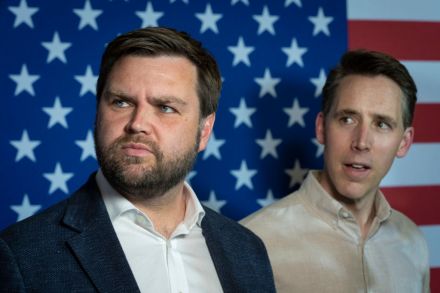
Traditionally, the GOP has been the favorite of those concerned with safety and national security. The party of Ronald Reagan emphasized the need for strong engagement abroad, a willingness to project power when necessary, and a commitment to the free world. Yet the contours of the conservative movement have begun to change in recent years, calling into question the GOP’s credibility on the issue of security. The growing support for a sort of soft isolationism is a problem. It is also fundamentally not conservative. Prominent voices from the American right have been carrying the banner of soft isolationism for years, from Tucker Carlson and J.D. Vance to Senator Josh Hawley and former president Donald Trump.

The Russia-Iran axis that’s menacing Ukraine

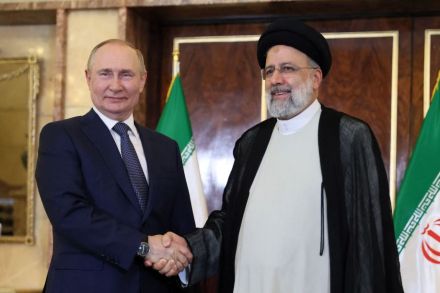
Russia’s brutal war in Ukraine is coming up on its eighth month, and the costs to the Kremlin’s military have been immense. Increasingly isolated on the world stage, Vladimir Putin has joined the world’s club of pariah states, the only group willing to give him support. Chief among his allies is the Islamic Republic of Iran, a state with similarly imperialistic designs and global isolation. This axis has been brewing for some time — the two nations worked together extensively in Syria, for example — but the relationship has reached new heights as the Russian armed forces buckle under the strain of war. Perhaps the most potent symbols of this relationship are the hundreds of Iranian drones flooding into Ukraine to fill a gap in Russia’s weapons inventory.

How the US failed to stop OPEC from cutting oil production

Near the top of President Biden’s to-do list for the past few months has been to keep gas prices down. On Wednesday, this was dealt a likely fatal blow by the Organization of Petroleum Exporting Countries, or OPEC, which, led by Saudi Arabia, agreed to cut its overall production by two million barrels per day. In actuality, the cut will mean a reduction of more like one million barrels per day if it's taken into account that OPEC has been underproducing compared to its previously stated production goals. Still, this is a significant cut, and the effects on oil markets are already being felt.

Why Putin might have attacked Nord Stream

As the world wonders what happened to the Nord Stream 1 and 2 pipelines, many suspect that Russian President Vladimir Putin is behind the sabotage. At first glance, it appears strange that Russia would damage pipelines that its own companies run. But Putin has several possible reasons for carrying out the attack. One reason could be that Gazprom (the Russian state-owned gas giant) wants to avoid paying penalties for failing to fulfill its contractual obligations. Since August 31, Russia has halted gas exports via both Nord Stream pipelines, which follows a similar move in July where the Kremlin cited erroneous maintenance issues as the cause of the short shutdown that month.

Liz Truss showed up Biden at the UN

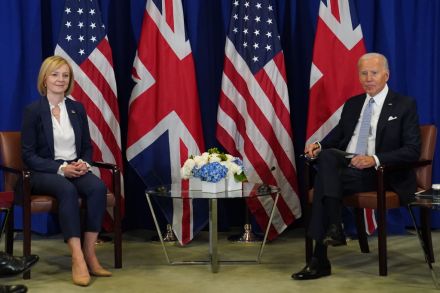
British prime minister Liz Truss’s speech at the United Nations this week was spot-on. It was clear, concise and left no question that the UK would do everything in its power to lead in the defense of the West and its values. President Biden’s address, by contrast, left you feeling overwhelmed and unsatisfied. That's not to say he failed to speak about Ukraine — he spent a reasonable amount of time on it — but the substance just was not there. Truss made a clear commitment to continue to “sustain or increase... military support to Ukraine, for as long as it takes,” a concrete and actionable statement. Though Biden issued a ringing condemnation of Putin’s war, he only made a vague pledge to “stand in solidarity against Russia’s aggression.

Russia isn’t just losing influence in Ukraine

If Vladimir Putin’s goal is to reestablish Russian influence, his ambitions are on track for another major setback. Far less high-profile than the war in Ukraine, a slow and quiet revolution has been brewing south of Russia’s borders in Central Asia and the Caucasus. These nations, members of the former Soviet Union, have traditionally been in Russia’s sphere of influence. That, however, is now changing. At the start of the year, it looked like Russia was ascendant. Putin had over 150,000 troops waiting to invade Ukraine, and was receiving a steady stream of Western visitors pleading with him to step back. When Kazakhstan was engulfed in popular protests, Putin stepped in and deployed about 2,500 Russian troops after an appeal by the Kazakh president to help quell the unrest.

Putin and Xi herald a rising authoritarian axis

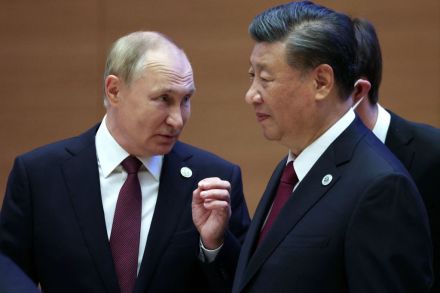
Russian President Vladimir Putin and Chinese President Xi Jinping met in Uzbekistan during this week’s Shanghai Cooperation Organization (SCO) summit — and a lot had happened since their last meeting. With the Russian Army on the back-foot in Ukraine and its economy forecasted to contract by over 4 percent in 2022, Putin is in a far worse position. Whether this impacted the meeting is hard to tell, though Putin indicated that Xi had “questions and concerns about [Ukraine].” Nevertheless, both countries expressed support for one another, touching on their respective concerns. Xi stated that China wanted to work with Russia “to set an example of a responsible world power,” a jab at the Western powers that both countries are positioning themselves against.

How Russia is forcibly relocating Ukrainian civilians

With the stunning, rapid advance of its military against the Russians, Ukraine has shot back into the headlines. The focus is, understandably, on the battlefield, but the happenings behind the lines deserve attention too. Since the first weeks of the war, information has trickled in about Russia’s massive, criminal attempts to relocate Ukrainian civilians. While much of the situation in the Russian-occupied regions of Ukraine remains murky, what is known provides a rough outline. Russia’s attempt at social control in Ukraine consists of two key elements: filtration and forced relocation.

Republicans blow their chance to win in Massachusetts

It was a surprise to no one that Geoff Diehl won Tuesday's Massachusetts Republican gubernatorial primary. It was expected, but it puts an end to any chance of having a Republican in the governor’s seat come 2023. Diehl’s opponent, Chris Doughty, ran on a moderate platform modeled after incumbent Republican governor Charlie Baker. Baker is one of the most popular governors in the nation, with an approval rating of 74 percent — in a state that voted for Joe Biden by a margin of 33.5 points — so he is doing something right. There is no getting around the fact that he is not particularly conservative, especially on social issues, but he is a tempering force on the progressives that dominate Beacon Hill. Indeed, Baker is the only elected statewide Republican.