John Pietro

John Pietro is an editorial assistant at The Spectator World

The Baltic nations show the world how to defend freedom

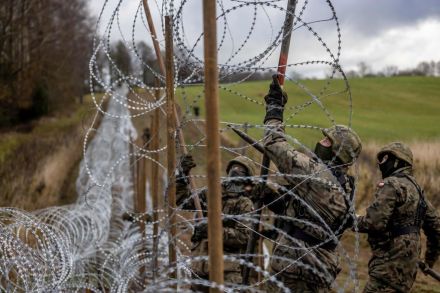
It is not inevitable that the Baltic States of Estonia, Latvia, and Lithuania would be among freedom’s most potent defenders. Nestled between the Russian mainland and Moscow’s exclave of Kaliningrad, their only direct connection to their NATO allies is through the vulnerable Suwalki Gap. For its part, NATO only has small rotational forces stationed in the three countries. At first glance, one would expect these tiny nations (Lithuania is the largest at 2.8 million people) to prefer flying under the radar. Instead they have become some of the most vocal and powerful defenders of the Western way of life. Tiny though they may be, the Baltic countries have managed to stand up to the two greatest enemies of freedom at work today, Russia and China.
What the US can do about Germany’s hardball on Ukraine

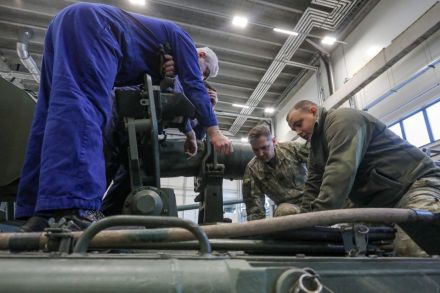
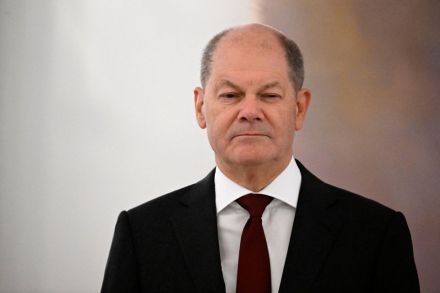
Once again, German Chancellor Olaf Scholz has crushed the hopes of NATO allies and, most of all, the millions of Ukrainians suffering under Russia’s assault. Originally, he refused to send tanks to Ukraine for fear that Russia would escalate the war. More recently, Scholz has said he'd only consider sending tanks if it was part of a coalition, not just Germany acting alone. Last week, the United Kingdom announced it would be sending Challenger 2 main battle tanks (MBT) to Ukraine, making it the first nation to supply modern, Western MBTs to Kyiv. Poland, Finland, and Denmark have also indicated that they would be willing to send their own Leopard 2 tanks. Those are German-origin weapons, so they first require a nod of approval from Berlin in order to export.

Why Sweden and Finland still haven’t joined NATO

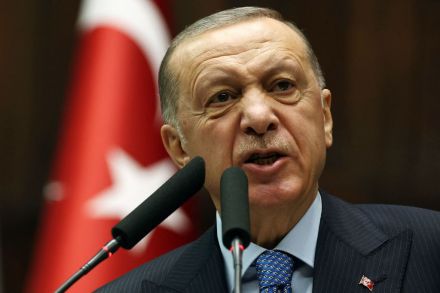
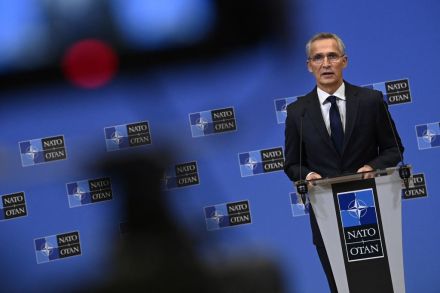
Sweden and Finland officially applied to join NATO last May, overturning their long-standing policies of neutrality. If their membership goes through, it will be one of the most consequential accessions in NATO history, bringing two technologically advanced militaries right on Russia’s doorstep into the fold. But as the eight-month mark approaches, neither nation has received the unanimous support from the other members that it needs. To date, twenty-eight members of the alliance have approved the Scandinavian nations’ memberships, with Hungary and Turkey as the two holdouts. Hungary has indicated it will vote to accept the accession in early 2023, which will leave NATO’s most undemocratic and troublesome member, Turkey, as the last hurdle.

Poland is Europe’s next great military power

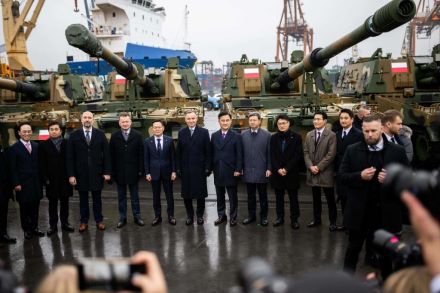
As Russia’s war in Ukraine rages into its eleventh month, there is one country that can truly be said to have learned its lesson: Poland. By the mid-2030s, when the majority of its equipment purchases have been delivered, Warsaw will command one of the most modern, well-equipped armies in Europe. It’s not cheap, but Poland is taking decisive action to be able to face the threats of tomorrow. Poland's $20.5 billion 2023 defense budget is a huge increase over the previous year, and is over 3 percent of gross domestic product (well above the NATO-suggested 2 percent). Aside from equipment, this money will be used to help expand the manpower that Poland can bring to bear, upping its active-duty forces from 140,000 to 300,000 troops.

How Republican chaos could threaten aid to Ukraine

As the House GOP continues to make a fool out of itself trying to elect a speaker, those watching might be wondering how all of this will impact the war in Ukraine. The group of around twenty Republican lawmakers who have opposed Kevin McCarthy in the (as of this writing) eight votes taken so far for the speakership include some of the most hardline anti-Ukraine-aid Republicans, like Lauren Boebert and Matt Gaetz. A group this small in the House should be nothing more than an annoyance, but the changes they are demanding — and even those McCarthy has conceded to — give them far more power. The most threatening among them is a provision to return to the system whereby one member of the House can launch a motion to vacate the chair, forcing an up or down vote on the speaker.

Israel’s wake-up call to America

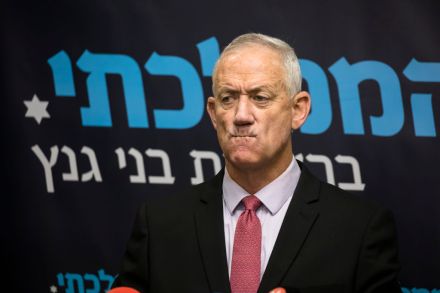
Last month, then-Israeli defense minister Benny Gantz made headlines when he said that Israel may strike Iran’s nuclear infrastructure within two to three years. Gantz has made readying Jerusalem for this contingency a priority, and in November said that Israel had “achieved preparedness, we have [more] capabilities we are developing and we have long-term processes I don’t want to elaborate on.” But while Israel may have the capability to hit Iran, the US should not force it to risk such a strike.

Ancient Apocalypse and the end of history programs

For those with a love of history who remember what the History Channel once was, its current state is a travesty. What was once populated with interesting documentaries is now home to Ancient Aliens and Swamp People. Despite the channel being quite literally called the History Channel, history was not bringing in the dough. Now Netflix is joining the party. In early November 2022, the streaming platform released Graham Hancock’s eight-episode series, Ancient Apocalypse. Hancock believes that there was an advanced civilization that was destroyed at the end of the last Ice Age, around 10,800 BC. Its members supposedly circumnavigated the globe, built wondrous feats of architecture, and may have left signs for future civilizations warning of coming catastrophes.

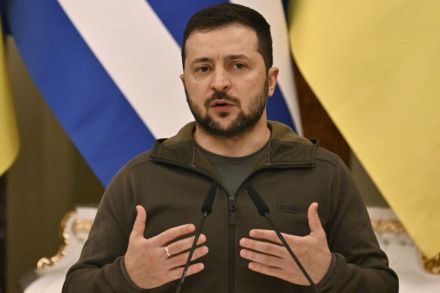
Zelensky spoke to the American soul

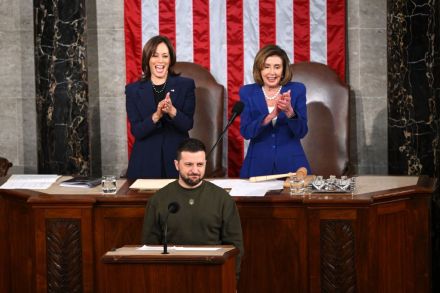
When Volodymyr Zelensky entered the chamber to address Congress, the applause and cheers took on a particularly emotional character. It was not the stilted, forced applause that the president receives at the State of the Union; it was an affectionate show of admiration for a man who has come to embody the twenty-first century struggle for freedom. Though delivered to Congress, the opening words of the Ukrainian president’s speech revealed his true audience: “Dear Americans... all those who value freedom and justice.” It was a speech for all of us. He pulled the dusty tarp off of America’s deepest identity as the shining light of liberty in a world of tyranny.

volodymyr zelensky

Biden needs to stop ceding the initiative to Putin

Washington will provide Patriot missiles to Ukraine, bolstering Kyiv's air defenses in the new year. This is welcome news — but it should have happened a long time ago. One word best characterizes the Biden administration’s response to the war in Ukraine: reactive. The president’s lack of proactive measures both gives Putin an edge and prevents Ukraine from achieving a swift victory. US weapons began arriving in Ukraine in December 2021 from a $60 million package approved in August, with another package worth $200 million being approved in December and arriving in January. Both lacked the firepower needed to deter Moscow. The administration knew by October 2021 that Putin might invade — and that Russia had been building up forces around Ukraine since the spring.

putin

The January 6 Committee’s recommended charges against Trump, explained

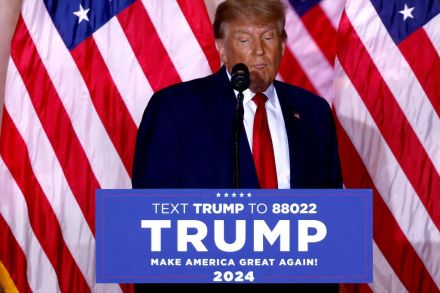
The Select Committee to Investigate January 6 announced Monday that it would refer former president Donald Trump for charges to the Department of Justice’s special counsel. The committee also released its Executive Summary, which includes a description of findings and charges. Since its formation in July 2021, the committee has heard testimony from dozens of officials in the Trump administration and individuals who were associated with the January 6, 2021 attack on the US Capitol. The Executive Summary lists seventeen findings of the Select Committee which inform their decision to refer Trump for charges.

donald trump january 6

The US must punish Iran for aiding Russia

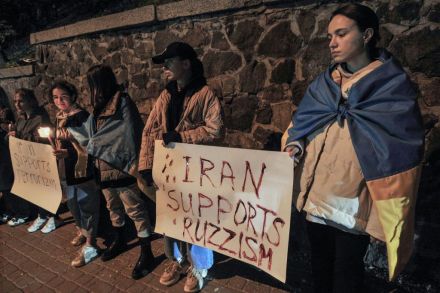
Russia’s brutal war in Ukraine has been disastrous for Vladimir Putin, but it has been a boon for the Islamic Republic of Iran. Western nations are increasingly concerned about Tehran’s profitable cooperation with Moscow, as Iran leverages Russian desperation to fuel its own ambitions. So far, Iran has sent hundreds of drones to Russia along with training personnel, and may soon send ballistic missiles. Tehran has continued its malign activities in the Middle East as well, attempting to steal American drones and blind American ships, attacking and endangering American forces and personnel, and supporting destabilizing groups such as the Houthis in Yemen. Iran has also ruthlessly repressed widespread protests at home.

Sam Bankman-Fried charged with fraud and conspiracy

The Southern District of New York released charges against FTX’s Sam Bankman-Fried, a day after he was arrested in the Bahamas. The charges include eight criminal counts, primarily involving fraud and conspiracy, the illicit shifting of money from FTX to Alameda Research (also part of FTX Group) and breach of campaign finance laws. Bankman-Fried is also being charged by the Securities and Exchange Commission on similar grounds, with the Commission describing FTX as “a house of cards on a foundation of deception”. The Commodity Futures Trading Commission is suing him as well. The FTX founder is currently held in the Bahamas, pending extradition to the United States, which reports say he will resist in a Bahamian court.

sam bankman-fried

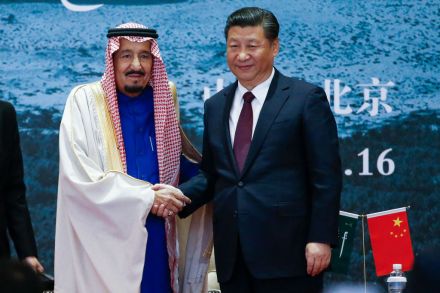
Why China’s budding relationship with the Saudis spells trouble

Joe Biden’s chickens are coming home to roost as Chinese President Xi Jinping visits Saudi Arabia. The trip itself has not been especially revolutionary. But it is another indication of America’s declining prowess in the region. Xi was given a welcome befitting an ambitious leader (and notably different from how Biden was greeted in July). Beijing and Riyadh signed numerous economic agreements worth about $29 billion in total, including with Huawei, which will only further the Chinese technology giant’s control over global telecommunications infrastructure. Xi also advanced his desire to make the yuan a competitor to the dollar in the global economy, pushing for the use of the yuan in the oil trade with Saudi Arabia.

Don’t condemn Ukraine for its ‘illiberal’ measures against Russia

The war in Ukraine is being fought on two fronts: the battlefield and the information space. From the beginning of Russia’s interference in Ukraine in 2014, the information war has been a key factor in the Kremlin’s strategy for victory. Because of this, Ukraine has taken a series of wartime measures to stabilize and protect itself, from political restrictions to media regulations. Some in the West have used these measures to paint Kyiv as undemocratic, but such rhetoric rings hollow. What these criticisms miss is the fact that Ukraine, unlike other Western democracies, has been in a state of war for eight years.

It’s time for Pope Francis to speak out against China

There is a lot to dig into amid Pope Francis’s recent interview with America magazine, but the most interesting tidbits might be his commentary on foreign affairs. Whereas the traditional head of state represents the interests of a nation, the Holy Father’s most important duty is the shepherding of the Catholic faithful. His message thus carries much weight, not because of the raw power at his disposal, but because it is backed by the moral authority of the Catholic Church. The pope has been in some hot water recently over both the war in Ukraine and the Vatican’s relations with China. Though he has long condemned the violence in Ukraine, he has not been as clear in condemning Russia and Putin specifically.

The West should follow Eastern Europe’s lead on foreign policy

Few countries know Russia’s brutal imperialism better than Poland and the Baltic states. These nations are among a handful in the West to have responded to Putin’s invasion of Ukraine with the decisiveness and clarity of vision that the security environment demands. This is why the United States, as it faces a dual threat of China and Russia, should look to Eastern Europe for inspiration. Poland has undergone the most dramatic transformation of the bunch, increasing its defense budget and boosting the size of its military, in addition to supplying Ukraine with a vast array of materiel. Warsaw has pledged to raise defense spending to 3 percent of gross domestic product (GDP) within a year, up from 2.2 percent, which will be nearly on par with the United States.

In defense of Mitch McConnell

After the GOP’s mediocre election performance on November 8, every faction in the party is scrambling to pin the responsibility on someone else. There is plenty of blame to go around, but one person who should not feature highly on that list is Mitch McConnell. Not only has the Kentucky senator been an instrumental force in the GOP’s successes in recent years, he was behind some of the largest funding efforts this past election cycle. It would be hard to find a leader in the Senate more accomplished and effective than McConnell. Having led the GOP’s Senate caucus since 2007, he has always played his hand with cunning and skill.

NATO acquits itself well in the Poland missile crisis

Mid-afternoon Tuesday, a missile struck the town of Przewodow in eastern Poland close to the Ukrainian border, killing two. The incident immediately set off alarm bells around NATO and the world, as Poland, a member of the military alliance, could invoke Article 5 of the North Atlantic Treaty, bringing all 30 members to its defense. The Polish government is considering invoking Article 4 of the treaty, which allows any member state to call a meeting of all members to discern if "territorial integrity, political independence or security… is threatened." NATO was due to meet on Wednesday anyway, but the tragedy in Poland has superseded the gathering’s planned lineup.

Winter is no time for weakness in Ukraine

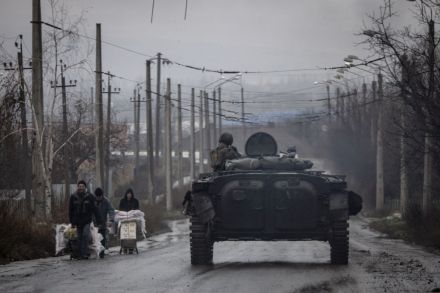
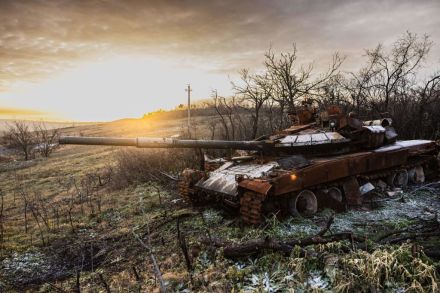
With the recapture of the key southern port city of Kherson, Ukraine has achieved yet another success in its nearly nine-month war with Russia. But as winter approaches and conditions worsen, both sides will face new challenges, and the West’s support will be tested. As the Institute for the Study of War indicated in a recent assessment of the conflict, it is unlikely that combat activity will drop significantly in the coming months. As the early winter rains roll over Ukraine, the region’s infamous mud will prove to be an impediment to maneuver warfare. That period will then give way to the freezing temperatures that characterize the Eastern European winter. Those temperatures will put an end to the mud, allowing forces to more effectively continue operations.

Time for the GOP to call out Democrats’ primaries meddling

If there is one lesson the Republican Party needs to learn from this year’s elections, it is that fringe politics and conspiracy theories are not popular. The GOP lost independents by three points to Democrats, a fatal statistic for any midterms. Poor candidate quality, a problem Senator Mitch McConnell pointed out to many Republicans’ chagrin, lost the party winnable seats across the country. The Democrats played a small part in this result through their cynical support for far-right candidates in Republican primaries who they suspected (correctly) would be easier to beat in November. Through various PACs, Democrats spent around $53.275 million to elevate 13 extreme Republican candidates, six of whom won their primaries. All six lost in November.

democrats