John Phipps

It’s almost touching that the NFT world sees itself as radical

From our UK edition

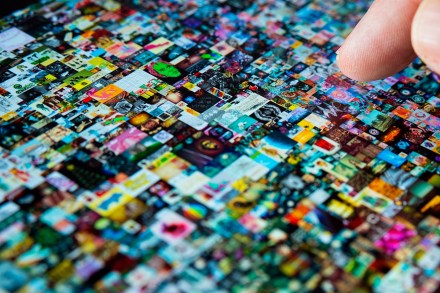
Some things are explained so many times that they become unexplainable: we can only relate to them as something complicated that needs to be explained. The global financial crisis was like this. Crypto-currencies were like this too. The newest thing that exists to be explained is the world of non-fungible tokens, or NFTs. NFTs are collectible digital objects. They are created with a technology called the blockchain, which unalterably and uniquely records their provenance. This means that if I mint an NFT of an image — a cartoon of Donald Trump, say, sitting naked astride the Capitol — I can prove definitive ownership of the image, no matter how many copies exist. In other words, NFTs can be authenticated, which means they can be sold.
Why In Our Time remains the best thing on radio

From our UK edition

In Our Time is the best thing on Radio 4, possibly the best thing on the radio full stop. It is broadcast regularly from a parallel universe where everyone is interesting, everything is worth knowing and anyone can know it if they want to. It gets the best out of its medium by being somewhat contemptuous of it. It understands that the overproduced trimmings of modern radio are entirely extraneous. There will be no sound effects, no music and no catchphrases. All that we need by way of introduction is the word ‘hello’. After that, there’s no telling what will follow. ‘Hello. In 541 AD, in the realm of Justinian, there was a plague in which the whole human race came near to being destroyed.’ ‘Hello.

The funniest current affairs show since Brass Eye: Into the Grey Zone reviewed

From our UK edition

It was something a friend said to me about The Revenant, Leonardo diCaprio’s bloody-minded and brutal Oscar vehicle: ‘The problem with the film is once you start laughing, you can’t stop. And for me, that moment was the second time he fell off a cliff.’ I thought about this a lot listening to Into the Grey Zone, a new podcast hoping to educate its audience about the new forms of constant pseudo-warfare that modern states engage in. This is the world of nerve poisoning in Salisbury, airspace incursions over Taiwan, cyberattacks, mass disinformation and remote interference. None of these things can be considered open warfare but taken together, the podcast implies, they do not suggest we are in a state of perfect peace.

Pleasant, cheerful and a little exhausting: Graham Norton on Virgin Radio reviewed

From our UK edition

In my parents’ house, the radio is always tuned to one of two stations: Magic FM and LBC. When Magic is playing, it wafts through the kitchen like an over-scented camomile candle. LBC, by contrast, hits you like a strong gust of Novichok: it is undiluted poison, carefully synthesised from the DNA of hysterical US shock jocks. At times, they feel like the two paths for modern radio: a draught of herbal tea or a fit of apoplexy; James O’Brien having kittens or ‘Broken Strings’ playing constantly, for ever. Where does that leave the chatty host, the one who natters cheerfully while you potter aimlessly, who rabbits on while you faff about doing nothing?

A round-up of horror podcasts

From our UK edition

Good evening! Come shivering on in through the garden side door, my friends, and distance yourselves in a semi-legal fashion around the flickering flames of my recently installed firepit while I guide you through the best horror listening for the depths of this December dark and drear. The Magnus Archives is an unslagoffably enthusiastic anthology series stuffed with monsters, ghouls and redundant adjectives. If you can get over the Alan Partridge touches (‘I didn’t move… I just stood there… sipping my tea… not even noticing it was still far too hot to drink comfortably’), this show features the scariest story I have heard this month, ‘Lost Johns’ Cave’.

The world’s greatest podcast: Dan Carlin’s Hardcore History reviewed

From our UK edition

It’s well known that you should never meet your heroes because they will only disappoint you. Less commonly said, but equally true, is that you should never google your favourite podcast hosts, because their face will not match their voice. I have just finished looking at photos of Dan Carlin, the host and sole narrator of Hardcore History — the world’s greatest podcast — and I find myself disappointed. He’s a perfectly nice-looking man: bald, medium build, squarish of face. But he doesn’t look like I want him to. Why do we think we can imagine someone’s face just from the sound of their voice? It’s a mysterious but enduring illusion, like the image you have of a place before you visit, which you never quite forget.

Boldly going where hundreds have gone before: Brave New Planet podcast reviewed

From our UK edition

Since technology is developing at such light-speed pace, why does it feel so strangely slow? There is a sense that driverless cars, green energy and of course certain vaccines are, for all their breakneck pace, still taking for ever to arrive. Watching the future emerge is like watching slow-motion footage of a high-speed train. We know it’s going quickly — but can we not just fast-forward? Perhaps it’s merely our heightened expectations, our diminished boredom thresholds. Some of our most distinguished thinkers and entrepreneurs have warned that an all-powerful artificial intelligence, badly calibrated, might represent the greatest threat to the long-term survival of humanity.

A beautiful radio adaptation: Radio 4’s The Housing Lark reviewed

From our UK edition

Nineteen fifty-six: the Suez crisis, the first Tesco, Jim Laker takes 19 wickets in a match. But also: Trinidadian pianist Winifred Atwell becomes the first black woman to have a UK number one with ‘The Poor People of Paris’; Kenneth Tynan announces a playwriting competition in the Observer, which is won by the Trinidadian dramatist Errol John, and a third Trinidadian, Sam Selvon, publishes his most enduring novel, The Lonely Londoners. He was photographed the same year by Ida Kerr, looking up out of shot past a crooked nose, a frown half creasing his forehead as a smile plays around the corners of his mouth. Selvon’s novels are fatalistic comedies, written with a keen ear for the ironic possibilities of spoken language. They are well studied but not much read.

Tacky and incomprehensible: The Sandman audiobook reviewed

From our UK edition

Listening to the tacky and incomprehensible audio-adaptation of Neil Gaiman’s graphic novel series Sandman, I couldn’t stop thinking about the 19th-century Swiss artist Rodolphe Töppfer. Did Mr Töppfer realise what he was doing when he one day decided to draw a narrative in sequential panels with captions underneath? His satirical novel in pictures, Histoire de M. Vieux Bois, was published in 1837, and made its way to America five years later as The Adventures of Mr Obadiah Oldbuck. ‘Mr Oldbuck drinks ass’s milk’ reads one caption, and then overleaf: ‘His physician recommending exercise, he buys an Arabian courser.’ Riding the courser, ‘Mr Oldbuck increases his speed, advancing at the rate of ten leagues an hour.

A podcast about the literary canon that actually deepens your knowledge (sort of)

From our UK edition

While most of life’s pleasures can be shared, reading is lonely. It’s more than possible for six friends to enjoy an exquisite meal, a bottle of wine and then settle down for a four- or five-hour orgy. Food, drink, sex: these things are better shared. But if, as dawn approached, someone cracked open Chaucer’s ‘Parliament of Fowls’ and intimated that it was time to really get down to brass tacks, it could only spoil the mood. Reading is lonely because so much of the reading that matters is hard. The books that change the world and shake the culture are rarely pure pleasure. The heaven sections of Paradise Lost. The war bits of War and Peace. The history bits embedded within the war bits of War and Peace.

Louis Theroux’s podcast reveals a master at work

From our UK edition

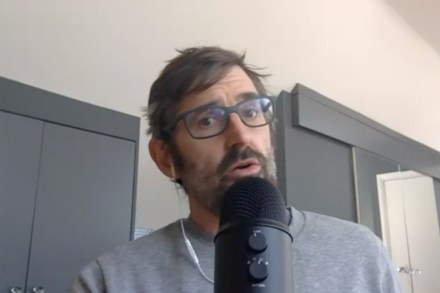
I always want to know more about Louis Theroux, which is odd, since I’ve seen so much of him already. I’ve seen him hanging out with Nazis, auditioning for Broadway and undergoing liposuction. I’ve seen him chased by scientologists and given the runaround by Jimmy Savile. I’ve even seen him evading the insistent romantic advances of an American sex worker. Why am I still interested? Perhaps it’s that his personality veers close to seeming like an act. The otterish earnestness, the jerky, mannequin physicality. The spectacles that feel like a prop. There is something in me that wants to lift the lid on the real Louis Theroux, to sweep the curtain aside with a flourish and say: ‘This is how he gets them to say what he wants!

Why is Robert Burton’s masterpiece Anatomy of Melancholy being sold as self-help?

From our UK edition

The BBC has been having a good pandemic. Stuck at home, a generation raised on podcasts and YouTube has discovered the comfort of a radio that babbles quietly in the corner. The concerts from the empty Wigmore Hall, streamed live on YouTube once a day, have been the first classical concerts of my life that could honestly be described as cultural events. And in the initial terror of the disease’s spread, everyone reverted to watching the BBC simply to find out what would happen next. Perhaps our vaunted passion for fake news was only a fad of convenience given that, when our lives depended on it, we really listened to Auntie.

The Literary Disco podcast made me want to throw my laptop at the wall

From our UK edition

One of the stranger things that happened in the period just before lockdown was the sudden disappearance of audiences from TV and radio shows. Late-night hosts told jokes to silent rooms in front of a white background, dutifully pausing for a laugh that never came; panel shows were broadcast without so much as the sound of tumbleweed. Punchlines flopped, charisma evaporated. It was as if Earth’s comedians had been banished to some purgatorial realm, where they would be forced to tell jokes to no one as a form of penance. Comedy needs an audience. It’s not clear that the same is true of short stories. In Selected Shorts, well-known actors read short stories to a room full of people.

The importance of sadism in writing a great screenplay

From our UK edition

How do you tell a great story? According to Craig Mazin, you have to be a sadist. ‘As a writer, you are not the New Testament God who turns water into wine,’ Mazin chuckles on his long-running podcast Scriptnotes. ‘You are the Old Testament God who tortures Job because, I don’t know, it seems like fun.’ Mazin wrote HBO’s horrifying, incandescent miniseries Chernobyl, and so knows of what he speaks. In the episode of this podcast titled ‘How to Write a Movie’, he describes how screenwriters build plot out of suffering. He outlines a scenario, making the stakes higher each time. Suppose our main character is a single father desperate to protect his child. Not good enough.

You’ll keep saying ‘I’m sorry, did I hear that correctly?’: Fiasco reviewed

From our UK edition

Kevin Katke was quite a man. He had no military training, no political background and no espionage experience. Nonetheless, his hatred of communists and can-do attitude made him the pre-eminent idiot savant of private American intelligence throughout the Reagan administration. It was a peripatetic career that culminated with him spearheading a bungled plot to oust a leftist regime in Grenada while holding down a full-time job at Macy’s. Call it the American dream. I learnt this — along with dozens of other things to make you say, ‘I’m sorry, did I hear that correctly?’ — listening to Fiasco (Luminary), a political-history podcast whose second season retells the bizarre and shambolic story of the Iran-Contra scandal.

An Al-Qaeda double agent explains what’s really going on in Middle East

From our UK edition

When will the definitive history of the modern Middle East be written? For 20 years and more, a continent has been torn apart by invasion, upheaval and civil war. It took hundreds of years for balanced histories to be written of the Reformation, European history’s most obviously comparable period. If you want the whole story of the modern Muslim world, written from a dispassionate, God’s-eye view, you may be waiting a long time. For the moment, more personal accounts will have to suffice, and Conflicted, a series of amiable hour-long conversations between the Middle East expert Thomas Small and former jihadist Aimen Dean, makes a strong case for just this kind of opinionated, idiosyncratic history. ‘There is no one on planet Earth like Aimen Dean,’ says Small.