John Keiger

John Keiger

John Keiger is a former Research Director at the University of Cambridge and author of the biography of French president Raymond Poincaré

How France is bending the knee to Iran

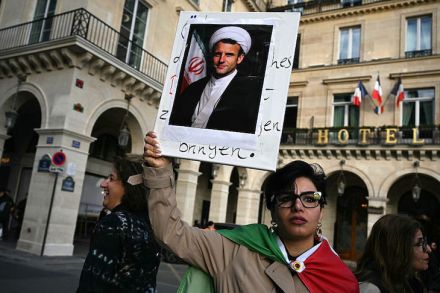
What is Emmanuel Macron playing at? In the space of just a few days, three apparently unconnected incidents have the French president’s fingerprints all over them. They indicate that, while Macron is a spent force at home, he is willing to deploy his powers to help France navigate the Iran war crisis and try to salvage his reputation – even if it means making his allies, including Britain and the United States, look utterly foolish. While Macron is a spent force at home, he is willing to deploy his powers to help France navigate the Iran war crisis On Thursday 2 April, a French container ship, the Kribi, became the first western vessel to cross the Strait of Hormuz and exit into the Gulf of Oman since the war against Iran began.

Why America and France are always arguing

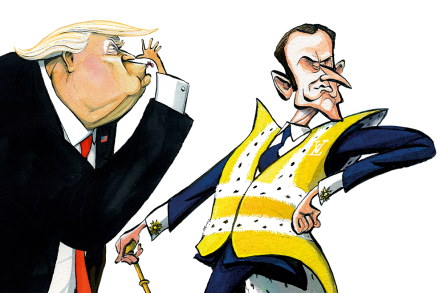
“Not perfect,” was Donald Trump’s reply when asked about Emmanuel Macron’s support for the Iran operation. “But it’s France, we don’t expect perfect.” The French President had initially distanced his country from the bombing campaign for, in his view, noncompliance with international law. Then Iran struck allied Gulf states and Cyprus. Macron immediately dispatched France’s Charles de Gaulle aircraft carrier to the eastern Mediterranean (while Britain was, humiliatingly, unable even to scramble a frigate). “We are not taking part in the conflict that is under way,” Macron declared with characteristic grandiloquence from the deck of the carrier. “France is a balancing and peaceful power.

france

Bats are paying the ultimate price for our wind turbine obsession

From our UK edition

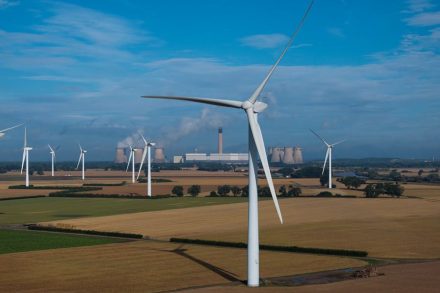
The 11,000 wind turbines in the UK are not only an eyesore, they are also a killer. Their blades can spin deceptively fast at up to 186 miles per hour. Even if most are bridled at 56 miles per hour for structural reasons, they still manage to kill creatures which fly into their paths. Birds of prey and swifts are particularly vulnerable, as are songbirds, many of which are on ornithological ‘red lists’. The scale of the slaughter of bats is monumental: 200,000 annually in Germany, 500,000 in the USA and 30,000 in the UK, according to a French study into the impact of wind turbines on bats by the Museum national d’histoire naturelle, recently reported in Le Monde. Millions of bats are killed annually by wind turbines, according to the UN Environment programme.

Can Louis XX save Macron’s France?

From our UK edition

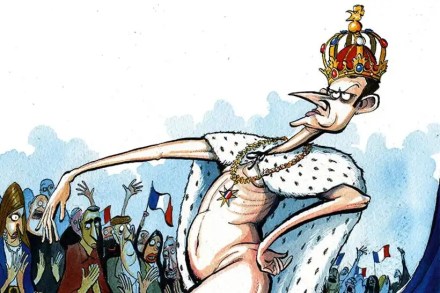
From the stability of the Fifth Republic’s institutions, France is regressing to the chronic instability of bygone republics. In eight years as president, Emmanuel Macron has expended eight prime ministers. For the moment, one per year compares favourably with the Third and Fourth Republics, whose governments averaged nine and six months respectively. But the pace is accelerating. Since Macron’s re-election in May 2022, his prime ministerial tally is five, with the last government surviving 14 hours. Where to look for a ray of hope in France’s darkening political crisis? New government, dissolution, presidential resignation?

Royal treatment, neurodiverse history & is everyone on Ozempic?

From our UK edition

45 min listen

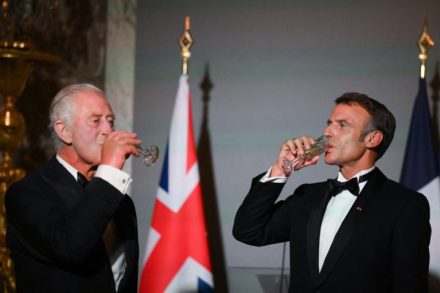
First: a look ahead to President Trump’s state visit next week Transatlantic tensions are growing as the row over Peter Mandelson’s role provides an ominous overture to Donald Trump’s state visit next week. Political editor Tim Shipman has the inside scoop on how No. 10 is preparing. Keir Starmer’s aides are braced for turbulence. ‘The one thing about Trump which is entirely predictable is his unpredictability,’ one ventures. And government figures fear he may go off message on broadcast – he is scheduled to be interviewed by GB News. It is rare for leaders to receive a second visit, especially those in their second term. But, as Tim says, ‘Britishness is fashionable in Washington’ and no-one likes ‘royal treatment’ more than Trump.

A dual crisis is looming for France

From our UK edition

Financial crises are often linked to a political crisis. On 8 September, the French government will submit itself to a vote of confidence – which, by all accounts, it will lose. At issue is France’s parlous financial state, which a minority French government seeks to address. This week, French 30-year bond yields reached levels unseen since the Greek debt crisis in 2011, while the 10-year yield has surpassed present-day Greece’s.  France’s economy minister was quick to warn that France’s lamentable financial position could leave it facing an IMF bailout. This was intended to frighten MPs ahead of the vote rather than reflect reality. Greece was borrowing at near 30 per cent prior to its debt crisis and had a budget deficit of 15 per cent GDP, while France’s is 6 per cent.

How Macron triumphed over Starmer

From our UK edition

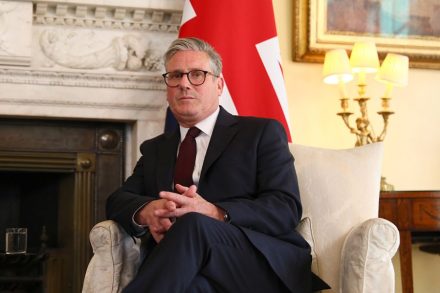
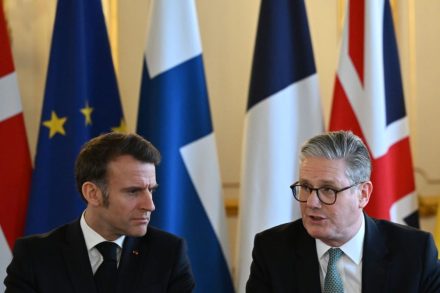
‘Small boats’ are the big talking point from this week's Franco-British summit. The consensus is that there are slim pickings for Britain, and the reason why is simple: France negotiates according to its interests, Britain negotiates according to the Chagos template. France's president Emmanuel Macron had little incentive to agree anything but a symbolic ‘returns’ agreement with Sir Keir Starmer. Most of the French political class, public opinion and ‘humanitarian’ organisations do not support Britain returning migrants to France. Nor for that matter do other EU states. Why would they? What then was Macron seeking from the summit?

Britain could pay a big price for Starmer’s ‘EU Reset’

From our UK edition

The great ‘EU Reset’ of 19 May – when the first formal UK-EU summit since Brexit will take place – is rapidly approaching. Yet even before Keir Starmer and EU Commission president Ursula von der Leyen meet in London to thrash out an agreement, advance attempts to sell the new relationship are growing. That so much surrounding Monday’s UK-EU summit in London is being kept secret on either side of the Channel is auspicious 'UK wins £500m in science grants from EU Horizon scheme after Brexit lockout,' the Guardian excitedly told its readers earlier this month. It claimed that British scientists were 'over the moon' with Britain’s return to the EU’s flagship science research programme.

Does Britain really need to share ‘geopolitical values’ with Europe?

From our UK edition

Sir Keir Starmer will sign a new strategic partnership with Brussels at a summit on 19 May. The draft preamble apparently states that the UK and the EU are committed to similar ‘geopolitical values’. This is all part of Labour’s ‘reset’ with Europe intended to return Britain to the EU’s orbit in everything from phytosanitary and food safety alignment to defence and security. That Britain and the EU share geopolitical values is no scoop. Such utterances are the ‘motherhood and apple pie’ of all summits. Where allies so often disagree is less on objectives than priorities. Aligning Britain’s defence and security with the EU will mean bowing to the EU’s priorities – which are not always the same as the UK's.

Defence cooperation with France would be a bad idea for Britain

From our UK edition

Donald Trump’s recent decision to deny Ukraine access to American intelligence data in the war against Russia has concentrated minds on how the US could restrict Britain’s defence capability, from F-35 stealth jets to its independent nuclear deterrent. Some fears are well-founded. Others, such as the recent suggestion by a former French ambassador to the UK that a ‘dual key’ controls Britain’s submarine-launched Trident ballistic missiles, are a myth.  The idea is growing in some quarters that now is the moment for Britain to switch away from the US to Europe for defence equipment cooperation. One need not look too far to detect its motivation or to see its naivety.

How Macron beat Starmer to Trump

From our UK edition

Emmanuel Macron’s lightning visit to the White House was a tour de force of French diplomatic energy, skill and bravado. Whether Macron has managed to convince Donald Trump of the need to involve Kyiv and Europe in US-Russian negotiations on the war in Ukraine will become clear in the next fortnight. But what it demonstrated forcefully was the striking humiliation of the British Prime Minister Keir Starmer and the slothful incompetence of diplomacy in London and Washington. It is a stark warning of how President Macron and the EU will run rings round the Labour government and its ‘reset’ with Brussels. The Labour government announced some two weeks ago a Keir Starmer visit to Washington to meet newly elected Donald Trump.

Starmer must protect Britain’s defence industry

From our UK edition

When David Frost led UK negotiations with the EU on a free trade agreement five years ago, he was supported by a 100-strong Cabinet Office team. Prime Minister Sir Keir Starmer’s ‘EU reset unit’, also based in the Cabinet Office, is 100-strong too, including two permanent secretaries. Given Labour’s insistence that it is not seeking to renegotiate Brexit, but merely to improve relations with the EU, why appoint such a large, high-powered unit? Setting aside the harsher criticism that the ‘EU surrender unit’ is a machine to reverse Brexit, government ministers and the PM remain tight-lipped about the officially titled ‘European Union relations secretariat’. It does not appear on the Cabinet Office website.

How Jean-Marie Le Pen lives on

From our UK edition

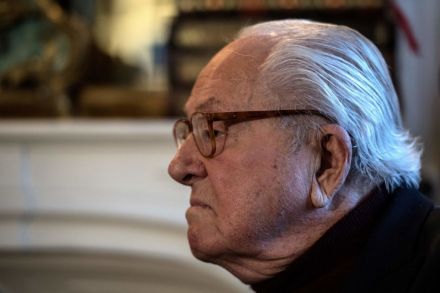
Jean-Marie Le Pen, who died aged 96 on 7 January, was the personification of the travails and excesses of post-war France. He was a co-founder in 1972 of the reactionary Front National, whose senior members included former Vichy collaborators and a former member of the Waffen SS Charlemagne Division. Yet on 21 April 2002 to universal surprise, he nonetheless beat the Socialist candidate and qualified for the second round of the French presidentials with 18 per cent of the vote. For some he was a malign towering figure of French politics and political life for six decades; for others the outspoken tribune of the French people insistent on stating fearlessly, even recklessly, in the manner of an Enoch Powell, what many did not want to hear.

The irony of Starmer’s Armistice Day visit to France

From our UK edition

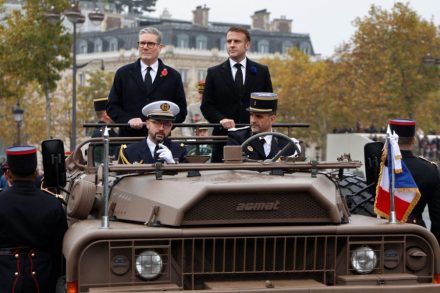
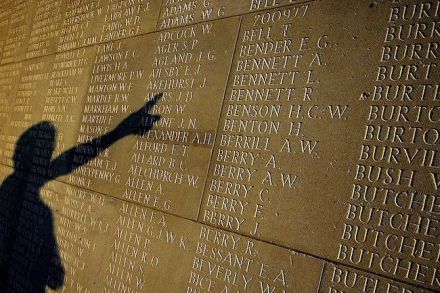
Yesterday morning, the British Prime Minister travelled to Paris at the invitation of the French President to lay a wreath at the Tomb of the Unknown Soldier at the Arc de Triomphe. Sir Keir Starmer was the first UK leader to attend an Armistice Day ceremony in Paris since Winston Churchill did so alongside General de Gaulle in 1944. Yet there is a degree of irony in these displays of Franco-British unity marking the war’s end. Despite having fought side-by-side for the conflict’s duration, and notwithstanding the integration of their economies to an unprecedented degree, at the war’s end the two countries reverted to traditional rivalry.

Germany and the politics of blame for the First World War

From our UK edition

Wars begin and end in controversy. The war that ended 106 years ago today with the armistice of 11 November 1918 carried the germ of controversy before it even broke out. Prior to Britain declaring war on the German Empire on 4 August the Germans rushed into print their ‘White Book’ of diplomatic documents on the war’s causes revealingly titled: How Russia and her Ruler betrayed Germany’s confidence and thereby made the European War. The day after war began Britain responded with its ‘Blue Book’, followed by the Russian ‘Orange Book’, the Belgian ‘Grey Book’ and the French ‘Yellow Book’ at the end of November 1914, entitled ‘How Germany forced the War’. By the summer of 1915 the Austrian ‘Red Book’ served up their version.

What the First World War can teach us about the Third

From our UK edition

It is our duty on Remembrance Sunday to honour the fallen. But to do justice to their sacrifice, we should also remember why the world descended into war in 1914. The history of the Great War has captivated and divided historians since Serbian nationalist Gavrilo Princip fired that fateful shot at Austro-Hungarian Archduke Franz Ferdinand on 28 June 1914. Only later did we come to realise the full significance of that date. British military historian of the First World War and Conservative cabinet minister, Alan Clark, recorded the moment in his diary on Tuesday, 28 June 1983, with characteristic wit: ‘Today is the sixty-ninth anniversary of the assassination of the Archduke Franz Ferdinand at Sarajevo, the date from which the world changed.

Why France’s media is keeping quiet about Michel Barnier’s health

From our UK edition

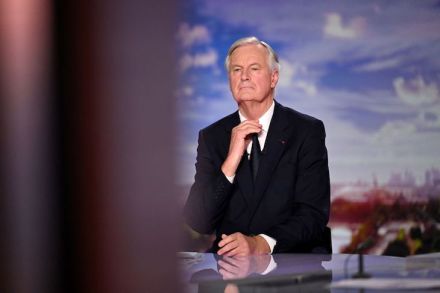
France’s 73-year-old prime minister, Michel Barnier, underwent surgery last weekend for a lesion on his upper neck. According to the government spokeswoman yesterday, the operation ‘went well’ and the PM is back at work after two to three days’ rest. French media have been characteristically tight-lipped about the health of France’s second in command and the Fifth Republic’s oldest prime minister.  French media have been characteristically tight-lipped about the health of France’s second in command Le Monde – sometimes thought of as an unofficial organ of the state – merely trotted out the official communiqué; Le Figaro added that the operation was considered benign and that test results will be known in coming weeks.

Does France need a government?

From our UK edition

France has been without an official government for seven weeks, the longest in the history of the Fifth Republic. A caretaker prime minister and government have been running the country for what President Macron declared the ‘Olympic truce’. That truce is now over, yet the President is in no hurry to appoint a new prime minister. One can understand why. A clear majority of French voted for alternatives to Macronist policies in the European and legislative elections, something the President refuses to accept. Whichever government is eventually appointed will unpick much of the President’s policies over the last seven years.

Macron’s lavish spending is jeopardising French finances

From our UK edition

In the last years of Louis XVI’s reign, French finances were in a parlous state. State debt had ballooned, its servicing became exorbitant, and France’s creditworthiness sunk. The need to raise taxes after years of profligacy forced the monarch to summon the Estates General – the first time since 1614 – to obtain their approval. A series of scandals linked to the monarchy fuelled popular anger. All ushered in the July 1789 Revolution.  Against a background of French debt at 112 per cent of GDP, a budget deficit of 5.5 per cent and the EU taking out special measures against France for persistently ignoring the EU stability pact, this week France’s independent auditing court poured petrol on the flames.

Even the Olympics can’t unite France

From our UK edition

Writing of the state of France in the twilight of the fateful Second Empire, the left-wing journalist Henri Rochefort observed: ‘France contains 36 million subjects, not including the subjects of discontent.’ Has anything changed since 1868? From the European to the legislative elections, France is a profoundly divided nation. At present and probably until mid-August, she has a caretaker government because the National Assembly is irremediably split into three camps. One might have thought that the Paris Olympic Games could have united the country. Instead, it has deepened division. France was desperate to be enthralled, and above all, distracted by the Games France was desperate to be enthralled, and above all, distracted by the Games.