John Keiger

John Keiger

John Keiger is a former Research Director at the University of Cambridge and author of the biography of French president Raymond Poincaré

Covid statistics are just politics by other means

From our UK edition

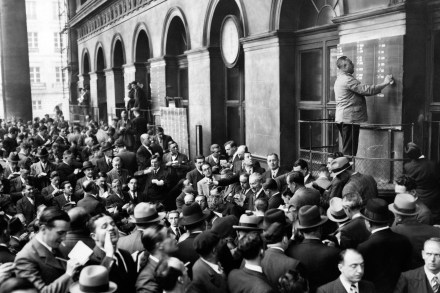
Statistics is the continuation of politics by other means, to misquote Clausewitz. One hundred and fifty years after the crushing of the revolutionary Paris Commune, historians still clash aggressively about the death toll. Was it as high as 40,000 or as low as 10,000? It matters because the Paris Commune is a shibboleth, a great left-wing site of memory and martyrdom, made famous by Karl Marx’s pamphlet The Civil War in France. He presented the Paris Commune as the first great experiment in communist government. Its crushing by the army of the conservative Adolphe Thiers is depicted in left-wing folk memory as the ‘reactionary, repressive forces of capitalism’ ending an idyllic experiment in socialism.

It’s a mistake to compare our Covid death toll with Spain and France

From our UK edition

Covid statistics are like complex machinery; if you don’t read the instructions you won’t operate them properly. Which is why the claim by some media outlets that the UK now has the second highest number of Covid deaths in Europe, should be handled with caution. It is true that on Wednesday the official UK Covid-19 death toll increased by 4,419 to 26,097 after the government included deaths outside hospitals for the first time. The figures were revised respectively by Public Health England since the first UK death in March. According to the Guardian, ‘The change comes after weeks of criticism of the way that the UK had been reporting its coronavirus death toll, which made effective comparisons with other European countries impossible.

Don’t bank on a V-shaped recovery

From our UK edition

Last week, Britain and France were treated to an avalanche of financial statistics jostling with the macabre daily litany of Covid casualty numbers. All are premised on a V-shaped recovery in which the severity and rapidity of the Covid recession is matched by a rapid bounce back. But the French above all should be aware of a historical parallel that suggests caution regarding the V-shaped recovery. But first the size of the problem. In Britain, the Office for Budget Responsibility produced the most pessimistic scenario for the British economy compared to those of KPMG, Morgan Stanley and the OECD. Based on a three-month lockdown it projects a 2020/21 budget deficit of 14 per cent falling back to a 2.

Meet the Frenchman who has shaped the world’s response to coronavirus

From our UK edition

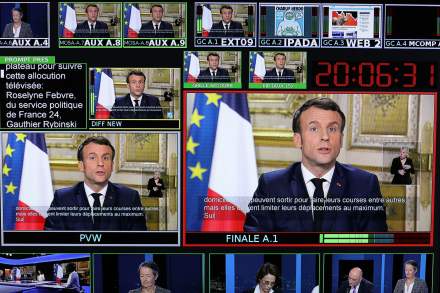
Projecting the fight against Covid as a war on a virus – like the war on terror – tells us more about the politician than about the strategy. But in the struggle to halt and extinguish the disease, it is war that has provided us with tools to manage the present crisis. Take ambulances, field hospitals and triage, for instance. All are the products of war, one war in particular and one man in all: Baron Dominique-Jean Larrey, the French surgeon who in the Revolutionary and Napoleonic wars pioneered battlefield medicine and its associated logistics. President Macron wisely abandoned his martial tone and bid to emulate France’s great war leader Georges Clemenceau in his most recent TV broadcast to the French nation.

Britain should brace itself for a new world order after coronavirus

From our UK edition

How will states perceive themselves and each other after the pandemic? This is not just a matter of narcissism; it is fundamental to international politics. Such 'soft power' is, as Joseph Nye argues, crucial to the clout of countries on the world stage; it allows them to convince rather than coerce in achieving their objectives. Whether it be the British model of democracy, French culture or good governance, these values complement a state’s hard power of armies, bombs and bullets. In today’s information age it is not ‘whose army wins, but whose story wins.’ States may claim that they dealt effectively with coronavirus domestically or internationally, but when this is all over there will be clear winners and losers.

A hard Frexit needn’t be a disaster for France

From our UK edition

With European solidarity impaled on the coronavirus epidemic, talk of Frexit is surfacing again. But how could Frexit be organised? Like Britain, France would activate Article 50 of the Lisbon Treaty to begin the process of leaving the European Union. But how does one leave the single currency? Brussels, which existentially regulates for everything, does not say and the 3000 page Lisbon Treaty is silent on the subject. So how could France move to ‘eurexit’ and what would be the financial consequences? A starting point could involve reverse engineering the Lisbon Treaty’s monetary articles to begin negotiations with Brussels on exiting the euro.

Could coronavirus lead to Frexit?

From our UK edition

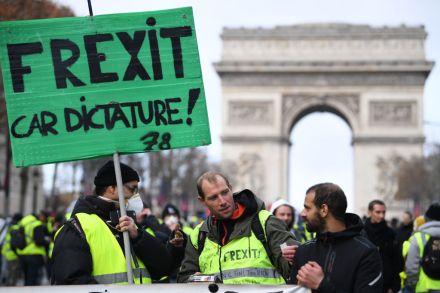
Is France flirting with the idea of Frexit again? Coronavirus is currently provoking a chorus of ‘reprendre le contrôle’ (take back control) across the political spectrum. The epidemic is laying bare France’s dependence on outside states for essentials such as masks, medicines, test kits and ventilators. Even arch-Europhile Emmanuel Macron visiting a French mask manufacturer declared this week: ‘We have to produce more in France, on our territory, from now on to reduce our dependency… we must rebuild our national and European sovereignty’. His reference to Europe is not unusual, but highlighting national sovereignty is. The second ‘take back control’ stimulant comes from growing irritation with the European Union.

Macron’s updated coronavirus statistics will test French morale

From our UK edition

On Saturday night France’s Prime Minister spoke to the French people flanked by the Health Minister, the Director General of Health (DGS) and three epidemiologists, to reassure the public that the government would be more transparent about the spread of coronavirus. Despite President Macron’s increasing media appearances in the ‘war on corona’ a 25 March opinion poll showed 90 per cent of the French public are anxious, 39 points more than on 11 March before the lockdown. Although 64 per cent claimed their morale was holding up, 56 per cent said they had lost faith in the executive’s management of the crisis.

Can we trust France’s coronavirus casualty count?

From our UK edition

It is said that the first casualty of war is truth. In the purported war on coronavirus, Rod Liddle rightly asks ‘how reliable are the coronavirus figures?’ and comes to the conclusion the answer is 'not very'. He is right, for at least two important reasons.  Firstly, not all states are carrying out the same number of tests per million people. For Germany, it is 2,023; Britain, 960; and France, 560. That has a consequence on the number of positive infected cases. Given that the most widely-accessed world rankings of total cases per country used by the media, such as Worldometers (updated in live-time), are based on that figure, the results are not hugely helpful.

‘Germany will pay!’ is Macron’s coronavirus mantra

From our UK edition

In his broadcast to the nation ten days ago, president Macron tub-thumped his war campaign on coronavirus. Six times he repeated the word ‘war’. Yesterday, he visited the front: Mulhouse in Alsace, on the Franco-German border, where France’s largest virus cluster is overwhelming the region’s hospitals. Live TV saw him, masked up, in an army field hospital, surrounded by soldiers in combat gear. From there he spoke again to the nation. France, he intoned, was at war in this region, a region scarred by past wars. By remaining united France would defeat the coronavirus enemy. And he launched military ‘Operation Résilience’ to take the combat further. Macron’s advisors have allegedly been briefing that he is the new Clemenceau.

France’s downward spiral of coronavirus repression

From our UK edition

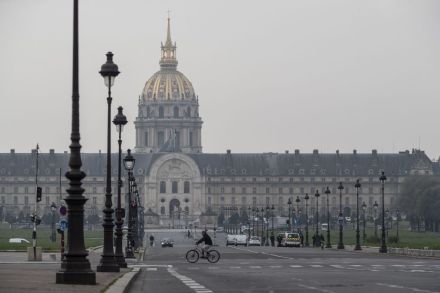
In France there is a palpable sense of administrative and political panic in how to deal with the coronavirus epidemic. As I write from Perpignan on the French-Spanish border on the morning of 24 March, France has 19,856 coronavirus cases and 860 deaths; Britain 6,650 and 335. After Italy and Spain, France is the third worst affected country in Europe (Germany has more cases because it tests more, but only 123 deaths), but it has imposed and enforced the most severe lockdown. France went into lockdown on 17 March. The administrative state immediately generated an array of bureaucratic forms: a certificate to leave your house to walk the dog or go shopping; a certificate justifying your attendance at work rather than working from home.

Save French food!

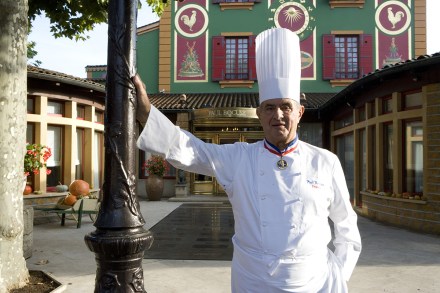
The annual publication of the century-old Michelin restaurant guides creates an excitement in France akin to the Oscars, but the 2020 Guide Michelin is provoking dyspepsia. This is the first time since 1965 that the restaurant founded by Paul Bocuse — the pope, the Napoleon, of French cuisine — no longer figures among the 27-strong group of French restaurants receiving the ultimate culinary accolade: three-star status. Two years after the maestro’s death, the black truffle soup and volaille de Bresse en vessie Mère Fillioux no longer seduce Michelin inspectors. What Bocuse called la sainte trilogie, butter, cream, wine, has lost its infallibility. And Monsieur Paul is not the first to go.

french food

Coronavirus means the EU will never be the same again

From our UK edition

The European project was built on the idea of rendering future war among European states impossible. The EU is programmed to avoid armed conflict among its member states, a situation that would blatantly undermine its very essence. But who could have predicted that an epidemic would shake its foundations. In the space of a couple of weeks fundamental tenets of the EU project have received a body blow and may not recover from the coronavirus epidemic. The European Stability Pact requires member states to respect a three per cent budget deficit. France was about to breach that anyway and has used Covid-19 as a cover to go much further, as will Italy, Greece and others. The Pact also requires states’ national debt to go no higher than 60 per cent of GDP.

The arrogance of France’s coronavirus rhetoric

From our UK edition

‘At the beginning of a pestilence and when it ends, there’s always a propensity for rhetoric. In the first case, habits have not yet been lost; in the second, they’re returning. It is in the thick of a calamity that one gets hardened to the truth – in other words to silence.’ Albert Camus, The Plague. Faced with Covid-19, France has not yet reached that moment of silence when one gets hardened to the truth. Rhetoric still has the upper hand as President Macron’s address to the nation on Monday night revealed.

Revealed: Michel Barnier and France’s Brexit stitch-up

From our UK edition

The glaring difference between the EU and British negotiating goals has been brought into plain sight. In readiness for the upcoming Barnier-Frost negotiations, the French senate produced for the French government a set of requirements that Michel Barnier should work to in the negotiations. Those recommendations, which it published on 6 March, are extremely hardline. If Britain were to accept even a few of the key objectives, it could undermine Brexit. Given president Macron’s power in the European Council it is safe to say that most, if not all, of the recommendations will figure prominently in Barnier’s negotiating file. Frost will have to be on his guard to resist them when talks get underway.

Why Paris will fail in its bid to usurp the City

From our UK edition

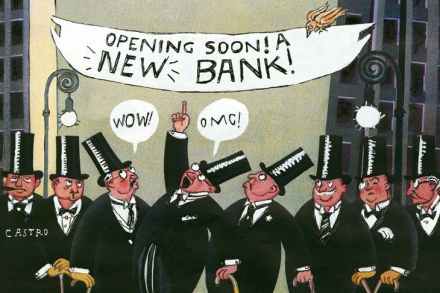
Looming behind the Frost-Barnier negotiations is a battle between London and Paris as financial centres. After the June 2016 referendum, the French failed miserably to seduce City institutions away from the UK. There was no exodus from London, and of those few relocations to the continent, most avoided Paris, preferring to scatter widely from Dublin to Frankfurt and Amsterdam.  After failing in the first instance, the French will now attempt to do so by force under the cover of the EU negotiations.

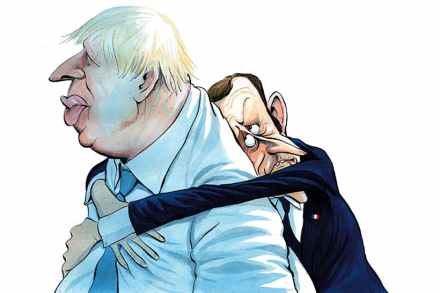
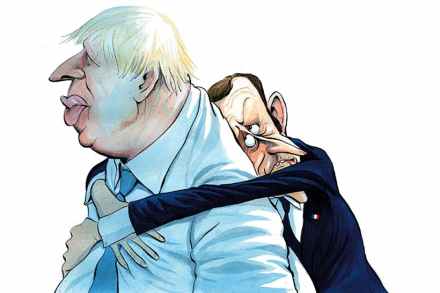
Macron lacks Boris’s Napoleonic flair

From our UK edition

'I’d rather have lucky generals than good ones’, Napoleon - or Eisenhower - was supposed to have said, ‘they win battles’. Emmanuel Macron is a good general, but not a lucky one. Since he stood for the presidential election in May 2017, he has demonstrated strategic ability in identifying the reforms France needs to modernise its economy. He has conducted those reforms with considerable courage in the face of strong opposition overhauling outdated labour laws, unemployment benefits, restrictive practices in the national railway system and now he is tackling the over-generous pension system. And his strategy is beginning to show positive results for the French economy. 2019's GDP at 1.

Frost vs Barnier: who will triumph in the Brexit trade talks?

From our UK edition

What would Disraeli make of Brexit? His advice to ‘read no history; nothing but biography, for that is life without theory’ is a useful starting point. Brexit has been – and continues to be – a hotch-potch of biographies where human weaknesses, strengths and foibles chafe and collide. The upcoming clash between the EU’s chief negotiator Michel Barnier and his British counterpart David Frost is no exception. On 2 March, Barnier, who is responsible for leading the ‘Task Force for relations with the United Kingdom’ will face Frost, the British head of ‘Taskforce Europe’, across the negotiating table for the first time.

Macron’s British charm offensive is only just getting started

From our UK edition

In the excitement/misery of leaving the EU at the end of January many overlooked a touching note written by President Emmanuel Macron to the British people. It was a ‘love letter’ of sorts, a mixture of déclaration d’amour and regretful confession, which bore all the hallmarks of a note from the jilted to the jilter, warm in parts but suffused with a peevish undertone. After three and a half years of condescension, lecturing and veiled threats, Britons are unused to being the object of courtly love. But Macron’s billet doux is about much more than Brexit. Brexit is the catalyst for a deeper concern that Britain is embarking on a global strategy that could see her loosen her commitment to Europe as in the past. Macron knows his history and his geopolitics.