John Keiger

John Keiger

John Keiger is a former Research Director at the University of Cambridge and author of the biography of French president Raymond Poincaré

Expect fireworks at this week’s Nato summit

From our UK edition

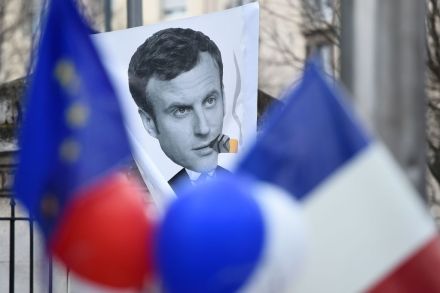
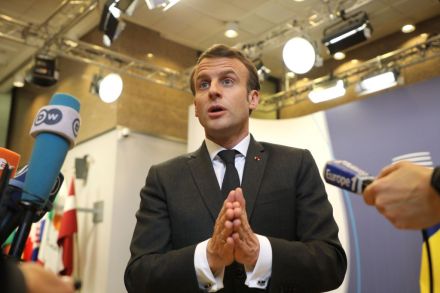
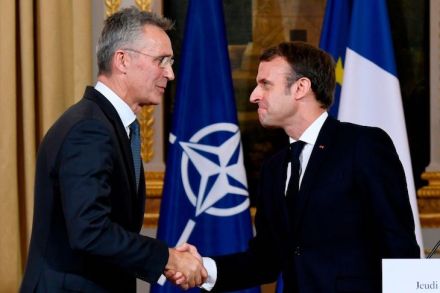
This week is seminal for Boris Johnson and Emmanuel Macron. Boris, in Watford, is hosting one of the most important Nato summits for years. Its significance is not because it marks the Alliance’s 70th anniversary, but because of President Macron’s ‘disruptive’ and trenchant criticism of the Atlantic Alliance as close to ‘brain dead’, which has touched a nerve. The French President went on to reiterate his remarks at an Elysée press conference, with a visibly uncomfortable Nato Secretary General, three weeks later.
Why Macron changed his tune on Boris

From our UK edition

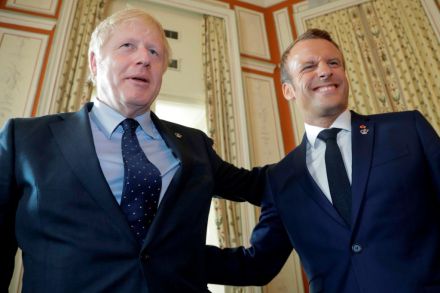
What was Emmanuel Macron playing at when he threatened to veto a second EU Brexit extension in October? Few would contest he was attempting to pressure British MPs to vote through Boris Johnson’s newly negotiated withdrawal agreement. He failed. But it's also worth asking another question: why did Macron stick his neck out for Boris Johnson, a man he previously branded a ‘liar’ before he entered Number 10? Was it that ‘foot on the table’ Elysée meeting of minds (22 August) or the numerous all-hours phone calls and the 24-26 October Biarritz G7 summit that persuaded Macron to declare on 18 October that Johnson was ‘a leader with genuine strategic vision’ who should be taken seriously?

What really caused the world to go to war?

From our UK edition

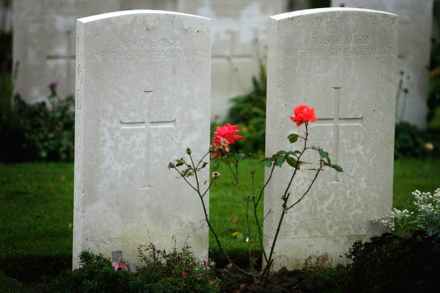
Armistice day this year marks one hundred and one years since the guns were silenced on the western front. Four years of commemorations of the ‘seminal catastrophe’ of modern times, the calamity from which other calamities sprang, has also meant a wave of ‘new’ accounts of varying quality, none more so than for the causes of the conflict. But a book that has ‘turned up’ on the origins of the First World War could dramatically change our thinking about what really caused the world to go to war.

Jacques Chirac leaves behind a limited legacy

From our UK edition

The death today of the Fifth Republic’s fifth president, at the age of 86, is also the passing of its most romanesque character. Tall and debonair, Jacques Chirac's charms worked their magic with the ladies at a higher rate than even the standard operating procedure for most French presidents. Chirac’s social and political ascension bears the stamp of Balzac. A provincial lower middle-class republican upbringing in the rural Corrèze is transformed by the stereotypical transfer to Paris at the behest of a local patron. Good schooling followed by the elite nurseries for top civil servants - Sciences Po and ENA – put the boy Chirac on the right path. Marriage in to one of Paris’s prominent aristocratic families complemented the package.

Can France keep Germany in check after Brexit?

From our UK edition

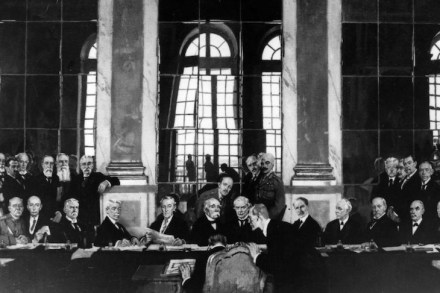
‘France has a German policy, she has no other’, remarked the seasoned observer of international affairs and future editor of Le Monde André Fontaine in 1952. With a British withdrawal from the EU she is again confronted by an old demon dating from 1871 : management of a dominant Germany on the continent of Europe. Paris has sought to counter German power, whether military, political or economic, by two broad means since 1900. The first means was to secure Britain as an ally and ensure she remained committed to the security of continental Europe. This she was successful in doing prior to 1914 and 1939. However, the immediate post-war years were a different story.

Emmanuel Macron could be Boris Johnson’s Brexit saviour

From our UK edition

One thing on which Remainers and Brexiteers can agree is that Brexit delayed is Brexit denied. The government continues to proclaim that the UK will leave the EU on 31 October with or without a deal. But No. 10 is acutely sensitive to the possibility of a parliamentary manoeuvre designed to compel the executive, through legislation, to seek a further extension of Article 50 to delay Brexit yet again. But Boris Johnson should keep calm about this prospect, for an unlikely saviour – the president of France, Emmanuel Macron – could come to his rescue. Whatever Brexit extension legislation Parliament might push through, any further extension of Article 50 requires unanimous EU Council of Ministers’ support.

What Alsace-Lorraine could teach the French about the backstop

From our UK edition

When Boris meets Macron at the G7 meeting on 24 August in Biarritz, it will be one of the first international meetings of his premiership. What will be the dynamics of that tête-à-tête? Will Macron resort to the bonhomie he used – unsuccessfully as it turned out – in his first major encounter with Donald Trump when the French President matched his American counterpart’s power handshake? Will they open with references to their respective grandparents, Macron’s British great grandfather and Boris’s half-French grandmother? Or will Macron turn down Britain’s demands with a Gaullian ‘non’? And what will Boris’s stance be?

The moment the European project first went wrong

From our UK edition

At a time when the EU is at its least popular and, worse still, least respected, it is worth reflecting on how the idea for a united Europe developed – and where it went wrong. The Spectator’s reprint last week of Christopher Booker’s 2014 article ‘How the first world war inspired the EU’ is a timely reminder of the real genesis of the EU. Yet it was only after the Second World War amid fear of a renascent Germany, that the concept of an 'ever-closer union' became the shibboleth of European construction. It was here that the European project took a mistaken turn. The First World War led to France and Britain's economies becoming closely aligned. This partnership involved inter-allied commissions to oversee the distribution of wheat, sugar, coal and credit.

Why France is frustrated – and baffled – by Brexit

From our UK edition

Silence has befallen French pronouncements on Brexit. Le Monde’s vitriolic editorial (12 June 2019) on Boris Johnson apart, the scene is remarkably calm. But this isn't good news. In fact, such silence is often a sign of French anxiety and a presage to trouble, particularly when Britain is concerned. As rationalists, the French are frequently frustrated by the ‘wait and see’ of the empirical British. ‘What is not clear is not French’, said the 18th century French philosopher Antoine de Rivarol.

Could France’s far left and far right come together again?

From our UK edition

As the European elections approach, Europe’s oldest liberal democracies – Britain and France – are in turmoil. Taking the long view, Britain’s problems are circumstantial and exceptional. France’s, by contrast, are renewing with more extreme political traditions that have risen and fallen, but never disappeared, over the last two centuries. Gavin Mortimer's blog on Coffee House describes the seemingly paradoxical synthesis of far-left and far-right voters contemplating casting their ballot for the same party – the former National Front, now Marine Le Pen's Rassemblement National. Yet as with so much in French politics this is far from novel.

France – and Europe – could become the frontline in Algeria’s latest crisis

From our UK edition

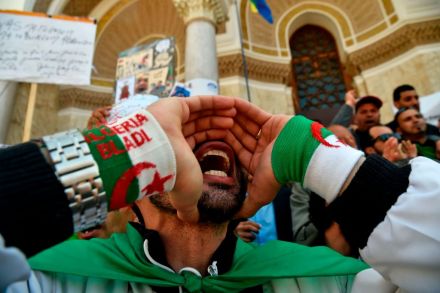
As the European parliament elections approach, the continent’s navel-gazing is ever more myopic. Even its two most outward focused states, France and Britain, are consumed by domestic crises. And yet in Europe’s backyard – across the Mediterranean, in Algeria – radical change is taking place with potentially serious ramifications for the European Union and France. Every Friday since February the authoritarian Algerian regime has been the target of tens of thousands of peaceful demonstrators on a scale unknown since the country’s troubled independence from France in 1962. The spark was 82-year-old Abdelaziz Bouteflika’s announcement that he would seek a fifth term as president, despite being chronically debilitated by a stroke since 2013.

Macron’s bid to woo the yellow vests risks opening a battle on two fronts

From our UK edition

As France and the world grieved over the Notre Dame fire, French national politics rolled on behind the scenes. President Macron was scheduled to broadcast to the nation on his reform programme following the national consultation (Grand Débat) that has been underway for three months in the hope of quelling the five-month-old yellow vest protests. The fire an hour before forced him to cancel the presidential message. But because the details of the reforms were in the pre-recorded speech – and because France is France – the outline of the programme leaked heavily. This was not a bad case of ‘a good day to bury bad news’; Macron was furious. But the national outpouring obliged him to delay the official announcement. What then is in that programme?

How Britain can make life difficult for the EU during the Brexit extension

From our UK edition

It is not good form for the British to be awkward and obstructive. The art of the compromise was the polite British way of doing things. Or so it used to be thought. But Europe’s axis has tilted since Theresa May’s inability to secure an exit from the EU. Jacob Rees-Mogg’s recent tweet calling for Britain to be 'difficult' and paralyse the workings of the EU from inside sums up this toppling of conventional etiquette. Now that the extension has been granted until 31 October with few constraints on British membership, should Britain form an awkward squad in Brussels to block Europe’s institutions? And if so, where do we look for inspiration and lessons in how to be difficult?

Notre Dame and Emmanuel Macron’s annus horribilis

From our UK edition

“Paris outraged, Paris broken, Paris martyred, but Paris liberated!” intoned General de Gaulle on 25 August 1944 from the Hotel de Ville on his first appearance before the French people following the capital’s liberation. The following day he attended the Te Deum at Notre Dame Cathedral, that other high symbol and site of memory and meaning for Parisians and the French. The tragedy of the Notre Dame fire puts politics and politicians in perspective.

How Britain can make life difficult for the EU during the Brexit extension | 15 April 2019

From our UK edition

It is not good form for the British to be awkward and obstructive. The art of the compromise was the polite British way of doing things. Or so it used to be thought. But Europe’s axis has tilted since Theresa May’s inability to secure an exit from the EU. Jacob Rees-Mogg’s recent tweet calling for Britain to be 'difficult' and paralyse the workings of the EU from inside sums up this toppling of conventional etiquette. Now that the extension has been granted until 31 October with few constraints on British membership, should Britain form an awkward squad in Brussels to block Europe’s institutions? And if so, where do we look for inspiration and lessons in how to be difficult?

Theresa May must stand up to Emmanuel Macron’s Brexit posturing

From our UK edition

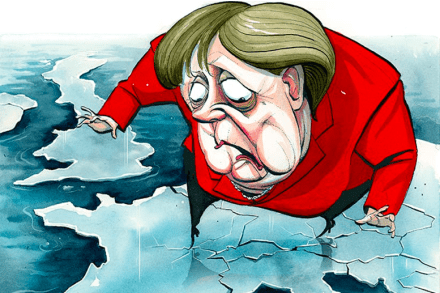
In this the 115th anniversary week of the Entente Cordiale, the French president and the British Prime Minister will meet twice, today at the Elysee Palace and tomorrow at the European Council in Brussels. But neither of those meetings will be to celebrate their countries friendship. When May goes to Paris and then to Brussels, she will instead be a woeful supplicant in the Brexit feuilleton. And the one thing the vicar’s daughter can count on is that she will be subjected to a severe bout of Macron lesson-giving and severe sermonising, as is his wont. And yet Macron is hardly in a position of strength. Both leaders are battling domestic crises that come to a head this week. The British PM’s Brexit woes are only too well known.

How Brexit could lead to Frexit

From our UK edition

Struggling to understand the ways of the French, the francophile Winston Churchill reflected whimsically in 1942: ‘The Almighty in His infinite wisdom did not see fit to create Frenchmen in the image of Englishmen.’ And yet today, the Almighty would struggle to create two more similar states in international terms than Britain and France. Similar geographies on the northwest European continent, similar populations (66 and 67 million), economies (5th and 6th by GDP), colonial histories, 3rd and 4th nuclear powers, two of the five permanent members of the UN Security Council, leading members of Nato and, until 2019 (probably), equally prominent members of the European Union.

A no-deal Brexit spells trouble for Emmanuel Macron

From our UK edition

In 1919, a 31-year-old Tommy from Bristol, named George Robertson – fresh from fighting alongside French troops on the Somme – married Suzanne Leblond in Abbeville, northern France. In 2017, George Robertson’s great grandson, Emmanuel Macron, became French president. Macron embarked on a policy that, while acknowledging Franco-British friendship, sought to ensure that Britain did not prosper from Brexit. Yet Macron’s stance appears increasingly counter-intuitive. Of all the European leaders, Macron is noted for being the most intransigent in his public utterances on Britain’s Brexit negotiations.

A no-deal Brexit spells trouble for Emmanuel Macron | 12 February 2019

From our UK edition

In 1919, a 31-year-old Tommy from Bristol, named George Robertson – fresh from fighting alongside French troops on the Somme – married Suzanne Leblond in Abbeville, northern France. In 2017, George Robertson’s great grandson, Emmanuel Macron, became French president. Macron embarked on a policy that, while acknowledging Franco-British friendship, sought to ensure that Britain did not prosper from Brexit. Yet Macron’s stance appears increasingly counter-intuitive. Of all the European leaders, Macron is noted for being the most intransigent in his public utterances on Britain’s Brexit negotiations.

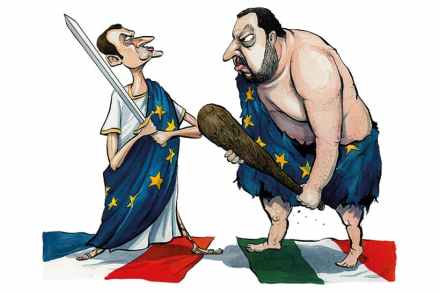
Macron’s fight with Europe’s populists is backfiring

From our UK edition

In France, discontent has been brewing for years. Emmanuel Macron managed to set it alight by embarking on a series of reforms that sparked the gilet jaunes movement. In Europe it has been brewing too, and now Macron seems to be repeating the trick. Here the antipathy is from populist governments opposed to his ideas, not only on a future Europe but also his lesson-giving in how those countries should govern themselves. International politics are following a similar pattern to national politics. Macron sweeps onto the international stage with new ideas for reforming Europe, he accompanies that with acerbic throw-away quips on the competence and morality of particular leaders, they riposte and, gradually, individual protests coalesce into an axis of angry opposition to the French president.