John Ferry

John Ferry

John Ferry is a contributing editor for the think tank These Islands and a former financial journalist

The SNP’s latest separation blueprint is pure project fantasy

From our UK edition

'A SNP MSP has claimed an independent Scotland could guarantee a couple with children a minimum income of more than £37,000 a year,' the Daily Record reported breathlessly this week, as it covered the SNP's latest plans for an independent Scotland. Then came the clincher: 'Neil Gray admits the plans have not been costed.' Neil Gray is an SNP MSP and deputy convenor of the party's Social Justice and Fairness Commission, which has published its final report: A Route Map to a Fair Independent Scotland. One of the report's key recommendations is for a pilot of a minimum income guarantee.

Scotland’s next constitutional fight won’t be over a referendum

From our UK edition

Get ready for a constitutional rammy during the first half of this, the sixth session of the Scottish parliament. Just don't expect it to be over a second independence referendum. Recent polling shows momentum has moved back in favour of those wishing to remain in the UK, while signals from the public also consistently suggest a lack of appetite for another referendum anytime soon. Nicola Sturgeon knows this, which means the phoney war over a repeat plebiscite will likely trundle on without bringing any great change to the country. The real action is elsewhere. Specifically, the upcoming review of the Fiscal Framework Agreement, which is set to be fraught and, unlike the referendum debate, actually has the potential to impact Scotland.

Sturgeon can’t hide the economic costs of Scexit

From our UK edition

Might the 2020s be the seismic decade in which the post-war consensus, that liberal democracies do not and should not break apart, is broken? Scotland's First Minister Nicola Sturgeon certainly thinks so. Her lifelong quest to break up Britain must feel closer than ever after winning last week's Holyrood elections. But there are hurdles yet to be cleared. Sturgeon insists on an exact repeat of the process that took place after Alex Salmond won an SNP majority in 2011 – even though she did not manage to replicate his success, achieving instead another minority administration. As in the 2011 to 2014 period, she wants the referendum booked and in the diary before presenting an updated economic case for Scexit. This will not hold.

Scotland’s post-reality politics

From our UK edition

When the Institute for Fiscal Studies (IFS) uses the word 'disappointing' in its press release, you know things are getting serious. This week, the IFS said a 'lack of credibility' unites the policy manifestos of the three biggest Scottish political parties (the SNP, Scottish Labour and the Scottish Conservatives) competing for votes in the Holyrood election next week. The IFS's David Phillips also said that, with the exception of the Scottish Conservatives, it was 'disappointing' to see 'no serious attempt by the parties to provide transparent and comprehensive costings for their plans'. The Tories still got a telling off though, as did the SNP again, for underestimating the true cost of their NHS spending promises.

Sturgeon has no credible answers on economics of Scexit

From our UK edition

What has happened to the SNP's usually slick media handling during this election campaign? In several recent interviews the famously sure-footed Nicola Sturgeon has struggled to sound credible when asked tricky questions. The bluff and bluster, learned from her mentor Alex Salmond, is still there, but at the same time there is a sense of a previously grounded authenticity slipping away. In a revealing interview with Channel 4 News last week, Sturgeon was asked if she has conducted any economic analysis on the consequences of independence. Given the UK is now outside the EU (and hence we have clarity on the EU-UK trading relationship) and that Sturgeon wants to use this election as a gateway to independence, you would think this would be of some importance. But apparently not.

Sturgeon’s hard border with England comes into view

From our UK edition

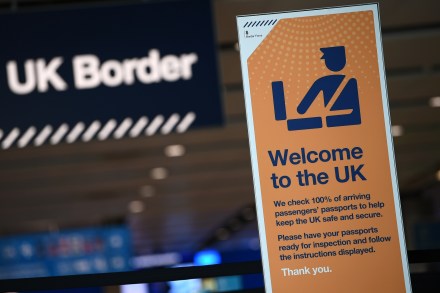
When it comes to making the case for removing Scotland from its most important trading bloc, Nicola Sturgeon takes her lines directly from the Brexiteer playbook. Asked about the possibility of a post-independence hard border between Scotland and England, Sturgeon's standard response has been to tell people what she would want instead of the reality of what would be. Just as Brexiteers started off under the delusion that both frictionless trade with the EU and the freedom to trade on UK terms with the rest of the world was what they wanted and was achievable, so too Sturgeon liked to suggest she was aiming for an independent Scotland with all the benefits of open trading relationships to EU and remaining UK markets.

Can Scotland become Singapore on the Clyde?

From our UK edition

Scottish multi-millionaire Sir Tom Hunter is frustrated. Speaking to the BBC's Today programme to promote a new report commissioned by his foundation on Scotland's economy, he said: 'The general consensus in business up here is that the current government don't really listen to business. They make policy in isolation, which makes bad policy, and that's not good enough for Scotland in my opinion.' Sir Tom, who famously started out selling trainers from the back of a van before going on to make hundreds of millions in retail, wants to see Scotland's private sector given the tools and assistance it needs to turbo-charge the economy.

Has Salmond just shattered Sturgeon’s currency delusion?

From our UK edition

The war of the Salmondites versus the Sturgeonites is just getting started. Who knows how nasty it will get or what the longer term ramifications will be? Already apparent though is how Salmond's pantomime villain shimmy back into the political arena is forcing Nicola Sturgeon onto ground she would rather avoid during an election campaign. The usual SNP tactic around elections is to downplay separation talk and reach out to risk averse moderate voters, safe in the knowledge the party's most zealous supporters will stay in line. But with Salmond on the scene demanding to know how exactly Sturgeon will achieve independence, that is not an option. Sturgeon will have to make another referendum and her commitment to leaving the UK a central part of her campaign.

Who’s paying the price for Sturgeon’s pandemic politics?

From our UK edition

Don't worry if you missed the press release announcing which Scottish taxes are going up to pay for Nicola Sturgeon's headline grabbing four per cent minimum pay rise offer for certain front-line healthcare workers, including nurses. You missed it because there wasn't one. In characteristically hubristic form, the Scottish Government made the announcement just a few hours before the pre-election 'purdah' period began, with Sturgeon immediately taking to Twitter to declare:  'Our NHS staff deserve more than applause and one per cent is not enough'.  It was a thinly-veiled dig at the offer Boris Johnson's administration has put forward in England. Normally when a government makes an announcement like this the immediate question is: where is the money coming from?

The reality of the SNP’s impossible economic dream

From our UK edition

A newly independent Scottish state would have to implement eye watering spending cuts or tax increases to stay afloat, according to new analysis. If the new state were to balance the books using tax increases alone then Scotland’s three income tax bands, which are broadly equivalent to the basic rate in the rest of the UK, would have to go up by 26 pence in the pound, taking Scotland’s basic rate to 46 pence. Alternatively, the gap could be filled by raising VAT from 20 per cent to 49 per cent. Such massive tax rises would represent at least 10 per cent of Scotland’s GDP. The analysis comes from a report by libertarian-leaning campaign group the TaxPayers’ Alliance (TPA), and was written by TPA chairman and ex-Treasury economist Mike Denham.

The SNP’s foray into high finance has come at a big price

From our UK edition

In a refreshing twist for Scotland's party of government, the latest potential scandal facing the SNP administration does not involve allegations of sexual misconduct, but rather high finance. Earlier this week, finance company Greensill Capital filed for administration. Greensill specialised in supply-chain finance, which involves acting as an intermediary to raise money on the back of payment commitments between companies and their suppliers. Greensill's innovative financing arrangements were instrumental in metals tycoon Sanjeev Gupta's rapid expansion of his business empire, including his 2016 acquisition of an aluminium smelter at Lochaber in the Scottish Highlands, plus two nearby hydroelectric dams.

Why is the SNP afraid of issuing its own government bonds?

From our UK edition

Rishi Sunak's budget appeared to offer some good news to Scots, not that the SNP saw it that way. An additional £1.2 billion in Barnett funding was handed over to Scotland's government. This is on top of £9.7 billion in extra spending delivered over the past year for pandemic support. But the SNP Scottish government took a different view. 'While I welcome some of the announcements today, it is clear the Chancellor has not matched Scotland’s ambition for economic recovery and supporting households,' said Scottish Finance Secretary Kate Forbes. Forbes and her colleagues often point out that 'Scotland's ambition' includes more borrowing powers.

Is the SNP prepared for Scotland’s next financial crisis?

From our UK edition

As the world continues its fight against Covid-19, the Scottish National Party has been busy plotting Scotland's exit from the UK. If the party gets its way and wins another referendum, Scots could soon find themselves living under a 'sterlingisation' currency system. The implications could be disastrous. It would be wrong to dismiss talk of another referendum as hypothetical. Powers over the UK's constitution may sit with Westminster, but recent polling demonstrates a sustained (small) majority for secession. The SNP continues to ride high in the polls, looks set to win convincingly in May's Holyrood election and has announced it intends to hold another referendum without UK government approval, if necessary.