John Ferry

John Ferry

John Ferry is a contributing editor for the think tank These Islands and a former financial journalist

The SNP’s ferry fiasco is a very Scottish sham

From our UK edition

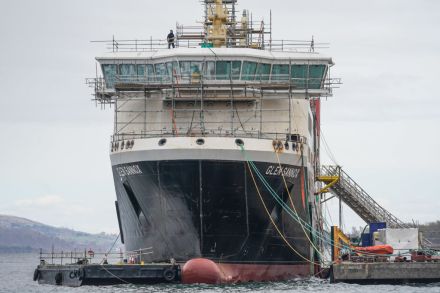
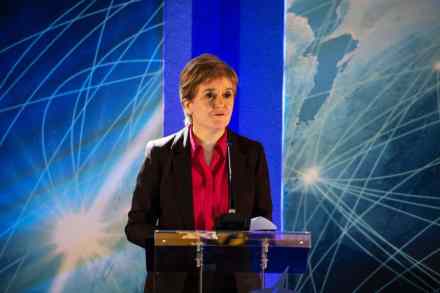
‘As first minister I am ultimately accountable for every decision that the Scottish government takes,’ Nicola Sturgeon announced on Friday as she gave evidence to the Scottish parliament’s public audit committee. Scotland’s ferry procurement fiasco is being closely scrutinised, and the latest developments have put Sturgeon’s record under the microscope.  In a performance reminiscent of her evidence session during the Salmond inquiry, the first minister spoke confidently, asserting several times that she was trying her best to be open – while dodging any actual accountability. It was classic Sturgeon.  There have been accusatory murmurings that the Scottish government may have corrupted the ferry procurement process for political reasons.

Nicola Sturgeon’s euro muddle

From our UK edition

The First Minister could not have been clearer. Asked about the possibility of Scotland joining the euro, she said Scotland 'would not qualify'. 'I don't think it is the right option for Scotland,' she added. The question was put to her earlier this month at a press conference where she presented her new paper on the economic case for Scotland exiting the UK. It was a significant statement, because new entrants to the European Union must commit to adopting the euro. 'All EU member states, except Denmark, are required to adopt the euro and join the euro area,' says the European Commission.  Unsurprisingly, senior officials in Brussels were not impressed.

Sturgeon’s economic plan will hurt Scots

From our UK edition

Poor old Nicola Sturgeon. The news agenda at the start of this week was meant to be dominated by her new economic prospectus on independence. Then along comes Jeremy Hunt with his scrapping of the mini-Budget, which ensured everyone’s attention was on Downing Street rather than Bute House. If you did miss it, yesterday saw the First Minister set out the latest – and what was expected to be the most substantive – paper on the economic plan for exiting the UK (or Scexit, as Nationalists don’t like to call it). Did it live up to expectations? Of course not.

Trussonomics shows that Scottish independence doesn’t add up

From our UK edition

As the pound fell to a record low on Monday on the back of Kwasi Kwarteng's 'mini-budget', the pings on SNP MPs and MSPs private WhatsApp groups must have ballooned in line with Gilt yields. There were many aspects to consider: the challenge of responding to the 45 per cent rate of income tax being scrapped and cuts to stamp duty, and how this new tax competition will impact Scotland's budget; the impact on cost-of-living challenges; international concerns that the volatility induced in financial markets could destabilise the global economy. All too predictably, the messaging from senior SNPers focused on this being yet another reason for Scotland to exit the UK.

Nicola Sturgeon’s desperate spin on the Scottish deficit

From our UK edition

Nicola Sturgeon and her colleagues plan to hold a referendum on Scotland leaving the UK a little over a year from now. All going to plan, they then intend to start governing a brand new state, with full control over taxes and spending, sometime in 2025. With such weighty obligations on the horizon, you would think the release of new, up-to-date official numbers outlining Scotland's stand-alone fiscal position would be hotly anticipated by the First Minister and her team. Apparently not.

Star SNP economist fails to find the positive case for independence

From our UK edition

You can imagine the glee with which Scottish government ministers and their advisers greeted the news they had a new convert arguing the case for Scotland exiting the UK, and that it was a Scots-born academic making a name for himself as an edgy, left-wing economist. Mark Blyth, hailing from Dundee but now professor of international economics at the Ivy League Brown University in Rhode Island, and co-author of anti-austerity book Angrynomics, was signed up to a new Scottish government economic advisory council last summer. The group, which had a remit to publish a strategy paper on turbo-charging Scotland's economy, replaced a previous Council of Economic Advisors set up by Alex Salmond.

The key flaw in the SNP’s indyref ruse

From our UK edition

This week we've had the bizarre occurrence of the SNP formally submitting a request to intervene in the Indyref2 Supreme Court case, even though Scotland's top law officer, the Lord Advocate, has already put forward the Scottish Government's written case. To recap, the Lord Advocate Dorothy Bain has referred a prospective bill on a referendum to the UK Supreme Court so that judges can rule on whether Holyrood has the power to unilaterally hold a vote. In a 51-page written submission to the court, Bain argues a referendum, which Nicola Sturgeon wants to see take place in October 2023, would merely demonstrate the views of the Scottish people regarding secession from the UK and would not have the legal outcome of ending the union.

Sturgeon’s case for Scexit doesn’t add up

From our UK edition

No one should be too perturbed by Nicola Sturgeon's latest referendum pronouncements. There will not be a referendum next year. The thought of the First Minister flying to London to start secession negotiations after gaining a majority of votes in Scotland at the next general election is Pythonesque in its absurdity. At some point this century a politician might emerge who kicks off an era-defining trend of breaking apart established liberal democracies – but that politician is unlikely to be Nicola Sturgeon. Scotland can, and will, ultimately shrug its shoulders at this week's Holyrood melodrama. The same goes for the First Minister's latest attempt to create an economic narrative to justify exiting the UK.

Nicola Sturgeon’s Potemkin independence bid

From our UK edition

In one sense Nicola Sturgeon’s new independence campaign launched today – which assumes there will be a second referendum within the next 18 months – does not signal anything new. Sturgeon did not unveil any new legislation. Nor did she submit a formal request for the UK government to allow a referendum to take place. The legal and political impediments to having a rerun of the 2014 vote remain. Most people in Scotland do not want a referendum next year. Polling shows there is no majority for secession, while the constitution is way down the list of people’s priorities. There is no incentive for Downing Street to concede even an inch of ground to the SNP-Green administration’s demands for having another go at ‘Scexit’.

The irrational cruelty of the SNP’s nationalism

From our UK edition

They can't build a ferry, organise a census or keep the railways operating, but when it comes to organising a grievance campaign, nobody does it better than the SNP. This week saw perhaps the most impressive effort yet from team grievance as the SNP tried to turn the Chancellor's announcement of a windfall tax on big oil companies into a Scotland-versus-the-rest-of-the-UK bun fight. Speaking on Sunday, SNP MP Kirsty Blackman complained:  It feels very unfair that Scotland is having to pay for the entirety of the UK. If Scotland was an independent country, the windfall tax would generate £1,800 for every household in Scotland.

Scotland’s national investment bank is running aground

From our UK edition

Like so many SNP Scottish government initiatives, it was launched to great fanfare but has made questionable progress since. Established in November 2020 as an investment vehicle for delivering long-term, ‘patient capital’ to Scottish businesses, the creation of the Scottish National Investment Bank (SNIB) was described by Nicola Sturgeon as ‘one of the most significant developments in the lifetime of this parliament.’ The ‘mission-led development bank’ is being funded by the Scottish government to the tune of £2 billion over ten years.

Is the SNP now pro-nuke?

From our UK edition

At the rate he’s going, the SNP’s hawkish spokesperson on defence, the MP Stewart McDonald, will soon be talking about an independent Scotland having a weekly armed forces day where citizens don camouflage and wargame defending the nation. McDonald is tasked with making the SNP sound sensible when it comes to defence and western collective security. His latest manoeuvre appears to be to turn his party’s long-standing anti-nuclear weapons position on its head. This would move the SNP on from merely pretending it wants to be a part of Nato to credibly backing an independent Scotland’s membership of the alliance.

The problem with Nicola Sturgeon’s latest independence drive

From our UK edition

The Scottish government will start refreshing the ‘very positive case’ for exiting the UK, Nicola Sturgeon said this week, in the aftermath of Scotland’s local council elections. Can we expect anything radical to come out of this series of papers? Will there be a big departure from the last major overhaul of the independence pitch, the 2018 SNP-commissioned Sustainable Growth Commission report? That report advocated an emerging market-style currency arrangement – with Scotland unofficially using pound sterling for a prolonged period after secession – and a decade of austerity to put the new state’s public finances in shape.

The SNP ferries fiasco has taken another nasty turn

From our UK edition

It started as farce but is quickly turning into something more ugly, perhaps even sinister. When Audit Scotland last week released a report shining a light on the SNP's costly ferries fiasco, all the talk was of painted on windows and a comical 'launch' event for an unfinished ship. It was Carry on Up the Clyde but with a rather dull cast of characters. This week the story has taken a different turn. Jim McColl, the Scottish billionaire who took over the shipyard at the centre of the controversy, has come out fighting. He gave an interview to the Sunday Times in which he accused Nicola Sturgeon's administration of hastily pushing through the contract for the new boats so the deal could be announced at the party's autumn conference in 2015.

The prospect of an independent Scotland is fading away

From our UK edition

Whisper it, but the dream of a separate Scotland could be fading for Scottish nationalists. A new poll shows that only one-third of Scots want a referendum on independence to take place within the next two years. And while only a slim majority (51 per cent) support holding Britain together, the poll also found that only one-third of Scots believe it would be wrong for the UK Supreme Court to decide whether a referendum can take place. Constitutional powers being decided at the UK level is, it turns out, absolutely fine with most Scots. That matters, because the Supreme Court could be the crucial institution that decides whether a poll can take place (that is, if law officers at Holyrood even let it get that far).

The SNP’s flagship economic strategy is pure window dressing

From our UK edition

It was an odd launch event for what had previously been a much-touted initiative. While all eyes were on the war in Ukraine, Scotland’s finance minister, Kate Forbes, took to Dundee to set out Scotland's new ten year National Strategy for Economic Transformation. Such events usually involve a room full of press, lots of questions, photographs, one-on-one interviews and then widescale coverage in the Scottish media. This event however was characterised by complaints from print journalists that they were excluded on spurious grounds of ‘ongoing Covid restrictions’, despite the finance minister speaking to a room full of business people and some select journalists to which this rule seemed not to apply.

The book that shatters the SNP’s economic myths

From our UK edition

There aren't many whose name becomes part of the mythology of a nation while they are still alive. Gavin McCrone, author of After Brexit: The Economics of Scottish Independence, has inadvertently achieved this status. McCrone is an academic and a former chief economist to the Scottish Office. In 1974, he wrote an internal briefing paper for Scottish ministers outlining the economic potential of North Sea oil. McCrone thought ministers were underestimating the value of the resource and the positive impact it could have on the economy if extraction were managed successfully. His paper was designed to remedy that ignorance and was framed from a Scottish perspective and in the context of nationalist arguments for independence.

Ian Blackford has exposed the SNP’s pensions muddle

From our UK edition

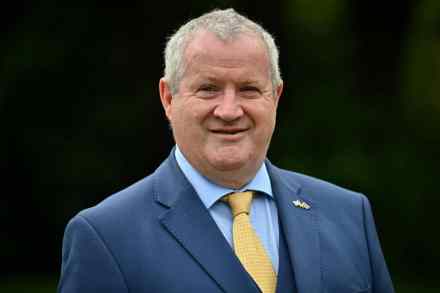
Amidst the Downing Street psychodrama, have we missed the moment the reality of Scottish fiscal autonomy finally dawned on the SNP?  This week saw an extraordinary turn of events in London and at Holyrood. First there was an interview the SNP's Commons leader Ian Blackford gave in which he stated the government of the remaining UK will be responsible for paying the Scottish state pension after a Scottish exit. The next day, Nicola Sturgeon was asked at First Minister's Questions if the SNP's position now really was that pensions in an independent Scotland would be paid by English taxpayers. Amazingly, she took the same brazen stance as Blackford.

How long can the SNP ignore Scotland’s looming fiscal timebomb?

From our UK edition

A new report from Holyrood's finance and public administration committee is unusually blunt in its assessment. But is the SNP up to the task of dealing with Scotland's looming fiscal time bomb? It seems unlikely. The Scottish government has given no signal of being serious about facing up to that challenge. Indeed, if anything, the ruling SNP-Green coalition has an incentive to make the budget situation worse. If so, Nicola Sturgeon can't say she wasn't warned. In its report scrutinising the Scottish government's proposed budget for 2022/23, the committee says:  'We consider that evidence showing that Scotland is lagging behind almost all other areas of the rest of the UK in key indicators of economic performance is deeply worrying.

The paradox at the heart of Nicola Sturgeon’s green ‘revolution’

From our UK edition

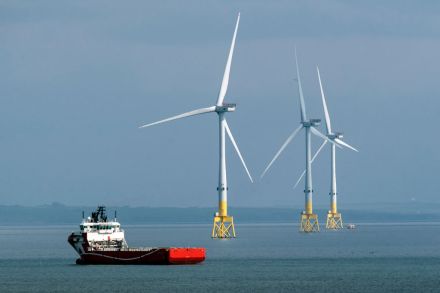
In some ways it was refreshing to see the radical left brought to heel by the realities of government. Having spent years campaigning to ‘ditch neoliberal economics for good’, this week saw the Scottish Green Party celebrate Shell and BP winning contracts to exploit Scotland’s offshore wind potential for the enrichment of their shareholders. Far from being a strike against neoliberalism, the Greens have provided a ringing endorsement of capitalism’s place in the transition away from fossil fuels. This came on the back of the ScotWind Leasing project, which has seen the Scottish government auction off seabed plots for major offshore wind projects around the Scottish coast.