John Casey

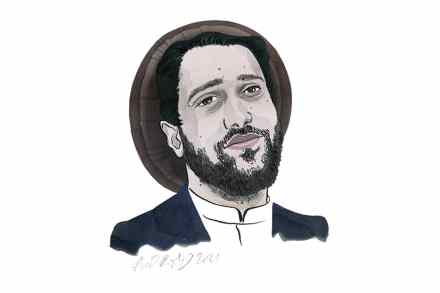
Meeting Ahmad Massoud, the Sandhurst graduate taking on the Taliban

From our UK edition

The Taliban do not yet control all of Afghanistan. As most of the country fell to the Islamic militant group with terrifying speed, Panjshir valley, about 100 miles north of Kabul, leading deep into the Hindu Kush mountains, remained unconquered. It is now the last province beyond the Taliban’s control. While many Afghan politicians have fled the country, Ahmad Massoud — leader of the National Resistance Front, the anti--Taliban resistance in Panjshir — has decided with (perhaps) a few thousand followers to try to turn the valley into a final redoubt. He has vowed that if war breaks out, his rebels will fight ‘to the very last breath’. His pledge may well be put to the test. This week hundreds of Taliban fighters entered the valley, preparing for a siege.
From riches to rags

From our UK edition

So accustomed have we become to North Korea as a failed state, 15 times less prosperous than the south, and depending entirely on foreign aid to survive, that we forget that things were not ever thus. I remember meeting Japanese nationalists who boasted that Japan had put more effort into building the infrastructure of their colonies than any western power had done for theirs. This was entirely true of Korea. The Japanese rulers (since 1910) left a huge industrial base in the north, including mines, processing plants for coal, iron, magnesium and zinc, and many reservoirs and pumping stations which enabled the north to fertilise and irrigate its land.

Pawn or game-changer?

From our UK edition

The British were in Burma for more than 120 years, but were never sure what to do with it. They completed their conquest in 1885, annexing Upper Burma and abolishing the ancient, semi-divine monarchy, apparently on the whim of Randolph Churchill. This was contrary to the British imperial tradition of indirect rule, and brought about a crisis of legitimacy which was never overcome. British rule was never fully accepted, even though the country prospered under the Raj, becoming the greatest exporter of rice in the world. In the short-lived democracy after independence, the rather bumbling U-Nu kept winning landslide victories in elections.

A prayer for the Copts

From our UK edition

Among the many heartening images coming from Egypt’s winter revolution in Tahrir Square was a photograph of a Muslim and a Copt holding up, respectively, a Koran and a crucifix. While the President of Iran, with motives that were all too plain, nervously hailed what had happened in Egypt as an ‘Islamic revolution’, many of the demonstrators vehemently contradicted him: ‘No — it is our democratic, secular revolution.’ Even spokesmen for the Muslim Brotherhood insisted that it had been a revolution made ‘by men and women, Muslims and Christians’. Does this mean that the ancient Coptic community of Egypt — possibly 15 per cent of the population — has nothing to be afraid of?

The revival of Tory philosophy

From our UK edition

I hear that the Conservative Philosophy Group is about to be revived after a hibernation of about 15 years. The group, in so far as it has been heard of at all, has the reputation of being a collection of Thatcherite ideologues, exercising an arcane influence over policy. In fact it had no discernible influence over Tory policy, and was never meant to. One or two members (it must be admitted) wanted to give the impression that we were a think-tank with the usual ambitions. However, along with Roger Scruton, I had helped organise it from the beginning (c. 1975) and I always had the secret determination that it should be just like an Oxbridge college essay-reading society. That eccentric character may even explain its success.

Brutal, bankrupt Burma

From our UK edition

Thant Myint-U has a special perspective on the history of modern Burma because his family played a role, albeit a passive one, in one of the most dramatic and well-remembered events in its history. The military-socialist dictator, Ne Win, who seized power in an almost bloodless coup in 1962, overthrowing the elected prime minister, U Nu, ran a regime that was characterised by a distrust of educated or distinguished people. Ne Win himself conceived an intense jealousy of Thant Myint-U’s grandfather, U Thant, who, as Secretary General of the United Nations, was the most famous Burmese in the world. When U Thant died in 1974, Ne Win decreed that he should be buried in an obscure Rangoon graveyard, with no public ceremony.

A hunt for origins

From our UK edition

No modern country wishes to understand itself through its remote past more ardently than does Korea. Nineteenth- century Korean nationalists were anxious to trace their state back to a mythical semi-divine hero, Tan’gun, who founded Korea in the third millennium BC. (Koreans will probably be irritated if it is suggested that this resembles Japanese eagerness to trace their imperial family back to an Emperor Jimmu, about 2,500 years ago.) The communists enthusiastically join this hunt for origins. When the ‘Great Leader’, the late Kim Il Sung, dictator of North Korea, wanted to propose a federation of the North with the South, he suggested that the name for the united country should be Koryo, after a state that had existed from the 10th to the 12th centuries.

The lure of the jungle

From our UK edition

This is a curious story. In 1886, a year after the final British conquest of Upper Burma, a piano-tuner, Edgar Drake, is requested by the War Office to travel to the Shan States - still largely untouched by British power - to tune a rare 1840s Erard piano. The piano was originally shipped to one Surgeon-Major Antony Carroll, an ambiguous, slightly Kurtz-like figure, who rules a remote area in the Shan States, and who is either making peace or fomenting war or even (as we finally hear alleged) spying for the Russians among the Shan.