Joanna Williams

Joanna Williams

Joanna Williams is an academic and author. Follow her on Substack here

Feminism is holding women back

From our UK edition

It’s easy to see why the online dictionary Merriam-Webster chose ‘feminism’ as their word of the year. 2017 kicked off with women across the globe marching against Donald Trump and ended with Time magazine heralding the #MeToo ‘silence breakers’ as their person of the year. Every glossy double-page spread further established feminism as this year’s fashion. Head cheerleader Jessica Valenti, writing in the Guardian (naturally) is cock-a-hoop about feminism’s resurgence: ‘Now we just have to continue to make it the movement of the year (and next year, and the next) until women can start to feel safe in their own country.

In defence of Saturday jobs

From our UK edition

In August 1988, after weeks of practice, I created the perfect Mr Whippy ice cream. I was 14 and I had a Saturday job in a cafe. When the sun shone I’d get to lean out of the serving hatch, chat to passers-by and sell ice creams. Rarely have strawberry sauce and sugar sprinkles been so lovingly applied to such gravity-defying cornets. Go to your local cafe this Saturday and the chances are you won’t be served by an over-enthusiastic 14 year-old. Figures released to the BBC this week, under the Freedom of Information Act, show the number of teenagers with part-time jobs has declined markedly in recent years. Businesses wanting to employ children under the age of 16 need to apply for a local authority work permit.

The #MeToo witch hunt comes back to bite Lena Dunham

From our UK edition

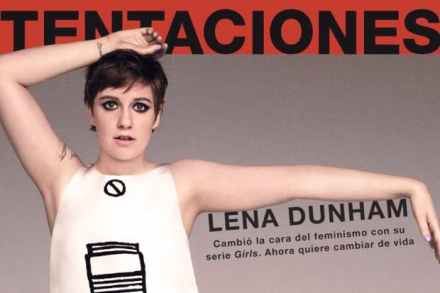
Let’s take a moment to celebrate Lena Dunham. OK, so she stinks as an actress and her brand of self-indulgent, pity-me feminism leaves me cold. But credit where it’s due: she’s now managed to unite America’s culture-warring and politically divided population. Surely a Nobel Peace Prize nomination can’t be far behind. Loathing for Lena has gained such momentum it has spawned its own insult. It’s the worst insult that could possibly be levelled against a white, bourgeois but self-berating, feminist-identifying and politically ‘woke’ woman: ‘hipster racism’. For those struggling to keep up (aren’t we all nowadays?

Why did the government prevent Milo Yiannopoulos from speaking at my sons’ school?

From our UK edition

Discovering my sons’ school had invited back former pupil Milo Yiannopoulos as a guest speaker was the highlight of an otherwise terrible parents’ evening. I chatted with the Head of School about the teenage Milo and whether there had been any clues as to his future transformation into a darling of the alt-right and anti-hero of American college campuses. This was a great opportunity, we agreed, for current students to challenge such a notorious figure. I also mumbled something about the school being brave. But I don’t think either of us, at that point, realised quite what a torrent of criticism the school would be expected to withstand.

When sexual harassment is defined so broadly it becomes meaningless

From our UK edition

Almost a third of young women think that winking is a form of sexual harassment. Let that sink in. For 28 per cent of women aged 18 - 24 the merest flick of an eyelid, an action so small as to be barely noticeable, is considered to be unwanted sexual behaviour that violates their dignity, makes them feel intimidated, degraded or humiliated and creates a hostile or offensive environment. Now, I’m normally first in line to point out the flaws in surveys that tell us only the views of a small number of people motivated to answer questions about sexual harassment. But the YouGov research lands at a time when stories about sexual harassment dominate news coverage. It comes on the back of a BBC survey claiming half of women are sexually harassed at work.

The #MeToo movement reveals feminism’s obsession with victimhood

From our UK edition

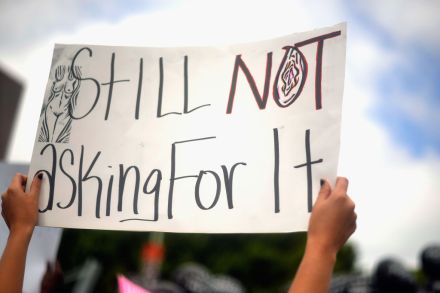
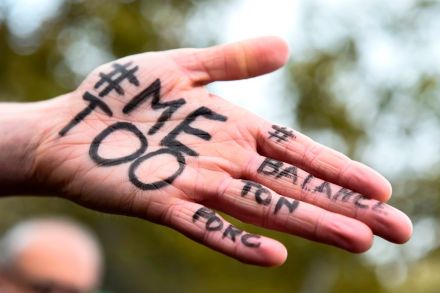
Following a weekend crammed with ever more salacious revelations about Harvey Weinstein, hundreds of thousands of women have now taken to social media to share their own experiences of sexual harassment. This is called the ‘#MeToo’ movement, and it’s gone viral, in the way that these things do. According to Twitter, this reveals ‘the magnitude of sexual assault’. In reality, it does nothing of the sort. #MeToo tells us far more about the desire of some women to reach for victimhood status. The accusations against Weinstein include charges of rape; as such, they deserve to be taken seriously and tried in courts of law rather than by public opinion.

Patronising working class students won’t make universities more inclusive

From our UK edition

From Educating Rita and The Young Ones to the more recent Fresh Meat, social class differences among university students provide perennial dramatic inspiration. Working class students - what with their funny accents, strange diet and odd clothes - are simply a great source of comic relief. Now there’s a new stereotype for scriptwriters to get their teeth into: chicken. Fried chicken to be precise. Apparently the working class just can’t get enough of it. And luckily the working class students at Goldsmiths, University of London, have defenders on hand to ensure this cultural trait is neither mocked nor appropriated by their more middle class peers. Working class students: you can relax. Your fried chicken-habit is safely yours, and yours alone.

The BBC sisterhood has made the ultimate sacrifice – and asked for a pay rise

From our UK edition

The sisterhood is, apparently, ‘in full flow’ at the BBC. Since the publication last week of the salaries of its 96 highest paid presenters, discussion of the institution’s gender pay gap has filled air time and column inches. How can it be right that Clare Balding is paid less than Gary Lineker? Or that John Humphrys earns more than Sarah Montague? But if being paid less than their male colleagues wasn’t bad enough, female presenters must, it seems, also use their ‘strong and loud voices’ on ‘behalf of all’ to tackle the entrenched sexism endemic not just within the BBC but everywhere.

Jeremy Corbyn: the nation’s therapist

From our UK edition

Comparisons between Jesus and Jezza became commonplace long before he chose to end his election campaign with a rally at a church in Islington. As far back as August 2015, which in today’s political currency is at least two lifetimes ago, commentators were asking, ‘Is Jeremy Corbyn The New Messiah?’. It wasn’t just the shared initials (it’s a sign!) but the crowds he drew and the tearful adulation among his audience. But Corbyn is not messiah-like – indeed his very lack of magnetism is part of his appeal. And neither does Corbynism fill some Christianity-shaped hole in British life. The old religion demanded confession, sacrifice and a commitment that extends beyond both the present and the self.

The post-fact world suits feminism just fine

From our UK edition

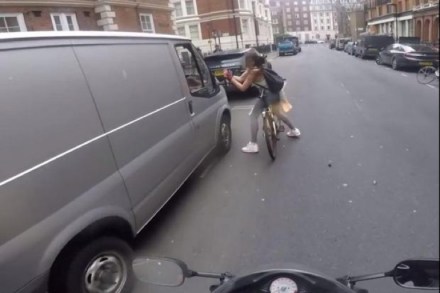
We now know that the video of a cyclist confronting a catcalling driver, which spent much of yesterday being circulated on social media and covered in the national press, was staged. Barely had viewers finished cheering on the woman as she tore the wing mirror off the side of her harasser’s van than the truth emerged. An eyewitness told the Sun, ‘They practiced the scene two or three times with the motorbike riding behind them. You could see there was already damage to the wing mirror, it was loose.’ The company that hosted the video, Jungle Creations, has now issued a statement claiming that although it was under the impression that it portrayed real-life events, it now realises the video ‘may be factually incorrect.

The ‘pocket money gap’ is an alternative fact

From our UK edition

Parents: stop whatever you are doing, go home and give your daughter more pocket money. She needs it. A report out this week shows that girls are getting less than their fair share from the bank of mum and dad; a whopping £2.20 a week less, to be precise. Boys are favoured when it comes to doling out allowances, with brothers routinely getting more than their sisters. Poor girls. The gender pay gap is never out of the headlines for long and to find out it kicks in before you even leave school, never mind get a job, must come as a terrible blow. I’m expecting my daughter to milk this news for all she’s worth. As Everyday Sexism’s Laura Bates has been quick to point out, this missing £2.20 a week has consequences that go way beyond Red Bull and phone credits.

The ‘Women’s March’ on Washington is a protest against democracy

From our UK edition

The 'Women’s March' on Washington might not have actually happened yet but it can already be judged a success. Few demonstrations in recent years have attracted such advance publicity, inspired so many supportive column inches, or prompted such an abundance of ‘how to’ guides for the novice protester. The march, planned for 21 January - the day after Trump’s inauguration - and now scheduled to take place across a further thirty American cities as well as in London, Sydney and Zurich, has clearly captured the imagination of those determined to signal their distaste for the incoming administration. More than 200,000 people are expected to participate in Washington alone with trains and hotel rooms now reportedly fully booked.

What the increase in hate crime really tells us about post-Brexit Britain

From our UK edition

It’s official: there is 41 per cent more hatred in Britain now than there was before the vote to quit the EU. Home Office statistics out this week reveal the torrent of religious and racist fury that was unleashed on June 23rd. Only a reversal of the democratic will of the people can possibly save us now. Really? We all need to calm down. The recently invented and chillingly Orwellian concept of ‘hate crime’ tells us absolutely nothing about the state of the post-referendum, pre-Brexit nation. Hate crime is defined as ‘any criminal offence which is perceived, by the victim or any other person, to be motivated by hostility or prejudice towards someone based on a personal characteristic.’ In other words, hate crime statistics are a record of hurt feelings.

Saatchi’s sexism row suggests feminists can’t handle debate

From our UK edition

Forget Pimm's, sunburn and rain abandoned picnics. What really makes summer is a heap of outrage directed at an old white man for saying something feminists think is beyond the pale. Last year it was Sir Tim Hunt and his quip about the problem of women in labs. This time it is Kevin Roberts, chairman of Saatchi and Saatchi, who has suggested gender bias is not an issue in the advertising industry. For this crime against feminism, Roberts has been suspended and will spend this summer in his garden rather than in the office. Unpicking the obligatory social media bluster about ‘misogyny’ and ‘the patriarchy’ to work out where exactly Roberts went wrong is not easy.