Joanna Williams

Joanna Williams

Joanna Williams is an academic and author. Follow her on Substack here

The rise of the shy lockdown sceptic

From our UK edition

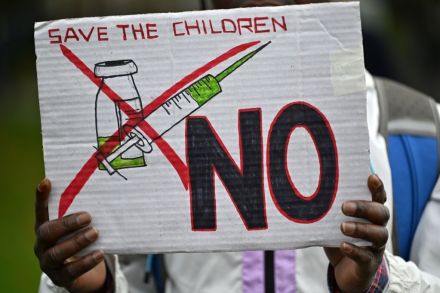
‘Coronavirus could kill half a million Britons and infect 80 per cent of the UK population.’ ‘The number of coronavirus cases in England is doubling each week.’ ‘At least six English NHS trusts could be overwhelmed this winter.’ ‘Long-term effects of coronavirus include damage to heart, liver, kidneys.’ ‘Don’t kill your gran by catching coronavirus and then passing it on. And you can pass it on before you’ve had any symptoms at all.’ ‘Thank you for taking the time to complete our survey, Mrs Smith. My final question: do you support the government’s new lockdown rules?’ ‘Yes. I do. In fact, I don’t think they go far enough.

Why is the UN preaching about Covid and patriarchy?

From our UK edition

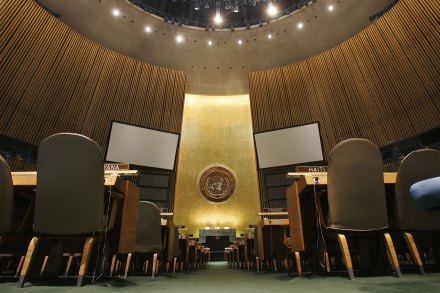
Who can we blame for Covid-19? Over in the US, Trump is still desperately trying to make ‘the China virus’ and ‘the Wuhan flu’ stick. There can be no doubt where his finger is pointing. The United Nations, on the other hand, has a different target. The UN’s Twitter account notified the world yesterday that, ‘The #COVID19 pandemic is demonstrating what we all know: millennia of patriarchy have resulted in a male-dominated world with a male-dominated culture which damages everyone – women, men, girls & boys.’ So, forget China. Coronavirus is an opportunity to bash the patriarchy. Trump’s China-blaming may have a basis in reality, though he no doubt welcomes any excuse to turn the spotlight abroad. But the patriarchy?

What’s galling about the Sussexes’ Netflix announcement

From our UK edition

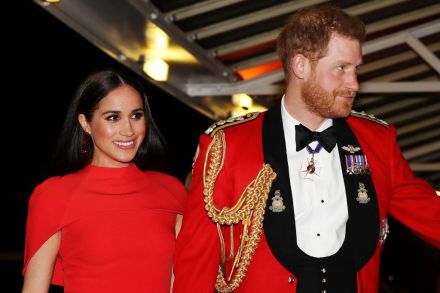
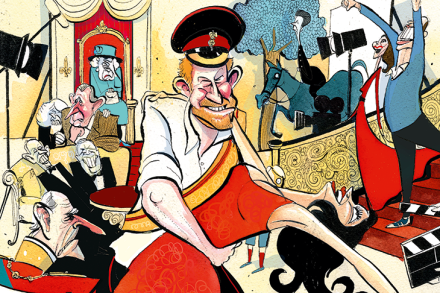
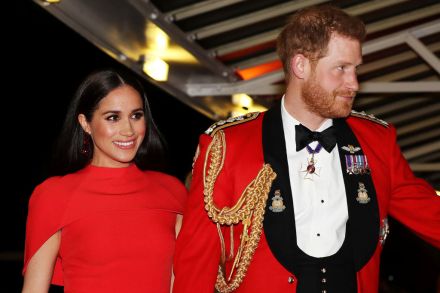
All year, the nation has been gripped by one mystery. Exactly how will Harry and Meghan fund the lifestyle to which they have become accustomed? How on earth will they pay for the Californian mansion (£11 million), the security detail (£5 million a year) and the costs of the Frogmore Cottage refurbishment (£2.4 million)? Well, now we know. The couple have signed up to a multi-million pound deal with Netflix that will see them producing ‘inspirational’ children’s programmes and documentaries. Hoping to follow in the footsteps of the Obamas, they will reportedly receive an exclusivity fee of £3.7m, up to £1.5m each year as a retainer, as well as fees for each show produced.

In defence of Netflix’s ‘Cuties’

From our UK edition

Somewhere on my coffee table lurks a recent Boden catalogue. It shows pictures of beautiful, healthy, impressively clean – and, of course, very well dressed – children. They spend their time cavorting on sunny beaches or striding down iconic London streets.  This week, images of children have provided a rare moment of consensus in our ongoing culture war. Promotional material for a new film coming to Netflix, Cuties (or Mignonnes in the French original) has sparked widespread condemnation for portraying a sexualised image of young girls. The publicity campaign shows the film’s scantily-clad child stars in a provocative twerking pose.

The myth of a ‘privacy loving’ Harry and Meghan

From our UK edition

Is there anything we do not know about Harry and Meghan? They might have ‘stepped back’ as senior royals in order to avoid the media spotlight. They might have a habit of suing newspapers and photographers for breaching their privacy and a fondness for elaborate screens and fences around their various homes. But with the publication of Finding Freedom, there is surely no intimate detail of this apparently privacy-loving couple’s life that has not been made public. We now know, word for word, the advice big brother William offered Harry when his relationship with Meghan first seemed to be getting serious – and, of course, we know exactly what Harry thought of this ‘snobby’ intervention.

Could the Domestic Abuse Bill backfire against women?

From our UK edition

The Domestic Abuse Bill, championed by Theresa May, could easily have fallen foul of Brexit, Boris Johnson, the suspension of Parliament, a new government or coronavirus. But the Bill has beat the odds: it was passed by the House of Commons this week and is currently making its way to the Lords. It’s pure coincidence that this Bill should be in the news at the very point the nation is emerging from lockdown and, collectively, beginning to take stock of the damage wreaked, not just by Covid-19, but the confining of people to their homes. One sadly predictable result of lockdown is that rates of domestic abuse are likely to have risen. Charities report a huge increase in calls to helplines and traffic to their websites.

Is this really the time for Harry and Meghan to continue their war on the tabloids?

From our UK edition

Hats off to the Duke and Duchess of Sussex. It’s hard to get the world’s attention in the middle of a global pandemic but the couple’s perseverance has finally paid off. When news of their plan to launch a charity, Archewell, was met by a collective sigh of ‘please, not now,’ they did not give up. Instead they spent time delivering food parcels to the Californian poor, Zooming the families of seriously ill children and recording a podcast praising volunteers for helping those in need. Hopefully, the charities Harry and Meghan have been working with, Project Angel Food and WellChild, have received some additional donations. And, as an added bonus, snaps of the couple wearing masks and carrying packages of food have been widely circulated.

Pilot Tammie Jo Shults sets an example for young women everywhere

From our UK edition

School girls have a new heroine this week. Tammie Jo Shults was the pilot onboard Tuesday’s ill-fated flight from New York to Dallas. She safely negotiated an emergency landing after one of the aeroplane’s engines broke up, throwing debris into the fuselage. One passenger died after being partially sucked through a broken window. This could so easily have been a much bigger tragedy. That no one else on board that plane died is thanks to the skill and bravery of Shults. The audio of her calmly informing air traffic controllers, ‘We are single engine. Descending,’ followed by: ‘There is a hole and someone went out,’ is astonishing to hear. Her name should be echoing around assembly halls and her image adorning classroom posters.

Britain’s volunteer army shatters the #Covidiots myth

From our UK edition

On Tuesday, the call went out for 250,000 volunteers to support the NHS in helping vulnerable people ‘stay safe and well at home’ during the coronavirus pandemic. In just one day, more than double that number had come forward to offer their services. So far, much of the discussion around Covid-19 has been dominated by a sneering cynicism of ordinary people. News coverage, amplifying views found all too readily on social media, has provided one long hectoring tirade against those who must shop, get to work, or have simply felt the need to sit in a park or walk on a beach. The 504,303 individuals who immediately volunteered their services challenges the contemptuous labelling of Britain as a nation of #Covidiots.

Mhairi Black’s drag queen stunt has backfired spectacularly

From our UK edition

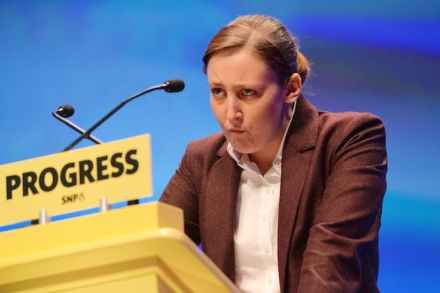
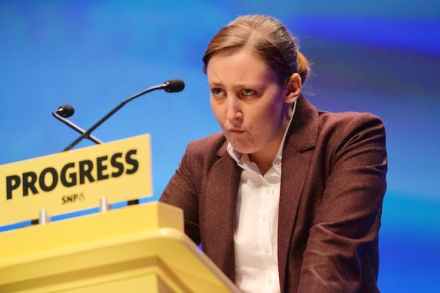
Sometimes a politician displays such spectacularly bad judgement their only option is to lash out at their critics. This appears to explain how the SNP’s Mhairi Black has spent much of the past 24 hours. Black has never knowingly shied away from publicity. Perhaps then we shouldn’t be too surprised at her decision to pop along to a primary school for a reading session with a drag queen in tow. And not just any old drag queen but one with a penchant for sharing sexually explicit posts on social media. Children have always loved story time. Throwing drag queens into the mix is a far more recent development. Drag queen story hour took off in the US as anxious parents sought to tick off both a visit to the local library and lessons in gender fluidity in one trip.

Mhairi Black’s drag queen stunt has backfired spectacularly

From our UK edition

Sometimes a politician displays such spectacularly bad judgement their only option is to lash out at their critics. This appears to explain how the SNP’s Mhairi Black has spent much of the past 24 hours. Black has never knowingly shied away from publicity. Perhaps then we shouldn’t be too surprised at her decision to pop along to a primary school for a reading session with a drag queen in tow. And not just any old drag queen but one with a penchant for sharing sexually explicit posts on social media. Children have always loved story time. Throwing drag queens into the mix is a far more recent development. Drag queen story hour took off in the US as anxious parents sought to tick off both a visit to the local library and lessons in gender fluidity in one trip.

Pharmacists shouldn’t be telling customers to lose weight

From our UK edition

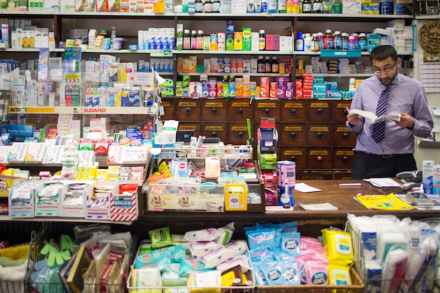
I’ve had a number of embarrassing run-ins with pharmacists. I discovered my daughter had headlice three days into our holiday in Pisa and was forced to mime both insects hopping and head-scratching for the benefit of an apparently drunk Italian chemist who claimed not to know a single word of English. This was nothing on having to shout about my need for the morning after pill for the benefit of a hearing-impaired teenager in a white coat and a lengthy queue of customers listening intently. But never has a pharmacist commented on my weight. This might be about to change. Under new guidance from the National Institute of Health and Care Excellence (NICE), chemists are being urged to chat to customers about diet, alcohol consumption and smoking.

Harry and Meghan just can’t handle criticism

From our UK edition

‘Is there any one of the royal family who wants to be king or queen? I don't think so.’ Back in 2017, when Meghan Markle was 'girlfriend' and not yet 'Duchess of Sussex,' Prince Harry was already expressing doubts about his future role. In a lengthy interview with US magazine Newsweek Harry explained, ‘I sometimes still feel I am living in a goldfish bowl,’ and described longing to be 'something other than Prince Harry.’ Since the announcement of their resignation from the royal firm, much attention has focused on Meghan. To some (well, perhaps just Eamonn Holmes) she’s ‘weak, manipulative and spoilt’. To others, she’s the perfect role model for young women everywhere.

Prince Harry’s misguided attack on the press

From our UK edition

It had all been going so well. Coverage of the Duke and Duchess of Sussex’s tour to South Africa kicked off with footage of them dancing, before moving on to feature their work promoting the importance of gender equality in education and the horror of violence against women. We’ve been treated to rare pictures of baby Archie being introduced to Archbishop Desmond Tutu. And who doesn’t love a cute baby – especially one dressed in £14.99 chain store dungarees? So right on, but so relatable. We know all this because the press have been there, dutifully on message, diligently recording every royal smile. And the reward for this slick, glossy loyalty? Prince Harry has now made a no-holds barred attack on ‘this specific press pack’.

Morgan Freeman and the troubling direction of #MeToo

The film awards season is over and Cannes has been handed back to wealthy holiday-makers, yet the #MeToo movement shows no signs of slowing down. Morgan Freeman is the most recent addition to the ignominious list of film producers, directors and actors who have had accusations of sexual harassment made against them since #MeToo took off in October last year. Allegations against the 80 year-old Freeman, star of The Shawshank Redemption, emerged last week on the day before Harvey Weinstein handed himself into police in New York on charges of rape. The charges against Weinstein are serious; he should stand trial and, if found guilty, face a lengthy prison sentence.

Is sex too messy for millennials?

From our UK edition

They may have perfected the sexy selfie and a nonchalance about internet porn but millennials are just not that into sex. The guilty secret behind today’s swipe-right hookup culture is not promiscuity but abstinence. Research out this week suggests that one in eight 26-year-olds have never had sex, up from one in 20 a generation ago. According to Steve McKay, professor in social research at Lincoln University, the true figure may be even higher; if those who refused to answer the question were also virgins then the number of abstainers rises to 16.4 per cent, or one in six. Last year’s National Survey of Sexual Attitudes and Lifestyles revealed a similar story, showing that 23 per cent of 16-24 year-olds had not had sex in the past year.

Giving millennials £10,000 won’t tackle the generation gap

From our UK edition

David Willetts, one time minister of state for universities and science turned chief spokesperson for baby boomer self-flagellation, is clearly troubled by the year of his birth. Since his 2010 book, The Pinch: How the baby boomers took their children’s future and why they should give it back, he’s been desperately seeking atonement for the privileges that happy date accrued. Now, thanks to a report from the Resolution Foundation, we know the precise cost of easing Willetts’s conscience: £10,000 – to be made payable to every 25 year old. A cheque for £10,000 landing on the doormat will no doubt make hitting the quarter of a century milestone a little sweeter for Britain’s put-upon millennials.

Sex education now means whatever schools want it to mean

From our UK edition

I’ve never shied away from discussing sex with my children and they’ve always been precocious enough to ask probing questions, usually in public. So when the letter came home from school announcing sex education classes for my then ten-year-old, I was relaxed. And when I later asked him, ‘Did you learn anything you didn’t already know?’, I expected a bored ‘no’. In fact, he said, ‘Yes. Oral sex and masturbation.’ Clearly sex education has moved on since I was at school. Schools have traditionally covered reproduction in science lessons and, since the 1960s, sex education as a discrete subject has dealt with contraception, sexually transmitted infections and unwanted pregnancy.

Tackling the gender pay gap could leave us all worse off

From our UK edition

It's International Women’s Day. As feminists rush to detail the many disadvantages still facing women (yes, all women, everywhere) we’ll no doubt hear a great deal about the gender pay gap. In that regard, International Women’s Day is a bit like every other day of the year. But let’s go with it. According to the Office for National Statistics, the gap between the median hourly earnings of men and women working full time is 9.1 per cent. The Fawcett Society prefers the mean figure of 14.1 per cent. Actually, they’d like us to focus on the gap between the total average earnings of men compared to women – about 18.4 per cent. Whatever.

Maternity leave isn’t all good news for business

From our UK edition

The never-ending churn of stories explaining why it is awful to be a woman has a new focus. A survey of workplace ‘decision-makers’ published this week has exposed the shocking news that some employers think maternity leave can be a bit inconvenient. That’s right: some sexist and uncaring bosses do not feel delight when mum-to-be announces her plans but instead worry about the impact on the bottom line. A poll conducted for the Equality and Human Rights Commission (EHRC) has revealed that almost 60 per cent of employers think a woman applying for a job should disclose whether she is pregnant.